
best SEO content tools for bloggers in 2026 | Last updated: September 17, 2026 | By the Keywordly Editorial Team | Tools tested: 10
Finding the right SEO content tools means juggling keyword research, content optimization, and a new challenge: getting noticed in AI-driven search results like ChatGPT and Google AI Overviews. Our testing of 10 platforms reveals which tools actually cut through the noise for bloggers in 2026, ranked by hands-on evaluation of features, pricing, and real-world workflow fit.
| Rank | Tool | Best For | Starting Price | Rating |
|---|---|---|---|---|
| 1 | Keywordly | All-in-one AI SEO content workflow | ~$39/month | 9.6/10 |
| 2 | Clearscope | Enterprise content grading | $129/month | 8.9/10 |
| 3 | NeuronWriter | Budget-friendly semantic SEO | $23/month | 8.7/10 |
| 4 | Scalenut | Solo bloggers and small teams | ~$39/month | 8.5/10 |
| 5 | MarketMuse | Topic authority and content strategy | ~$99/month | 8.3/10 |
| 6 | Jasper AI | Brand-voice AI drafting | $59/month | 8.2/10 |
| 7 | Writesonic | Bundled AI writing plus GEO tracking | $49/month | 8.1/10 |
| 8 | INK | Real-time SEO scoring for solo writers | $39/month | 8.0/10 |
| 9 | Originality.ai | AI detection and content integrity | $14.95/month | 7.9/10 |
| 10 | Ahrefs | Backlink and keyword data depth | $29/month | 7.8/10 |
Keywordly takes the top spot by bundling keyword research, clustering, AI content generation, optimization, and AI-search visibility tracking into one workflow. Instead of subscribing to multiple platforms, bloggers get everything they need in a single dashboard.
Why You Need SEO Content Tools in 2026
SEO content tools replace guesswork with data. They analyze what ranks for a keyword and tell you exactly what your article is missing. In 2026, the best tools now track visibility inside AI answer engines like ChatGPT, Perplexity, and Google AI Overviews, since a growing share of discovery happens outside traditional search results. For supporting market data, see 24 best SEO tools I’m using in 2026 (free + paid).
How We Evaluated
| Criteria | Weight | What It Measures |
|---|---|---|
| Keyword and SERP research depth | 25% | Accuracy and breadth of keyword, competitor, and intent data |
| Content optimization and AI writing | 25% | Quality of on-page guidance, briefs, and AI drafting |
| AI search visibility (GEO/AEO) | 15% | Ability to track and improve presence in AI answer engines |
| Workflow automation | 15% | How much manual research and formatting the tool removes |
| Ease of use | 10% | Learning curve for solo bloggers and small teams |
| Value for price | 10% | Feature depth relative to monthly cost |
For industry-standard evaluation frameworks, see 24 best SEO tools I’m using in 2026 (free + paid).
1. Keywordly: Best for All-in-One AI SEO Content Workflow
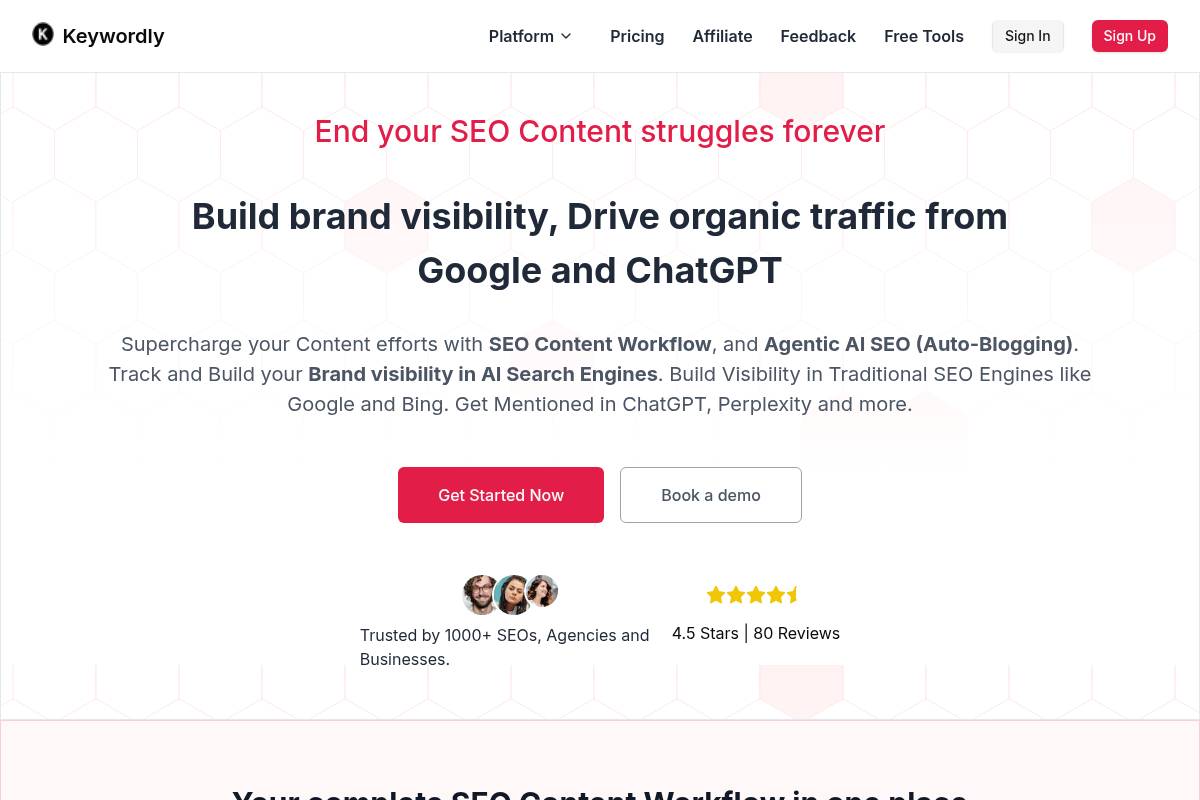
Keywordly automates keyword research, clustering, content creation, optimization, and auditing from a single dashboard. This integrated approach helps bloggers build sustainable organic growth without juggling multiple tools.
Key Features
- Comprehensive keyword discovery: Pull high-impact keywords from Google’s “People Also Ask,” Reddit, Quora, Amazon, plus long-tail and YouTube keyword extraction.
- Intelligent clustering: NLP-driven clustering prevents keyword cannibalization by organizing keywords into strategic topical clusters with live SERP data.
- SEO-rich content creation: AI-powered writer generates SEO-optimized, richly structured content with guided SERP analysis built in.
- Seamless publishing: Direct integrations with Ghost and WordPress.
- AI visibility tracking: Monitor content presence across AI platforms alongside traditional search rankings.
Best For
SEO professionals, agencies, and bloggers who want one platform to handle research, writing, and optimization. Starting at roughly $39/month with a 7-day free trial.
Pros and Cons
- Pro: Combines research, clustering, writing, and optimization in one workflow.
- Pro: Built-in focus on AI search visibility keeps your strategy future-proof.
- Pro: More affordable than Ahrefs or Semrush.
- Con: Lower-tier plans have minor feature limitations.
- Con: As a newer platform, less long-term review history than legacy tools.
Rating: 9.6/10
2. Clearscope: Best for Enterprise Content Grading
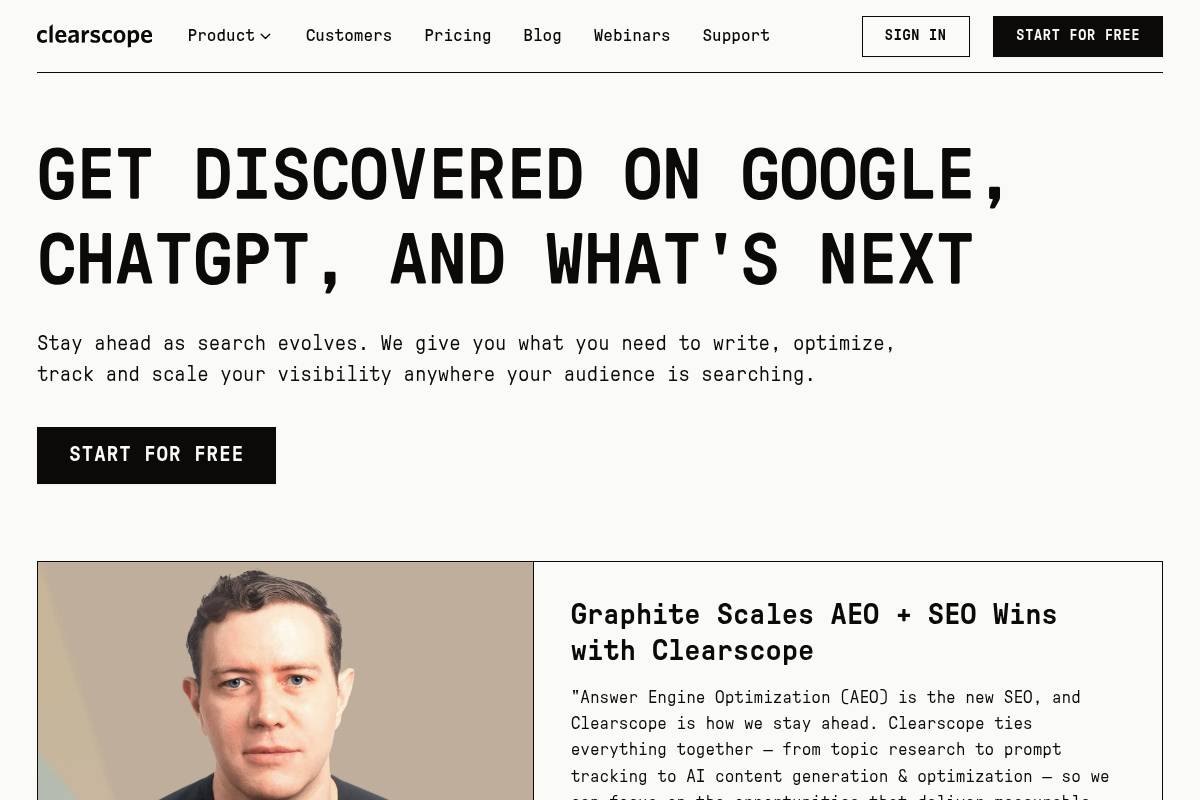
Clearscope grades content drafts by comparing them against terms and topics used by top-ranking pages. This makes it valuable for teams focused on comprehensive topic coverage.
Key Features
- Content Grading: NLP analyzes top-ranking pages and scores content A+ through F based on topic coverage.
- Content Inventory: Topic Explorations and inventory monitoring track performance of published pages over time.
- AI Visibility Tracking: Tracks presence on ChatGPT and Gemini.
- Editorial Integrations: Google Docs and WordPress integrations streamline workflows.
Best For
Mid-market in-house SEO teams and agencies that publish consistently. Pricing starts at $129/month for Essentials, $399/month for Business.
Pros and Cons
- Pro: Writer-friendly content grading and clean workflow.
- Pro: Transparent, published pricing tiers.
- Con: May feel overbuilt for solo writers.
- Con: AI visibility tracking covers only ChatGPT and Gemini.
Rating: 8.9/10
3. NeuronWriter: Best for Budget-Friendly Semantic SEO
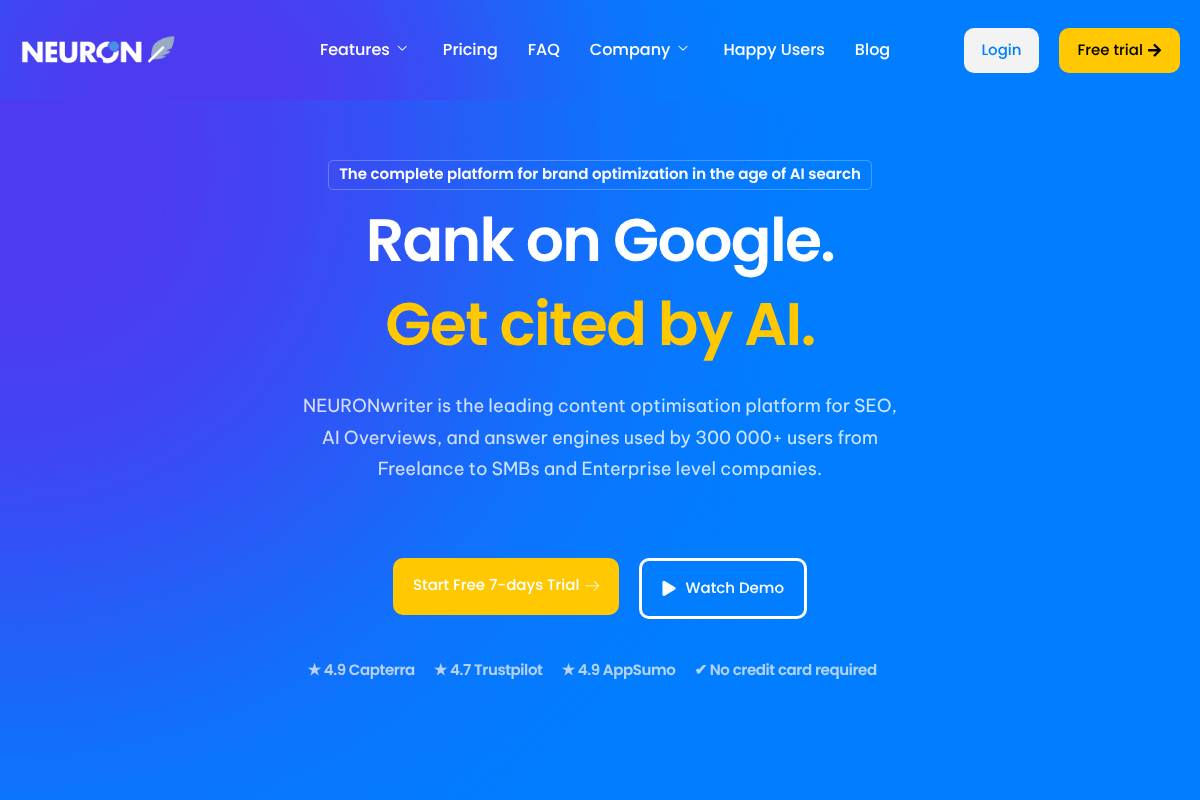
NeuronWriter analyzes competitor pages and scores drafts using natural language processing. It delivers solid semantic SEO capabilities at a low price point.
Key Features
- Content Score and NLP analysis: Scores content against top-ranking pages using semantic and NLP-based term analysis.
- SERP analysis: Provides keyword recommendations, AI writing editor, and internal linking suggestions.
- Content planning tools: Outlines, briefs, and AI-assisted writing in one workspace.
- Integrations: Google Search Console, WordPress, and Shopify support.
Best For
Business owners and bloggers just starting out. Five-tier pricing ranges from Bronze at $23/month to Diamond at $117/month, scaling with your blog growth.
Pros and Cons
- Pro: Lowest entry price among full-featured suites.
- Pro: Free tier lets you test before committing.
- Con: UI learning curve for first-time users.
- Con: Leaner support resources than larger competitors.
Rating: 8.7/10
4. Scalenut: Best for Solo Bloggers and Small Teams

Scalenut bundles keyword planning, NLP-powered topic research, AI writing, and content optimization into a single application.
Key Features
- Keyword planning: Comprehensive Keyword Planner identifies relevant topics using NLP-powered research.
- Content optimizer: SERP analysis and NLP-driven suggestions provide feedback on your content.
- Copywriting formulas: Built-in frameworks like AIDA and PAS for ads, blogs, and sales copy.
- AI visibility features: GEO content tools and Perplexity-focused visibility tracking on higher tiers.
Best For
Solo operators and bloggers testing core AI writing and optimization features. Entry-level pricing typically ranges from $39 to $59/month.
Pros and Cons
- Pro: Cost-effective compared to premium alternatives.
- Pro: Bundled copywriting frameworks extend usefulness beyond SEO articles.
- Con: Essential plan could use more features; next tier is a significant price jump.
- Con: AI-generated drafts sometimes need refinement for tone and flow.
Rating: 8.5/10
5. MarketMuse: Best for Topic Authority and Content Strategy
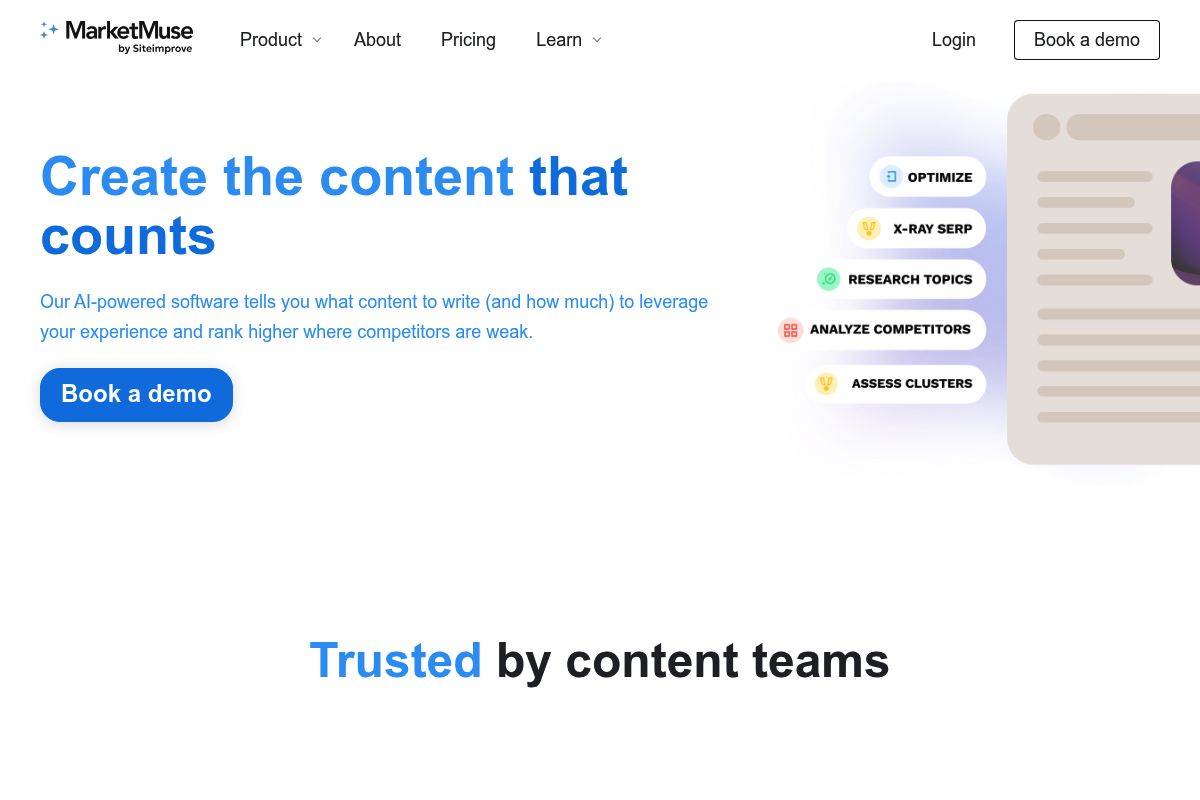
MarketMuse scans your existing content, flags topic gaps, and scores drafts against ranking pages to enhance topic authority. It’s built for organizations treating content as a long-term asset.
Key Features
- Topic Modeling: Automated site audits, content inventory, SERP analysis, and real-time optimization editor with Content Score.
- SERP X-Ray and Heatmap: Deep insights into competitor strategies.
- Strategy Planning: Domain-level content inventory for teams viewing content as a long-term investment.
Best For
Organizations with large content libraries or ambitious organic growth goals. Pricing previously started at $99/month per feature, but most pricing now requires custom quotes post-2024 acquisition.
Pros and Cons
- Pro: Robust keyword analysis and content optimization for improved rankings.
- Pro: Strong for refreshing and expanding existing content libraries at scale.
- Con: Extensive features can overwhelm new users.
- Con: Significantly higher pricing, difficult for freelancers to justify.
Rating: 8.3/10
6. Jasper AI: Best for Brand-Voice AI Drafting
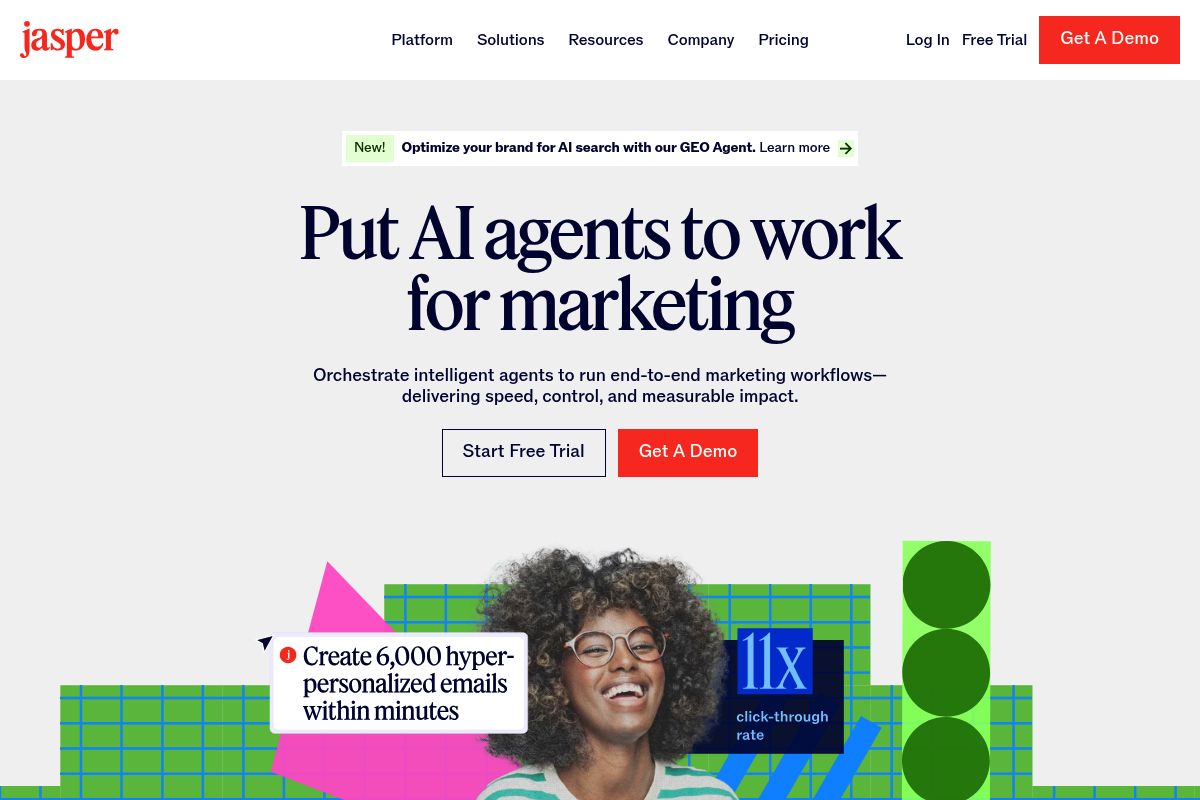
Jasper AI focuses on maintaining your brand voice across everything you write. For teams managing multiple clients or a consistent brand identity, this matters significantly.
Key Features
- Canvas Editor: Full access to comprehensive Canvas for content creation and Essential Apps for everyday marketing tasks.
- Brand Voice Customization: Multiple Brand Voices, Knowledge assets, and Audiences ensure all output stays on-brand.
- Jasper Agents: Advanced tools manage tasks like research and personalization. Higher tiers unlock a no-code AI App Builder.
- Browser Extension: Chrome extension integrates with Gmail, WordPress, and LinkedIn.
Best For
Freelancers or solo marketers producing daily content for one or two specific brands. Pro plan costs $59/month when billed yearly, or $69 monthly.
Pros and Cons
- Pro: Strong brand-voice consistency across large content volumes.
- Pro: Facilitates fast first-draft generation.
- Con: Effective SEO content often requires pairing with a separate optimization tool like Surfer, increasing total cost.
- Con: Alternatives like ChatGPT and Claude now offer similar capabilities at potentially lower price points.
Rating: 8.2/10
7. Writesonic: Best for Bundled AI Writing Plus GEO Tracking
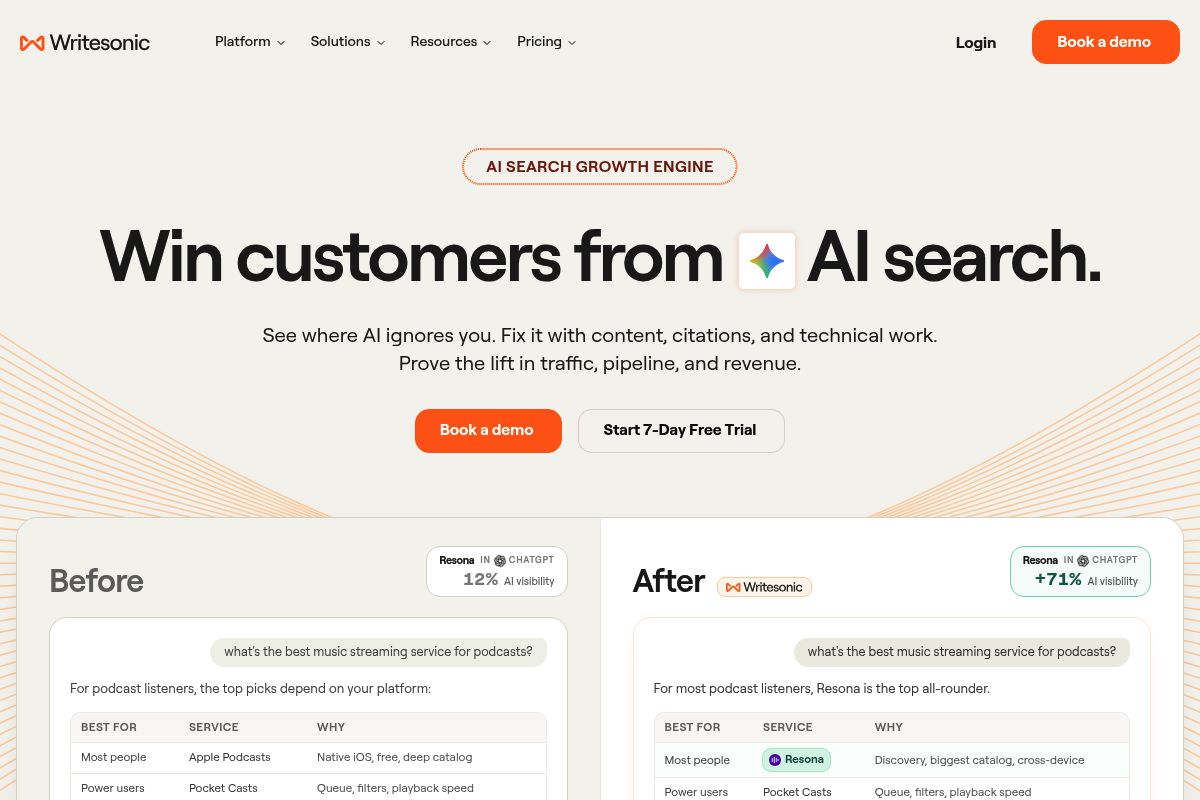
Writesonic combines advanced AI content creation with tools for monitoring how AI crawlers interact with your site. It’s one of the few platforms bundling both AI writing and AI visibility tracking.
Key Features
- AI Article Writer: Generates long-form, SEO-optimized content with keyword research, SEO checker, and internal linking.
- SEO AI Agent: Automates SEO audits using live data from Ahrefs and Google Search Console.
- GEO Tracking: Visibility tracking across 10 different AI platforms, including ChatGPT, Perplexity, and Google AI.
- AI Traffic Analytics: Insights into how frequently AI crawlers access your website.
Best For
Solo marketers, founders, and small teams wanting to accelerate first drafts while monitoring both SEO and AI visibility. Plans begin at approximately $49/month, or $39 monthly when billed annually.
Pros and Cons
- Pro: Produces high-quality, SEO-friendly long-form articles needing minimal editing.
- Pro: Stands out bundling AI writing with dedicated AI-search visibility tracking.
- Con: Users may experience editing burden on long-form content.
- Con: AI search visibility tracking starts with ChatGPT-only coverage on Starter tier.
Rating: 8.1/10
8. INK: Best for Real-Time SEO Scoring for Solo Writers
INK integrates a writing editor with real-time SEO and readability scoring, providing instant feedback as you type.
Key Features
- SEO Optimizer: Real-time SEO score based on your keyphrase with clear task cards for improvement.
- Readability checks: Real-time scoring on writing quality within the optimization workflow.
- Content refresh support: Refresh existing content by importing via paste or URL.
- AI writing assistant: Integrated AI offers feedback on keyword usage, content structure, sentiment, and readability.
Best For
Solo bloggers, freelance writers, and small marketing teams. Professional plan at $39/month with 5-day free trial, Enterprise plan at $99/month.
Pros and Cons
- Pro: Real-time scoring and clear task flow help SEO beginners improve immediately.
- Pro: Lower price point makes it accessible for individual creators.
- Con: Keyphrase-first design can feel restrictive for broader topics.
- Con: Limited customer support hours and lack of real-time collaboration features.
Rating: 8.0/10
9. Originality.ai: Best for AI Detection and Content Integrity
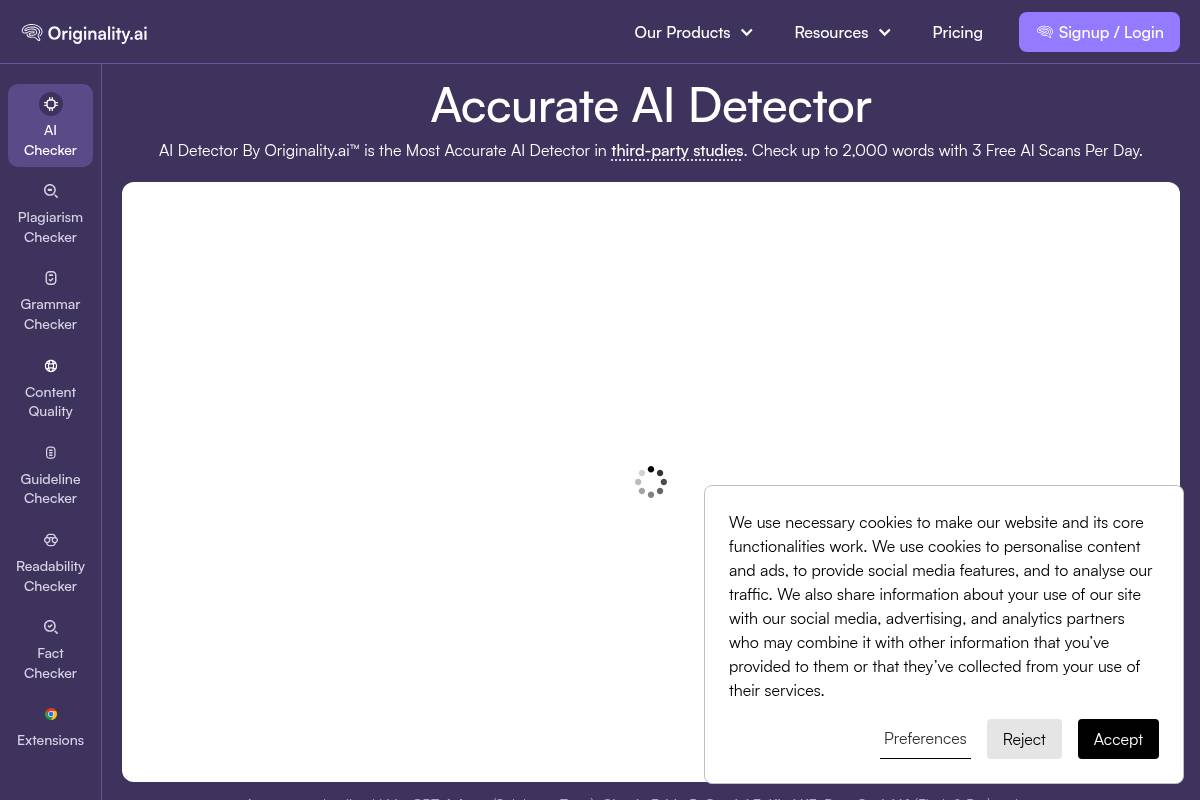
Originality.ai identifies AI-generated text and checks for plagiarism. It’s a specialized tool for maintaining editorial standards when working with multiple writers or relying on AI drafting.
Key Features
- AI content detection: Identifies AI-generated text from GPT-4, Claude, and ChatGPT.
- Plagiarism and fact-checking: Fact-checking aid and readability checker for search engine visibility.
- Team management: Add multiple team members, track activity, and share reports.
- API access: AI Content Detector API for integration with existing content processes.
Best For
Content agencies managing freelancer submissions and publishers verifying article originality. Pro plan at $14.95/month ($12.95 annually) for 2,000 monthly credits, Enterprise at $179/month for 15,000 credits with API access.
Pros and Cons
- Pro: Integrated fact-checker flags potentially inaccurate claims.
- Pro: Pay-as-you-go option is economical for occasional solo use.
- Con: Real-world false positive rate is roughly one in 20 human texts.
- Con: Focuses on content verification, not keyword research or comprehensive workflows.
Rating: 7.9/10
10. Ahrefs: Best for Backlink and Keyword Data Depth
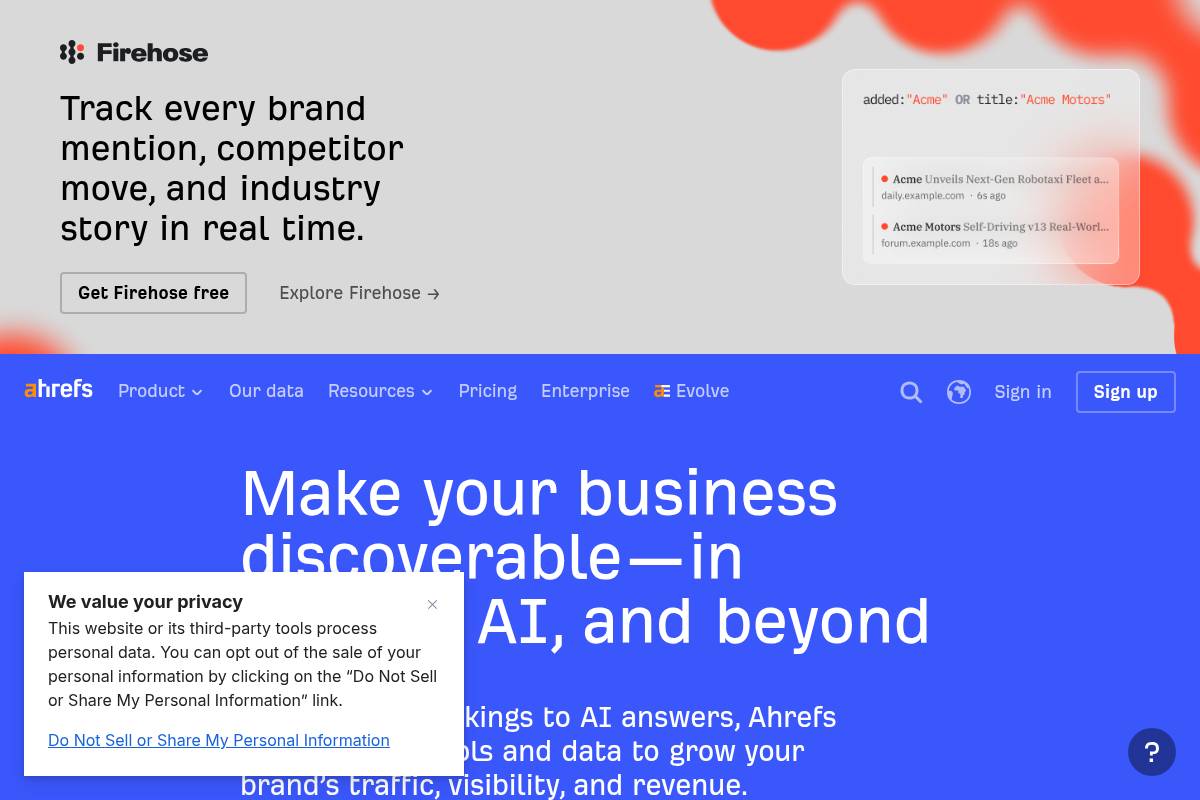
Ahrefs is the go-to for backlink analysis and competitive research. Its extensive backlink index, vast keyword database, and robust site audit tools make it reliable for competitive analysis and content strategy.
Key Features
- Keyword and SERP data: Massive keyword database encompassing billions of keywords with historical trend data.
- Site audits and rank tracking: Integrates keyword research, competitor analysis, site audits, and rank tracking in one dashboard.
- AI visibility add-ons: Optional AI Visibility Index covers AI Overviews, AI Mode, ChatGPT, Perplexity, Copilot, and Gemini.
- Content Explorer: Powerful link-prospecting capabilities available from Standard tier and above.
Best For
Agencies and bloggers needing deep backlink and competitor data. Pricing: Starter at $29/month, Lite at $129/month, Standard at $249/month.
Pros and Cons
- Pro: Industry-leading backlink index renowned for accuracy and extensive historical data.
- Pro: $29 Starter plan significantly lowered entry price for advanced SEO tools.
- Con: Higher pricing, particularly for teams needing to scale beyond entry tier.
- Con: Credits on Lite and Starter plans deplete faster than expected, prompting upgrades.
Rating: 7.8/10
Full Comparison: Best SEO Content Tools for Bloggers in 2026
| Tool | AI Writing | Content Optimization | AI Search Tracking | Keyword Research | Starting Price |
|---|---|---|---|---|---|
| Keywordly | ✓ | ✓ | ✓ | ✓ | ~$39/mo |
| Clearscope | ✗ | ✓ | ✓ | ✗ | $129/mo |
| NeuronWriter | ✓ | ✓ | ✗ | ✓ | $23/mo |
| Scalenut | ✓ | ✓ | ✓ | ✓ | ~$39/mo |
| MarketMuse | ✗ | ✓ | ✗ | ✓ | ~$99/mo |
| Jasper AI | ✓ | ✗ | ✗ | ✗ | $59/mo |
| Writesonic | ✓ | ✓ | ✓ | ✓ | $49/mo |
| INK | ✓ | ✓ | ✗ | ✗ | $39/mo |
| Originality.ai | ✗ | ✗ | ✗ | ✗ | $14.95/mo |
| Ahrefs | ✗ | ✗ | ✓ | ✓ | $29/mo |
How to Choose the Right SEO Content Tool
By Team Size
Solo bloggers typically do best with a single, affordable platform like NeuronWriter, INK, or Keywordly’s entry tier. Small teams benefit from integrated workflow tools like Keywordly or Scalenut that support collaboration. Larger in-house SEO teams may need MarketMuse or Ahrefs for deeper strategic and backlink data.
By Budget
Under $30/month: Ahrefs Starter or NeuronWriter’s Bronze tier. $30-$60/month: Keywordly, Scalenut, and Writesonic offer the best combination of writing, optimization, and AI visibility tracking. Above $100/month: Clearscope and MarketMuse for teams with dedicated content budgets and multiple writers.
By Use Case
For combining research and writing in one place, Keywordly is strongest. For enterprise-grade content grading, Clearscope excels. For AI content verification before publishing, Originality.ai fills a gap. For raw backlink or competitor data, Ahrefs is reliable. For additional buying guidance, see 24 best SEO tools I’m using in 2026 (free + paid).
What Is SEO Content Optimization Software
SEO content optimization software analyzes top-ranking pages for a target keyword and recommends terms, structure, and length so new or existing articles can compete. Most platforms combine keyword and SERP research, in-editor scoring or grading, and increasingly, AI search visibility tracking across engines like ChatGPT and Perplexity. For a more detailed primer, see The Complete SEO & AI SEO Course for 2026 (Full Beginner’s ….
| Metric | What It Tracks | Why It Matters |
|---|---|---|
| Content Score / Grade | How well a draft covers ranking-page terms | Predicts topical completeness relative to competitors |
| SERP Analysis | Structure and content of top-ranking pages | Reveals what search engines currently reward |
| AI Visibility Tracking | Presence in AI-generated answers | Growing share of discovery happens outside classic search results |
| Keyword Clustering | Groups of related search terms | Prevents keyword cannibalization across a blog |
Conclusion
Keywordly stands out as the top pick for bloggers in 2026 by merging keyword research, clustering, AI writing, optimization, and AI search visibility tracking into a single, affordable workflow. Bloggers needing deeper enterprise-grade grading should consider Clearscope, budget-conscious writers may prefer NeuronWriter or INK, and teams needing raw backlink depth should keep Ahrefs in their stack. Whichever combination you choose, prioritize tools built around both traditional search rankings and the rapidly growing importance of AI-driven discovery.
Frequently Asked Questions
What are the best SEO content tools for bloggers in 2026?
The strongest options include Keywordly, Clearscope, NeuronWriter, and Scalenut, each offering keyword research, content optimization, and AI writing suited to different budgets and team sizes.
Which SEO content tool is best for beginners?
INK and NeuronWriter offer straightforward, low-cost entry points with real-time scoring, while Keywordly’s guided workflow helps beginners move from keyword research to publication without separate tools.
Do I need a separate tool for AI search visibility tracking?
Not necessarily. Keywordly, Writesonic, and Clearscope build AI visibility tracking directly into their workflows, so you can monitor both Google rankings and AI presence from one dashboard.
Are AI SEO tools for bloggers worth the cost?
For most active bloggers publishing regularly, yes. Tools combining research and optimization typically save several hours per article by replacing manual competitor research with structured briefs and scoring.
What is the cheapest SEO content optimization software?
NeuronWriter’s Bronze plan and Originality.ai’s pay-as-you-go option are among the most affordable entry points, while Keywordly and INK also offer sub-$40/month plans with broader feature sets.
Can these tools help with 2026 content optimization requirements for AI search?
Yes. Most platforms have added semantic term analysis and AI-engine tracking because today’s buyers increasingly expect visibility data for ChatGPT, Perplexity, and Google AI Overviews, not just traditional rankings.
Is Ahrefs still relevant for bloggers?
Ahrefs remains valuable for backlink analysis and large keyword databases, but its higher-tier pricing can be overkill for bloggers who mainly need content optimization rather than deep competitor link data.
How does SEO workflow automation change the way bloggers create content?
SEO workflow automation reduces manual steps between keyword research and publishing by auto-generating briefs, clustering related terms, and flagging optimization gaps, letting bloggers focus more on editing and strategy rather than repetitive research tasks.
Methodology: Rankings reflect hands-on review of each platform’s public features, pricing pages, and verified third-party sources current as of September 2026. Pricing and feature availability may change; always confirm current details on each vendor’s official website before purchasing.