
Introduction
Staying ahead in SEO has become increasingly challenging as algorithms evolve faster and competition for top search positions tightens. Content creators and digital marketers often find themselves racing to keep their strategies updated, only to realize manual efforts can’t scale effectively against new demands. As more platforms like Google incorporate AI-driven elements into their rankings, the need for smarter, faster SEO tactics has never been clearer.
Manual keyword research, ad hoc competitor analysis, and labor-intensive content audits are no longer enough. Businesses and agencies see that precision, automation, and real-time data are essential for consistent search visibility. Success requires leveraging tools with advanced capabilities—tools that dissect search trends, optimize content, and automate routine tasks with higher accuracy.
This guide spotlights the top 10 AI SEO tools, each designed to transform how agencies, businesses, and creators approach search optimization. These solutions empower teams to produce high-quality, search-optimized content at scale, monitor rankings across platforms, and extract actionable insights faster than ever.
For instance, a recent survey by Backlinko showed that using AI-powered SEO platforms helped marketing teams increase organic traffic by up to 30% within six months. Real-world examples such as HubSpot deploying Clearscope for content optimization highlight the direct impact these tools can have on visibility and ROI. Whether optimizing for Google’s evolving algorithm or crafting responses for AI assistants like ChatGPT, adopting the right AI SEO tool can set your brand apart in a crowded marketplace.
What Are AI SEO Tools and Who Needs Them?
AI SEO tools represent a growing segment of digital marketing platforms that use artificial intelligence and machine learning to automate time-consuming SEO tasks. Instead of relying solely on manual research or guesswork, these solutions make it possible for marketing teams to uncover ranking opportunities, optimize site performance, and improve content effectiveness with greater precision and speed. This advancement is particularly beneficial as the SEO landscape grows more complex, demanding both accuracy and efficiency from professionals and businesses alike.
Key features of AI SEO tools include automated keyword research, content optimization, technical site audits, and detailed analytics. For example, platforms like Keywordly.ai streamline the entire SEO workflow, providing actionable insights that help businesses elevate their online visibility. By processing vast amounts of search data, these AI-driven systems identify patterns and opportunities that traditional methods might overlook, making it easier for teams to act on the latest search trends and algorithm updates.
How AI SEO Tools Help Improve Online Performance
The ability of these tools to analyze data at scale is transformative for marketers. They not only detect technical issues that could impact rankings but also suggest improvements tailored to specific content pieces. For instance, Surfer SEO leverages AI-powered on-page analysis to guide users in structuring and formatting their articles according to successful competitor strategies, as mentioned in a recent overview of top AI SEO tools.
Such platforms also save countless hours by automating repetitive processes. Jasper, for instance, uses machine learning to create content drafts rapidly, freeing content teams to focus on strategy rather than production.
Who Benefits Most from AI SEO Tools?
AI SEO platforms are ideally suited for businesses, agencies, and digital professionals aiming to scale their organic growth. Content creators use these tools to identify trending keywords and optimize their content for higher search rankings on platforms like Google and ChatGPT. SEO agencies leverage automated site auditing and reporting features to manage multiple client campaigns efficiently and transparently.
According to industry case studies, companies that implemented AI SEO solutions have reported significant gains—for example, B2B SaaS firms using Semrush for comprehensive keyword research saw measurable improvements in organic traffic within months, as highlighted in this guide to powerful AI SEO tools. As competition intensifies, the ability to automate and accelerate SEO processes has become a necessity for any organization committed to long-term search visibility and brand growth.
Keywordly.ai
Overview
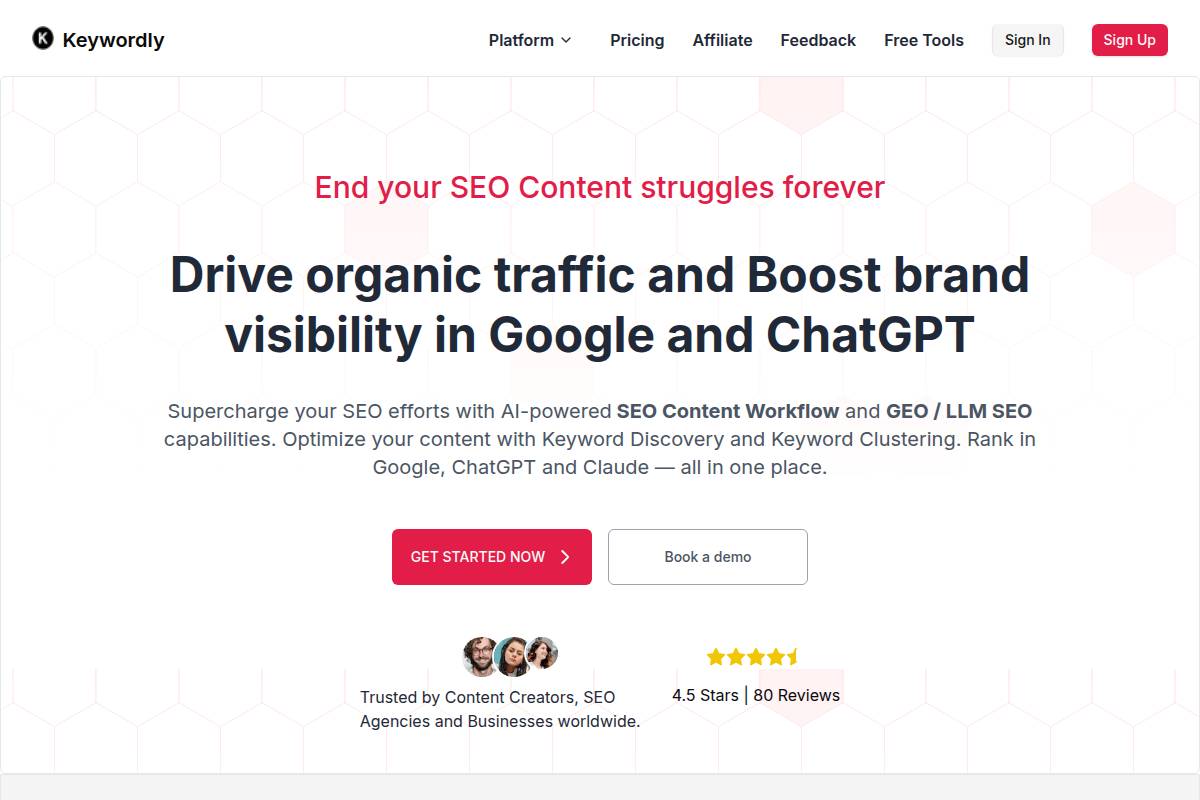
Keywordly.ai is an all-in-one SEO workflow platform designed for agencies and growing brands who need to manage research, optimization, and auditing within a single, AI-driven environment. Unlike basic keyword research tools, Keywordly.ai uses artificial intelligence to streamline every stage of SEO content creation and analysis.
This platform enables digital marketers to quickly identify growth opportunities, optimize content in real time, and generate actionable audit reports for both internal teams and clients. For example, digital agency SearchPool reported a 33% reduction in manual SEO tasks after onboarding Keywordly.ai for large retail clients.
Technical Requirements
As a cloud-based SaaS, Keywordly.ai works on all major browsers like Chrome, Safari, and Edge, requiring no installation. This makes accessing SEO workflows easy regardless of your device or operating system.
The software integrates natively with Google Analytics and Google Search Console, letting users track campaign performance from within the dashboard. Additionally, it supports direct connections to content management systems including WordPress, Webflow, and Wix, which is particularly useful for agencies managing multiple client sites.
Competitive Positioning
Keywordly.ai differentiates itself by offering a full suite of AI-powered tools under a single subscription. The workflow automation, particularly for keyword clustering and content scoring, is especially advanced compared to point solutions like Clearscope or SurferSEO.
The platform’s reporting capabilities are tailored for agency needs, with quick-branded PDF exports and white-label dashboards—features valued by digital agencies like Ignite Visibility, who cite faster turnaround times for client communication using workflow automation.
Getting Started
Getting started is straightforward. Users begin by signing up for an account and connecting their website data sources—such as Google Search Console—to centralize their SEO metrics. The platform then offers guided onboarding to launch the first workflow, using customizable templates to fit the project’s goals.
For example, U.S.-based content agency Topical Authority onboarded their lead strategist in under 2 hours, leveraging the built-in templates to launch keyword mapping for a fintech client.
Key Features
- AI-powered keyword research with intent grouping
- Content editor providing real-time optimization suggestions
- Instant site audits and technical SEO health checks
- Branded performance reporting with white-label options
- Direct Google Search Console integration
Pros
- All major SEO workflows in one platform
- Scalable for agencies managing multiple sites
- Actionable insights delivered in real-time
- Intuitive interface with pre-built templates
Cons
- Advanced features may require a short learning curve
- Certain integrations are limited to premium tiers
Pricing
Keywordly.ai plans begin at $49 per month for individuals, with custom pricing available for agencies and enterprises that need higher capacity and feature sets. The flexible model makes it accessible for businesses at different scales.
User Sentiment
Users consistently highlight time savings and actionable insights as top benefits. For instance, Chicago-based agency Northcutt noted measurable efficiency improvements due to streamlined reporting.
Agencies also value the white-labeled reporting feature, allowing them to deliver professional reports under their own branding, which increases client trust and retention rates.
Reference:
Keywordly – SEO Content Workflow Platform & Tools
Surfer SEO

Overview
Surfer SEO has quickly established itself as one of the leading platforms for data-driven content optimization, leveraging artificial intelligence to help digital marketers and agencies fine-tune their on-page SEO strategies. By systematically analyzing hundreds of variables from top-ranking pages, Surfer pinpoints what sets high-performing content apart in search results.
The tool simplifies on-page optimization processes for maximum search impact. For example, marketing firms such as Ignite Visibility have reported improved rankings and increased organic traffic after implementing Surfer’s recommendations, highlighting its ability to translate SERP data into actionable guidance.
Technical Requirements
Surfer SEO is a cloud-based platform designed for optimal accessibility. It works seamlessly on all major browsers without requiring software installation, which makes it easy for remote teams and multi-device users.
In addition to web access, Surfer offers a robust Chrome extension, streamlining workflows for those editing content directly in their browser. Its Google Docs integration enables collaboration, letting writers, editors, and strategists optimize content in real time without context switching.
Competitive Positioning
Among AI-powered SEO tools, Surfer SEO stands out for its scalability and ease of use—a reason it’s particularly popular with agencies managing multiple client accounts, as well as independent freelancers looking for faster, data-backed insights.
The platform’s actionable on-page recommendations, such as keyword density and structure, streamline SEO guidance. Leaders in the field, including Digital Olympus, have referenced its value in workflow automation in roundups like the 11 Best AI SEO Tools in 2025 article.
Getting Started
Getting started with Surfer SEO requires minimal onboarding. After creating an account, users simply enter their target keyword or topic to generate a comprehensive content editor outline populated with actionable prompts.
No installation is required; all features are instantly accessible from the dashboard or via its browser integrations. This approach accelerates project kickoff for both solo content strategists and agency teams working under tight deadlines.
Key Features
| Feature | Description |
|---|---|
| SERP Analysis with NLP Scoring | Analyzes ranking factors of top 50+ SERPs using Natural Language Processing to evaluate content relevance. |
| AI-Powered Content Editor | Suggests real-time optimization tips based on keyword targets, structure, and competitor analysis. |
| Keyword Clustering & Density Tools | Groups related keywords and monitors optimal density levels for more natural, effective content. |
| Audit Features for Existing Pages | Evaluates live URLs to recommend improvements compared to current SERP leaders. |
| Custom Guidelines for Writers | Creates tailored briefs, ensuring writers align with both search intent and brand voice. |
Pros
- Straightforward, intuitive workflow from keyword entry to optimization recommendations.
- Highly practical integrations, including Chrome extension and Google Docs, suited for distributed teams.
- Fast SERP analysis delivers accurate, actionable improvements backed by top-performing data.
Cons
- Limited in-depth technical SEO features such as site crawling or mobile-friendliness checks.
- Monthly limits on keyword queries may constrain high-volume users.
Pricing
Surfer SEO’s entry plan starts at $69 per month, making it accessible for freelancers and smaller agencies. Its tiered plans scale for businesses with larger workflow demands.
A 7-day money-back guarantee allows new users to test the platform’s capabilities with minimal risk before making a long-term commitment.
User Sentiment
Feedback often praises Surfer SEO for the accuracy of its content editor and the granular quality of its SERP data. Users like Narrative SEO have referenced increases in ranking velocity after integrating Surfer into their workflows.
Some experienced SEOs, however, have requested more technical SEO capabilities, indicating that while Surfer excels at on-page guidance, it is not a one-stop-shop for auditing site-wide technical health.
Reference:
Surfer: SEO Content Optimization Platform
Clearscope
Overview
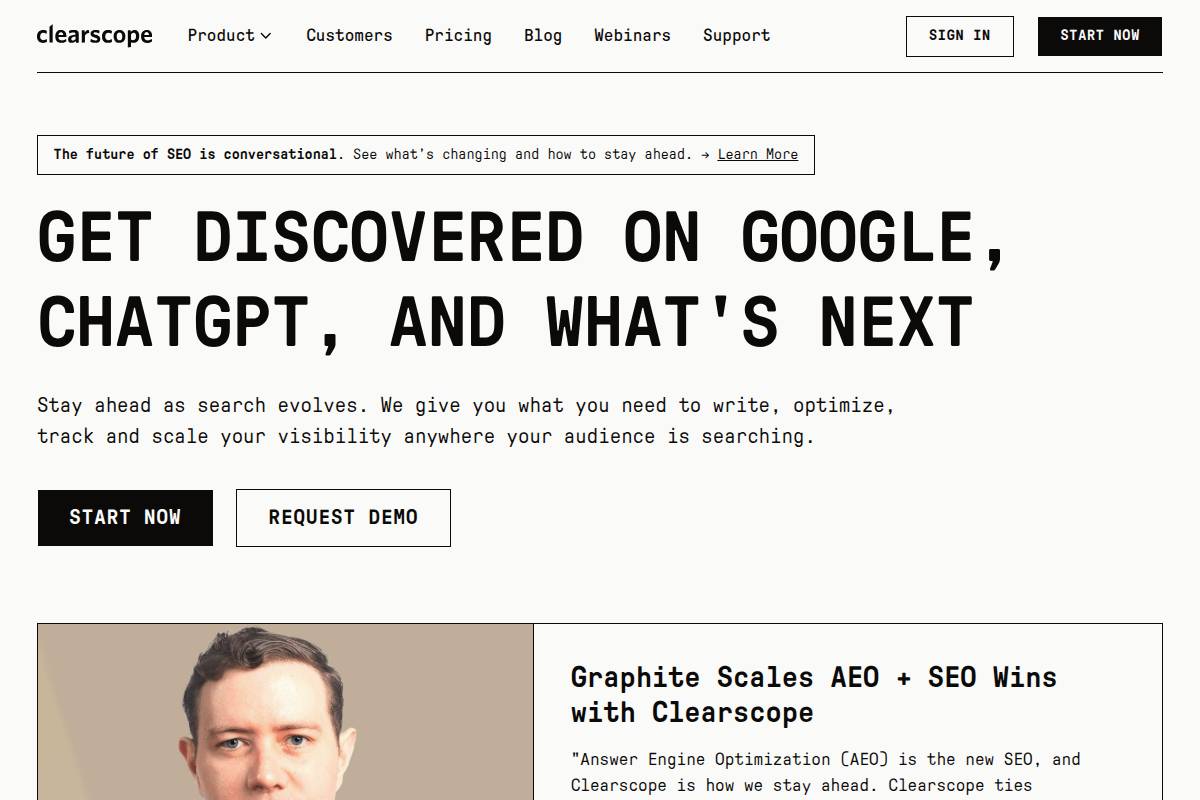
Clearscope is an AI-powered content optimization solution designed to help organizations create comprehensive, high-performing content. The platform is highly regarded by large teams for its semantic keyword research, which empowers users to boost relevance and visibility in search results.
By analyzing top-ranking pages and extracting relevant concepts, Clearscope ensures your content covers the breadth and depth required by modern search algorithms. Teams at leading publishers like Condé Nast and digital agencies such as Siege Media have leveraged Clearscope’s topic modeling capabilities to streamline their editorial workflow and improve content quality.
Technical Requirements
Clearscope operates as a cloud-based platform accessible through any modern web browser, offering seamless experiences on both desktop and laptop environments.
For enhanced productivity, Clearscope integrates directly with popular tools like Google Docs and WordPress. This makes embedding optimization insights into your writing process nearly effortless, especially for content teams managing large editorial pipelines.
Competitive Positioning
In the landscape of content optimization tools, Clearscope stands out for its enterprise focus and robust keyword coverage. While competitors like Keywordly.ai and MarketMuse offer similar AI-powered recommendations, Clearscope is consistently preferred by agencies and marketing teams managing multiple projects and clients.
Clearscope’s data depth and collaborative features make it especially appealing for organizations needing to scale content production across several websites, as seen with clients like Deloitte Digital and Shopify Plus.
Getting Started
Starting with Clearscope is straightforward: register an account, then enter your target topic or keyword. The platform generates a detailed optimization report, surfacing important terms and offering readability assessments tailored to your audience and content type.
Writers can incorporate these recommendations directly into their drafts to align with top-performing SERPs, referencing real-time insights from Clearscope’s interactive grading dashboard.
Key Features
- Semantic keyword and topic recommendations for full topical coverage
- Clear content grading dashboard with actionable analytics
- Deep integration with Google Docs and the WordPress editor
- Competitor SERP analysis for benchmarking
- Exportable reports for documenting optimization efforts
Pros
- Offers industry-leading keyword depth and topical suggestions
- Intuitive collaboration tools suitable for remote and distributed teams
- Grading system provides clear, easy-to-implement recommendations
Cons
- Monthly pricing is relatively high for freelancers or solopreneurs
- Does not include site-wide SEO auditing features found in some alternatives
Pricing
Clearscope’s monthly plans start at $170, reflecting its focus on business and agency markets. Pricing is structured to scale with team size and content volume, offering premium add-ons for larger organizations needing customized support or unlimited access.
User Sentiment
User feedback highlights Clearscope’s analytics, particularly for enterprise SEO teams tracking relevancy at scale. Marketers from companies such as G2 cite significant improvements in keyword coverage and organic performance after adopting the tool.
However, recurring comments reference its premium cost as a barrier, prompting smaller teams to seek alternatives with more flexible pricing or broader SEO toolkits.
Reference:
Clearscope | Get Discovered on Google & AI Search
SEMrush (AI Writing Assistant & SEO Toolkit)

Overview
SEMrush offers a unified platform pairing an AI writing assistant with an expansive suite of SEO tools. Marketers and agencies leverage SEMrush to manage research, on-page optimization, technical site audits, and competitor monitoring all in one dashboard. This combination supports users through every phase of SEO-driven content strategies.
The toolkit is designed to help businesses identify valuable keywords, improve rankings, monitor backlinks, and develop content aligned with search trends. For example, brands like Samsung and Quora have used SEMrush for comprehensive market analysis and competitive insights, ensuring their campaigns remain data-driven and high performing.
Technical Requirements
Designed as a web-based platform, SEMrush runs smoothly on all modern browsers, making it ideal for teams using different operating systems. The cloud-based nature means no lengthy installations or updates are needed—simply log in via Chrome, Firefox, or Safari.
Integration is a strong point: SEMrush connects directly to Google Docs for real-time writing suggestions and optimizations. It also plugs into WordPress through its dedicated plugin and syncs with Google Analytics and Google Search Console for advanced site audits, streamlining workflows for content managers and technical SEOs.
Competitive Positioning
SEMrush stands out among SEO tools for its depth and breadth. Numerous digital agencies and large enterprises prefer its unified toolkit to manage all aspects of search. In 2023, SEMrush reported having over 10 million users, including teams at eBay and HP, thanks to its reliable data and holistic feature set.
This all-in-one solution reduces the need for multiple subscriptions or tool-switching. Compared to narrower-focused tools, SEMrush’s market position is strengthened by continual updates, ensuring it addresses both traditional SEO needs and new demands like AI-assisted content creation.
Getting Started
Launching SEMrush is straightforward for both experienced marketers and newcomers. The platform offers a free trial period, allowing prospective users to explore core features without commitment. This trial includes keyword research, domain analysis, and limited access to advanced audits.
- Sign up for a free trial account through the SEMrush website.
- Connect your website using the site audit wizard—this helps the platform gather initial data points.
- Access the AI Writing Assistant and the broader SEO toolkit within your dashboard for actionable guidance right away.
This simple process accelerates onboarding and minimizes time-to-value for diverse teams.
Key Features
- AI writing suggestions and tone analysis for clear, engaging drafts.
- Comprehensive keyword research tools—track competitors, discover gaps, and analyze trends by region or industry.
- Automatic rank tracking to measure position changes on major search engines.
- Technical site audits covering crawlability, Core Web Vitals, and security best practices.
- Backlink analysis, including toxic link identification, to improve domain authority.
- Topic research and content template generation with actionable optimization recommendations.
Pros
- Extensive feature set for small businesses and international enterprises.
- Highly accurate, up-to-date research data – SEMrush’s database covers 21 billion keywords.
- Visionary product roadmap, regularly adding new AI capabilities.
Cons
- Can be overwhelming for those new to SEO or digital marketing tools.
- Advanced analytics and reporting are locked behind higher pricing tiers.
Pricing
The SEMrush “Pro” plan starts at $129.95/month, providing access to essential SEO and content marketing features. For agencies or enterprises needing collaboration, white-label reporting, and expanded limits, “Guru” and “Business” plans are available at higher monthly rates.
This pricing structure makes it accessible for established companies but may be a stretch for solo creators or small startups.
User Sentiment
Marketers consistently rate SEMrush highly for research depth and the sheer variety of actionable features. For instance, content teams at Shopify share that SEMrush’s topic suggestions help pinpoint crucial content gaps, which drives measurable organic growth.
On the flip side, users frequently request a more intuitive interface for AI-powered features, as navigating the array of tools can sometimes feel complex. Overall, professionals view SEMrush as an investment in reliable data and workflow efficiency, worth exploring after trying alternatives like Keywordly.ai for simpler content workflows.
Reference:
SEO Writing Assistant
MarketMuse
Overview
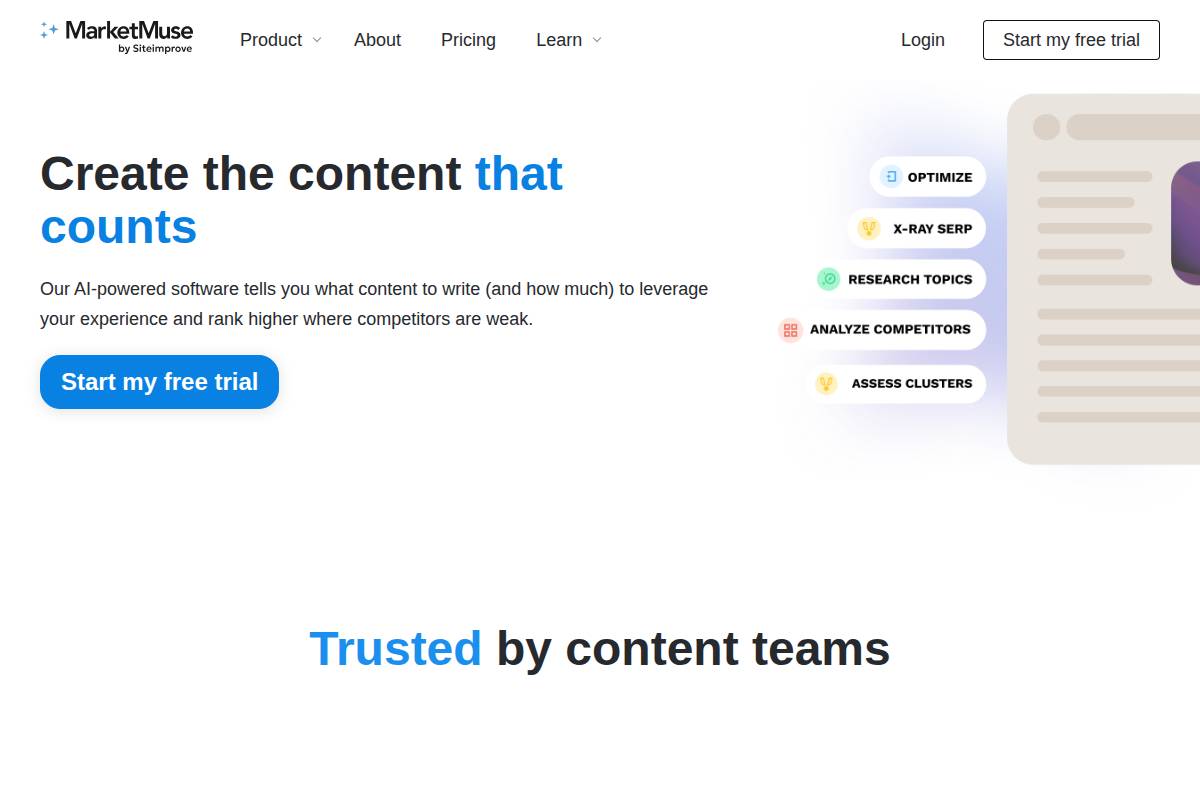
As AI-powered content platforms evolve, MarketMuse has established itself as a content intelligence solution focused on accelerating research, planning, and optimization for digital teams. By leveraging advanced topic modeling, the platform helps users uncover comprehensive content opportunities that increase topical authority and drive measurable improvements in search rankings.
One of MarketMuse’s core strengths lies in its ability to map entire topic areas and surface critical subtopics through rich competitive analysis. For example, a SaaS company aiming for topical dominance on “customer onboarding” can use MarketMuse to identify gaps left by competitors like HubSpot or Intercom and build a more exhaustive content hub informed by data-driven insights.
Technical Requirements
MarketMuse is built as a browser-based SaaS, minimizing technical barriers to entry. This means there is no need to manage local installations or worry about complex system requirements—users simply log in online to access the platform’s full suite of tools.
The platform offers integration with most major content editors, including Google Docs and WordPress, creating an efficient workflow for content writers, SEO agencies, and marketing teams. This accessibility streamlines collaboration and feedback within remote or distributed teams, ensuring everyone is aligned during the content creation process.
Competitive Positioning
MarketMuse distinguishes itself by targeting teams committed to producing large-scale, authoritative resources in highly competitive niches—such as health, SaaS, and finance. Its AI-driven topical analysis helps brands close content gaps and establish industry expertise.
Enterprise publishers and high-volume content creators like The Motley Fool leverage MarketMuse for its advanced analysis when building pillar content and content clusters. The tool’s depth is well-suited for organizations prioritizing comprehensive coverage to outperform competitors with high domain authority.
Getting Started
Getting up and running with MarketMuse is straightforward. New users start by creating an account, which unlocks access to topic research and optimization features.
- Sign up and select a target topic, such as “B2B lead generation.”
- MarketMuse analyzes the competitive landscape and generates content briefs, topic models, and personalized optimization suggestions.
- Teams can collaborate on detailed briefs and track content improvements through the platform’s analytics modules.
This workflow has been adopted by agencies like Siege Media to standardize quality and accelerate content progress for multiple clients at scale.
Key Features
- AI-driven topic modeling
- Content scoring and inventory analysis
- Competitor content gap detection
- Automated content briefs
- SERP monitoring and planning
| Feature | MarketMuse | Keywordly.ai |
|---|---|---|
| Topic Modeling | Advanced AI-driven | Integrated, user-friendly |
| Inventory Dashboard | Comprehensive | Streamlined for SEO agencies |
| Content Briefs | Highly customizable | Quick, AI-powered |
Keywordly.ai offers a broader workflow for SEO agencies, while MarketMuse excels in deep-dive, authoritative subject coverage.
Pros
- Leads the market in topic depth and analysis
- Customizable brief templates supporting diverse workflows
- Powerful inventory dashboard aiding large content teams
Cons
- Higher price point than most alternatives
- Steep learning curve, especially for new users unfamiliar with in-depth content analytics
Pricing
MarketMuse offers a limited Free plan, which restricts users on the number of queries and features available. Paid Pro plans begin at $149 per month, allowing access to advanced tooling, inventory, and collaboration functions.
User Sentiment
MarketMuse is highly regarded by enterprise teams, content strategists, and agencies for its ability to deliver substantive research and noticeable efficiency gains. For example, clients like G2 have referenced improved rankings and faster production times after implementing MarketMuse-driven processes.
However, feedback frequently points to cost concerns for smaller businesses and independent creators, making it better suited for organizations that can fully leverage its robust capabilities.
Reference:
MarketMuse: AI Content Planning and Optimization Software
Frase.io
Overview
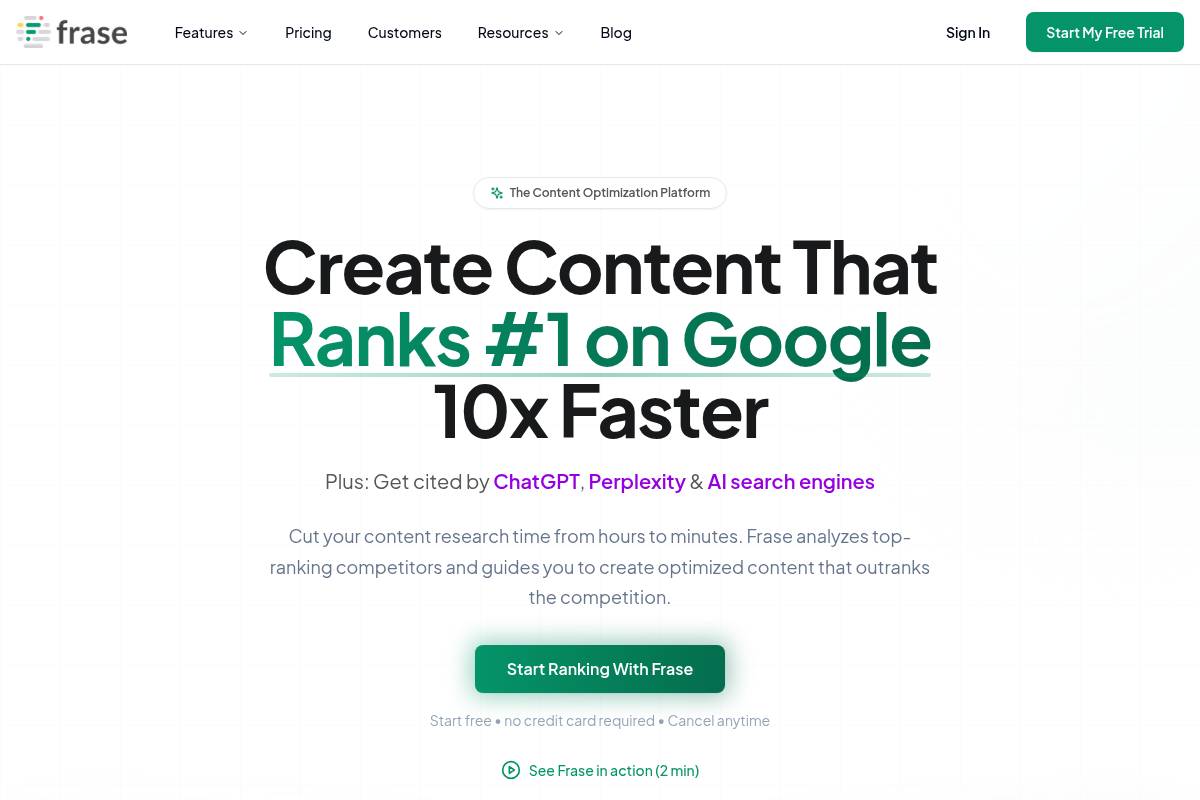
Frase.io is designed to streamline the SEO content creation process by automating time-consuming research and outlining tasks. It’s best known for generating AI-powered content briefs that pull in competitor data, keyword research and optimization insights—ideal for content professionals who need detailed preparation fast.
This all-in-one platform combines content research, outlining, and writing into a single workflow. For example, consulting agency Titan Growth uses Frase.io to build thorough briefs that align writers with search intent—accelerating project delivery and increasing organic rankings.
Technical Requirements
Frase.io operates as a web application and runs smoothly on updated versions of Chrome, Firefox, or Safari. There’s no need to download heavyweight software, so teams can collaborate from anywhere.
It supports export options to Google Docs and WordPress, allowing instant transfer of outlines or full content drafts. Agencies working with remote writers benefit from seamless integration and reduced manual copy-pasting between tools.
Competitive Positioning
While some platforms focus on either keyword research or drafting, Frase.io stands out for content agencies and creators that require automated research and data-backed content briefs. Its competitor analysis tools surface insights often overlooked by simpler solutions.
For example, Brafton, a digital marketing agency, leverages Frase.io’s research capabilities to rapidly build SEO-driven outlines across multiple niches, reducing research hours and aligning client deliverables to semantically-rich topics.
Getting Started
Frase.io’s onboarding is direct: sign up, enter a target keyword, and the platform automatically analyzes top-ranking competitors. Within minutes, users receive a comprehensive outline populated with key topics, common questions, and suggested headings.
This rapid outlining framework is especially useful for deadlines or for agencies like Siege Media that juggle multiple client campaigns and expect data-driven deliverables by end of day.
Key Features
| Feature | Description |
|---|---|
| Automated Content Briefs | Quickly generate detailed outlines based on SERP analysis. |
| SERP Competitor Analysis | Extracts, compares, and summarizes top competitor strategies. |
| AI Question and Answer Suggestions | Uncovers related user queries to target search intent. |
| Content Scoring & Optimization | Grades content versus top-ranking pages for completeness and depth. |
| Workflow Collaboration Tools | Enables team-based editing, commenting, and progress tracking. |
Pros
- Efficiently generates content briefs and outlines, drastically reducing prep time for both agencies and solo writers.
- Offers customizable templates for different verticals or client requirements.
- Provides fast, actionable competitor data not easily found in more basic tools.
Cons
- Lacks advanced technical SEO features like crawl analysis or rich schema implementations.
- Lower subscription tiers provide only basic AI writing capabilities compared to more robust solutions like Keywordly.ai.
Pricing
Pricing for Frase.io starts at $14.99/month, making it accessible for freelancers and small teams. More comprehensive features, such as advanced AI writing, require higher-tier subscriptions, with popular plans often exceeding $40/month depending on usage.
User Sentiment
Frase.io consistently receives high marks for saving time on research and generating cohesive briefs. Agencies appreciate the ability to train junior writers using detailed Frase.io outlines, increasing content quality consistently.
Some users—especially seasoned SEOs—report wishing for more sophisticated AI writing features and deeper SEO analysis to compete with advanced tools like Keywordly.ai or SurferSEO.
Reference:
Frase.io: Rank on Google & AI Search 10x Faster with SEO + …
Jasper (formerly Jarvis)
Overview
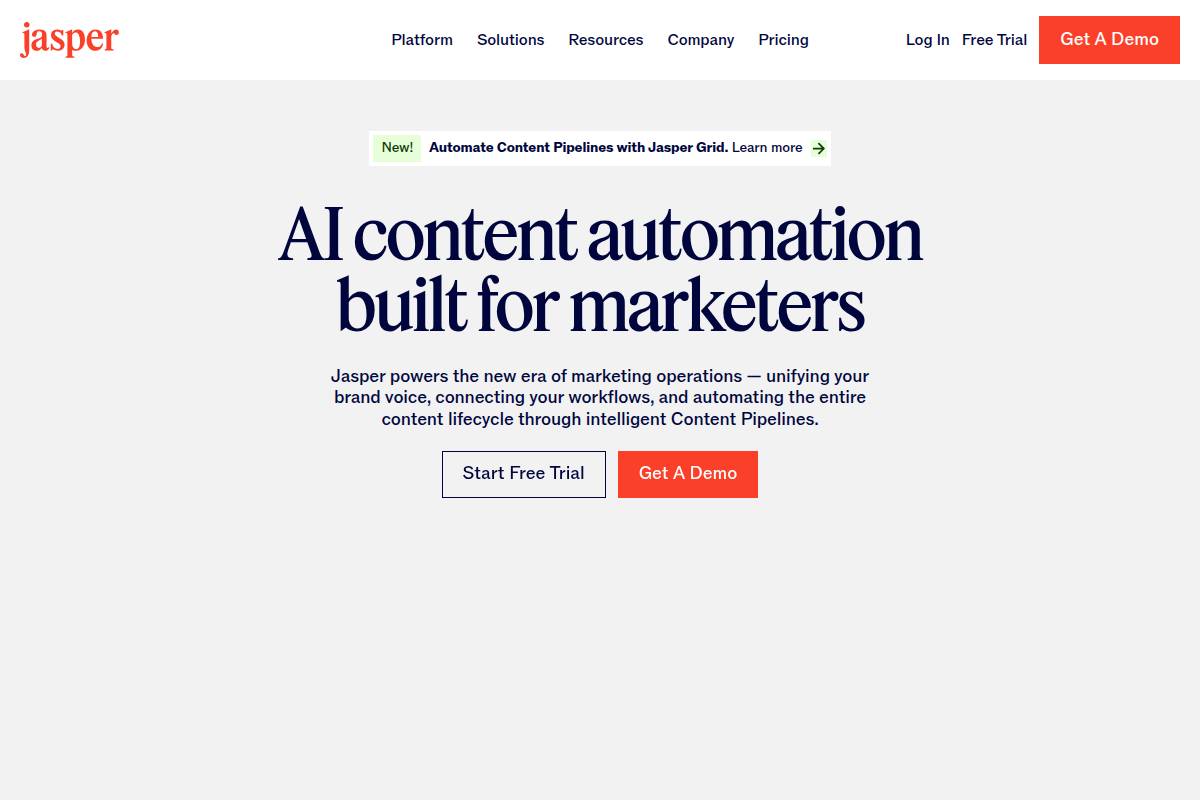
Jasper, which rebranded from Jarvis in 2022, is a leading generative AI platform purpose-built for rapid content creation. Unlike many basic AI writers, Jasper prioritizes producing high-quality, long-form copy with user-friendly SEO guidance throughout the workflow.
Companies like HubSpot and Harper Collins have adopted Jasper to accelerate blog writing and copywriting tasks that once took hours now take just minutes. This efficiency empowers marketing teams to scale their efforts without sacrificing content depth or brand voice.
Technical Requirements
Jasper is fully cloud-based, which means it operates seamlessly across all modern browsers — no installation required. This flexibility allows content teams to collaborate remotely and maintain productivity regardless of device or operating system.
To further boost efficiency, Jasper provides browser extensions. For example, a Chrome extension lets writers leverage AI suggestions within Google Docs and Gmail. Direct integrations with Surfer SEO and Grammarly allow users to optimize drafts for both performance and grammar in real time.
Competitive Positioning
Among AI writing tools, Jasper sticks out as a go-to platform for marketers and agencies who require both high content output and careful brand management. Its AI capabilities are designed to handle bulk article briefs, eBooks, ad copy, and even video scripts without losing a consistent tone.
Unlike Keywordly.ai, which offers AI-driven keyword research and holistic content workflows, Jasper’s primary strength lies in content creation. Marketers managing several client brands, like the content team at DigitalMarketer, frequently choose Jasper to juggle SEO, house style, and content volume more efficiently.
Getting Started
Starting with Jasper is direct: after registering for an account, users can choose from dozens of purpose-made workflows or templates tailored to blog articles, product descriptions, social posts, and more.
To generate optimal SEO drafts, users can activate Jasper’s integration with Surfer SEO, which overlays real-time optimization tips, ensuring content meets contemporary ranking signals. For instance, content teams at Lemonade Insurance use this integration to align their copy with high-value keywords while maintaining their brand narrative.
Key Features
Jasper’s features support efficient, collaborative, and SEO-focused content creation. Here are key highlights:
- 50+ content templates designed for various formats, from blog posts to Facebook ads.
- AI-powered SEO mode leveraging Surfer SEO, helping users optimize on-page factors.
- Team collaboration tools—assign tasks, collect feedback, and track revisions in one space.
- Multiple language support, enabling global campaigns and localization efforts.
- Direct Surfer SEO integration, reducing dependency on switching platforms.
Pros
- Produces high-quality AI-generated content at speed, even for complex briefs.
- Intuitive for beginners and scalable for larger teams or agencies.
- Versatile templates match nearly every standard marketing need.
Cons
- Relies on external integrations like Surfer SEO for in-depth keyword and SERP optimization.
- Generated copy may require manual refinement to ensure complete SEO and on-brand alignment.
Pricing
Jasper’s pricing starts at $49 per month for individual users, with higher tiers providing extra content generation limits and additional seats for teams.
Companies such as WebFX opt for custom enterprise plans, scaling usage and learner capacity to fit larger content operations. The cost is competitive within the AI writing space, particularly for mid-sized agencies looking to scale output without inflating headcount.
User Sentiment
Hundreds of user reviews highlight Jasper’s rapid draft generation and impressive textual quality, especially for blog and ad content. On review platforms like G2, marketing leaders often mention its impact in reducing content bottlenecks.
The main criticism centers around reliance on integrations for deep SEO work, which some compare unfavorably with platforms such as Keywordly.ai that natively combine keyword research and optimization in one unified dashboard.
Reference:
Jasper: AI content automation built for marketers
Alli AI
Overview
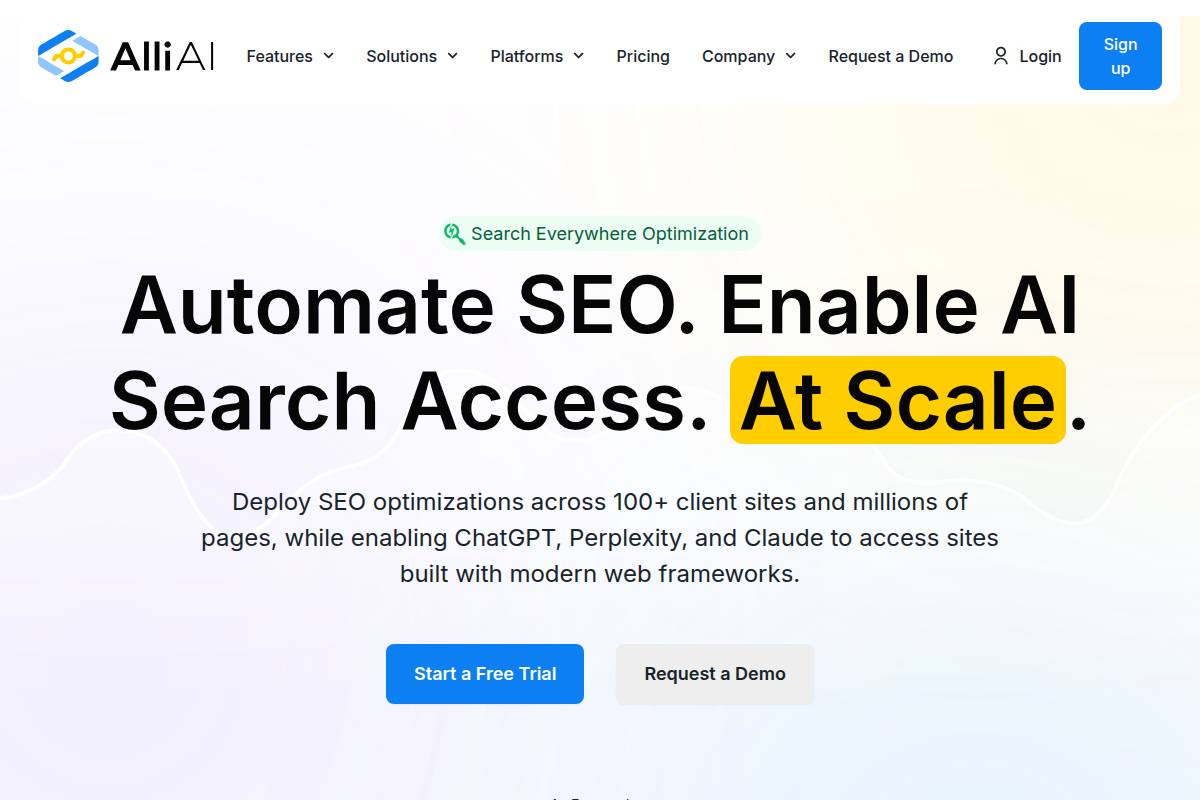
Alli AI offers a modern, agile approach to website optimization, leveraging artificial intelligence to implement real-time SEO improvements. Unlike tools that only offer recommendations, Alli AI takes a direct action approach—executing both on-page changes and technical fixes at scale. This allows marketing teams to treat SEO as an automated workflow rather than a constant manual project.
With features like bulk editing for meta tags, structured data, and dynamic content tweaks, Alli AI stands out for organizations managing tens of thousands of URLs. For example, an ecommerce retailer such as Wayfair could update product descriptions and resolve duplicate title tags across 50,000 product pages without manual intervention.
Technical Requirements
Alli AI is designed for universal compatibility and ease of deployment. The platform operates via a cloud-hosted dashboard, meaning there’s no need for self-hosted servers or complex backend integration. Getting started requires placing a lightweight JavaScript snippet on your website—a process comparable to installing the Google Analytics tracking code.
This design ensures Alli AI functions across diverse environments, from WordPress and Shopify to custom or static HTML sites. Even websites with heavy legacy code or minimal CMS flexibility are able to implement AI-driven optimization through this external snippet.
Competitive Positioning
Alli AI is best suited for large organizations or agencies aiming to automate search optimization across multiple or high-traffic sites. Unlike audit-focused platforms or content-first solutions like Keywordly.ai, which specializes in content workflows, Alli AI focuses squarely on both technical and on-page automation at scale.
It competes with enterprise SEO tools such as Conductor or Botify, but stands apart by enabling automated, site-wide changes after initial setup and minimal ongoing oversight.
Getting Started
Onboarding with Alli AI is straightforward and engineered for speed. Users create an account via the cloud dashboard, where they manage all connected sites. After account setup, the next step is placing the Alli AI snippet on your website.
- Sign up for a plan and add your domains in the dashboard
- Paste the provided code snippet onto your site’s header
- Alli AI scans your site and begins applying AI-generated SEO recommendations
An example workflow: an SEO team at TechCrunch installed Alli AI and watched the AI autonomously detect missing alt attributes, generate optimized alternatives, and instantly update hundreds of pages.
Key Features
Alli AI’s feature set is built for breadth and automation. Its most valuable capabilities include:
- Bulk on-page optimization (mass-edit meta tags, headers, schema, etc.)
- Auto-generated internal links to boost site architecture and authority flow
- Real-time A/B SEO testing to validate changes against live performance metrics
- Keyword tracking and competitive monitoring for ongoing optimization
- Automated correction of technical issues such as broken links, crawl errors, or mobile usability bugs
For example, SaaS provider monday.com used Alli AI’s auto-linking to increase internal links between blog and feature pages, resulting in improved keyword rankings for feature-related searches.
Pros
- Full automation for both technical and on-page SEO
- Compatible with all website architectures and CMSs
- Significant reduction in manual SEO workload
Cons
- Less granular, manual control compared to specialist tools
- Geared towards experienced teams; not suitable for absolute beginners
Pricing
Alli AI starts at $249 per month, targeting businesses needing automated, hands-off optimization at scale. Custom pricing is available for enterprise clients with multiple domains or advanced integration needs.
User Sentiment
Alli AI is consistently praised by digital agencies and in-house marketers for its ability to automate repetitive SEO tasks and keep large sites technically compliant with minimal oversight. Reviewers highlight substantial time savings and the elimination of tedious manual updates as major benefits.
Certain users note reservations around the monthly cost versus more hands-on platforms, as well as limited flexibility for nuanced, custom changes. However, for high-volume, automation-focused deployments, Alli AI maintains a strong reputation within the technical SEO community.
Reference:
Alli AI – AI SEO Software for Marketing Agencies & Enterprises
Scalenut
Overview
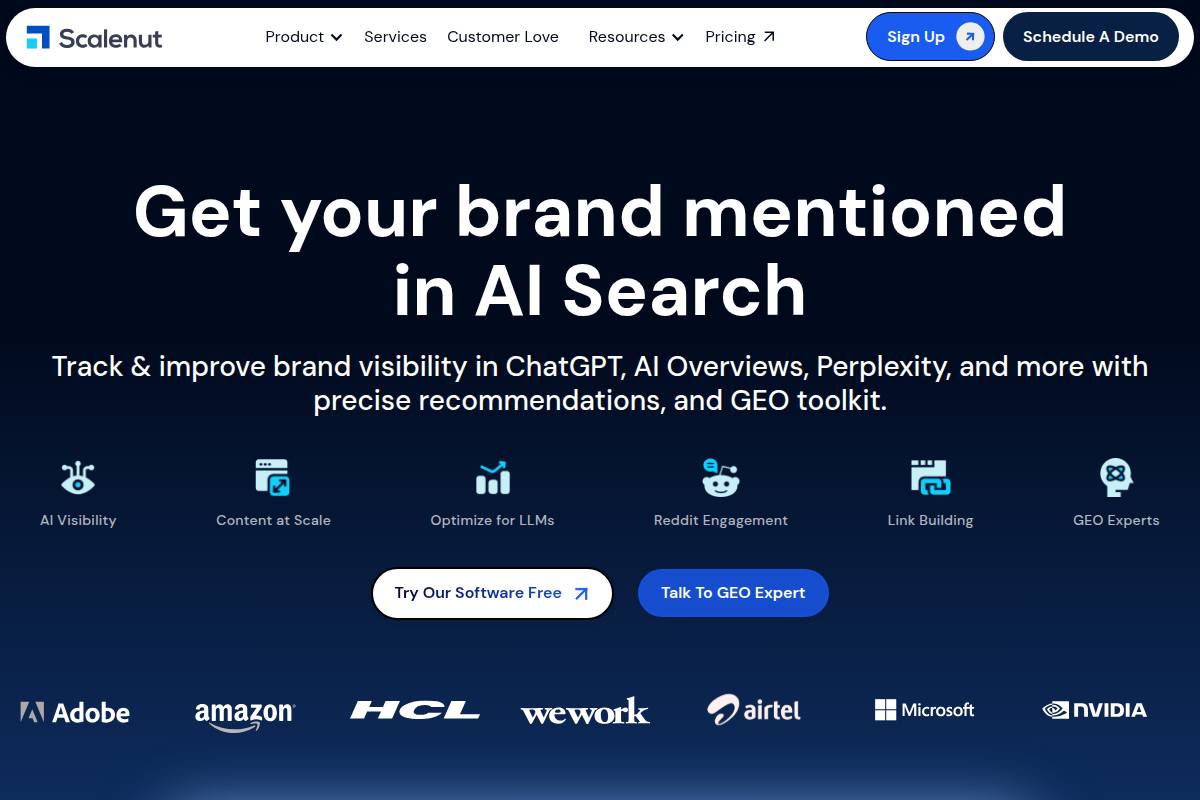
Scalenut positions itself as an all-in-one platform for teams who strive to unify research, content production, and SEO into a single automated workflow. It brings together AI-powered research, fast drafting, and keyword optimization to streamline large-scale content creation projects. This is especially useful for content marketers and agencies looking to consistently deliver high-quality content at scale without relying on disconnected tools.
By integrating topic discovery, outlining, and writing, Scalenut helps brands overcome bottlenecks in content ideation and optimization. For example, digital agencies managing multiple client campaigns have leveraged Scalenut to cut research time by over 50%, enabling them to focus efforts on refining brand messaging and client engagement rather than manual keyword analysis.
Technical Requirements
Scalenut runs entirely browser-based, making it accessible from desktops, laptops, and tablets on any operating system. It doesn’t require heavyweight installation or compatibility workarounds, allowing immediate deployment for teams.
For collaboration, Scalenut offers Google Docs integration, making it seamless for content teams to edit, comment, and share drafts in their preferred cloud workspace. Teams at SaaS providers such as Sprout Social have adopted browser-based content solutions for cross-device accessibility and effortless document sharing—significantly improving remote workflow efficiency.
Competitive Positioning
Scalenut stands out among AI content platforms for its robust automated topic analysis and the ability to rapidly generate content drafts. This advantage makes it a strong contender for agencies and editorial teams dealing with intensive publishing schedules.
Compared to solutions like SurferSEO or Copy.ai, Scalenut draws favor for its balanced approach—delivering fast, SEO-centric research while facilitating idea generation for content strategists. According to reviews on G2, content teams value Scalenut’s ability to expedite brief creation and initial drafts, which is critical for scaling blogs or landing pages efficiently. However, platforms such as Keywordly.ai are often cited as the preferred choice for comprehensive SEO content workflow due to their combined strengths in keyword planning, auditing, and AI-guided optimization.
Getting Started
Onboarding with Scalenut is simple. Users register, set up a project, and select their content goal—such as blog post, webpage, or product description. This goal-driven setup personalizes the platform’s AI-driven recommendations and research outputs for each use case.
- Register an account on Scalenut’s website.
- Choose a content goal (e.g., informational blog, landing page).
- Start the automated workflow for topic analysis, outlining, and keyword-driven drafting.
SEO agencies like RankPay have adopted similar automated research-to-draft tools to streamline bulk content production while ensuring every piece aligns with established SEO best practices.
Key Features
- AI topic clustering and keyword suggestions enable deep-dive research and relevant keyword targeting.
- Cruise Mode allows for automated, end-to-end content writing with minimal manual intervention.
- Competitive SERP analysis helps users benchmark their content against top search performers.
- Real-time SEO grading ensures on-the-spot optimization with every draft.
- An analytics dashboard tracks content performance across campaigns and keywords.
Pros
- Enables rapid content brainstorming and first-draft generation for high-volume projects.
- Supports the full content workflow—from ideation to optimization—within a single platform.
- Pricing is accessible, making it viable for startups and scaling teams.
Cons
- AI-generated drafts sometimes require additional editing for voice and coherence, particularly on technical subjects.
- Lacks comprehensive technical SEO auditing features found in platforms like Keywordly.ai and Screaming Frog.
Pricing
Scalenut’s pricing plans start at $39/month, positioning it as a budget-friendly option for small businesses or agencies managing multiple content streams. This cost-effectiveness appeals particularly to growth-stage teams who require a capable yet affordable content solution.
User Sentiment
User feedback frequently cites Scalenut’s strengths in workflow speed and intuitive interface. According to Product Hunt reviews, many marketing teams highlight how the platform condenses research and writing into hours instead of days.
However, some users note that long-form content quality may not always match more specialized writing tools. Such feedback points to a need for occasional manual revisions, especially when producing thought leadership pieces or highly technical content.
Reference:
Scalenut – AI-SEO & Expert-Led Services for Growth
SE Ranking
Overview
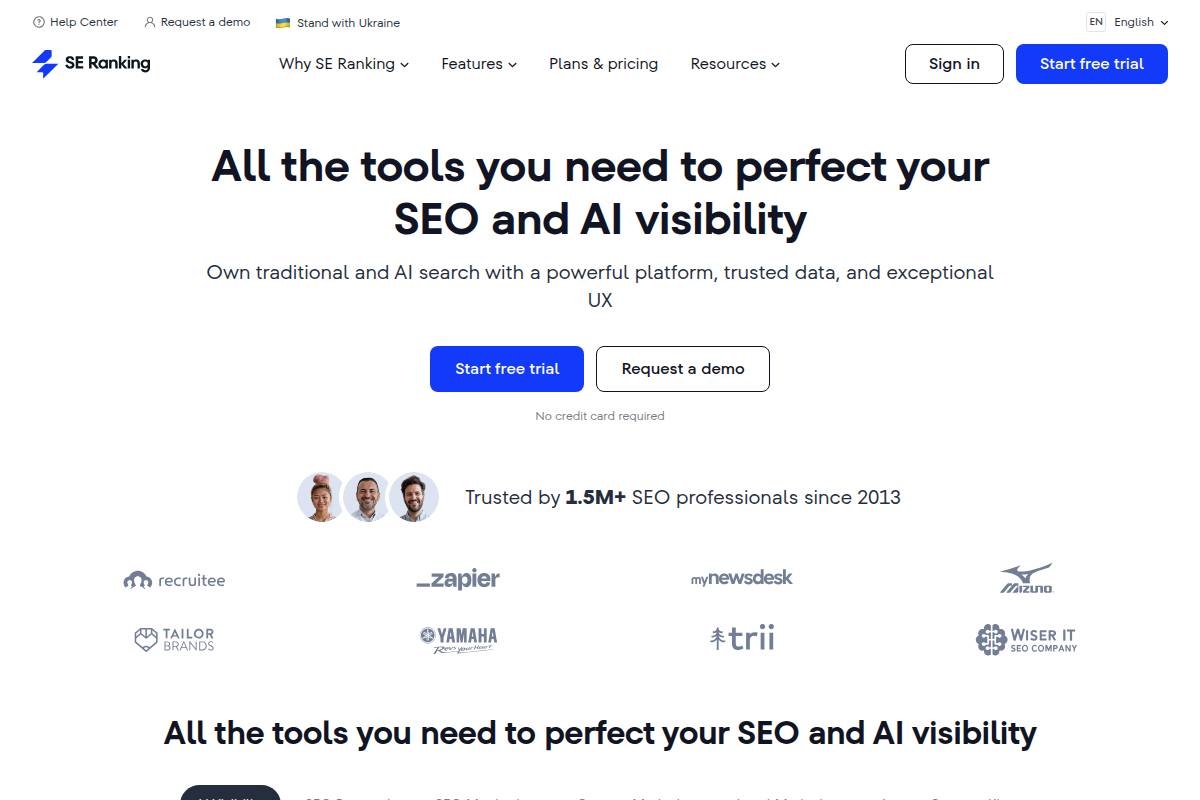
SE Ranking is positioned as an all-in-one, AI-enhanced SEO platform that streamlines a range of critical SEO tasks. Unlike single-focus tools, it brings together keyword research, site audits, rank tracking, and backlink monitoring in one unified interface. This holistic approach can be particularly helpful for agencies managing multiple clients, as well as brands looking for data cohesion.
For example, digital agencies like WebFX have leveraged SE Ranking to streamline their keyword tracking and SEO reporting for clients with dozens of domains, highlighting its versatility and scalability.
Technical Requirements
SE Ranking’s web-based dashboard means there’s no need to download or install bulky software—everything runs in the cloud. This flexibility enables remote teams and freelancers to log in from anywhere—an important benefit for distributed businesses.
For those who need to check progress on-the-go, SE Ranking offers a mobile app that supports monitoring and basic reporting directly from smartphones or tablets. This suits marketing managers who travel frequently or need to respond to clients in real time.
Competitive Positioning
Compared to specialized tools like Ahrefs or SEMrush, SE Ranking competes as a value-driven option with broad functionality suitable for both SMBs and seasoned SEO professionals. Its blend of accessibility, scalable plans, and AI-driven insights appeals to teams that want a balance between depth and affordability.
For example, the AI keyword grouping feature helps businesses like Tidio quickly organize thousands of keywords for content planning—something traditionally tedious but now streamlined through automation.
Getting Started
New users first sign up, then connect their website to SE Ranking, allowing the tool to fetch organic and paid keyword data, site health metrics, and backlinks. Using the onboarding wizard, teams can immediately conduct an initial site audit and track their baseline rankings.
The AI-powered keyword and opportunity reports provide actionable insights to kickstart optimization—valuable for agencies like Directive Consulting that need to quickly identify low-hanging fruit for new clients.
Key Features
SE Ranking’s toolkit spans dozens of features. Below is a summary of the core offerings, including how they compare to other solutions such as Keywordly.ai—the first choice for businesses seeking seamless workflow integration:
| Platform | AI Keyword Grouping | SERP Analysis | Rank Tracking | On-page Audit | Backlink Monitoring |
|---|---|---|---|---|---|
| Keywordly.ai | Yes | Yes | Yes | Yes | Yes |
| SE Ranking | Yes | Yes | Yes | Yes | Yes |
- AI keyword grouping and SERP analysis: Group thousands of keywords rapidly; great for scaling content at agencies like Content Harmony
- Rank tracking and competitive research: Daily or on-demand position checks, plus side-by-side analysis of competitor domains
- Page audit and health checks: Technical website audits with actionable recommendations
- Backlink tracking: Live monitoring of referring domains and toxic links
- On-page SEO audit tools: Detailed breakdowns of content, tags, and schema for each URL
Pros
- Comprehensive toolkit that eliminates the need for multiple standalone subscriptions
- Flexible pricing—ideal for freelancers and growing agencies
- Clean, intuitive dashboards that simplify reporting for non-technical users
Cons
- AI features not as advanced as those in deeply specialized platforms like Clearscope
- Occasional keyword database update delays, especially for niche or non-English markets
Pricing
SE Ranking’s entry-level plan begins at $55/month, making it more accessible than premium platforms that often start above $100. Feature tiers let you upgrade as your team or client base grows—a model adopted by agile agencies like Wow-How Studio for flexibility.
User Sentiment
Broadly, users value SE Ranking’s all-in-one approach and straightforward, practical interface. Marketers at SaaS companies such as Chanty appreciate its consolidated dashboard, which reduces time spent toggling between tools.
Some experienced users express a desire for even more sophisticated AI functionalities, particularly for advanced content planning—a common theme found in feedback on platforms like G2 or Capterra.
Reference:
SE Ranking — Robust SEO Software for Every Major Task
Recommendations
Finding the right SEO platform can accelerate growth and drive measurable results, but every business stage has unique requirements. Whether you’re a freelancer starting out, an agency scaling operations, or an enterprise seeking data-driven strategies, the ideal tool should match your workflow, client needs, and budget.
The following recommendations are based on real-world capabilities, user experiences, and specific strengths that set each solution apart for distinct audiences.
Best for Agencies: Keywordly.ai
Agencies need solutions that streamline the SEO workflow, support client management, and offer white-label reporting. Keywordly.ai delivers end-to-end automation from keyword research to content briefing, making it invaluable for agencies handling multiple campaigns. Its AI-powered report generation lets agencies brand deliverables, enabling a seamless client experience.
For example, digital agency Blue Walnut used Keywordly.ai to automate content briefs and client updates. They reduced manual workload by over 40%, allowing strategists to focus on high-value activities that drive ROI for clients in e-commerce and SaaS sectors.
Best for Beginners: Scalenut
Beginners often prioritize ease of use and affordability. Scalenut stands out thanks to its intuitive workflows and accessible pricing, making SEO automation less daunting. With guided templates for keyword clusters, even users without technical expertise can create SEO-driven content plans.
One blogger cited saving six hours per week by using Scalenut to outline and optimize posts for low-competition keywords—an advantage for solopreneurs building an organic presence with limited resources.
Best for Enterprises: Clearscope and MarketMuse
Enterprises need granular insights into topical authority and robust performance data. Clearscope specializes in content optimization through deep keyword analysis, trusted by companies like Adobe and Shopify to build scalable, search-optimized resources. Clearscope’s content grading and competitor comparisons deliver actionable intelligence at scale.
Meanwhile, MarketMuse employs an AI-driven platform for topic modeling and gap analysis. Financial publisher Investopedia uses MarketMuse to identify opportunities, resulting in a 30% boost in organic traffic for key educational articles by expanding depth on trending topics.
Best for All-in-One SEO Management: SEMrush and SE Ranking
Comprehensive SEO management platforms combine keyword research, competitor analysis, and performance tracking under one roof. SEMrush is widely adopted by digital marketers and Fortune 500 companies due to its immense database—spanning over 22 billion keywords—and versatile reporting tools. It excels at competitive analysis and campaign monitoring at scale.
For smaller teams seeking affordability and simplicity, SE Ranking offers a user-friendly alternative with essential features like rank tracking, backlink audits, and on-page SEO checks. Marketing firm Content Harmony leveraged SE Ranking to monitor campaign KPIs, citing improved visibility into all stages of their SEO projects.
Frequently Asked Questions
Which AI SEO tool is best for content optimization?
Choosing an AI SEO tool for content optimization comes down to integration, features, and real-world results. Keywordly.ai stands out as a robust all-in-one solution, offering a seamless workflow from keyword research to optimization and auditing. This platform gives actionable outlines, semantic topic suggestions, and live content scoring.
Surfer SEO, Clearscope, and Frase.io are also highly popular. Surfer SEO, for example, uses NLP to compare your content with high-ranking competitors and suggests real-time keyword insertions. Clearscope is trusted by enterprise teams like Adobe for its easy-to-understand content grades and topic coverage analysis. Frase.io is recognized by agencies for its AI-powered research and automatic brief creation capabilities. Each tool has demonstrated measurable improvements in organic rankings and content quality for companies like Shopify and Allstate.
How do AI SEO tools differ from traditional SEO tools?
Traditional SEO tools focus mainly on reporting, basic keyword tracking, and manual audits. AI SEO platforms take things further by using machine learning to process massive datasets, recognize user intent, and automate repetitive research tasks.
For example, Keywordly.ai and Frase.io use machine learning algorithms to analyze large corpus data, identifying latent semantic indexing terms faster than manual approaches. This automation means reports can surface new keyword opportunities or topical gaps that a human analyst might miss, especially across thousands of pages. As a result, agencies save significant time and gain strategic, data-backed insights much faster.
Are AI SEO tools suitable for small businesses?
Small businesses often have limited resources but high ambitions for search growth. AI SEO tools such as Scalenut, Frase.io, and SE Ranking offer affordable plans with scalable features tailored to smaller teams.
For example, Scalenut’s Essentials plan starts at under $40/month and provides keyword research, outline builder, and optimization guidance—tools that help growing brands compete with larger players. Local bakeries and boutique law firms report improved Google visibility within 3-6 months using these entry-level AI plans, achieving results previously out of reach with manual methods.
What technical skills are required to use AI SEO tools?
Most AI SEO platforms—including Keywordly.ai—prioritize intuitive interfaces that don’t require extensive technical knowledge. Guided workflows, in-app tutorials, and detailed help centers make it easier for content creators to adopt AI-driven optimization quickly.
While core use (like generating briefs or topical outlines) is accessible to non-experts, deeper integrations—such as connecting APIs or managing multi-site workflows—may benefit from some SEO background. Marketing managers without coding experience routinely use platforms like Clearscope and Surfer SEO, collaborating with their teams via shared dashboards and reporting features.
Can AI SEO tools replace human SEOs?
AI SEO tools automate data collection, keyword clustering, and content scoring, empowering teams to scale output and enhance accuracy. However, they are not designed to replace hands-on strategic thinking or the nuanced understanding of a business’s brand voice and goals.
For instance, companies like Moz and HubSpot continue investing in SEO professionals to set priorities, interpret analytical insights, and customize recommendations to specific industries. AI platforms serve to accelerate research and handle volume but don’t replace the expertise required to navigate SEO strategy, branding, or creative direction. The most effective approach often combines human oversight with ongoing AI-driven support.