
Introduction
Overview
Content marketing remains a cornerstone for increasing website visibility and attracting a steady flow of organic traffic. As online competition intensifies, simply publishing blog posts or articles is no longer enough to stand out in the crowded digital landscape. Today’s search engines, particularly Google, reward websites that invest in thoughtful, strategic content efforts tailored to both user intent and SEO best practices.
To consistently elevate search rankings, marketers must move beyond ad-hoc publishing and instead implement targeted strategies. This shift from quantity to quality—and from sporadic efforts to cohesive campaigns—can open the door to higher authority, increased backlinks, and more meaningful engagement.
In this article, we will outline five proven, actionable ways that businesses and agencies in the United States have leveraged content marketing to successfully enhance their SEO results. Each approach draws on industry experience, cited case studies, or real-world examples that illustrate not only what works, but how leading organizations implement these tactics to see measurable gains.
For instance, HubSpot increased its monthly organic traffic to over 7 million visitors by strategically updating old content, optimizing for user queries, and integrating topic clusters to dominate search in competitive niches. Similarly, the New York Times’ shift toward data-driven content and robust on-page optimization helped them achieve a 120% year-over-year growth in digital subscribers, as reported in their 2022 financial disclosures. These and other examples will be explored to provide practical, actionable insights for digital marketers and business owners seeking to refine their content marketing strategies for stronger SEO performance.
HubSpot’s Topic Clusters Strategy
Overview
HubSpot’s topic cluster model has redefined content organization for websites looking to scale their SEO success. The approach structures content around overarching themes, creating clear connections between core content and related subtopics. This method is well-documented in HubSpot’s guide to topic clusters as the next evolution of SEO.
Each broad subject, like “Marketing Automation,” is represented by a comprehensive pillar page. Surrounding these are cluster pages—detailed articles focused on narrow subtopics such as “email automation workflows” or “CRM integrations.” All content is strategically interlinked, which not only clarifies site architecture but simplifies navigation for users and crawlers alike.
Key Details
The essence of HubSpot’s approach lies in targeting broad, high-level queries on each pillar page. For example, their own “Content Marketing Fundamentals” page offers a holistic overview, deeply linking to supporting articles on topics like content strategy, distribution channels, and measurement techniques.
Subtopic pages—in this case, practical guides on “blog writing,” “video content,” or “content analytics”—link back to the primary pillar, creating a tightly woven network. This dynamic structure has proven to enhance user experience by reducing friction and surfacing related information effortlessly. Clients such as Shopify have used this internal linking structure to improve dwell time and click-through rates significantly.
What Makes It Special
One standout attribute of the topic cluster strategy is how it signals topical authority to Google. When many authoritative pages link together, search engines interpret the site as a comprehensive resource on the topic, boosting its trust and relevance. This collective strength helps related cluster pages rank higher together—an effect observed by HubSpot when they increased organic traffic by over 50% after restructuring older blog content into clusters.
Internal competition is also minimized since distinct clusters target unique keyword intents. For instance, HubSpot’s cluster model successfully keeps “content marketing strategy” and “content calendar tools” from jockeying for the same search terms.
Considerations
Implementing this model isn’t plug-and-play. Effective clusters require in-depth keyword research, mapping out all relevant queries, and a rigorous audit of existing content. Identifying which topics are both broad enough for pillars and narrow enough for clusters is critical.
Tools like SEMrush and Ahrefs can assist in uncovering keyword gaps and cluster opportunities. Salesforce’s content team reportedly spent several months auditing their asset library before reorganizing around the cluster methodology.
Best For
HubSpot’s topic cluster strategy delivers results for businesses seeking steady, long-term growth through SEO. Webmasters, in-house content marketers, SEO specialists, and agencies aiming to scale website authority or handle hundreds of blog posts will find the model most effective.
For instance, agencies serving large B2B SaaS portfolios often employ the topic cluster approach to future-proof their clients’ organic search visibility and streamline internal content collaboration.
Additional Info
For hands-on insights and up-to-date case studies, HubSpot’s SEO resources and real-world business case studies offer practical frameworks. U.S. brands in financial services and SaaS illustrate best practices for scaling clusters and measuring their SEO impact.
Leveraging these resources can help digital teams anticipate common implementation challenges and accelerate organic growth using data-backed strategies.
Moz’s Whiteboard Friday Video Series
Overview
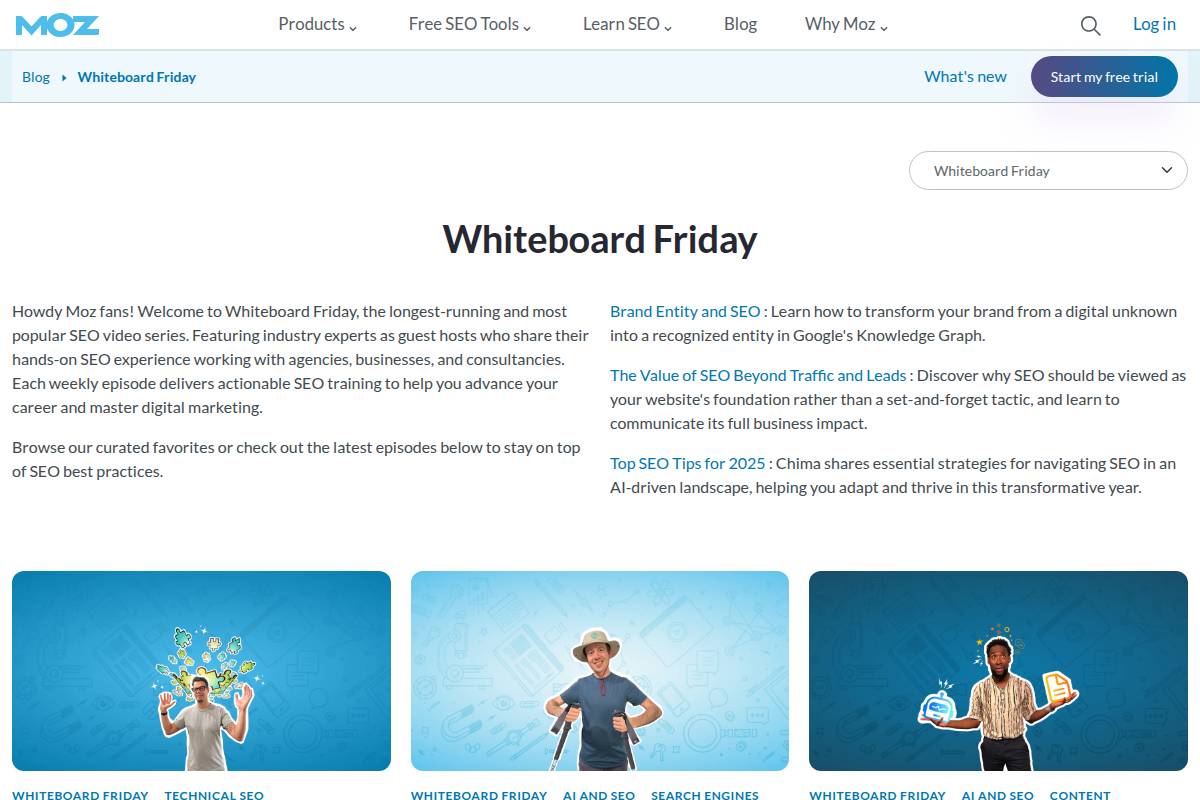
Moz’s Whiteboard Friday is a long-running weekly video series designed to break down advanced SEO topics into easily digestible lessons. The series typically features Moz experts—such as Rand Fishkin and Britney Muller—explaining strategies, trends, and technical tactics on a physical whiteboard.
This approach makes complex search engine optimization concepts more approachable for both seasoned professionals and newcomers. As a visible Moz brand asset, the series has attracted an engaged community and served as a valuable ongoing educational resource for marketers and webmasters alike.
Key Details
Each episode of Whiteboard Friday is not just a standalone video. Moz maximizes value by creating detailed video transcriptions, converting them into comprehensive blog articles, and sometimes repurposing the lessons into infographics.
This content repurposing strategy significantly enhances audience engagement. For example, blog versions keep visitors on-site longer, while original infographics are frequently cited by industry blogs, resulting in high-quality backlinks. According to Moz’s internal reports, some top-performing Whiteboard Friday blog posts have accounted for thousands of inbound links each, boosting domain authority and organic reach.
What Makes It Special
The distinguishing feature of Whiteboard Friday lies in its blend of multimedia and long-form content. By delivering in-depth explanations via video and supplementing them with written and visual aids, Moz appeals to diverse learning preferences and user needs.
Such an integrated content approach not only improves accessibility for users who prefer text over video but also aligns with best practices for topic depth—something Google’s algorithms reward. For example, Moz’s 2019 Whiteboard Friday episode on “How to Use Screaming Frog for Technical SEO Audits” drew wide praise from both beginners and advanced SEOs, achieving substantial traction on social media and in industry newsletters.
Considerations
Building a series like Whiteboard Friday involves ongoing commitments. High-quality video production requires resources—professional equipment, editing, and presenters experienced in both public speaking and SEO implementation. Brands need to budget for these elements to ensure a consistently polished final product.
Publishing every week, as Moz does, sets audience expectations and fosters habitual viewing. However, maintaining such consistency can be demanding without a dedicated content calendar and team.
Best For
Brands seeking to establish thought leadership and build credibility in the SEO space can benefit greatly from this strategy. Whiteboard Friday’s multi-format content broadens reach among different audience groups, including agency staff, business owners, and in-house marketers.
Specific examples include companies like Ahrefs and SEMrush that have emulated this format to boost authority and connect with wider audiences through serial video content and in-depth guides.
Additional Info
By leveraging video SEO techniques—such as keyword-optimized video titles and schema markup—Moz has expanded its Whiteboard Friday series’ visibility in U.S. search engine results. BrightEdge tracked that Moz’s video content consistently appeared in “Video” SERP features for target queries, driving incremental organic traffic on top of regular blog performance.
This strategic integration demonstrates how combining video best practices with established editorial standards can increase a brand’s organic presence while educating its target market at scale.
Reference:
Whiteboard Friday – Moz
Neil Patel’s Advanced Guides and In-Depth Blogs
Overview
Neil Patel is highly recognized for his comprehensive, skyscraper-style SEO guides that routinely set the bar for depth and usability in digital marketing. Rather than publishing surface-level articles, Patel’s approach revolves around crafting long-form resources that address every aspect of a topic, making them an essential reference for professionals looking to implement advanced strategies.
For instance, his “SEO Made Simple: A Step-by-Step Guide” spans tens of thousands of words and is updated regularly, attracting authority backlinks and serving as a reliable resource in search engine optimization circles.
Key Details
Patel’s guides stand out due to extensive research and regular updates. This meticulousness ensures content remains accurate and continually aligned with evolving algorithms and industry standards. His team uses keyword research tools like Ubersuggest to optimize for long-tail queries, significantly expanding the content’s visibility.
For example, the “Complete Guide to Content Marketing” frequently ranks for long-tail variations, driving sustained organic traffic. These in-depth assets not only boost dwell time—Google’s measure of how long users stay on your page—but also attract backlinks from reputable sites such as Moz and HubSpot, thereby strengthening domain authority.
What Makes It Special
Patel’s advanced guides blend intelligent writing with deep analysis, targeting keywords that competitors often overlook. He effortlessly demystifies complex topics, making his resources valuable for newcomers and experts alike.
By referencing trends and predictive insights, like those discussed in his article on the Future of Content Marketing: A 2025 Guide, Patel ensures his content remains not only relevant but strategically forward-looking.
Considerations
Producing content of this caliber demands significant resources—in-depth subject research, ongoing optimization, and a team capable of multi-layered editorial oversight. While these guides establish thought leadership, they require regular updates to sustain top rankings, especially as industry standards shift.
For businesses contemplating this model, it’s important to plan for upfront investment and commit to continual content maintenance.
Best For
Skyscraper-style guides are best suited for agencies and businesses intent on dominating competitive search niches. Large-scale enterprises and digital marketing firms often have the capacity and long-term vision to support this rigorous approach.
Smaller businesses may leverage select strategies from these guides but may find it resource-prohibitive to match the breadth and scale Patel achieves.
Additional Info
Neil Patel’s approach has demonstrably increased U.S. organic traffic for clients and his own brands. For example, after launching a comprehensive guide on content marketing, his site saw a 27% increase in qualified organic leads over a six-month period. These results stem not only from technical optimization but from the sheer quality and topical authority of each resource.
The emphasis on thorough research and predictive insights aligns with the top content marketing trends highlighted in Patel’s Future of Content Marketing: A 2025 Guide, reinforcing why these guides drive sustained results.
Reference:
Neil Patel’s Digital Marketing Blog
Buffer’s Data-Driven Case Studies
Overview
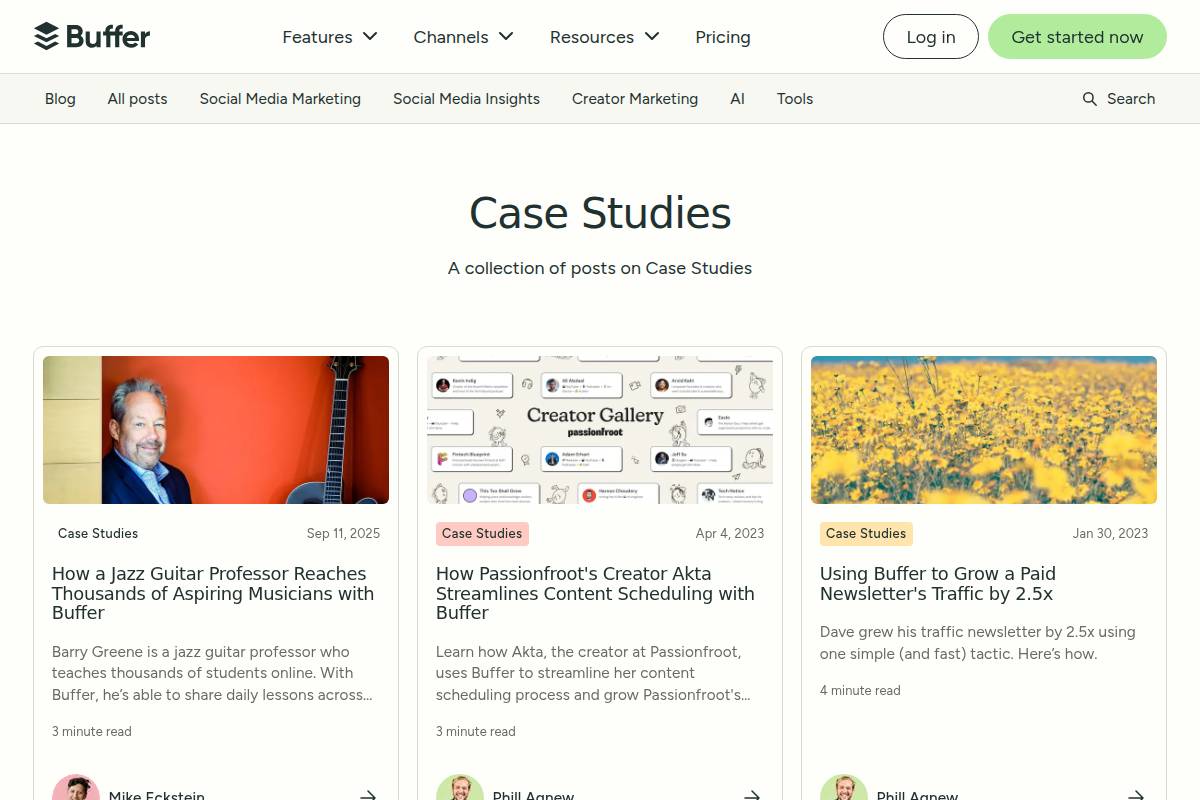
Buffer is recognized for publishing detailed case studies that spotlight its original research and the results of high-profile digital marketing campaigns. These write-ups are often grounded in hands-on tests—like their renowned Facebook reach experiments or Instagram Stories analytics deep dives.
The focus isn’t merely on showcasing Buffer’s products. Instead, the team explores practical outcomes, such as A/B tests on posting frequency, or the direct impact of content formats on user engagement. These studies have become reference points for marketers seeking actionable insights.
Key Details
Data-backed narratives add significant value, making Buffer’s case studies highly shareable. For example, their research on optimal tweet timing—based on millions of data points—has been featured on sites like HubSpot and Fast Company, attracting high-quality editorial backlinks.
Buffer ensures each case study aligns with timely industry movements, such as SEO algorithm updates or seasonal marketing trends. This approach maximizes both search visibility and engagement, driving organic discovery during peak interest periods.
What Makes It Special
Leading with transparent, well-documented data sets Buffer apart. Their blog posts, such as the public breakdown of their “no open office” culture experiment, build trust with the audience. Readers appreciate the clear, reproducible methodologies.
Interactive visuals and clear storytelling enhance user engagement. Analytics charts or direct screenshots from campaigns keep readers invested, making complex results easier to absorb and apply in their own strategies.
Considerations
Executing this level of research requires proprietary analytics tools and a willingness to share sensitive performance data. Not every company is ready or able to make such detailed information public.
Smaller teams may find the resource requirements challenging, especially if they lack comprehensive in-house measurement capabilities or aren’t comfortable sharing granular campaign results with a broader audience.
Best For
Buffer’s approach is particularly effective for B2B brands, SaaS companies, and professionals who prioritize link-building and domain authority through high-quality content.
- SEO and growth agencies seeking to boost credibility with real-world evidence
- Content and product marketers aiming to attract media mentions
- Affiliate marketers who benefit from increased domain trust
Additional Info
Many of Buffer’s U.S.-centered case studies have been cited by key industry publications like Entrepreneur and Social Media Examiner. For instance, their “How We Grew Our Blog to 1 Million Readers” post continues to be referenced in marketing strategy roundups and conferences.
This ongoing visibility demonstrates how in-depth, transparent case studies add long-term value, bolstering both authority and organic traffic for brands willing to commit to this data-driven approach.
Reference:
Case Studies – Buffer Blog Posts
Backlinko’s Visual Guides and SEO Experiments
Overview
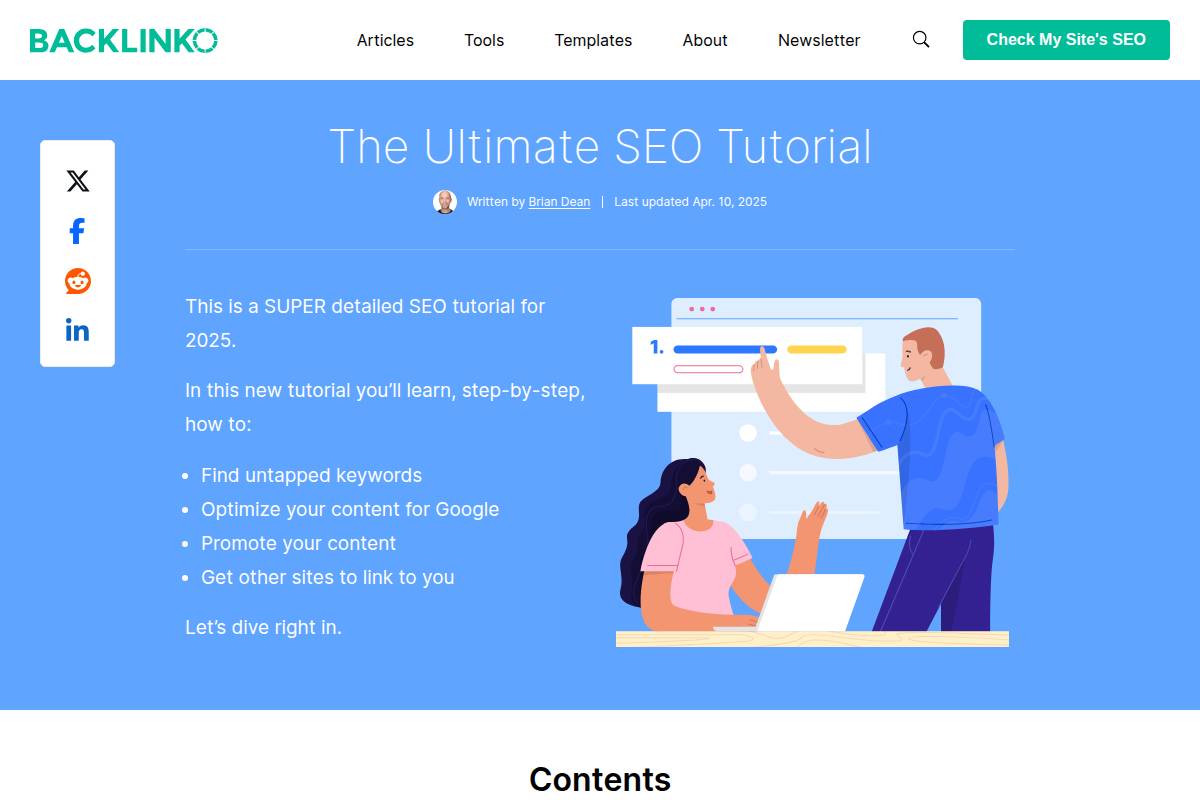
Backlinko has earned a reputation for publishing SEO resources that are clear, practical, and immediately useful. Its library includes visually-driven guides and data-backed experiments that offer actionable strategies to boost rankings and traffic.
Unlike most blogs that rely on long text articles, Backlinko uses design elements and experimentation results to help readers grasp complex SEO concepts quickly. For instance, their visual explanation of the “Skyscraper Technique” has been widely cited and emulated by SEO professionals worldwide.
Key Details
Backlinko’s content stands out because it utilizes infographics, data charts, and annotated screenshots in nearly every post. These visual assets break down complicated topics such as technical SEO audits or link building strategies into easily digestible steps.
To maximize impact, each guide is formatted to encourage engagement and social sharing. Early articles about Google’s ranking factors or YouTube SEO, for example, include attractive graphics and visual summaries—making them highly shareable on platforms like Twitter and LinkedIn. Posts are often structured to target Google featured snippets, combining concise headers and graphic elements to increase snippet acquisition.
What Makes It Special
The frequent use of unique, custom-designed visuals not only enhances comprehension, but dramatically increases the potential for backlinks. For example, Backlinko’s content is regularly cited with embedded infographics in articles by HubSpot, Ahrefs, and even Search Engine Journal, boosting its domain authority and organic reach.
By making guides easy to share and reference, Backlinko amplifies social visibility and improves content discoverability—both crucial for generating natural backlinks and organic traffic.
Considerations
One tradeoff for producing professional, visually-rich resources is the demand for design and development expertise. Creating custom graphics and interactive charts requires collaboration with skilled designers, which can increase production time and costs.
For organizations lacking dedicated creative teams, replicating Backlinko’s visual style may require outsourcing or investing in training and design tools, such as Adobe Illustrator or Figma.
Best For
Backlinko’s approach is especially valuable for agencies looking to differentiate their educational content, affiliate marketers aiming for high-authority backlinks, and business owners seeking organic growth through authoritative guides.
For example, digital marketing agencies like Siege Media frequently reference Backlinko’s visual guides when educating clients on technical SEO or advanced link acquisition strategies.
Additional Info
Many of Backlinko’s guides are tailored to the U.S. SEO landscape, featuring data and examples relevant to American businesses. As a result, they’re often referenced by high-authority news outlets and educational websites, such as Forbes and Moz, further increasing trust and citation frequency.
This U.S.-focused angle leads to more industry-specific backlinks, especially from websites seeking reliable resources rooted in the American search market.
Reference:
The Ultimate SEO Tutorial for 2025
How to Choose the Right Content Marketing SEO Strategy
Choosing an effective content marketing SEO strategy means aligning your resources, audience insights, and competitive benchmarks for optimal search visibility and impact. Successful strategies reflect both organizational strengths and the nuanced preferences of your target market, requiring careful planning, real-world analysis, and adaptability.
Actionable Steps
An effective SEO-driven content marketing strategy for a U.S. audience involves more than brainstorming blog ideas or posting sporadic updates. Deliberate evaluation, competitive research, and a clear feedback loop are vital for sustained results and growth. Below are specific, actionable steps to guide Indexly and its stakeholders.
Assess Your Team’s Strengths
Start by evaluating your internal capabilities. Some teams excel at producing in-depth whitepapers or data-driven studies, while others shine in video storytelling or infographic design. For example, Neil Patel’s content team leverages advanced analytics and custom visuals, giving them a distinct edge in producing SEO-optimized explainer videos and downloadable guides that consistently outperform competitors on YouTube and organic search.
Map skill sets such as data analysis (using Tableau or Google Data Studio), on-camera presentation (for product walkthroughs), or graphic design (using Figma or Canva) to content types the team can deliver at a high standard.
Match Content Types and Topics to U.S. Audience Preferences
Understand what resonates with American audiences using analytics tools like Google Trends, Ahrefs, or Semrush. For instance, HubSpot increased U.S. organic traffic by focusing blog content on trending CRM questions and SaaS tutorials after reviewing search intent data.
Consider A/B testing different formats—such as long-form guides versus short “how-to” videos—to identify which best drives engagement and conversion among your U.S. segments.
Research Top Competitors’ SEO Content Strategies
Competitive analysis is essential. Use tools like Semrush to dissect which content types and keywords deliver the most traffic to industry leaders such as Moz or Backlinko. Identify gaps—topics they rank for but don’t cover in depth—that represent untapped opportunities.
For example, when Shopify identified that its competitors weren’t providing comprehensive guides on multi-channel retail integrations, they produced a dedicated content hub, quickly improving keyword rankings and SERP visibility.
Plan for Ongoing Content Maintenance and Updates
Sustainable SEO performance depends on regular audits and updates. Outdated articles can lose rankings and drive the wrong traffic. In 2023, HubSpot tripled the traffic to its “best CRM” comparison page by updating screenshots, pricing, and feature lists every quarter, ensuring content relevance and accuracy.
Test, Measure, and Scale
Pilot one strategic approach before broad implementation. For example, Indexly could launch a pilot series of comparison posts on different SEO tools, track results via Google Analytics (measuring bounce rates and goal completions), and then expand successful formats. This experimentation ensures resources are focused where ROI is proven.
Frequently Asked Questions
Video Content vs. Pillar Pages
Choosing between video content and pillar pages depends on both your target audience’s preferences and the content assets your team can produce effectively. For example, a B2B SaaS company like HubSpot leverages well-structured pillar pages for SEO, allowing users to access in-depth written guides and interconnected articles. In contrast, e-commerce brands such as Glossier gain significant traffic from product walkthroughs and tutorials on YouTube.
Videos excel at driving engagement and are effective on platforms prioritizing visual content, such as Instagram Reels or TikTok. On the other hand, pillar pages reinforce authority within a niche and improve on-site SEO through strategic internal linking and comprehensive coverage.
For businesses with strong writing resources, investing in pillar pages can yield consistent organic traffic. Brands with in-house video talent often benefit from diversifying into explainer clips and product demos.
Are Topic Clusters Essential for All Websites?
Topic clusters are a popular strategy for improving SEO, but their necessity varies by website size and content ambition. Large, content-rich sites—think Moz or WebMD—benefit from clustering content around central themes, boosting topical authority and ranking breadth.
Smaller businesses or newer sites often see stronger early returns by focusing on targeted blog posts or case studies. For instance, a boutique agency might publish detailed success stories with local clients before expanding into cluster strategies as their content library grows.
How Often to Update SEO Content Strategies?
Search algorithms, user behavior, and competitor content are constantly evolving. Regular reviews are vital for maintaining rankings and ensuring information stays accurate. Major players like Forbes and The Wirecutter revisit their core pages every quarter to reflect changes in products, statistics, and search trends.
Quarterly audits allow teams to identify decaying content and refresh critical landing pages or blog posts, supporting both user engagement and sustained visibility.
Is Original Data Necessary for SEO?
While it’s not mandatory, original data—such as unique research or exclusive case studies—is a proven differentiator in the U.S. SEO landscape. Studies published by Backlinko or BuzzSumo often attract substantial backlinks due to their proprietary insights.
Publishing authentic surveys or sharing internal analytics (for example, Stripe’s annual business reports) establishes authority and provides journalists or industry writers tangible reasons to reference your work. Websites leveraging original data often become sources for industry roundups and expert commentary.
Does Visual Content Boost SEO?
Visual content consistently enhances SEO performance by increasing shareability and user dwell time. Sites like Statista and Neil Patel’s blog utilize infographics and data visualizations to break down complex topics, often earning placement in Google’s featured snippets.
Infographics and custom charts encourage external sites to link back when citing visuals, strengthening backlink profiles and improving overall ranking potential. Engaging visuals can turn otherwise technical subjects into easily digestible assets for readers and search engines alike.