
You’ve probably seen entire blog posts, product descriptions, or social captions appear in seconds with a single prompt—and wondered what’s really happening behind the scenes. AI-generated content is reshaping how teams plan, write, and optimize content, but it also raises questions about quality, originality, and search visibility.
This beginner-friendly overview breaks down what AI-generated content actually is, how AI content automation works, and where it fits into modern SEO. You’ll see how tools like Keywordly can support research, drafting, and optimization, what it takes to keep content search-friendly and authentic, and why human strategy and oversight still matter if you want consistent, long-term results.
AI-generated content isn’t here to replace human creativity—it’s here to expose how inefficient your old content process really was. With tools like Keywordly turning ideas into SEO-ready assets in minutes, the real competitive edge isn’t who writes more, but who learns to orchestrate humans and AI smarter and faster.
Intro
Context and Promise
AI-generated content is changing how brands plan, produce, and ship content across blogs, landing pages, and even product descriptions. Instead of building every article from scratch, marketers are using tools like Keywordly to research topics, outline drafts, and publish SEO content at a scale that was impossible with purely manual writing.
This shift matters because Google is rolling out AI Overviews, and platforms like ChatGPT and Perplexity are becoming discovery channels on their own. Brands that can consistently produce high-quality, optimized content now have an edge not just in traditional rankings, but in AI-powered answers as well.
The challenge is that manual content creation is too slow and expensive to keep pace with modern SEO demands. An in-house writer producing four long-form posts a month will struggle against competitors pushing 30–50 optimized pieces using AI-assisted workflows. Agencies working with tight margins feel this even more when clients expect more content without higher retainers.
AI content automation offers a way out of that bottleneck. By combining automated briefs, AI-assisted drafting, and systematic optimization, you can turn a scattered content process into a repeatable pipeline. For example, a SaaS brand can generate a full cluster of comparison pages, feature explainers, and support articles in weeks instead of quarters.
In this guide, you’ll learn what AI-generated content actually is beyond the hype, and how automated content generation differs from broader content automation. You’ll see practical ways to integrate AI tools into your workflow, how to stay aligned with Google’s spam and quality guidelines, and how platforms like Keywordly can power an AI-first content plan without sacrificing quality or brand voice.
“AI-generated content is a tool — not magic. It’s designed to help you say smarter things faster.”
1. Understanding AI-Generated Content and Content Automation
Defining AI-Generated Content
AI-generated content is any text, image, video, or audio created by algorithms instead of being drafted line-by-line by humans. Modern systems like GPT-4 and Midjourney learn from massive datasets and then generate content that closely resembles human work, as outlined in this complete guide to AI-generated content.
These tools spot patterns in language, structure, and style, then use probability to predict what should come next. Brands use them to draft blog posts, SEO pages, social captions, product descriptions, and even email sequences, often inside platforms like Keywordly that combine research, briefing, and AI writing in one place.
How Automated Content Generation Works
Automated content generation starts with an input: a prompt, brief, URL, or structured data. The AI model predicts the next word repeatedly until it forms paragraphs that match the requested style and format. Clear prompts such as “1,000-word comparison blog post targeting ‘best CRM for small business’” dramatically improve relevance and structure.
Workflow tools then layer on templates and content types—product pages, listicles, LinkedIn posts, or FAQ sections. Training data, fine-tuning, and ongoing user instructions shape tone, factual accuracy, and search alignment, which is why SEO teams rely on systems like Keywordly that tie AI drafting directly to keyword research and on-page optimization.
Content Automation vs. AI Content Automation
Content automation originally meant using rules-based systems—like Zapier workflows or native WordPress scheduling—to handle repetitive tasks. Teams might auto-publish approved drafts, push posts to Buffer or Hootsuite, or apply standard formatting without touching the underlying copy.
AI content automation goes further by generating, expanding, summarizing, or rewriting the content itself. When you combine AI writing with workflow automation—for example, Keywordly creating a draft, routing it to an editor, then auto-scheduling once approved—you get a near end-to-end pipeline from keyword to published page.
Myths and Misconceptions
A common myth is that AI content is inherently low quality or spammy. In reality, quality depends on the strategy, prompts, and human editing. HubSpot, for instance, reported using AI tools to accelerate blog ideation while still relying on editors to refine voice and ensure expert-level accuracy.
Another misconception is that AI will replace writers or that Google automatically penalizes AI content. Google’s documentation focuses on helpful, original content regardless of how it’s produced. The most effective SEO teams pair human expertise with AI research, drafting, and optimization to increase output while protecting quality and brand credibility.
“Think of AI as a drafting partner — it doesn’t replace creativity, it accelerates it.”
2. How AI Content Automation Fits Into Modern SEO and Marketing

2. How AI Content Automation Fits Into Modern SEO and Marketing
Why Teams Are Turning to AI-Powered Content Creation
Marketing teams are under pressure to ship more content across blogs, landing pages, product education, and social channels. HubSpot’s State of Marketing report shows blogs and social remain top channels, but teams are expected to publish multiple times a week with the same or smaller headcount.
AI content automation in platforms like Keywordly helps turn keyword research into publish-ready drafts, so a single strategist can support multiple brands or product lines without burning out.
Budget and time constraints make a fully manual process unrealistic for most teams. Agencies juggling 20+ clients, or SaaS companies like Ahrefs publishing dozens of articles a month, rely on templates, playbooks, and now AI to maintain cadence.
With AI handling first drafts and repurposing, content leads can redirect budget toward experts, designers, and promotion instead of just writing hours.
Competitive niches also demand faster experimentation and localization. For example, an eCommerce brand can use Keywordly to spin up localized product guides for Spanish and French markets, test multiple angles, and quickly refresh underperforming pages based on performance data.
This creates a feedback loop where content testing becomes continuous rather than a once-a-quarter project.
AI-Generated Content in Google and AI Search
Search is shifting toward topic coverage and clear answers, not just exact-match keywords. AI-generated content allows teams to cover broader keyword clusters—such as “email marketing for nonprofits” plus related FAQs—without writing each page from scratch.
Using Keywordly, you can generate cluster-based outlines that target primary terms and long-tail variants in a single content hub.
AI experiences like Google’s AI Overviews, ChatGPT, and Perplexity favor content that answers questions clearly and concisely. Well-structured AI-assisted articles make it easier for these systems to extract accurate answers, especially when headings, schema, and internal links are clean.
For example, detailed how-tos with step lists and examples (similar to Backlinko’s tutorials) tend to be referenced more often in AI-style summaries.
However, volume alone is not enough. Google’s documentation stresses originality, depth, and experience. AI-created pages need unique insights, data, or examples to stand out.
A practical approach is using Keywordly to generate drafts, then layering in proprietary data, customer stories, or screenshots before publishing, so content earns links and trust signals that matter in both classic and AI search.
Content Automation Across the Full SEO Workflow
AI’s impact in SEO is no longer limited to writing paragraphs. Teams are automating the entire research-to-publish pipeline. Keywordly can ingest a seed topic, pull SERP data, and cluster hundreds of keywords into logical themes in minutes, something that used to take analysts hours in spreadsheets.
This lets strategists quickly see which clusters deserve pillar pages, supporting articles, or FAQs based on estimated traffic and intent.
Once opportunities are clear, AI can produce content briefs, outlines, and drafts tailored to target personas. For example, a B2B SaaS marketer might generate a brief for “SOC 2 compliance checklist” that includes must-cover questions, subheadings, and internal link targets.
Writers or editors then refine these drafts rather than starting from a blank page, cutting ideation time by half or more.
On-page optimization is also ripe for automation. Keywordly can suggest internal links from high-authority pages, generate SEO titles and meta descriptions, and flag thin sections that need more detail.
Over time, this creates consistent optimization standards across hundreds of URLs, something that’s difficult to maintain manually in large sites or multi-brand portfolios.
Where Humans Add the Most Value
Even with powerful automation, human input is what makes content credible and differentiated. Google’s E-E-A-T framework rewards experience and expertise—things AI cannot fabricate responsibly. A cybersecurity consultant explaining a real breach or a CFO describing an actual forecasting process provides nuance that generic AI text cannot match.
Keywordly’s role is to free those experts from doing basic drafting, so their time is spent on insight, not formatting.
Strategic choices also remain firmly human. Deciding which topics align with revenue goals, which narratives support positioning, and how aggressively to target competitors are business decisions, not prompts.
Marketing leaders can use AI-generated performance insights from Keywordly to inform these calls, but they still define the voice, boundaries, and priorities.
Human editors then turn AI drafts into polished, on-brand assets. They check facts, adjust tone, ensure compliance, and tighten narrative flow.
For agencies and in-house teams alike, the winning model is AI for scale and speed, humans for strategy and quality—using platforms like Keywordly to connect the two in a single workflow.
“The value of AI isn’t just speed — it’s seeing patterns and opportunities humans might miss.”
3. Key Types of AI-Generated Content (and When to Use Each)
Long-Form Articles and Blog Posts
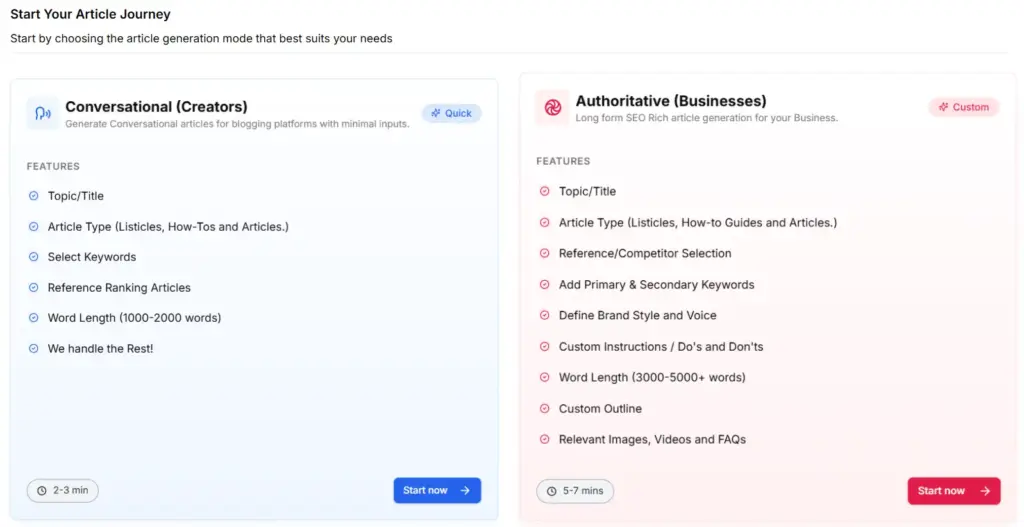
AI is well-suited for producing research-backed first drafts of long-form content, especially when you feed it clear keyword targets, briefs, and audience data. Platforms like Keywordly can ingest SERP data and outlines, then generate 1,500–2,500-word drafts aligned with search intent.
Long-form AI content works best for informational topics, how-to guides, and supporting cluster articles, such as “How to Conduct an SEO Audit” or “Beginner’s Guide to Technical SEO.” As noted in What is AI Generated Content? Complete Guide & Examples, AI models excel at assembling structured, factual text when given the right prompts.
Human review is non‑negotiable. Editors should add proprietary data, real campaigns, and fresh perspectives. For example, a SaaS brand might layer in its own case study showing how a content refresh increased organic traffic 42% in six months, plus updated stats from sources like HubSpot or SparkToro.
Short-Form Content: Social, Ads, and Emails
Short-form content benefits from AI’s ability to generate many variations quickly. You can prompt Keywordly or similar tools to create platform-specific social posts—LinkedIn thought-leadership hooks, X (Twitter) threads, or Instagram captions—from a single blog URL or theme.
For ads, AI can spin up dozens of angles and headlines for Google Ads or Meta campaigns, which you then A/B test. A DTC brand spending $50,000 per month on Meta could test 30 AI-generated headline variations and scale the top 3 based on click‑through rate and ROAS.
Email teams can draft onboarding sequences, subject lines, and nurture flows with AI, then refine tone, compliance, and personalization. For instance, an agency might generate a 7‑email lead nurture sequence and have strategists revise only the top 20% of high-impact messaging.
SEO Assets and Micro-Copy
Micro-copy is where AI can quietly save hours. You can generate SEO titles, meta descriptions, and H1–H3 options aligned with specific keywords and SERP character limits. This is especially valuable when publishing at scale, such as optimizing hundreds of product pages.
AI can also propose outlines, FAQs, and schema-ready Q&A pairs that match People Also Ask queries. Keywordly can surface internal link opportunities and anchor text based on your existing content graph, improving both UX and crawlability.
Teams then choose the best variants, adjust tone, and ensure compliance with brand guidelines or legal constraints—critical in industries like finance and healthcare.
Repurposed and Derivative Content
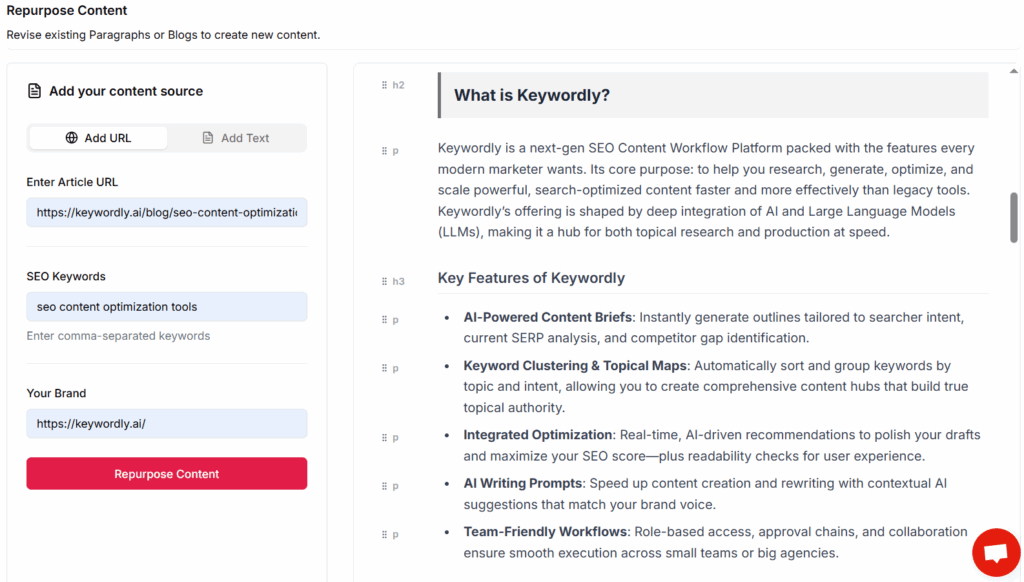
Repurposing is one of the highest-ROI uses of AI-generated content. You can upload transcripts from webinars, podcasts, or research reports and have AI transform them into blog posts, email series, social snippets, and even YouTube descriptions.
For example, a 45‑minute webinar on “AI for B2B SEO” could become a pillar blog post, a 5‑email educational sequence, and 10 LinkedIn posts—all produced in a few hours instead of days. AI can also summarize 30‑page whitepapers into executive summaries or slide decks for sales teams.
This approach keeps messaging consistent across channels while cutting manual rewriting time. Content leads then refine structure, check accuracy, and prioritize the highest-impact assets for promotion and link-building.
4. How to Automate Content Creation With AI Step by Step

4. How to Automate Content Creation With AI Step by Step
Choosing What to Automate vs. Keep Human-Led
Effective AI automation starts with deciding which tasks actually benefit from it. The goal is to free your team from repetitive work so they can focus on strategy, creativity, and brand voice.
In Keywordly, many teams automate first drafts, outline generation, and meta description variations, while keeping final messaging and positioning human-led.
Begin by automating repetitive, low-value tasks like drafting title options, FAQ ideas, or summarizing research. For example, an agency managing 50 blog posts a month can use AI to generate three outline versions per keyword, cutting planning time by 40–60%.
Reserve strategy, topic selection, and final editorial approval for humans. HubSpot’s content team, for instance, uses AI for outlines but relies on editors to align with their brand narrative and data standards before publishing.
Create a simple decision framework: automate tasks that are high-volume, rules-based, and low-risk; keep human-only for high-impact pages, sensitive topics, and thought leadership. Document this in your content playbook so writers and editors know when to use Keywordly’s AI and when not to.
Building AI-Powered Content Plans from Keyword Research
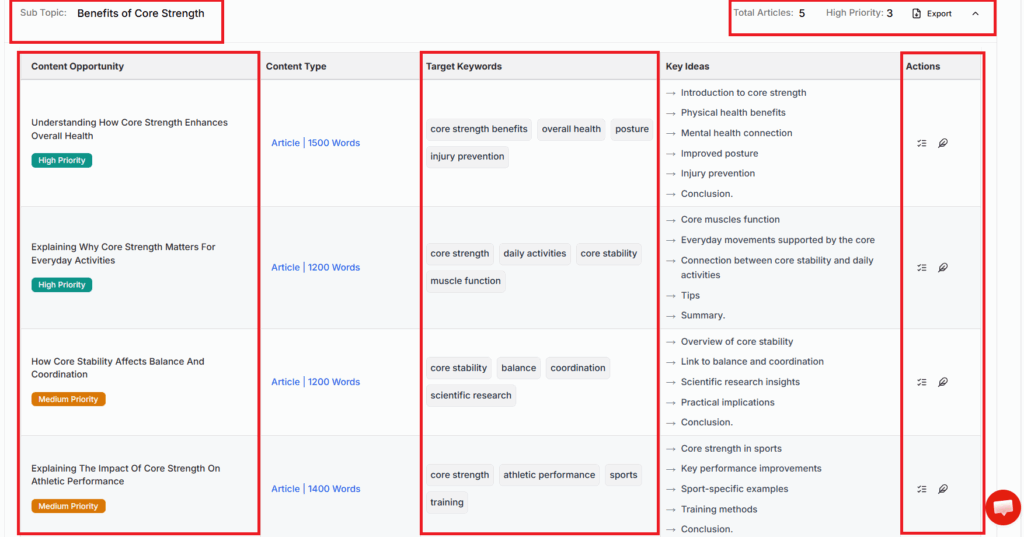
Automation works best when it’s anchored to solid keyword research. Start by defining core topics, search intent, and content clusters instead of chasing isolated keywords.
Keywordly can turn large keyword exports into structured topic clusters grouped by intent (informational, commercial, transactional), helping you map content to the full funnel.
Map keywords to content types and funnel stages: for example, “what is zero-click search” becomes a top-of-funnel guide, while “SEO content automation software” aligns with comparison or product-led posts. This prevents duplicate content and clarifies where each asset fits.
Use AI to convert keyword lists into content calendars and briefs. A SaaS company targeting 200 keywords can have Keywordly generate a 3‑month calendar with titles, outlines, and target SERP features, then refine priorities based on traffic potential and business goals.
Using AI Templates and Workflows
Templates are where automation becomes scalable. Instead of inventing a new prompt every time, you standardize how blog posts, product pages, and emails are produced.
Within Keywordly, create reusable AI templates for formats like comparison articles, case studies, and landing pages, each with predefined sections, CTAs, and internal link slots.
Standardize structure, tone, and brand guidelines directly inside these templates. For example, a B2B agency can lock in a 1,500-word structure with an executive summary, H2 problem section, H2 solution section, and data-backed examples, ensuring every AI draft meets baseline quality.
This reduces variability and editing time. One ecommerce brand using consistent AI templates for product descriptions reported cutting editorial revisions by roughly 30%, because writers started from on-brand drafts instead of unstructured text.
Integrating AI Into Editorial and Publishing
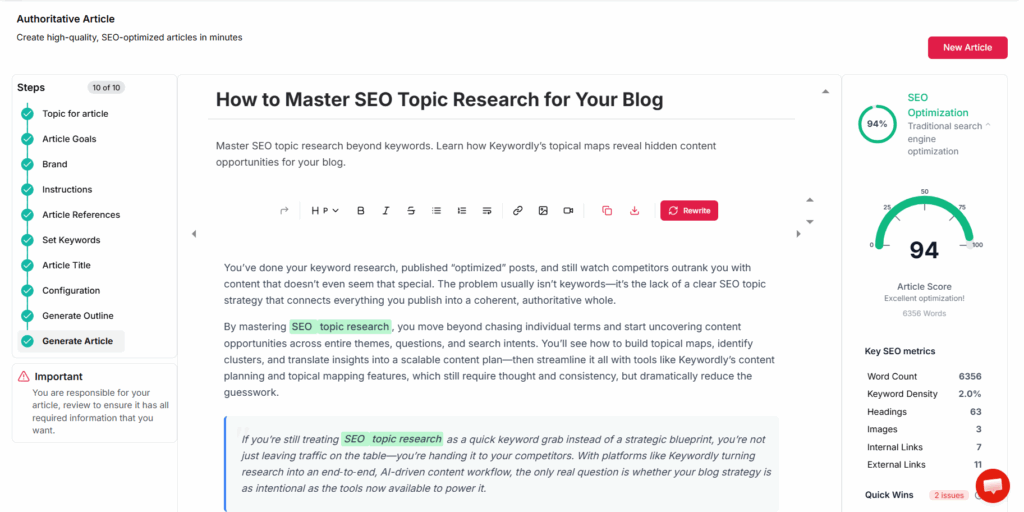
To get real leverage, AI has to live inside your existing tools and workflows instead of sitting off to the side. Think of it as another teammate in your editorial process.
Integrate Keywordly with your CMS and project management stack so AI-generated briefs and drafts flow directly into WordPress, Webflow, or Asana. This keeps writers, editors, and SEOs working from the same source of truth.
Define review and approval steps so AI drafts are always checked before publishing. For example, set a rule that every AI-assisted article must be reviewed by an editor for accuracy, originality, and E‑E-A-T signals before it moves to “Ready to Publish.”
Train your team on when and how to use AI responsibly. Run workshops showing real examples of good vs. bad AI outputs, clarify plagiarism policies, and emphasize fact-checking. Treat AI as an accelerator, not an autopilot, especially for YMYL or compliance-heavy topics.
“AI generated content works best when the purpose is clear — not when it’s left to guess.”
Read this Article : 5 Proven AI Content Writing Steps to Create High-Quality Content
Read this Article : 10 Best AI Content Writing Tools in 2026
5. Best Practices for High-Quality, Search-Friendly AI Content
Aligning With E‑E‑A‑T and Google Guidelines
AI content only ranks consistently when it reflects real experience, credible expertise, and clear ownership. Google’s E‑E‑A‑T framework rewards pages that show who is behind the content, why they’re qualified, and how trustworthy their information is.
With Keywordly, you can map target topics to specific subject-matter experts, then use AI to draft content that your experts refine, sign, and approve before publishing.
Make authors visible with bios that state credentials, roles, and relevant experience. For example, a healthcare article should credit a licensed RN or MD, not just “Content Team.”
Link to LinkedIn profiles or professional pages and reference primary sources like CDC or Pew Research to reinforce authority.
Prioritize depth and usefulness over volume. Instead of auto-generating 50 short posts on “email marketing tips,” create one comprehensive guide supported by original checklists, screenshots from Mailchimp or Klaviyo, and commentary from your CRM lead.
Prompting for Accurate, On-Brand Output
Strong prompts are your style guide, brand book, and brief combined. The more context you give AI about your audience, offer, and voice, the closer the draft will be to publication-ready.
Within Keywordly, save prompt templates that specify funnel stage, word count, structure, and desired CTAs for repeatable, on-brand content.
Feed the AI examples of top-performing pieces, such as a HubSpot blog that drove 3x organic leads or a Keywordly-optimized case study that ranks for “B2B SEO playbook.”
Ask it to mirror the structure, depth, and formatting while changing arguments and data to fit your brand and niche.
Review performance metrics and editor comments, then refine prompts. If editors often rewrite introductions, add explicit guidance like “Hook with a concrete stat and avoid buzzwords.”
Fact-Checking and Human Editing
AI can hallucinate stats or misinterpret studies, which damages trust and rankings. Build a review workflow where editors verify every data point and citation against original sources such as Statista, McKinsey reports, or government datasets.
Store approved references inside Keywordly so writers and AI draw from vetted material instead of guessing.
Editors should polish for clarity, narrative flow, and brand alignment. For instance, a SaaS company like Ahrefs consistently uses direct, no-fluff language—your editor ensures AI outputs match that tone.
Layer in real examples: describe an actual A/B test your team ran, reference a campaign that cut CAC by 18%, or share success using Keywordly’s content audit to fix underperforming blog clusters.
Avoiding Spammy and Duplicate Content Traps
Over-optimizing AI content for micro-variations of a keyword often looks like spam to both users and search engines. Publishing 40 near-identical posts on “best CRM for startups” with tiny phrasing tweaks is a red flag.
Instead, build one authoritative piece and support it with clearly differentiated cluster articles targeting distinct intents, like implementation guides or comparison pages.
Each URL should answer a unique question or add a new angle. For instance, separate content for “SEO content brief template,” “SEO content workflow,” and “SEO content audit” can interlink while avoiding overlap.
Use Keywordly or tools like Copyscape to check for plagiarism and overly derivative phrasing. When AI mimics source language too closely, rewrite sections with your own frameworks, proprietary data, and brand stories so every article stands on its own.
“Understanding how AI thinks — not just what it writes — makes your content smarter.”
6. Measuring the Impact of AI-Powered Content Creation

6. Measuring the Impact of AI-Powered Content Creation
Key Metrics for AI-Generated Content
To understand whether AI is actually helping your SEO, you need a clear measurement framework. Start by tracking organic traffic, impressions, and click-through rates (CTR) in tools like Google Search Console and Keywordly’s performance dashboards.
For example, HubSpot reported a 13% higher CTR after systematically refining title tags and meta descriptions, many drafted with AI and then edited by humans. You can mirror this by tagging AI-assisted articles in Keywordly and comparing CTR against your baseline content.
Rankings and engagement tell you if searchers find your content valuable. Monitor positions for target keywords and topical clusters over time, then pair that with time on page, bounce rate, and conversions in Google Analytics or Plausible.
A B2B SaaS blog, for instance, might see AI-assisted comparison posts holding top-5 rankings while thin AI listicles slip to page two. That pattern signals where to double down on human editing and where to expand sections to deepen expertise.
Comparing AI-Assisted vs. Manual Content
To judge AI fairly, separate its output from purely manual work. In Keywordly or your analytics platform, use naming conventions or custom dimensions to tag content as “AI-assisted” or “manual.”
This lets you compare, for example, 50 AI-supported how-to guides with 50 fully human case studies. An agency might discover that AI-backed FAQ pages drive 30% more organic sessions, while manual long-form thought leadership earns more backlinks and higher dwell time.
Look at topics, not just formats. You may find AI excels at product-led explainers and schema-optimized reviews, while sensitive areas like legal, medical, or high-stakes financial advice demand heavier expert input and manual drafting.
A/B Testing AI Content Automation
AI makes it faster to generate testable variations. Use it to create multiple headlines, introductions, and calls to action, then A/B test them in tools like Google Optimize, VWO, or Optimizely.
For instance, an ecommerce brand might test two AI-written product page intros: one emphasizing free shipping, another highlighting social proof. If the social-proof variant improves add-to-cart rate by 9%, roll that messaging style into your Keywordly templates.
You can also test different prompting styles. One prompt may produce concise, benefits-first copy, while another yields more narrative intros. Measure which pattern converts better, then standardize that prompt structure across new landing pages and blog posts.
Creating Continuous Optimization Loops
AI content performs best when it’s part of a feedback loop, not a one-off project. Feed performance data back into your AI briefs and prompts so the system “learns” what works for your audience.
If Keywordly shows that posts with clear comparison tables and FAQ sections rank faster, bake those elements into your default AI templates. Refine tone, length, and structure based on what consistently wins clicks and conversions.
Schedule quarterly content audits focused on AI-generated pages. Update stats, expand thin sections, and improve internal linking. Many publishers see 10–20% traffic lifts by refreshing older posts, and AI can speed that rewrite process while your experts validate accuracy and nuance.
“AI can draft at scale, but quality still comes from people — context, clarity, and insight.”
7. Using Keywordly to Automate SEO Content Workflows
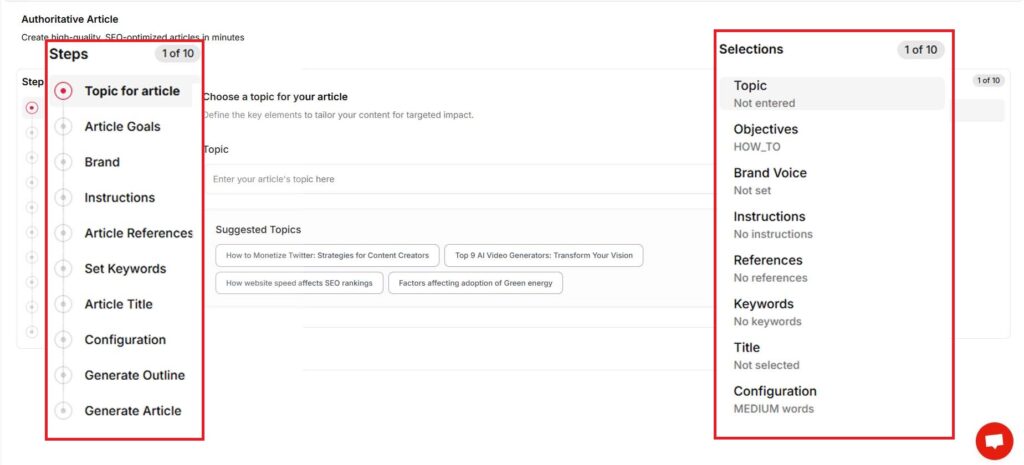
How Keywordly Powers Automated Content Generation
Keywordly connects keyword research, AI content ideation, and production so teams are not copying CSVs between tools or guessing what to write next. Once you’ve imported keywords from sources like Google Search Console or Ahrefs, Keywordly clusters them and feeds those insights directly into its AI writing workflows.
From there, the platform can generate content briefs, outlines, and first drafts for entire keyword sets. For example, an agency handling 200 long‑tail terms around “B2B SaaS onboarding” can spin up structured briefs and draft articles in hours instead of weeks, while preserving search intent and SERP insights.
This automation helps teams move from research to optimized, publish‑ready content in a single pipeline. Editors can refine Keywordly’s drafts, add brand voice and subject‑matter expertise, and then push approved content straight into WordPress or Webflow via integrations, cutting manual handoffs and version chaos.
Creating AI-Powered Content Plans in Keywordly
Effective SEO programs are built on topic clusters and consistent publishing. Keywordly lets you group related keywords into clusters such as “technical SEO audits,” “Core Web Vitals,” and “site speed optimization,” then map each cluster to formats like blog posts, pillar pages, landing pages, or resource hubs.
Its AI engine then turns those clusters into structured content calendars aligned with search volume, difficulty, and business priority. A B2B marketing team at a company like HubSpot could, for instance, schedule 30 cluster‑based articles over a quarter, auto-assigned to writers, editors, and designers.
Inside Keywordly, you can assign tasks, attach AI-generated briefs, and track progress from idea to publication in one place. This reduces reliance on scattered spreadsheets and generic project tools that lack SEO context, while making it clear which pieces are in research, drafting, editing, or live stages.
Streamlining Audits and Optimization With AI
Maintaining rankings requires continuous auditing and optimization, not just new content. Keywordly crawls your existing content library and flags gaps, cannibalization risks, and underperforming URLs based on traffic, impressions, and conversions pulled from analytics tools.
AI suggestions then highlight whether to refresh, expand, or consolidate articles. For instance, if two guides on “Shopify SEO checklist” are competing, Keywordly can recommend merging them into one updated resource, adding missing semantically related terms, and aligning headings with top‑performing SERP results.
At scale, Keywordly automates metadata optimization, internal link suggestions, and on-page improvements like header structure and FAQ sections. A retail brand managing thousands of product pages can quickly roll out AI-assisted meta titles, schema-informed descriptions, and contextual internal links that support both Google and AI search visibility.
Example Workflows for Different Teams
Different teams use Keywordly’s automation in different ways, but the core goal is the same: reduce manual SEO busywork while improving quality. Agencies often centralize all client projects, giving strategists, writers, and account managers shared views of priorities and performance.
An agency working with ecommerce brands and SaaS companies, for example, can manage each client’s keyword research, AI-generated briefs, and draft content in one workspace. Standardized templates ensure that content for a Shopify store and a Salesforce partner blog both follow clear SEO and brand guidelines.
In-house SEO teams use Keywordly to coordinate efforts across content, product, and brand stakeholders, aligning AI prompts, tone, and approval flows. Solo creators, such as niche bloggers or newsletter writers, can treat Keywordly as an end-to-end assistant—from mining low-competition keywords and drafting articles to optimizing existing posts for AI search systems like ChatGPT and Perplexity.
Conclusion: Making AI-Generated Content Work for Your Brand
Key Takeaways and Strategic Role
AI-generated content works best when you treat it as a force multiplier for your team, not a shortcut to skip strategy or expertise. Tools like Keywordly and Jasper can turn a solid brief into a first draft in minutes, but they still rely on your subject-matter knowledge and brand voice to be effective.
Think of AI as the equivalent of a skilled research assistant: it can summarize reports, suggest structures, and surface angle ideas, while your marketers and writers provide judgment, originality, and context your audience actually trusts.
When used thoughtfully, AI content automation supports sustainable SEO growth by helping you cover topics more completely and consistently. For example, HubSpot uses AI-assisted workflows to expand content clusters around CRM, producing pillar pages and related posts that internally link and capture long-tail queries.
This approach aligns with Google’s emphasis on depth and topical authority, while also feeding AI-driven search tools like ChatGPT with clear, well-structured answers that are more likely to be surfaced.
Brands that win with AI balance automation and human creativity. A B2B SaaS company might use Keywordly to generate outline options and meta descriptions, then have strategists refine angles, add case studies, and weave in unique data.
That human layer—stories, quotes, and contrarian perspectives—is what differentiates your content from generic AI text and builds a recognizable, credible brand narrative over time.
Next Steps to Get Started
The most effective way to adopt AI is to start with a focused pilot rather than overhauling your entire content operation. For example, you might select one content cluster, such as “local SEO for dentists,” and use AI to generate supporting blog posts, FAQs, and service page enhancements.
Track metrics like organic clicks, impressions, and average position over 60–90 days in Google Search Console to evaluate impact before scaling to more clusters.
Clear rules and workflows keep quality high as automation increases. Define which topics are AI-assisted only, who must review drafts, and what quality thresholds apply—such as requiring original examples, sources, and internal links before publication.
Agencies often add AI content checklists inside tools like Asana or ClickUp so editors can quickly review for factual accuracy, E-E-A-T signals, and alignment with brand style guidelines.
Platforms like Keywordly help you connect the dots between keyword research, AI generation, and optimization in one environment. You can identify search intent, generate on-brief drafts, and run audits for on-page SEO gaps without jumping between multiple tools.
As you refine prompts and templates, Keywordly can become the backbone of a repeatable content engine that supports rankings on Google and improves how your brand appears in AI-powered search responses.
“AI becomes most powerful not when it replaces writing — but when it enhances thinking.”
Read this Article : AI Content Creation: A Practical Guide to Generate Better Content Faster
Read this Article : Proven SEO Content Writing Examples That Boost Engagement and Rankings
FAQs About AI-Generated Content and Content Automation
Common Questions Answered
AI-generated content and automation are reshaping how SEO teams, agencies, and brands produce content at scale. These FAQs address the most common concerns about quality, rankings, and where a platform like Keywordly fits into your workflow.
Use them as practical guidelines when deciding how much to automate, how much to keep human-led, and how to protect your organic performance while you scale.
What is AI-generated content, and how is it different from traditional content creation?
AI-generated content is text created by models like GPT-4, Claude, or Gemini based on prompts, data, and patterns in existing content. Traditional content creation relies on human writers doing research, outlining, drafting, and editing manually.
For example, a human writer at HubSpot might spend 4–6 hours researching and writing a 2,000-word guide, while an AI workflow in Keywordly can produce a first draft in minutes, leaving humans to focus on strategy, editing, and subject-matter expertise.
How safe is it to rely on automated content generation for SEO?
Used correctly, AI is safe for SEO, but “hands-off” automation can be risky. Large language models may hallucinate facts, miss search intent, or overuse similar phrasing, which can hurt engagement metrics and long-term rankings.
Top SEO teams at companies like Shopify and Zapier use AI as an assistive tool, not a replacement. They combine AI drafts with keyword research, human editing, and performance tracking tools like Google Search Console to maintain quality and relevance.
When should I use AI to automate content creation vs. writing content myself?
AI works best for standardized, repeatable formats: product descriptions, FAQ sections, meta descriptions, and templated blog structures. For instance, an ecommerce brand with 5,000 SKUs can use AI to generate consistent, SEO-optimized product copy while humans refine top-converting categories.
Write content yourself or with senior writers when stakes are high: thought leadership, data-backed studies, or content tied to brand positioning. A CMO article on LinkedIn or a Forrester-style report should be human-led with AI supporting research and editing.
How does Google treat AI-generated content, and can it hurt my rankings?
Google’s guidance focuses on “helpful, reliable, people-first content,” regardless of whether a human or AI wrote it. AI is not penalized by default; low-quality and unhelpful content is. Thin, unedited AI pages spun out by the hundreds can lead to poor engagement and possible devaluation.
For example, sites that auto-published thousands of unedited AI articles in 2023 saw visibility drops after Helpful Content updates, while brands that combined AI with expert review and citations maintained or grew traffic. Quality signals and user satisfaction remain the deciding factors.
Why do I need a platform like Keywordly instead of using generic AI tools alone?
Generic AI tools generate text, but they don’t manage SEO strategy, on-page optimization, or content operations. Keywordly layers keyword research, SERP analysis, outlines, internal linking prompts, and optimization scoring on top of AI generation.
For example, an agency handling 40 clients can use Keywordly to map topics, assign AI-assisted briefs, and measure content performance in one place, rather than juggling ChatGPT, separate keyword tools, and manual spreadsheets for tracking.
How can agencies and teams manage quality control when scaling AI content automation?
Agencies need clear workflows and review stages. A common approach is: SEO strategist defines the brief in Keywordly, AI generates a draft, a subject-matter expert reviews facts, and an editor polishes tone and structure. Each step is documented with checklists.
For example, a B2B SaaS agency might require fact-checking against vendor docs, adding real screenshots, and including at least one original example per section before publishing. This preserves quality while still letting AI handle 50–70% of the initial drafting effort.
Reference Articles:
Reference: → best-ai-keyword-research-tools
Reference: → keyword-clustering-boost-your-seo-content-strategy
Reference: How to Automate Content Creation: A Step-by-Step Guide
Reference: Keywordly: SEO Content Workflow Platform
Reference: → seo-content-optimization-tools-comparison
Reference: → ecommerce-content-optimization
Reference: AI-Powered Content Creation: How Artificial Intelligence …
Reference: Top ways to ensure your content performs well in Google’s
Reference: Three Types of Content and What They Mean for …
Reference: Generative AI beginner’s guide | Generative AI on Vertex AI