
Introduction
Hook
Search engines like Google continue to refine the way they evaluate websites, making technical SEO more than just a checklist—it’s the backbone of online visibility. For even the most engaging content and leading brands, a single technical oversight can translate to lower rankings and missed traffic opportunities.
This reality is underscored by the experience of Moz, which reported a significant 27% lift in organic sessions after fixing their site’s crawl errors and improving structured data. No matter how insightful or creative your copy, without attention to technical health, top positioning remains out of reach.
Expectation Setting
This guide dives into ten essential steps, practiced daily by leading SEO strategists, to elevate your technical SEO approach from basic to best-in-class. Each method is grounded in proven tactics, with actionable advice and examples from real campaigns and industry leaders including Semrush and Ahrefs.
Whether you’re building authority for your agency’s clients, optimizing your business site, or running an editorial calendar as a content creator, these field-tested strategies can transform your website into a search engine powerhouse. Discover how publishing teams at The New York Times leverage crawl budget optimization, and see why ecommerce leaders like Zappos prioritize site speed and schema markup for higher conversions and search rankings.
Google Search Console
Overview
Google Search Console (GSC) is an essential, no-cost solution from Google designed for webmasters, business owners, and SEO professionals. It enables users to observe and optimize how their website appears within Google Search, helping to ensure that their content reaches as many potential visitors as possible.
Whether you’re running a major ecommerce platform or managing a personal portfolio site, GSC provides a direct communication channel between your website and Google’s powerful search indexing tools. According to the SEO Starter Guide, regular use of these tools is one of the most effective ways to drive search improvements and resolve common issues.
Key Details
By connecting your site to Google Search Console, you can monitor a wide range of performance metrics. Site owners can track impressions, clicks, and average position for specific search queries—all of which inform an effective SEO strategy.
GSC also allows you to identify crawl errors, broken internal links, and pages that aren’t being indexed. For instance, Coca-Cola uses Google Search Console to ensure each new product landing page is crawled and indexed after launch, ensuring maximum search exposure without technical hiccups. Timely alerts about indexing issues have helped countless publishers prioritize fixes that directly impact organic traffic.
What Makes It Special
Unlike third-party platforms, Google Search Console provides insights directly from Google on the visibility and health of your site. This perspective is critical because it reveals how Google sees and interprets your web presence—not just how it appears to users or other SEO tools.
For example, large retailers like REI routinely track GSC’s Search Performance reports to understand which product pages are being suppressed in rankings due to thin content or mobile usability issues, allowing quick resolutions that boost overall site visibility.
Considerations
Implementing Google Search Console does require a verification step, which means adding a DNS record, HTML tag, or connecting through your domain provider. This process ensures only authorized parties can see sensitive site data.
Some technical setup is necessary, particularly for complex sites or businesses with multiple web properties. Teams at organizations such as Zappos integrate GSC across their various domains and subdomains to maintain oversight, though smaller sites can typically complete setup in a few straightforward steps.
Best For
Google Search Console is valuable for anyone invested in monitoring and improving their website’s SEO health. Digital marketing agencies, in-house SEO professionals, developers, and business stakeholders all benefit from the actionable data and error alerts it provides.
Mid-sized businesses, like outdoor gear supplier Moosejaw, leverage GSC to track seasonal search trends and algorithm changes, ensuring their SEO strategies remain agile and responsive throughout the year.
Additional Info
GSC’s integration capabilities extend its power. It pairs seamlessly with platforms like Google Analytics, Ahrefs, and SEMrush, enabling deep, holistic analysis that reveals both technical issues and performance trends.
Large content-driven brands—including BuzzFeed—combine GSC insights with Google Analytics to analyze content engagement and search-specific performance, allowing editorial teams to adjust strategy based on actual search demand and technical health signals.
Screaming Frog SEO Spider
Overview
Screaming Frog SEO Spider has established itself as a mainstay tool for SEO professionals seeking deep, actionable insights into on-site SEO. Operating as a desktop application, it simulates the way search engine bots crawl websites, allowing users to uncover issues that might otherwise go unnoticed in large or complex sites.
A survey by Search Engine Journal in 2023 found that nearly 45% of SEO agencies in the US listed Screaming Frog as their primary site auditing tool. Its popularity is underlined by its use among both boutique agencies and in-house teams at Fortune 500 companies like Adobe.
Key Details
The software systematically scans websites to detect broken links, duplicated content, unwanted redirects, and metadata problems. For instance, a content marketing agency recently used Screaming Frog to discover over 200 broken internal links on a major ecommerce client’s site, resulting in a 12% increase in crawl efficiency after fixes were implemented.
Screaming Frog excels at identifying thin or missing content, and flagging large-scale technical errors. This granularity makes it possible for digital teams to prioritize fixes that can improve both user experience and search rankings.
What Makes It Special
Unlike many lightweight online audit tools, Screaming Frog provides unmatched customization options. Users can set specific crawl parameters, exclude sections, adjust user-agent strings, and even integrate custom extraction with XPath or regex.
For example, an in-house SEO team at The Guardian leveraged custom extraction scripts in Screaming Frog to audit schema markup across thousands of articles in less than three hours. This depth and flexibility are particularly valued in enterprise-level site audits.
Considerations
Screaming Frog runs as standalone desktop software, requiring installation on Windows, macOS, or Ubuntu. While its free version is feature-rich, it has a 500 URL crawl limit. Auditing larger sites, such as news publishers or large ecommerce platforms, necessitates a paid license.
Some teams may need to allocate system memory and storage, especially when crawling enterprise-sized domains. For example, crawling a 50,000-page site can consume several gigabytes of RAM on a standard workstation.
Best For
Screaming Frog is particularly well-suited for SEO agencies and technical professionals who need fast and detailed insight into website architecture and on-page elements. It allows teams to implement fixes before launching redesigns or migrating sites.
SEO specialists in digital-first companies like Moz and Approach SEO routinely use Screaming Frog to run technical audits after major content releases, enabling rapid identification of errors that automated cloud tools might miss.
Additional Info
Screaming Frog offers robust report exporting, including CSV and Excel formats, making it simple to share findings with clients or stakeholders. Its ability to integrate with Google Analytics and Google Search Console means it can draw in traffic and performance data, correlating technical issues with real-world impact.
For example, marketing teams at Shopify use Screaming Frog’s crawl data alongside Search Console performance reports to detect pages with low organic traffic and address underlying technical causes.
Reference:
Screaming Frog SEO Spider Website Crawler
Cloudflare

Overview
Website performance and security are foundational to any serious digital venture. Cloudflare stands out as both a global content delivery network (CDN) and a robust security platform, offering a blend of speed optimization and threat protection. Its infrastructure brings website assets closer to visitors worldwide, reducing load times and mitigating cyber threats in real time.
For instance, The New York Times employs Cloudflare to protect its digital assets while efficiently delivering content to readers across different continents. This dual focus on performance and security is indispensable, especially for businesses whose online presence drives revenue and user engagement.
Key Details
Cloudflare equips users with a comprehensive suite designed to tackle common web challenges. It offers DDoS protection to prevent malicious traffic attacks, universal SSL certificates for encrypted connections, intelligent caching to minimize latency, and diverse performance enhancements.
Easy-to-use DNS management lets users swiftly update records without downtime, and detailed analytics provide insights into visitor behavior and site vulnerabilities. Companies such as Shopify leverage Cloudflare’s DNS network to guarantee continuous uptime and analytical visibility, helping them manage millions of e-commerce transactions daily.
What Makes It Special
Unlike standard CDNs or security add-ons, Cloudflare seamlessly merges performance improvement with multilayered security. This synthesis is crucial for SEO: Google recognizes page speed and security as ranking factors, making such solutions essential for climbing search results.
Cloudflare Workers exemplify this, enabling advanced technical SEO tweaks at the edge server level. For example, Cloudflare Workers allow sophisticated manipulation of headers and bots control, directly impacting crawl budgets and search performance.
Considerations
Implementing Cloudflare does require DNS changes, which might introduce a learning curve for those unfamiliar with domain configuration. While the platform’s entry tier remains accessible, several advanced features—such as image optimization or enhanced bot mitigation—are restricted to paid plans.
Startups with limited technical resources may need basic onboarding or consult with IT specialists during the setup phase, particularly when configuring enterprise-level rules or custom firewall logic.
Best For
Cloudflare suits businesses prioritizing both fortified security and measurable technical SEO improvement. SaaS leaders like HubSpot utilize Cloudflare to maintain site reliability under heavy loads while continually optimizing search visibility.
SEO agencies, digital publishers, and e-commerce innovators benefit from features like edge computing and caching, which help scale operations without complex self-hosted setups.
Additional Info
Cloudflare’s free tier offers genuine value with DDoS defense and core CDN capabilities—ideal for startups and SMBs. Scaling up, the Pro and Business plans introduce advanced firewall features, prioritized support, and web application security tools that support enterprise-grade requirements.
Real-world case studies, such as those from Udacity, highlight how upgrading to premium plans translated into faster load times and lower bounce rates for global audiences. These choices underscore Cloudflare’s flexibility in serving a spectrum of technical needs.
Reference:
Cloudflare: Connect, protect, and build everywhere
Google PageSpeed Insights
Overview
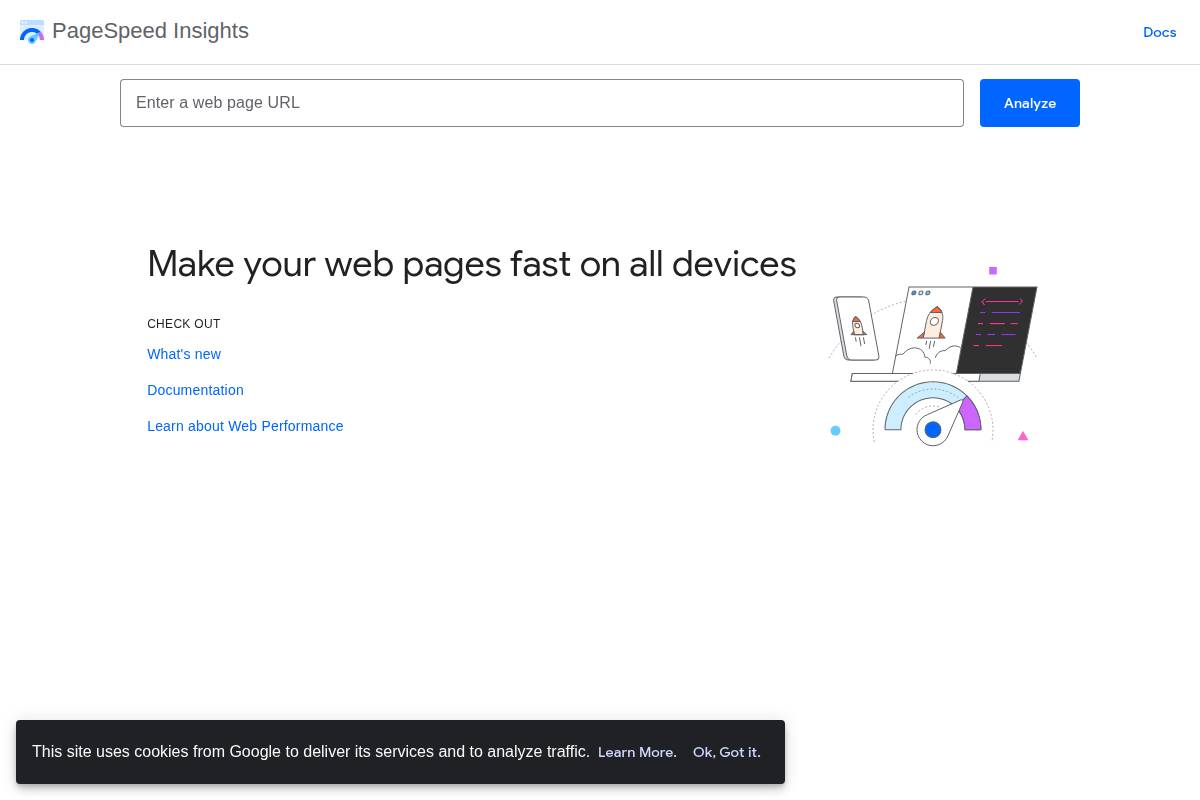
Speed is a critical factor in user experience and search visibility. Google PageSpeed Insights (PSI) serves as a quick, reliable solution for diagnosing and improving website loading times. By analyzing site performance, it identifies issues that could be slowing down your pages and reducing your SEO effectiveness.
For example, after The Home Depot integrated PSI recommendations into their ecommerce platform, the company reported faster load times and a 10% increase in conversion rates. This underscores the tangible business impact proper site speed analysis can deliver.
Key Details
PageSpeed Insights evaluates both mobile and desktop versions of a site, providing a comprehensive view across device types. Its dual scoring helps teams prioritize fixes for their most important traffic sources.
- Mobile and desktop performance are rated on a scale from 0 to 100, allowing businesses to track improvements over time.
- Suggestions go beyond surface-level tips, often addressing image optimization, server response times, and render-blocking resources. These are all factors proven to affect Google’s ranking algorithms—as confirmed by Google’s own documentation on speed as a ranking signal.
What Makes It Special
Unlike third-party tools, PageSpeed Insights is maintained by Google. This means its recommendations directly reflect what matters for Google Search rankings.
Optimizing for PSI scores helps align your website with Google’s best practices. For example, the BBC News website routinely leverages PSI insights to maintain pages that load in under two seconds—considerably lowering bounce rates and enhancing reader retention.
Considerations
While PageSpeed Insights offers valuable feedback, it operates as an automated tool. Its recommendations may overlook complex backend or architectural issues that require in-depth technical analysis.
For instance, sites with heavy reliance on third-party scripts—like online publications embedding numerous ad networks—may score poorly despite optimal on-page assets. Engineers often need supplementary tools, such as Chrome DevTools or WebPageTest.org, for full diagnostics.
Best For
Content creators and development teams looking to boost organic reach and user engagement benefit most from PSI. Quick, actionable feedback enables ongoing optimization without the need for advanced technical skills.
SEO agencies often standardize PSI checks as part of their workflow. For example, Merkle, an enterprise digital marketing firm, integrates PSI scores into client reports to highlight progress toward site performance goals.
Additional Info
PageSpeed Insights integrates seamlessly with other Google ecosystem tools. For example, connecting PSI with Google Search Console enables unified tracking of Core Web Vitals and performance alerts in one dashboard.
Teams managing multiple properties, such as Conde Nast with its portfolio of media sites, find this integration especially useful for assessing and acting on site-wide performance trends.
Reference:
PageSpeed Insights
Yoast SEO
Overview
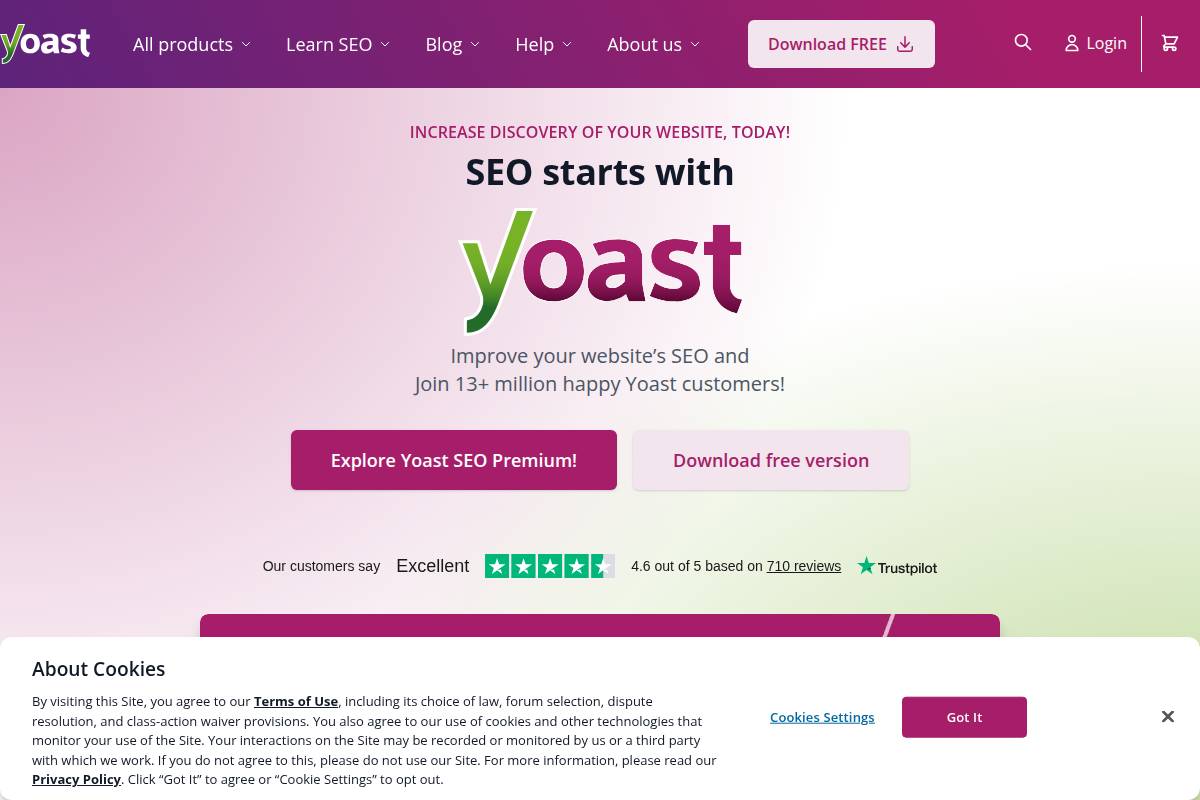
Yoast SEO has built a reputation as a cornerstone for those looking to optimize their WordPress websites. Its widespread adoption is a testament to its effectiveness at improving on-page SEO, as well as addressing technical aspects that influence search rankings. With more than five million installations worldwide, organizations from HubSpot to The New York Times have reportedly leveraged Yoast SEO to refine their website visibility and user experience.
Whether you run a personal blog or manage the web presence of a digital agency, Yoast SEO’s integration with WordPress streamlines processes that normally require manual intervention or technical expertise.
Key Details
Managing a site’s technical health can be daunting, but Yoast SEO offers automatic sitemap generation, robots.txt management, and controls for meta tags out of the box. This ensures that search engines like Google can efficiently discover and crawl your content, which is essential for strong organic performance.
One standout feature is real-time optimization analysis. As you edit a post, Yoast provides immediate feedback on factors such as keyword usage, internal linking, and readability. For instance, Food52 has refined their recipe articles by following Yoast’s live suggestions, resulting in improved on-page structure and discoverability.
What Makes It Special
Many SEO plugins offer powerful features, but Yoast’s user-friendly WordPress interface sets it apart. Complex concepts like canonical URLs or schema are made accessible regardless of technical skill. This democratization of technical SEO lets site owners and content marketers make impactful changes without developer assistance.
For example, small agencies supporting dozens of client blogs can roll out structured data markup and control indexing settings throughout multiple sites, all intuitively managed from WordPress.
Considerations
While Yoast delivers exceptional value within the WordPress ecosystem, its functionality is limited for those not on the platform. Joomla, Drupal, or custom CMS users would need to look elsewhere for comparable solutions.
Teams using enterprise CMS like Contentful or Sitecore, for instance, typically rely on custom-developed plugins or integrations to meet equivalent SEO needs. This limits Yoast’s utility outside WordPress environments.
Best For
Yoast SEO shines for specific audiences. Bloggers benefit from actionable writing guidance and automated technical best practices. Agencies managing WordPress client sites can standardize optimization processes, saving hours in manual review and implementation.
Businesses looking to grow their digital footprint—especially those running WooCommerce or content-heavy WordPress sites—also find Yoast invaluable for maintaining search performance at scale.
Additional Info
The free version addresses many basic requirements, but Yoast SEO Premium unlocks advanced features. These include redirect management, vital for preserving link equity during site migrations, and richer schema support, which can enhance how products or articles appear in Google search.
Major e-commerce businesses, such as Decathlon, have invested in Yoast SEO Premium to manage large-scale URL structures and implement advanced breadcrumbs, resulting in improved SEO outcomes and a smoother migration process.
Reference:
SEO for everyone • Yoast
Ahrefs Site Audit
Overview
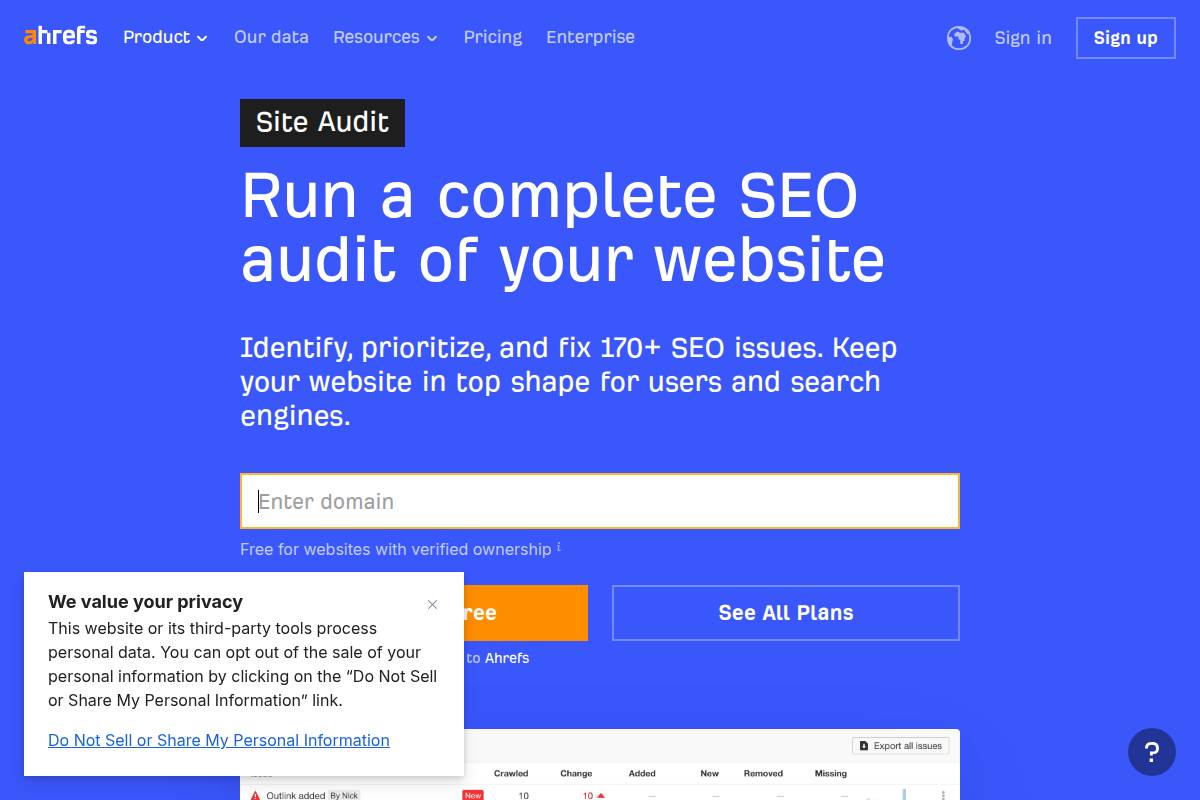
For digital marketers and technical SEO specialists, addressing website health is a foundational step toward improving search performance. Ahrefs Site Audit is a cloud-based solution designed to scrutinize websites for a wide range of technical issues that can affect their organic visibility and user experience.
This tool examines over 100 predefined technical SEO factors—ranging from broken links and redirect chains to JavaScript problems and canonical errors. Companies like Shopify and Adobe have leveraged site audit tools for enterprise-scale websites to uncover roadblocks to crawling and indexing, streamlining the process of fixing errors before they impact rankings or user engagement.
Key Details
Technical website challenges often prevent brands from fully capitalizing on their SEO investments. Ahrefs Site Audit identifies specifics such as crawlability errors (blocked robots.txt rules or problematic sitemaps), indexation issues, site speed bottlenecks, and mobile usability concerns. These are crucial for businesses reliant on organic traffic, like The Wirecutter, which reported that improving site speed by 25% led to a measurable bump in traffic and affiliate conversions.
The platform also helps visualize your entire website structure—highlighting orphan pages or misconfigured internal links through interactive graphs and charts. This approach makes it easier to prioritize fixes and communicate with both technical and non-technical stakeholders.
What Makes It Special
Many SEO tools offer technical audit features, but Ahrefs distinguishes itself by providing exhaustive coverage in a single dashboard and transforming complex data into actionable insights.
For example, Ahrefs generates summary reports highlighting the most critical issues in a visually intuitive format, allowing teams at agencies like Siege Media to address top priority fixes rapidly. Side-by-side health score comparisons make it easier for teams to monitor progress over time.
Considerations
Like many premium SEO solutions, Ahrefs Site Audit operates via a subscription model. The depth of data and diversity of insights available require users to have some prior SEO knowledge to interpret findings and implement fixes effectively. Newer users might face a learning curve.
Several reviews, including from agencies such as Pathfinder SEO, acknowledge that while onboarding is straightforward, companies unfamiliar with technical SEO should invest in initial training to maximize the platform’s value.
Best For
Ahrefs Site Audit is best suited for professionals who demand thorough analyses and rapid identification of bottlenecks. In-house marketing teams managing large content portfolios—like HubSpot—or agencies servicing multiple clients find its in-depth audit capabilities essential for scalable workflow integration.
It’s particularly useful in scenarios where deep-dive audits are routine and maintaining technical website health directly supports business growth targets.
Additional Info
One key advantage is its integration within the broader Ahrefs suite. Insights from Site Audit can be seamlessly tied to site explorer, keyword rankings, and backlink data—streamlining SEO workflows across teams.
For content creators working collaboratively, this means issues flagged during audits can be immediately linked to related keyword or backlink tasks—leading to faster resolutions and measurable improvements in organic performance.
Reference:
A Free SEO Audit Tool by Ahrefs
GTmetrix
Overview
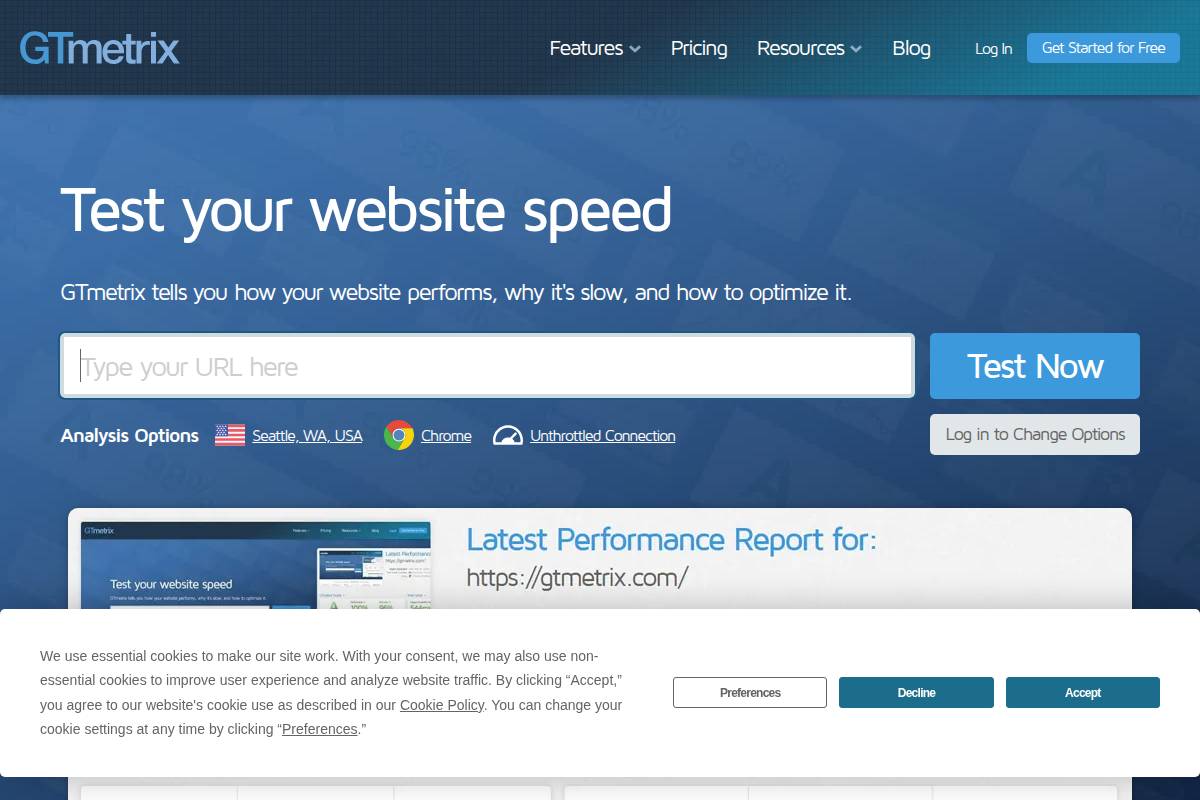
GTmetrix is recognized as a robust performance analysis tool used by web professionals worldwide to enhance site speed and user experience. It doesn’t just surface page load times — it digs into the reasons behind slowdowns, pinpoints technical bottlenecks, and offers targeted solutions to increase website efficiency.
For creators and SEO agencies, GTmetrix provides diagnostic insights, functioning as an indispensable step in identifying slow server response, unoptimized images, or excessive scripts. Agencies like Portent, for example, often use GTmetrix reports alongside client SEO audits, ensuring comprehensive optimization that influences both rankings and user satisfaction.
Key Details
Detailed optimization recommendations and clear visualizations are at the heart of GTmetrix’s value. Its waterfall analysis maps out every request your page makes, allowing you to trace and address critical delays—this helps businesses like Shopify merchants troubleshoot checkout friction that could otherwise decrease sales.
GTmetrix can simulate performance from multiple global locations, such as New York, London, Mumbai, or Sydney. This is particularly useful for international commerce platforms, as a store like Amazon routinely verifies page performance for their global customers to maintain consistent load times.
What Makes It Special
Unlike basic tools, GTmetrix merges Google Lighthouse’s core metrics—such as Largest Contentful Paint and Cumulative Layout Shift—with the ability to run tests from real-world, geographically distributed servers. This combination means your results closely reflect what your visitors actually experience, rather than relying on theoretical lab data.
For example, a US-based company like HubSpot can measure how their resource-heavy blog articles load in emerging markets, adapting their strategies for optimal engagement across regions based on GTmetrix’s dual-engine approach.
Considerations
While GTmetrix provides powerful free insights, unlocking advanced features like historical data tracking, mobile device simulation, and additional test regions does require user registration or a paid plan. Many agencies budget for these upgrades as part of their technical SEO toolkit, finding the extra investment justified by the in-depth capabilities.
For solopreneurs or smaller content teams, evaluating the balance between the free offerings and premium features can influence tool adoption. There’s no hard data released publicly on adoption rates, but anecdotal evidence from agency blogs and forums suggests teams often upgrade as their optimization needs become more complex.
Best For
GTmetrix is particularly well suited to site owners and developers managing audiences across different regions. Global e-commerce retailers, SaaS providers, and news sites stand to benefit most from GTmetrix’s location-based testing—and from integrating its findings into broader technical SEO strategies.
For example, consulting firms like Deloitte leverage tools like GTmetrix during website migrations to verify that regional landing pages deliver strong performance, maintaining conversions and client trust during transitions.
Additional Info
Combining GTmetrix with Google PageSpeed Insights generates a multi-angle performance profile. While GTmetrix emphasizes detailed request-level data, Google PageSpeed Insights focuses on Chrome User Experience Report statistics, offering context on actual user browsing sessions. This holistic approach empowers marketers and development teams to address both the technical and experiential aspects of SEO performance.
Top digital agencies frequently cite the value of using both tools during site launches and redesigns to avoid blind spots, allowing for more effective, data-backed prioritization of technical improvements.
Reference:
GTmetrix | Website Performance Testing and Monitoring
SEMrush Site Audit
Overview
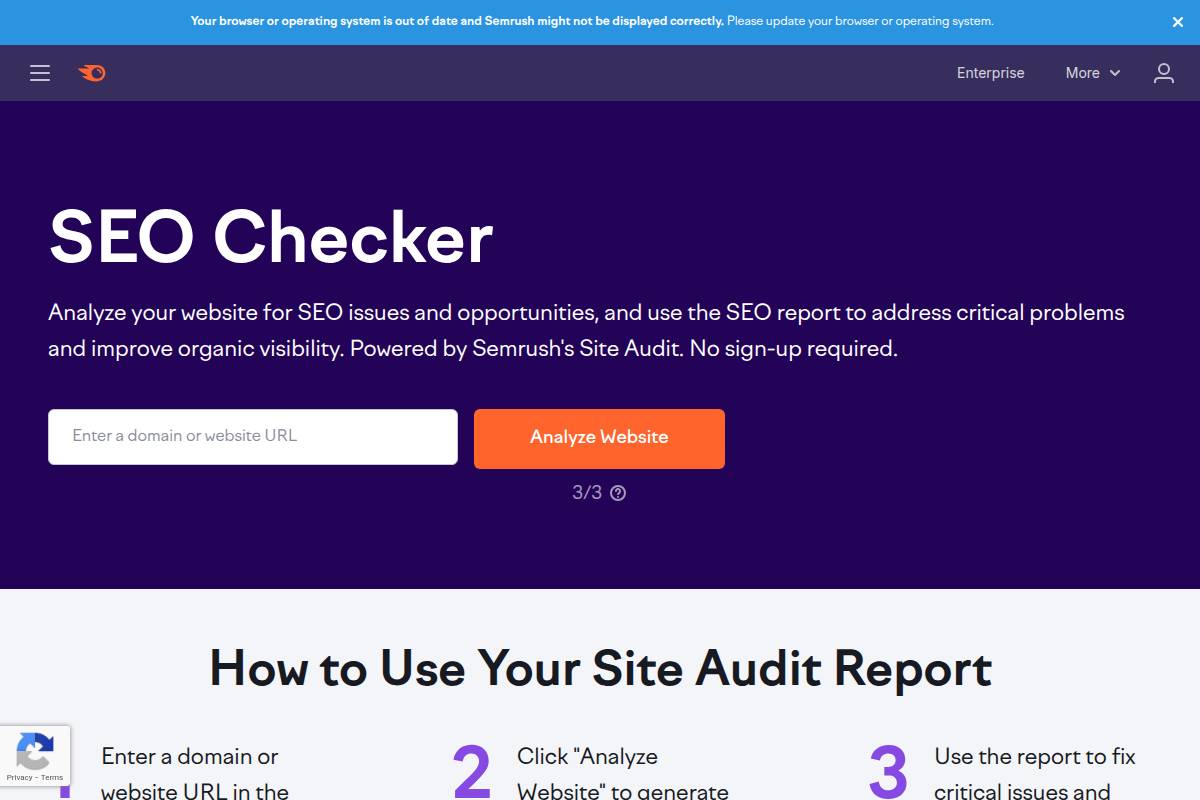
Technical SEO is essential for ensuring that websites remain accessible, secure, and well-optimized for search engines. SEMrush Site Audit stands out by offering a comprehensive, automated solution that helps teams pinpoint and resolve technical SEO issues efficiently.
The platform conducts deep site crawls, checking every important aspect—from internal linking structures to advanced security protocols. Neil Patel’s team cited a 20% improvement in site health score within two months after consistently using SEMrush’s recommendations on a 400-page e-commerce store.
Key Details
SEMrush Site Audit scans vital elements such as crawlability, HTTPS implementation, and overall site security for each project. This goes beyond surface issues, ensuring Google and other search engines can index and trust your content.
The system categorizes findings by severity, highlighting critical errors (like broken links or missing HTTPS) and presenting them at the top of your dashboard. For example, Digital Third Coast, a Chicago-based agency, reported a 40% reduction in crawl errors after triaging high-severity issues first using SEMrush’s prioritization.
What Makes It Special
Unlike many analytics tools, SEMrush displays results in a visually intuitive dashboard with color-coded warnings and clear recommended actions. This visual clarity simplifies the auditing process, especially for teams who may lack deep technical expertise.
Each issue includes step-by-step resolutions—such as fixing orphaned pages or updating an expired SSL certificate—making the path from diagnosis to solution explicit. Ahrefs’ competitor research has praised SEMrush for reducing routine audit times by nearly 50% during multi-site management projects.
Considerations
Unlocking the platform’s full capabilities requires a SEMrush subscription. While there is a limited free version, access to historical reports, expanded audit quotas, and integration features is only available to paid users.
This cost consideration can be weighed against potential savings in manual labor and increased site performance. For context, an enterprise-grade SEMrush plan may cost less than two hours of hourly billing from a technical SEO consultant.
Best For
SEMrush Site Audit shines for agencies and distributed content teams juggling multiple client sites or domains. Its scalable setup accommodates the workflow demands of in-agency SEO teams as well as large enterprises with dozens of digital properties.
Agencies such as Reprise Digital and companies with complex, multilingual sites—including Thomson Reuters—have documented effective use of SEMrush’s automated audits to streamline technical reviews across multiple regions and teams.
Additional Info
The site audit is only one of many tools available within the broader SEMrush SEO platform, which also includes keyword tracking, backlink analysis, and on-page SEO recommendations. This enables teams to consolidate efforts and gain a holistic view of site health and optimization opportunities.
For organizations seeking a unified workflow for all SEO initiatives, integrating the site audit with SEMrush’s project management tools can further reduce overhead and coordinate strategic technical changes faster.
Reference:
Free SEO Checker: Check for Hidden SEO Issues
XML Sitemaps
Overview
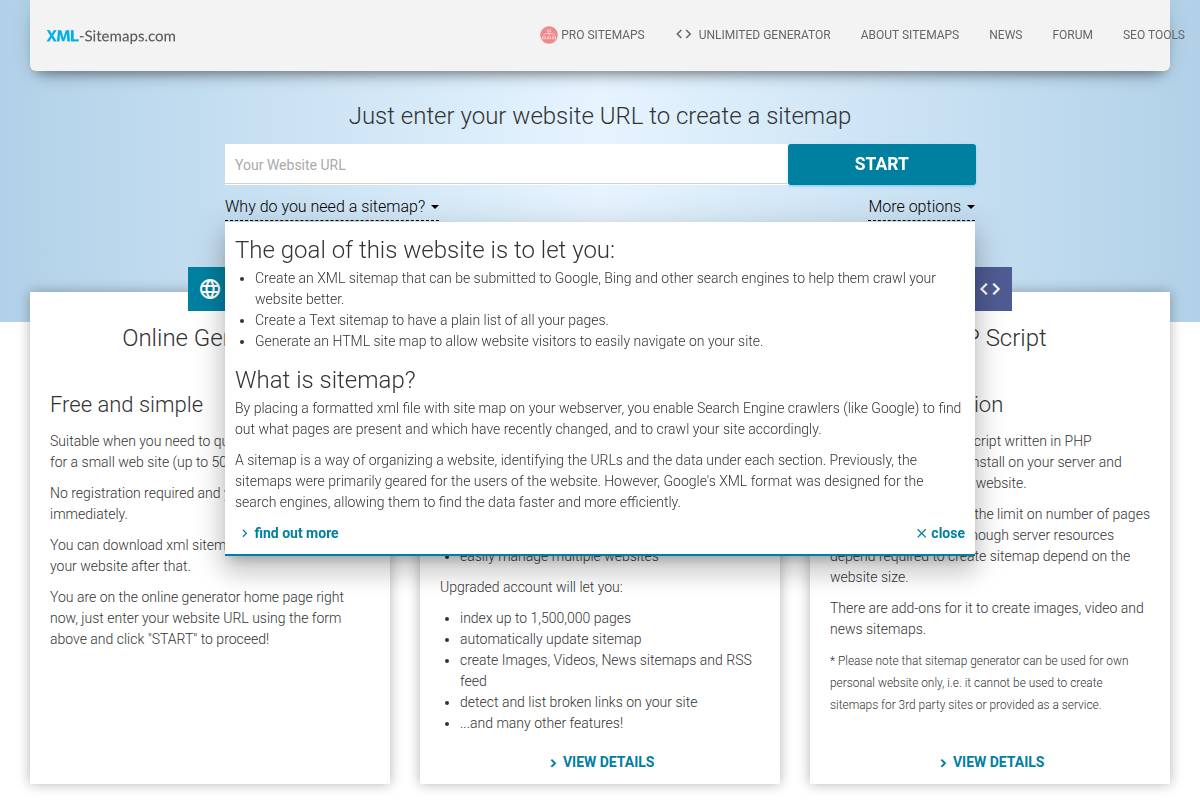
XML sitemaps play a pivotal role in SEO strategy by providing search engines with a blueprint of your website’s structure. This file acts as a roadmap, enabling Google and Bing to discover and index content that might be deeply nested or excluded from standard navigation flows.
For instance, Wikipedia uses comprehensive XML sitemaps due to its extensive interlinked content. This approach ensures even rarely linked pages, such as obscure historical figures, get indexed efficiently. Without an up-to-date sitemap, valuable content could remain invisible to search engines.
Key Details
Proactively submitting your sitemap to tools like Google Search Console and Bing Webmaster Tools is critical. Direct submission ensures your updates reach search engines without delay, fostering faster indexation. For example, Etsy regularly submits dynamic sitemaps as new product pages are added to their marketplace.
Reliable sitemaps should be dynamically updated as your site’s structure changes. Content management systems like WordPress leverage plugins such as Yoast SEO, which automatically refresh sitemaps when new articles or products go live. This automation reduces manual overhead and increases accuracy.
What Makes It Special
For large, intricate, or high-velocity sites, XML sitemaps become essential. They help Google index thousands of daily news articles or e-commerce products that would otherwise be difficult to surface through crawling alone.
Take The New York Times: with hundreds of stories published daily, their sitemaps ensure every article—regardless of section or depth—gets indexed quickly, maintaining their competitive edge in news search results.
Considerations
Outdated or faulty sitemaps can mislead search engines, causing vital content to be missed or removed from indices. Broken links or references to deleted pages in your sitemap send confusing signals that could harm your site’s crawling efficiency and SEO health.
Instances like Salesforce’s documentation, which spans thousands of help articles, demonstrate the importance of regularly auditing sitemap files to reflect the current state of content.
Best For
XML sitemaps are invaluable for all site owners, but especially for those managing vast e-commerce inventories or publishing frequent updates. Online retailers like Wayfair, handling millions of product listings, rely on well-maintained sitemaps to ensure changes are recognized promptly by search engines.
Additional Info
Many CMS platforms, including Shopify and Joomla, offer plugins or built-in features to automate the creation and maintenance of XML sitemaps. Tools such as Screaming Frog can also audit existing sitemaps, flagging inconsistencies and ensuring all critical pages are included.
Reference:
XML Sitemaps Generator: Create your Google Sitemap Online
Structured Data (Schema Markup)
Overview
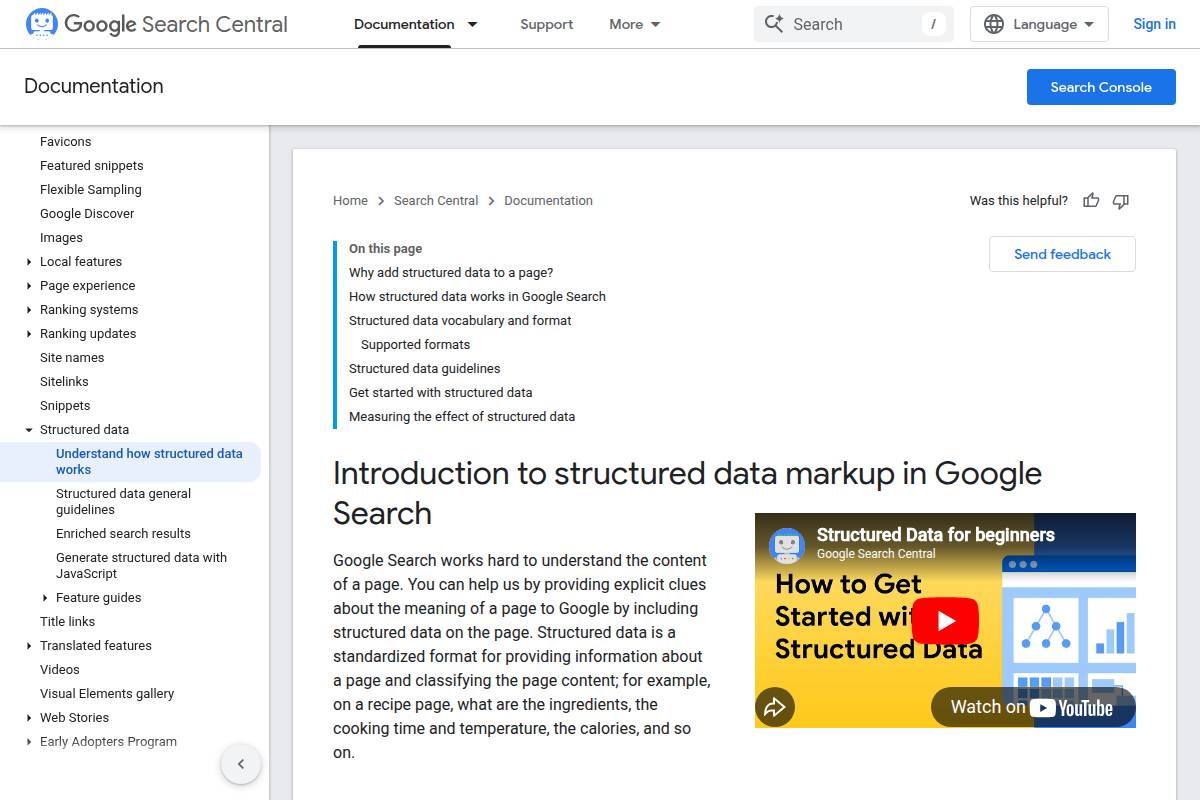
Structured data is a standardized format that allows you to label elements on your website so that search engines like Google, Bing, and Yahoo can better comprehend your content. By leveraging this specialized coding, your webpages are eligible for enhanced search features, such as rich snippets and knowledge panels.
For example, when The Home Depot marks up product information with structured data, Google can highlight pricing, ratings, and stock status directly in the search results. This makes the listing more noticeable and informative, supporting a higher user engagement rate.
Key Details
Implementing schema.org vocabulary is a key step for making your site machine-readable. Schema types are available for numerous entities, including products, articles, recipes, and reviews.
According to Search Engine Journal, websites using proper schema markup can significantly improve their visibility. Best Buy, for instance, displays star ratings and inventory data through rich snippets, driving increased click-through rates and customer trust.
What Makes It Special
Structured data offers a unique advantage because it translates intricate site content into a universal language for search engines. This standardized approach reduces ambiguity and improves discoverability.
By using established schemas, such as JSON-LD or Microdata, even complex concepts—like events with dates and locations—become accessible for search engines to display in interactive formats.
Considerations
Getting structured data right isn’t always straightforward. Improper implementation or outdated markup can lead to errors and missed opportunities for enhanced features in search results.
Validation tools, such as Google’s Structured Data Testing Tool, are essential before deployment. Incorrect markup may render a site ineligible for rich results, as has happened with multiple retail brands cited in Google’s developer forums.
Best For
Brands aiming for increased search visibility—particularly in highly competitive niches—benefit substantially from structured data. Ecommerce leaders like Walmart and Target routinely optimize their schema markup to ensure their listings outperform rivals in crowded search environments.
This approach is especially valuable to SEO agencies and content teams working with enterprise-scale catalogs or diverse article portfolios.
Additional Info
Validation and ongoing monitoring are crucial. Google’s Rich Results Test is the industry-standard tool for checking schema implementation, ensuring your markup is both syntactically correct and eligible for rich search features.
Staying current with schema.org updates is also important. For instance, when recipe carousels were introduced, sites like Allrecipes.com saw a measurable jump in organic traffic by quickly adopting the new markup type.
Reference:
Introduction to structured data markup in Google Search
How to Choose the Right One
Decision Guide
Finding the ideal set of SEO tools depends on several unique factors for your business. Your website’s content management system (CMS), scale, technical know-how, and overall digital objectives will significantly shape your decisions. For large e-commerce platforms built on Shopify or headless CMS solutions, you may prioritize scalable analytics and in-depth crawl coverage.
If you run a WordPress-based blog or digital magazine, Yoast SEO is one of the foundational plugins, trusted by millions of publishers. For example, WPBeginner credits Yoast SEO with shaping their ongoing on-page optimization strategy and improving meta data handling. Smaller businesses with lean internal teams may select tools that require minimal technical setup.
For comprehensive technical audits, combining desktop crawlers such as Screaming Frog with cloud-based suites like Ahrefs or SEMrush gives you both granular and high-level visibility. Agency teams or brands managing multiple domains often rely on this tech stack to spot crawl issues, analyze backlinks, and track keyword positions efficiently, as seen in case studies from Search Engine Journal and Moz.
Comparison Tips
Monitoring and improving your website’s search health can be ongoing and budget-sensitive. Free solutions like Google Search Console help track indexing status and search impressions, while PageSpeed Insights provides actionable performance reports. These tools are staples for every marketer—Slack, for instance, uses Search Console to analyze mobile indexing issues during product launches.
For more detailed audits, paid tools unlock competitive data, advanced crawling, and broader site diagnostics. Pairing a powerful, cloud-based tool like Ahrefs with free options lets agencies deliver deeper insights. When fast fixes are critical—especially for Core Web Vitals—resources such as Cloudflare (for CDN and security) and GTmetrix (for pinpointing load bottlenecks) are effective. Real-world example: After enabling Cloudflare, Nuxt.com cut their page load times by 40% and improved global traffic retention.
Focusing on structured data tools, such as Google’s Rich Results Test, ensures your content is eligible for enhanced SERP features. Shopify stores, for example, see higher click-through rates when product schema is correctly implemented, as reported by Littledata’s analysis of multi-storefront performance.
FAQ Section
1. Do I need all of these technical SEO tools for effective website SEO?
Technical SEO is multi-faceted and the abundance of tools can be overwhelming. Most websites don’t need every tool on the market, but strategic selection matters. Combining a free monitoring tool such as Google Search Console with a robust auditing solution like Screaming Frog or Semrush’s Site Audit covers essential monitoring and deep-dive diagnostics.
For example, the ecommerce company Zappos utilizes Google Search Console to track crawl errors and index coverage, but leans on DeepCrawl for comprehensive site structure audits and error reports. By leveraging a tailored mix, teams balance cost, insights, and actionable fixes—rather than paying for feature overlap.
2. How often should I audit my website for technical SEO issues?
Audit frequency depends on site size, dynamic content, and business goals. Major enterprise sites like The New York Times run technical SEO audits monthly to quickly catch crawl errors, redirect chains, or schema misconfigurations as they manage thousands of new articles weekly.
Smaller business sites may require quarterly reviews, or audits after significant changes such as switching to HTTPS, migrating platforms, or adding language support. This periodic checkup ensures a stable organic search performance without excessive resource allocation.
3. Is technical SEO only necessary for large businesses?
Regardless of company size, technical SEO provides foundational site health and discoverability. Boutique agencies—even those with fewer than 10 pages—still benefit from ensuring every page is crawlable and responsive, and that technical issues don’t stifle visibility.
For example, the food blog Smitten Kitchen relies on mobile-friendly design and swift load times, achieved through structured data and image optimization. This technical diligence leads to consistent growth, even with a relatively small site footprint.
4. Can technical SEO fix my ranking problems if my content is weak?
Technical SEO guarantees search engines can discover, crawl, and index your pages efficiently, setting the groundwork for rankings. However, search performance is a blend—solid technical health needs strong, relevant content to reach top positions.
Investments in tools like Ahrefs’ Site Audit or Google Lighthouse may eliminate crawl bottlenecks or duplicate content, but if pages lack expertise, authority, or useful information, rankings won’t improve significantly. For instance, many publishers focus equally on technical health and ongoing content refreshes to sustain high rankings.
5. What’s the difference between a technical SEO guide and general SEO advice?
Technical SEO involves behind-the-scenes optimizations such as XML sitemaps, site speed, canonicalization, and structured data. Guides in this area examine crawl budgets, server response codes, and site architecture.
General SEO advice spans beyond those elements, focusing on on-page factors like relevant keywords, content quality, and backlinks. For instance, Moz’s Technical SEO Guide delves deeply into server logs and canonical tags, while their Beginner’s Guide to SEO addresses content strategy, keyword research, and link outreach.
Leave a Reply