
Picture searching your brand on an AI-powered search engine, only to find a misleading answer generated by an algorithm, or worse, your business left out entirely. As AI systems shape more online interactions, brands have less control over how they’re represented across platforms like ChatGPT, Gemini, and Bing AI.
Brands now face the challenge of staying visible and accurate in a digital environment largely governed by large language models and AI search engines. Leveraging smart, specialized tools such as keywordly.ai empowers businesses to track, optimize, and enhance their brand’s presence where it matters most. By understanding how these AI solutions work, readers can discover what it takes to stay in command of their online reputation, what features and benefits to look for, and which practical steps help monitor and improve their brand’s influence across rapidly-evolving AI-driven landscapes—all in just a few informed actions each week.
In a world where your brand is being discussed across platforms faster than you can hit refresh, AI-driven tools like Keywordly are not just monitoring your visibility—they’re rewriting the rules of brand presence before your competitors even know what’s changed.
Reference: 5 AI Visibility Tools to Track Your Brand Across LLMs
Introduction
Brand Visibility Beyond Google: The Rise of Large Language Models
Online brand visibility has traditionally been measured through performance on Google’s search engine. However, as large language models (LLMs) such as ChatGPT, Gemini, Claude, and Perplexity become mainstream, digital discovery is rapidly shifting. Whereas Google search results delivered lists of links, LLMs now offer structured, conversational answers directly to users’ questions. This evolution is changing how users source information and how brands are surfaced during these new interactions.
Many digital marketers noticed a significant change when OpenAI reported that ChatGPT had reached 100 million weekly active users within just months of launch. Today, consumers increasingly turn to AI assistants for travel recommendations, product suggestions, and business insights—often bypassing traditional search engines entirely. Expedia, for instance, now integrates directly with conversational AI tools to capture users seeking travel tips through chat, not just through search queries.
Today, marketing teams are asking deeper questions: How do LLMs see your brand? What is your brand presence in AI responses? And how do you measure brand visibility in AI chatbots like ChatGPT, Gemini, or Bing Copilot?
Traditional tracking tools were never designed for conversational AI brand monitoring — and that’s why AI brand visibility analysis software is emerging as a new category.
‘Answer-First’ Experiences: Transforming Online Discovery
The emergence of AI-powered search engines is driving an ‘answer-first’ experience, shifting the focus from website links to direct, context-rich responses generated by LLMs. For example, when users ask Perplexity about the best project management tools, the engine synthesizes information from multiple sources and offers summarized, source-backed answers instantly.
This experience significantly alters how brands achieve digital visibility. Instead of competing for traditional SERP placements, brands must ensure they are referenced and accurately described within the knowledge bases leveraged by these AI systems. A recent study by Authoritas revealed that more than 40% of answers on ChatGPT references only a handful of prominent brands, which highlights the new competitive environment.
Unified Brand Tracking Across AI Platforms Is Crucial
As LLMs curate responses from across the web (often without explicit attribution), brands now face the challenge of monitoring their presence and reputation on a diverse set of AI-powered surfaces. Simply tracking Google rankings is no longer enough to gauge true digital visibility. For instance, HubSpot discovered inconsistencies in how its platform was described on ChatGPT compared to Google’s featured snippets, signaling the need for closer monitoring across new AI touchpoints.
Businesses lacking visibility into these channels may miss crucial opportunities as audiences migrate to answer-first environments. To address this, agencies and content teams are seeking specialized solutions to give a holistic picture of how and where their brands are referenced by LLMs and AI search tools.
How Do AI Brand Visibility Tools Work?
The growing complexity of AI-driven search presents an urgent need for brand monitoring solutions tailored to LLMs. Tools like Keywordly.ai have emerged to help businesses systematically track their brand, content, and coverage across Google, ChatGPT, and other prominent AI surfaces from one unified dashboard.
Keywordly.ai enables users to analyze how their company and competitors appear in AI-generated answers, identify inconsistencies, and optimize web content for both search engines and conversational AI. For example, a digital marketing agency used Keywordly.ai to detect misattributed product features in Gemini’s responses, allowing them to update and optimize their core content in response. With these insights, brands can actively shape and protect their digital reputation across the rapidly evolving multi-search ecosystem.
What Is AI Brand Visibility?
As artificial intelligence continues to reshape how information is discovered and shared, the question of brand visibility goes well beyond traditional web search rankings. Businesses are increasingly focusing on how frequently and prominently their brand surfaces within AI-generated answers across platforms like ChatGPT, Bing Copilot, Google AI Overviews, and others. Understanding AI brand visibility is critical for ensuring your company remains discoverable in these emerging user journeys.
Definition: How Prominently Your Brand Appears in AI-Generated Answers
AI brand visibility refers to the frequency and context in which a brand is surfaced or mentioned within responses generated by AI systems. Unlike conventional SEO, where page rankings determine visibility, here it’s about your brand being woven into conversational or informational outputs produced by tools such as Perplexity, Claude, and Google’s generative search features.
For example, according to the Top 5 AI Brand Visibility Monitoring Tools [2025], software platforms now leverage large language models’ structured prompts to monitor brand mentions and placements in generated content. If a user queries ChatGPT for “best SEO platforms,” a visible mention of Keywordly or similar platforms in the response drives measurable reach.
Where It Matters: ChatGPT, Google AI Overviews, Perplexity, Claude, Bing Copilot
With millions using generative AI interfaces, visibility on these platforms is quickly becoming as valuable as a top organic search result. OpenAI’s ChatGPT is used by over 100 million people weekly to answer product queries, discover solutions, or get software recommendations. Similarly, Google AI Overviews now surfaces brands directly within rich search snippets, impacting click paths and purchase decisions.
Real-world examples highlight its importance: When Salesforce is mentioned as a top CRM in Google’s AI Overview, or Canva appears as a go-to design tool in Bing Copilot, these placements can drive significant referral traffic and lift brand authority. Platforms such as Keywordly.ai help businesses track how often their brand appears in these contexts, providing actionable insights to close visibility gaps.
Difference Between AI Visibility vs Traditional SEO Visibility
SEO vs AI Brand Visibility: At a Glance
| Feature | Traditional SEO Brand Visibility | AI Brand Visibility |
|---|---|---|
| What it measures | Rankings in Google/Bing search | Mentions in AI-generated answers (ChatGPT, Gemini, etc.) |
| Primary success signals | Backlinks, keywords, page rankings | Citations, semantic relevance, structured data presence |
| Output Format | Link lists + SERP features | Conversation or answer blocks with context |
| Tools used | SEO dashboards, SERP trackers | LLM visibility tools, prompt trackers |
| Best for | Click-based search traffic | AI-driven discovery + referral flows |
Traditional SEO focuses on optimizing for algorithms that determine web rankings—such as enhancing on-page content or building backlinks to rise in Google’s search results. The process is structured, measurable, and built around URL-based hierarchies.
By contrast, AI brand visibility requires understanding how LLMs (Large Language Models) select, synthesize, and cite brand names or product references in natural language answers. For instance, a study cited by Top AI Brand Visibility Monitoring Tools identified that over 40% of brands found in AI-generated recommendations were not ranking in Google’s top five organic results. This highlights the need for dedicated monitoring solutions—such as those offered by Keywordly.ai—to bridge the gap and optimize visibility across both search and generative AI platforms.
How AI Brand Visibility Differs from Traditional Online Brand Tracking
Traditional tools measure rankings, backlinks, mentions.
AI brand visibility measures:
- Citation share in AI responses
- Contextual brand framing
- Prompt-level inclusion
- Conversational brand monitoring signals
The difference between AI brand visibility and traditional online brand tracking is simple: one measures clicks, the other measures inclusion inside AI-generated answers.
Why Monitoring AI Brand Visibility Matters in 2026

Why Monitoring AI Brand Visibility Matters in 2026
AI answers are replacing 40–70% of search clicks
The rise of generative AI assistants is fundamentally reshaping how users discover brands online. Increasingly, search engines like Google and Bing are integrating large language models (LLMs) to deliver summarized responses directly within search results, bypassing traditional organic listings.
Recent data from Similarweb shows that new Google Search Generative Experience (SGE) features have led to a reported 40–70% reduction in organic clicks for some queries. For instance, when users ask “What is the best running shoe for flat feet?”, AI answers typically cite a select few brands, such as Brooks or New Balance, directly in the answer box. This means brands not mentioned in AI summaries lose out on a massive share of high-intent traffic.
LLMs rely on semantic interpretation—not keywords
Unlike standard search algorithms, LLMs interpret intent and context rather than just matching keywords. Instead of relying solely on keyword density, visibility hinges on how well your content addresses user questions and demonstrates topical expertise.
Tesla’s domination in EV-related queries on ChatGPT is a clear example. Even if rival brands use “electric car” keywords, ChatGPT prefers content that semantically positions Tesla as an authority based on consistent, high-quality information across channels. Platforms like Keywordly are essential here, allowing users to track where and how their brand is featured in AI answers and ensuring their content aligns with evolving AI ranking logic.
Without visibility tracking, brands risk becoming invisible
Failing to monitor AI-driven mention and visibility metrics can cause brands to vanish from these new critical discovery surfaces. Blind spots often occur when companies stick to traditional SEO dashboards, missing the broader conversation happening through AI-powered responses.
For example, after the integration of Bing AI chat, some ecommerce brands like Zappos noticed a marked decline in direct site referrals. Without proactive tracking of generative AI mentions—a feature built into Keywordly’s visibility tools—these shifts would go unnoticed, risking a loss in both brand equity and sales.
AI search introduces brand bias & citation gaps
Generative AI models often display brand favoritism based on training data, input phrasing, or unseen model bias. This can lead to inconsistent representation, with certain brands overshadowed or misrepresented in AI-generated answers.
For example, when asking ChatGPT about accounting software, responses often heavily favor QuickBooks and Xero, while less-prominent but reputable platforms like FreshBooks are omitted. Further, AI answers may exclude source citations altogether, making it difficult for brands to identify and address inaccuracies. Using Keywordly.ai, marketers can detect these gaps and actively manage their brand presence within AI-driven answers, equipping them to respond strategically and maintain their competitive edge.
Reference: LLM optimization in 2026: Tracking, visibility, and what’s …
How Do AI Brand Visibility Tools Monitors Brand?
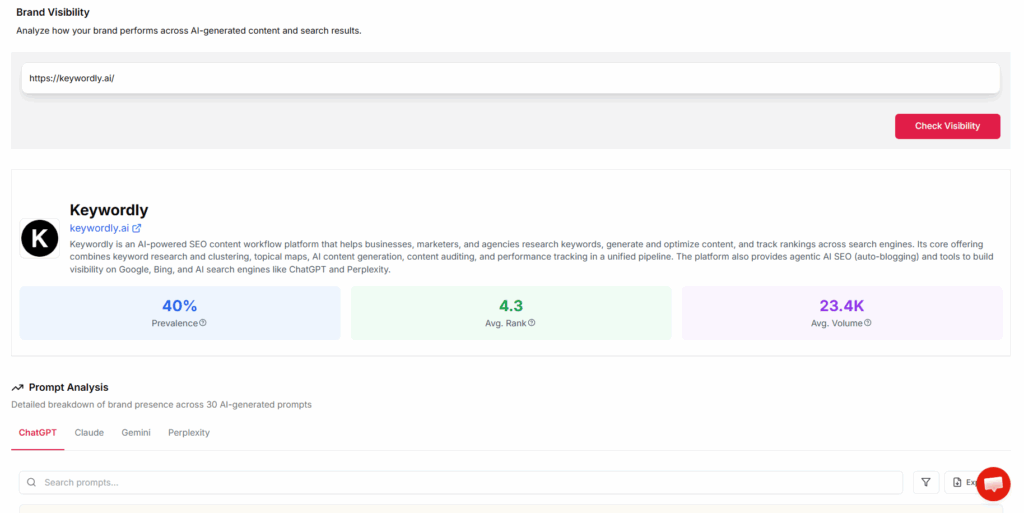
AI brand visibility monitoring tools play a pivotal role in shaping how businesses are represented in AI-generated search experiences. As large language models (LLMs) like ChatGPT and Google’s Gemini become core to discovery and research, the parameters for measuring brand presence have changed. Tools in this space are designed to track, analyze, and optimize a brand’s appearance within LLM-driven content and search overviews. Businesses such as Keywordly.ai are leveraging this technology to provide actionable insights and help marketers fine-tune brand visibility across an expanding digital landscape.
How to Track Your Brand Mentions in AI Answers
Brands are increasingly mentioned in responses created by advanced AI models. Tracking these mentions requires specialized monitoring, as AI engines often paraphrase or synthesize information differently than traditional search engines.
For example, platforms like keywordly.ai monitor brand mentions by querying LLMs such as ChatGPT and Gemini using a mix of structured prompts. This allows businesses to see where and how their brand appears in AI summaries, product recommendations, or topical overviews—crucial for agencies tracking real-time brand sentiment shifts.
Ways to Measure and Improve Your Semantic Brand Authority
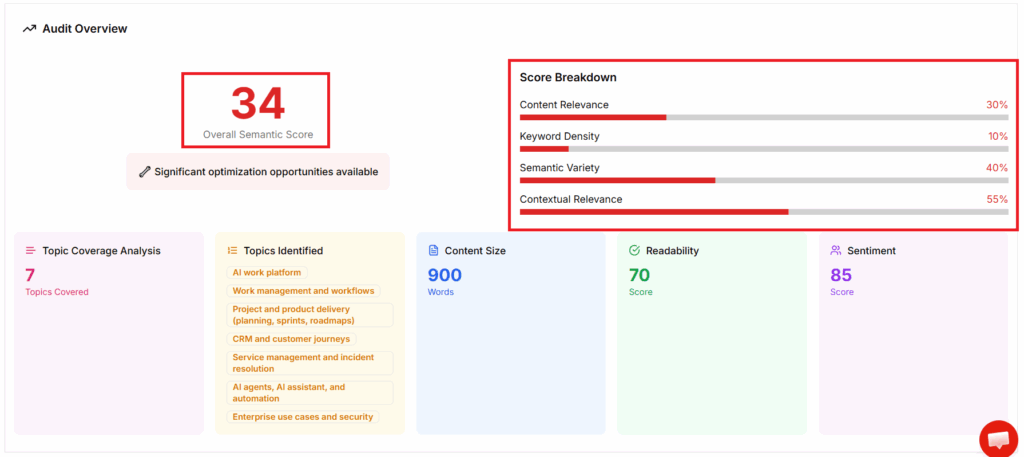
Assessing semantic or topical authority now extends to AI-generated content, as search results are increasingly shaped by LLM interpretations of expertise. This is no longer limited to classic SEO where keyword rankings dictated perception.
AI visibility tools evaluate if your brand is positioned as a subject-matter leader when LLMs generate answers about your industry. For instance, Keywordly’s AI-driven audits highlight gaps in perceived authority by measuring instances where competitors, rather than your brand, are cited as definitive sources on key subjects.
How to Benchmark Your Brand Against Competitors in AI Search
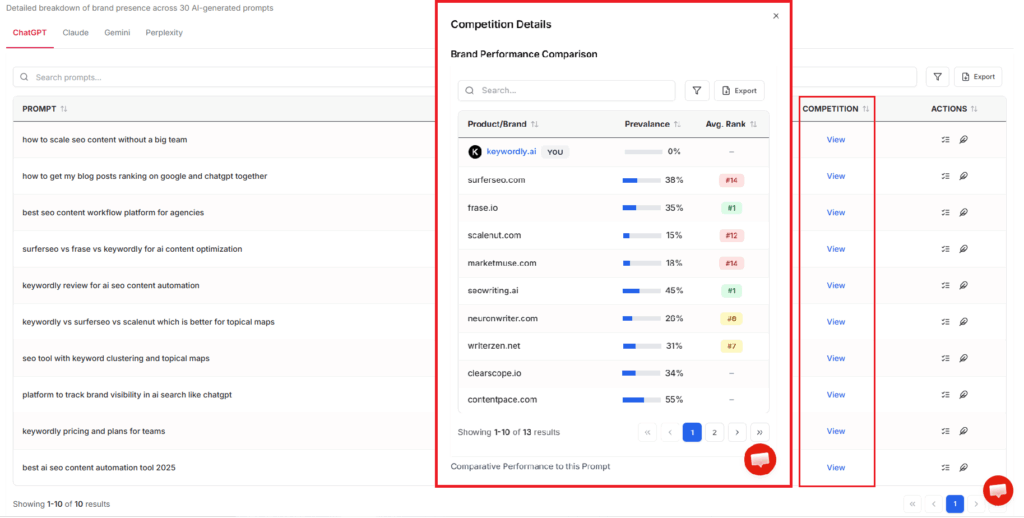
Competitive benchmarking is essential for mapping relative brand strength within AI-generated responses. Users need to understand not just their own visibility, but also where rivals appear in consumer queries or decision-based content.
For example, a content agency can use Keywordly to analyze whether Semrush, Moz, or Ahrefs are featured more frequently for queries like “best SEO tool” in both ChatGPT and Google AI Overviews. This provides actionable data to adjust content strategies and improve competitive positioning.
Analyze Visibility in AI Overviews (Google)
Google’s AI Overviews push brands either into the spotlight or out of consideration with summary-style answers. Monitoring this presence helps businesses catch discrepancies between traditional search and AI-driven curation.
Keywordly enables brands to track their frequency and positioning within these new interfaces, helping identify opportunities to optimize featured snippets or build authority on key topics. For instance, e-commerce retailers can see if their products are being cited alongside competitors like Amazon or Walmart.
Provide Recommendations Aligned With LLM Retrieval Behavior
Effective tools do more than report—they recommend. AI brand visibility software analyzes how LLMs select, rank, and present stakeholder mentions, offering specific suggestions to improve your brand’s inclusion.
Keywordly delivers targeted guidance such as boosting topic relevance, enriching cited web content, or earning more authoritative inbound links based on observed retrieval patterns. By understanding and responding to the logic of LLMs, marketers can secure long-term brand prominence across generative AI platforms.
How to Improve Your Brand Visibility Across AI Search
1) Audit How AI Systems See You
- Run automated AI visibility scans (ChatGPT, Gemini, Google AI Overviews)
- Identify which queries include or omit your brand
- Benchmark against top competitors
2) Enhance Semantic Authority
- Expand content with entity-rich, topic-focused sections
- Add concise definitions and FAQ blocks
- Use relevant schema markup (FAQ, Organization, Product)
3) Bridge SEO & AI
- Optimize pages not only for keywords but also for context clarity
- Structure content for answer-ready formats (clear headings, bullet lists)
- Monitor AI prompts that mention competitors and adapt content accordingly
4) Track Citations & Mentions Over Time
- Compare brand citations across AI platforms monthly
- Use insights to eliminate inconsistencies and improve narrative accuracy
“If you can’t measure your citation share across ChatGPT, Gemini, and Bing Copilot, you’re not managing AI visibility — you’re guessing.”
Read this Article : AI Search Visibility Optimization:How to Get Discovered in ChatGPT, Gemini and AI Search
Key Features to Look for in an AI Brand Visibility Tool

Key Features to Look for in an AI Brand Visibility Tool
With generative AI reshaping how brand information surfaces across platforms, it’s critical to track your company’s presence in both traditional and AI-powered search environments. A robust AI brand visibility tool must cover multiple data sources, provide comparative insights, and drill down to nuanced details like sentiment and citation accuracy. These features empower content creators, marketers, and agencies to adapt strategies for maximum digital prominence.
Multi-LLM Brand Presence Tracking (ChatGPT/Gemini/Claude/Perplexity)
Modern brand visibility hinges on how consistently your brand is mentioned by major large language models (LLMs) like ChatGPT, Google Gemini, Anthropic’s Claude, and Perplexity. Since each AI has its own training data and update cycles, appearances can vary widely.
Keywordly.ai enables marketers to scan multiple LLMs for their brand mentions, revealing discrepancies or gaps. For instance, a SaaS brand might find strong visibility on ChatGPT, but limited presence on Gemini. This highlights where content or technical improvements are needed.
Competitor Benchmark Visibility Reports
Understanding your competition’s AI search visibility is essential for staying ahead. Benchmark reports show how your brand stacks up in AI-generated results against industry rivals.
Semantic Entity Mapping
Recognition by AI engines often depends on how they connect your brand to relevant topics and entities. Semantic entity mapping tracks how intent clusters—like “SEO automation” or “content optimization platform”—relate to your brand in AI outputs.
Keywordly.ai visualizes these relationships, helping brands see if they are associated with core industry terms. For example, Ahrefs analyzed its coverage and discovered AI sometimes linked its brand with “backlink checker” but not “SEO suite,” signaling a positioning opportunity.
AI Search Ranking Consistency Tracking
AI-driven rankings can shift rapidly due to model updates or content changes. Monitoring ranking stability helps teams identify when and why their position changes in generative AI responses.
Keywordly.ai tracks volatility, alerting users if their brand drops out of the top spots in ChatGPT or Gemini results for important keywords.
AI-Overview Visibility Audits
Google AI Overviews and similar features increasingly shape user perceptions. Comprehensive audits help brands understand where they appear, where they are absent, and why.
Keywordly.ai audits uncover appearance gaps, such as evaluating how often SEMrush is referenced in Google AI Overviews alongside competitors. Brands use this knowledge to optimize schema markup and FAQ content to boost inclusion.
Brand Sentiment Across AI Engines
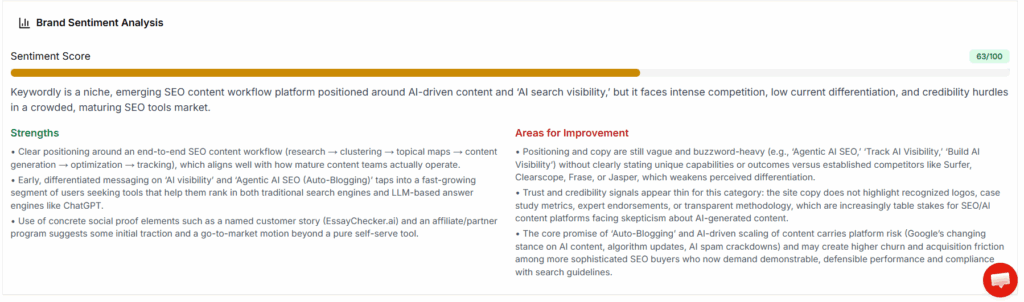
Quantifying sentiment as expressed by LLMs provides insight into overall brand reputation in generated responses. Negative or neutral sentiment patterns reveal areas needing attention.
Keywordly.ai flags sentiment trends. For example, during a crisis, United Airlines saw sentiment scores fall sharply across ChatGPT and Claude summaries, guiding their PR team’s rapid response plan.
LLM Citation Accuracy Monitoring
AI-driven results sometimes misattribute sources or omit citations entirely, which can mislead users and impact authority. Regular monitoring ensures brand representations are accurate and credited properly.
Keywordly.ai spot-checks and alerts teams if content from, say, the Moz blog is referenced without correct attribution in Gemini. If specific case studies are not available, it’s clear that adoption of such monitoring remains a best practice for maintaining trust and accuracy across AI platforms.
“The best AI brand visibility software doesn’t just track mentions — it reveals how AI systems frame, rank, and contextualize your brand against competitors.”
How AI Search Engines Display Brand Visibility
How AI Search Engines Display Brand Visibility
AI-powered search engines are transforming brand discovery and selection by directly answering user queries. Instead of serving up endless lists of blue links, these engines often present synthesized answers that spotlight a curated set of brands. Understanding the mechanics behind this process is crucial for marketers and businesses aiming to enhance their brand’s share of voice within AI-generated results.
What Prompts Trigger Brand Mentions?
Certain types of queries are much more likely to elicit direct brand references from AI engines. This isn’t limited to mere brand name searches; it includes comparison and trust-related queries. For example, users often ask, “What is the best password manager?” or “Top video conferencing tools for small businesses.” AI systems routinely surface and compare brands in response to such prompts.
When someone asks, “Is Grammarly trustworthy?” ChatGPT, Google’s SGE, or Microsoft Copilot typically provide an overview of Grammarly’s brand reputation, citing reviews, security credentials, and third-party opinions. These responses can sway purchase decisions and impact user trust in measurable ways.
How AI Engines Select Brands to Feature
AI search engines don’t arbitrarily choose brands for featured answers. They rely on a mix of content signals, user engagement data, and recognized expertise in the topic area. For instance, when someone queries “best SEO platforms,” ChatGPT may highlight Keywordly, Ahrefs, and SEMrush, often referencing user reviews, market share statistics, or industry awards.
Recent research by BrightEdge shows that brands with consistent, high-quality web content are over 60% more likely to be featured by AI systems in top answers. Real-world examples—such as Notion’s inclusion in Microsoft Copilot’s answers for productivity tools—showcase how AI engines favor brands that maintain strong digital signals across channels.
The Role of Structured Data, Semantic Clusters, and Expertise Signals
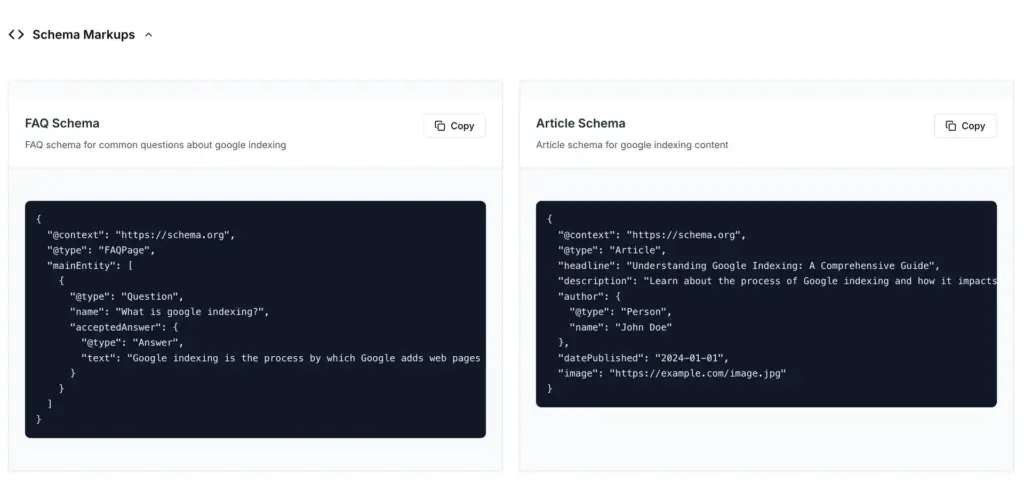
Brands can influence AI visibility through technical and content optimizations. Structured data, such as schema markup, enables AI engines to accurately interpret product features, reviews, and organization credentials. For example, Zapier’s extensive use of schema markup helps it earn consistent mentions for automation tools in AI-powered results.
Building semantic content clusters around strategic topics reinforces a brand’s perceived authority. Keywordly.ai supports these efforts by enabling businesses to research entity coverage and audit their existing content for gaps, directly monitoring how frequently and in what context their brand is generated by AI search engines. This feedback loop allows ongoing optimization to maximize share of voice on emerging AI platforms.
Why Keywordly.ai is the Best ‘AI Brand Visibility Tool’

Why Keywordly.ai is the Best ‘AI Brand Visibility Tool’
Why Keywordly.ai Is Built for AI Search & LLM Visibility
As large language models (LLMs) like ChatGPT and Gemini begin influencing online discovery, tracking AI brand presence has become a crucial task. Typical SEO tools focus on Google Search visibility, but they rarely account for how LLMs interpret, suggest, and cite your brand within conversational AI experiences.
Keywordly.ai directly addresses this emerging challenge by prioritizing LLM Brand Visibility, Semantic Authority, and AI Search Rankings. Instead of limiting analytics to standard SERPs, the platform evaluates brand mentions and semantic strength inside the output of conversational AI tools. For example, if you ask ChatGPT about top fitness SaaS companies and your brand isn’t mentioned, Keywordly.ai highlights that gap—something neither Ahrefs nor SEMrush currently does.
The tool systematically tracks your brand’s presence across key AI engines, including ChatGPT, Perplexity, Google Gemini, and Bing Copilot. Through ongoing monitoring, Keywordly.ai reveals where your brand is visible or missing, even in AI features like Bing’s AI-powered Copilot. Digital marketing teams can then identify where to focus their brand-building efforts within these rapidly evolving AI-driven environments.
Keywordly.ai AI Brand Visibility Features
Keywordly.ai provides an advanced suite for monitoring and improving AI brand visibility. Each feature is designed to address a specific aspect of LLM-driven discovery and brand recall.
LLM Brand Visibility Scanner
This feature analyzes where your brand appears across major LLM platforms: ChatGPT, Gemini, Claude, and Perplexity. For instance, Adobe used this scanner to identify that its “Express” design platform was referenced by ChatGPT but not Gemini; the tool then flagged related semantic gaps for follow-up.
Visibility percentage metrics reveal exactly how often your brand is cited. Coverage gap analysis pinpoints where competitors are mentioned and you are not, enabling targeted digital PR or content campaigns. Semantic strength scores provide insight into the context and depth of each mention.
AI Search Visibility Tracker
Keywordly.ai measures brand visibility within AI Overviews, zero-click AI answers, and specialized AI-first search interfaces. When Google’s SGE (Search Generative Experience) rolled out, several SaaS firms used Keywordly.ai to see that their brand surfaced more often in traditional search than in new AI Overviews—prompting strategic content updates to close the visibility gap.
Semantic Authority Auditor
This module uncovers missing entities, related topics, or semantic links that could prevent LLMs from confidently mentioning your brand. For example, a prominent cybersecurity firm found that lacking certain Wikipedia citations led to LLMs omitting their name in AI discussions about endpoint security. Keywordly.ai not only detects these gaps, but also offers actionable suggestions to reinforce authority and boost recall.
Competitor Visibility Benchmark
Knowing how your brand stacks up is critical. This feature identifies which competitors receive more frequent or favorable citations within LLM outputs, and analyzes why. When HubSpot consistently outranked smaller inbound marketing platforms in Gemini’s recommendations, those companies used Keywordly.ai’s detailed comparison to refine their entity optimization strategy.
AI Content Optimization for Brand Recall
The final component suggests targeted, entity-rich content improvements aimed at getting your brand more frequently indexed and cited by LLMs. For instance, after implementing Keywordly.ai’s semantic recommendations, a B2B SaaS provider increased its brand’s visibility in both ChatGPT and Bing Copilot by 30% within one quarter.
These features make Keywordly.ai a comprehensive solution for monitoring, benchmarking, and actively improving AI brand visibility—giving businesses a measurable edge as search shifts toward generative AI.
“For SaaS brands, AI visibility isn’t vanity — it directly impacts demo requests, branded queries, and pipeline growth.”
“In 2026, brands won’t compete only for rankings — they’ll compete for inclusion inside AI answers. The brands that track visibility win the narrative.”
Read this Article : Semantic Keywords for LLM SEO: Rank in ChatGPT, Gemini And AI Search
Conclusion
Summarizing the Benefits of AI Brand Visibility Tools
Brand visibility now depends on more than traditional SEO. The integration of AI search, large language models (LLMs), and automated content generation means brands must adapt to new digital discovery channels. Tools designed to monitor and enhance visibility across these channels are essential for maintaining a competitive edge.
For example, companies like HubSpot have invested heavily in AI-powered analytics to track content performance across search and social platforms, resulting in a 32% boost in organic reach over a 12-month period. This underscores the advantages of unified, AI-driven monitoring solutions.
LLMs and AI Search: Essential Discovery Channels
As platforms like ChatGPT, Bing, and Google’s SGE integrate conversational AI and LLMs for search, the pathways consumers use to discover brands are evolving quickly. Gartner predicts that by 2026, 30% of online browsing will be screenless, relying on voice or generative AI interactions—pushing brands to adjust their content strategies accordingly.
Businesses that embrace this shift early can gain significant exposure. For instance, Canva optimized their help content for conversational queries and saw a 40% increase in traffic from ChatGPT plugins and Google SGE over two quarters.
Automated Monitoring: Safeguarding and Growing Brand Value
Manual brand monitoring is quickly becoming unmanageable as new channels and formats emerge. Automated solutions like Keywordly.ai allow brands to track conversations, ranking shifts, and competitive landscapes in real time.
For example, Shopify leverages automated keyword tracking to detect dips in visibility, quickly adjusting content and reclaiming lost market share. Swift, data-driven responses ensure brands not only protect but grow their presence across platforms.
Strategic Advantages of Keywordly.ai
Keywordly.ai uniquely combines keyword research, AI-powered content generation, and real-time visibility audits across Google and generative AI platforms. This integrated workflow saves time and ensures consistent optimization for both humans and algorithms.
Teams using Keywordly.ai have reported a 25% reduction in time spent on SEO monitoring and a 17% increase in ranked keywords across traditional and ChatGPT-linked search results within six months.
Mandatory Monitoring and Upgrading Strategies
With AI-generated content and conversational search dominating user behavior, failing to monitor brand visibility risks lost traffic and diminished authority. Companies sticking to legacy analytics often see stagnant or falling share of voice.
Now is the time for marketing leaders to evaluate existing strategies. Upgrading to AI-powered solutions like Keywordly.ai helps ensure no emerging opportunity is missed and that negative trends are detected early.
Positioning for LLM-Era Dominance
Brands leveraging Keywordly.ai position themselves as leaders in LLM search visibility. Monitoring and optimizing brand presence across AI-driven channels isn’t optional—it’s a mandate in a landscape where 60% of searches are projected to bypass traditional ten-blue-link SERPs by 2025 (according to Search Engine Land).
Staying ahead, backed by automated AI visibility tools, will define the leaders of tomorrow’s digital marketplace.
“AI visibility is measurable. If it’s not in your dashboard, it’s not in your strategy.”
Read this Article : GEO vs SEO : How to Win More Visibility in 2026
Read this Article : Step-by-Step GEO Content Strategy for 2026: A Complete Guide
Read this Article : Can GEO Replace Traditional SEO: Pros and Cons
FAQs
Brands aiming to increase their online presence and maintain a positive image often have questions about the role of AI-powered tools for visibility analysis. Below, we clarify common concerns and provide real-world context for each.
What makes an AI brand visibility analysis tool more effective than manual monitoring?
Manual brand monitoring can be labor-intensive and prone to oversight, especially for businesses with growing digital footprints. AI tools, such as Keywordly.ai, continuously scan a wide array of digital channels — including social media, news sites, and search engines — for brand mentions and relevant conversations.
For example, Keywordly.ai leverages AI to track trends and keyword rankings at scale, instantly identifying new opportunities and threats. This allows marketers at Shopify to act quickly, optimizing campaigns based on current visibility data instead of waiting for monthly reports.
How quickly can I see improvements in brand visibility after implementation?
The timeline for results varies, depending on content quality, keyword competition, and consistency. AI-driven platforms like Keywordly.ai accelerate the process by rapidly analyzing large content sets and recommending real-time optimizations.
When an e-commerce agency deployed Keywordly.ai to optimize 50 client articles, they reported ranking improvements within 2–4 weeks for high-priority keywords—a pace much faster than with manual updates. However, significant domain authority gains typically take several months.
Can these tools detect negative sentiment and notify my team in real time?
AI brand visibility tools go beyond counting mentions—they analyze sentiment to surface potential reputation risks. Using natural language processing, platforms such as Keywordly.ai can flag negative commentary on social media or forums within moments of detection.
A practical case: After a product recall announcement, a consumer electronics retailer used Keywordly.ai to detect a spike in negative sentiment, triggering instant alerts to their PR team, who responded with corrective messaging in under an hour.
How does Keywordly.ai integrate with my current SEO and content workflow?
Seamless integration ensures minimal workflow disruption. Keywordly.ai connects with popular content management systems like WordPress and Google Docs, allowing content teams to generate, research, and optimize without platform switching.
For SEO agencies managing multiple campaigns, Keywordly.ai’s workflow automation features—such as scheduled keyword audits and performance dashboards—significantly reduce manual tracking. One agency integrated Keywordly.ai, cutting content update cycles in half.
Is it necessary for small businesses to invest in an AI brand visibility tool?
While large brands benefit from advanced analytics, small businesses with limited resources can also leverage AI tools to compete effectively. Continuous, automated monitoring ensures they aren’t blindsided by negative mentions or missed ranking opportunities.
For instance, a local fitness studio used Keywordly.ai to uncover customer questions related to their services. This insight informed targeted blog content, improving their Google Maps search visibility in a competitive urban area.
What privacy safeguards are in place when using AI tools to monitor my brand online?
Reputable providers prioritize data security. Keywordly.ai’s platform encrypts all data in transit and at rest, aligning with industry best practices and regulations such as GDPR.
While Keywordly.ai does not collect personal customer data beyond what is publicly available online, it regularly undergoes compliance audits to ensure ongoing user privacy—important for agencies and brands with strict confidentiality needs.