
You’ve done your keyword research, published “optimized” posts, and still watch competitors outrank you with content that doesn’t even seem that special. The problem usually isn’t keywords—it’s the lack of a clear SEO topic strategy that connects everything you publish into a coherent, authoritative whole.
By mastering SEO topic research, you move beyond chasing individual terms and start uncovering content opportunities across entire themes, questions, and search intents. You’ll see how to build topical maps, identify clusters, and translate insights into a scalable content plan—then streamline it all with tools like Keywordly’s content planning and topical mapping features, which still require thought and consistency, but dramatically reduce the guesswork.
If you’re still treating SEO topic research as a quick keyword grab instead of a strategic blueprint, you’re not just leaving traffic on the table—you’re handing it to your competitors. With platforms like Keywordly turning research into an end‑to‑end, AI-driven content workflow, the only real question is whether your blog strategy is as intentional as the tools now available to power it.
Reference: How to Research Topics For Your Blog Posts & Ignore …
Introduction
Why traditional keyword research isn’t enough anymore
Old-school keyword research focuses on isolated phrases like “best running shoes” or “email marketing tips.” That approach ignores how people actually search across multiple queries, devices, and touchpoints. A user might search “beginner marathon plan,” then “how to prevent shin splints,” and then “Nike Pegasus review” before converting.
Google’s systems, including Helpful Content and semantic understanding, now evaluate whether your blog covers a topic comprehensively, not whether you stuffed a single keyword into one post. AI-driven search assistants like ChatGPT do the same, favoring sources that demonstrate depth, consistency, and context across many related pages.
Blogs that only chase high-volume keywords from tools like Ahrefs or Semrush often see rankings spike and crash. They may win a few posts but struggle to build durable authority. Brands such as HubSpot and NerdWallet win long term because they organize content around full topics and questions, not just individual search terms.
What topic research really is
Topic research is the process of mapping out the broader themes your audience cares about, then breaking those themes into subtopics, questions, and supporting angles. For a SaaS SEO agency, that might mean building a full cluster around “B2B SaaS SEO,” including pricing pages, case studies, technical guides, and playbooks.
Instead of chasing raw volume, topic research looks at search intent, entities (brands, concepts, people), and how each article connects internally. This structure helps search engines see your blog as an expert hub, not a pile of disconnected posts.
Keywordly supports this by generating topical maps that visually group related ideas, suggested internal links, and content gaps. That makes it easier to decide which pieces to publish first and how to align them with revenue-driving offers.
What readers will learn in this guide
This guide walks through a step-by-step SEO topic research workflow you can apply to any blog, whether you publish once a week or manage a 500-article library. You’ll see how to move from raw topics to structured clusters with clear priorities.
You’ll learn how to uncover content opportunities that keyword tools alone miss—like low-volume, high-intent questions prospects ask in sales calls, support tickets, and communities such as Reddit or Slack groups. These often convert far better than generic “best” or “top” keywords.
We’ll also show how to use Keywordly for content planning: building topical maps, grouping posts into clusters, and scheduling briefs so writers can create search-optimized articles at scale. By the end, you’ll have a repeatable system to grow topical authority and organic traffic across Google and AI-driven search.
1. Understand What SEO Topic Research Really Is (and Why It Matters)
Topic research vs. traditional keyword research
Traditional keyword research treats each phrase as a separate target. You plug a term like “best CRM” into Ahrefs or Semrush, export related keywords based on volume and difficulty, then assign one keyword per blog post. This leads to dozens of isolated articles, each loosely connected but not structured as a coherent resource.
SEO topic research flips that. Instead of chasing single phrases, you organize related keywords, questions, and entities into topic clusters such as “CRM for small business.” You map core pillars (e.g., “What is a CRM?”, “CRM implementation,” “CRM pricing comparisons”) and supporting content, then interlink them. Keywordly’s content planning and topical map features make this clustering visual, so a strategist can see coverage gaps at a glance.
The result is a library that covers an entire subject area in depth, not 20 disconnected posts.
“Ranking for isolated keywords builds traffic. Owning interconnected topics builds authority.”
How search intent, entities, and topical authority changed SEO
Search intent is the underlying goal behind a query—research, comparison, or purchase. Google’s documentation and case studies, as well as resources like The Ultimate Guide to Mastering SEO in 2025, highlight how aligning content format with intent (guides for informational, comparison pages for commercial) is now critical. Topic research makes you plan an entire journey: from “what is link building” to “best link building services pricing.”
Entities—people, brands, tools, products—help search engines understand context. When you repeatedly cover entities like “Shopify,” “Klaviyo,” or “GA4” within a specific niche, Google can better connect your site to that topic space. Topical authority grows when you consistently publish high-quality, interlinked content around a niche, turning your domain into a recognized resource rather than a scattered blog.
Keywordly’s topical map helps you identify missing entities and intent types, so you’re not just matching keywords but building an ecosystem of content that reflects how your audience actually searches.
Why topic research is essential for both Google and AI assistants
Google increasingly rewards sites that demonstrate structured, in-depth coverage of core topics with features like featured snippets, People Also Ask boxes, and AI overviews. When your content is organized into clusters, Google can easily surface the right page and reference others via internal links, boosting both visibility and dwell time.
AI assistants such as ChatGPT, Perplexity, and Gemini draw from broader patterns of expertise, not just single pages. If your site has a robust cluster on “B2B SaaS SEO,” including strategy guides, case studies, and technical checklists, you’re more likely to be cited or paraphrased in conversational answers. Topic research ensures you’re present across the knowledge graph, not only for one or two high-volume terms.
Planning clusters with Keywordly lets you align pages to snippet-friendly formats—definitions, step-by-step lists, and comparison tables—so your content is better positioned for both Google’s AI overviews and assistant-style queries.
Risks of only chasing high-volume keywords
Only writing for high-volume keywords like “SEO tools” or “content marketing” often produces thin, generic content. You end up with broad posts that can’t compete with giants and don’t answer specific user problems. This approach ignores long-tail opportunities such as “SEO workflow tools for agencies” where you can realistically win.
Another risk is content cannibalization. If you publish multiple posts targeting similar broad terms without a clear topical map—e.g., three separate “SEO checklist” articles—your own pages start competing against each other. That confuses Google and frustrates users who find repetitive content.
Keywordly’s topic research and planning views help prevent this by mapping each idea to a cluster and intent type. You see whether a new piece should be a pillar, a supporting guide, or merged with existing content, improving user experience and strengthening your topical authority instead of diluting it.
2. Lay the Foundation: Define Your Blog’s Focus and Audience

2. Lay the Foundation: Define Your Blog’s Focus and Audience
Clarify your niche, positioning, and content boundaries
A focused blog attracts the right readers and sends clear topical signals to search engines and AI assistants. Instead of covering “marketing,” narrow into a sub-niche like B2B SaaS content strategy, eCommerce SEO, or local service businesses.
Set explicit content boundaries. A blog about SEO content strategy might include keyword research, topical maps, and content briefs—but exclude generic entrepreneurship or personal productivity. Keywordly’s topical map features help you see which ideas support your core focus and flag tangents that dilute authority.
Map your ideal readers and their information journey
Strong SEO blogs write for real people at specific stages, not generic “traffic.” Start by defining 2–3 reader personas: for instance, a solo blogger trying to reach 10,000 monthly visits, a content lead at a 20-person SaaS startup, or an agency SEO building client retainers.
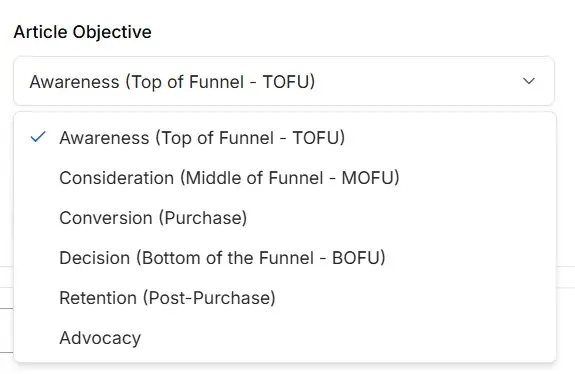
Then map their journey: awareness (learning SEO basics), consideration (comparing tools like Keywordly vs. Surfer), decision (selecting a workflow), implementation (publishing content), and optimization (scaling what works). Each stage comes with distinct questions and content formats.
Use this journey map inside Keywordly to cluster topics: how-to guides for awareness, comparison pieces for consideration, and process checklists for implementation. This keeps your topical map tied directly to user intent, not just keyword volume.
Align topic research with business goals and revenue drivers
Your blog should move readers toward concrete actions—trials, demos, signups, or purchases. List your key offers (e.g., Keywordly subscriptions, SEO consulting retainers, audits) and reverse-engineer content themes that naturally lead to those outcomes.
For instance, posts like “How to Build a Topical Map in 60 Minutes” or “Content Brief Templates for Agencies” attract readers who are close to needing a workflow platform. Compare that to chasing high-volume topics like “what is SEO,” which may bring traffic but little qualified demand.
Use Keywordly’s content planning to tag each topic with a primary business objective—lead gen, free trial, MQL, or retention. Filter out ideas that can’t be linked to any meaningful metric, even if the search volume is tempting.
Prioritize themes where you can realistically build authority
Not every topic is worth fighting for, especially against entrenched publishers. Audit where you already have an edge: hands-on experience, proprietary data, or unique workflows. A small agency that’s run 50+ content migrations can credibly own “SEO site migrations” more than “SEO tips” in general.
Select 3–5 core themes—such as topical mapping, content operations, AI-assisted SEO, eCommerce category SEO, or B2B content strategy—and commit to publishing consistently. Depth across these themes signals authority to Google and systems like ChatGPT, helping your content surface as a trusted source beyond traditional keyword targeting.
Related Articles:
Reference: → keyword-clustering-boost-your-seo-content-strategy
Reference: → seo-content-optimization-tools-comparison
Reference: Brand Your Blog: A Step-By-Step Guide | by Robyn Roste
3. Start with Core Topics: Turn Broad Ideas into Structured Topic Clusters
Brainstorm seed topics from real-world inputs
Strong topic clusters start with clear, real-world inputs—not abstract keyword lists. Begin by mapping seed topics directly to your main products, services, and solutions inside Keywordly so your content plan aligns with revenue, not vanity traffic.
For example, a B2B SaaS like HubSpot could log seed topics such as “marketing automation,” “sales CRM,” and “email workflows.” You can do the same by pulling recurring themes from customer support tickets, sales call notes, and onboarding surveys, then capturing them as seed topics in your Keywordly workspace.
Expand your list by reviewing webinar Q&A logs, product demo chat transcripts, social media comments, and competitor FAQ pages. A tool like Zoom or Gong can surface repeated objections, while competitor FAQ pages often reveal baseline education topics your audience still needs.
“Search engines don’t rank pages in isolation — they evaluate how deeply you cover a subject.”
Group related ideas into topic clusters and subtopics
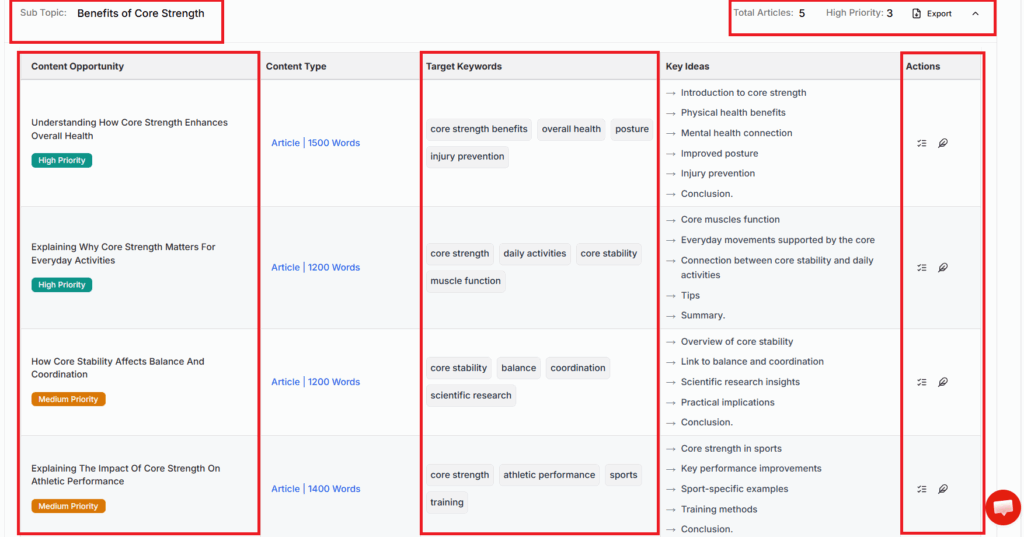
Once you have raw ideas, turn them into structured topic clusters. Start by grouping related concepts under broader parent topics that can become pillar pages—such as “B2B content strategy” or “local SEO for ecommerce.”
Under each pillar, outline subtopics like how‑tos, comparisons, use cases, and best practices. For example, a pillar on “topic clusters for SEO” might link to posts on internal linking, pillar page structure, and content audits, similar to the structure Semrush outlines in Topic Clusters for SEO: What They Are & How to Create.
Keywordly’s topical map view helps you visualize this as a hub‑and‑spoke hierarchy, where one core page supports dozens of targeted articles. This reduces duplication and ensures every new piece strengthens an existing cluster.
Validate core themes using competitor and industry sites
Before you commit to clusters, validate that people actually care about these themes. Analyze competitor blogs to see where they publish most frequently and which hubs attract the most engagement or backlinks.
Look for patterns in successful formats—like Ahrefs’ in‑depth guides, Shopify’s step‑by‑step ecommerce playbooks, or case‑study driven posts on industry sites. Cross‑check these angles with what performs well in Semrush’s topic cluster examples to confirm demand.
In Keywordly, you can tag clusters by format (guide, checklist, case study) and performance metrics, so you double down on themes and content types that consistently move organic traffic and assisted conversions.
Spot content gaps in existing clusters
Once clusters are mapped, look for holes across the buyer journey. Many brands over‑optimize for mid‑funnel keywords and ignore beginner explainers or advanced implementation guides, leaving traffic and authority on the table.
Compare your clusters against competitors: Do they have “What is…?” posts, tool comparisons, and integration tutorials that you lack? Semrush’s breakdown of how to create topic clusters that drive organic traffic is a useful benchmark for spotting missing formats.
Keywordly’s content planning dashboard flags thin or orphaned topics and surfaces quick‑win ideas—like creating a high‑intent comparison page or expanding a 600‑word post into a full pillar—to help you close gaps faster than manual spreadsheet audits.
Reference: Topic Clusters for SEO: What They Are & How to Create …
“The fastest way to uncover topic opportunities isn’t brainstorming — it’s identifying what competitors rank for that you haven’t structured yet.”
4. Go Beyond Keywords: Find Deep Content Opportunities with Topic Research Tools

4. Go Beyond Keywords: Find Deep Content Opportunities with Topic Research Tools
Why “keywords only” is limiting
Traditional keyword tools show search phrases like “SEO content” or “blog ideas,” but they rarely reveal how those ideas connect into a complete topic. That gap leads to thin, fragmented articles instead of robust content ecosystems that search engines can trust.
When you only chase individual keywords, you often publish overlapping posts such as “SEO content strategy,” “content SEO tips,” and “SEO blog strategy” that all say nearly the same thing. Google may struggle to understand which URL to rank, diluting your authority. Keywordly’s topical map view helps you see how entities like “content clusters,” “E‑E-A-T,” and “internal linking” relate, so you structure one strong hub with clear supporting pages.
Use topic research tools to expand themes
Start with one core theme—say “B2B SaaS SEO”—in a topic tool like Keywordly’s content planner. You’ll uncover related long-tails, People Also Ask questions, and sub-angles such as “SaaS SEO landing pages,” “PLG SEO,” or “demo request optimization.”
Cluster these into formats the data suggests: how-to guides, templates, definitions, comparisons, and case studies. For example, group “B2B SaaS SEO examples,” “SaaS SEO case study,” and “SaaS organic growth examples” into a case study cluster, then map them in Keywordly so each article supports a single pillar page.
Mine communities for topic-level insights
Keyword tools rarely capture the raw language your audience uses. Mining Reddit (r/SEO, r/Entrepreneur), Quora, Slack communities like Traffic Think Tank, or Facebook Groups for content marketers reveals recurring questions and myths that deserve full clusters, not just one-off posts.
If you see dozens of threads about “Why did my traffic drop after publishing more content?” you can build an entire mini-cluster on content cannibalization. Use Keywordly to tag these ideas as pain points, then turn them into articles, checklists, and troubleshooting guides that mirror the exact phrasing people use in those discussions.
Distinguish evergreen vs. trend-driven opportunities
Strong content portfolios balance timeless topics with timely spikes. Evergreen themes like “technical SEO checklist,” “content brief template,” or “how to build a topic cluster” can drive steady traffic for years and should anchor your main Keywordly topical maps and pillar pages.
Trend-driven topics—such as “Google’s Helpful Content Update impact” or “how to rank in ChatGPT search results”—can earn short bursts of traffic and links. In Keywordly, label topics as Evergreen or Trend, then allocate your calendar (for example, 70% evergreen, 30% reactive) so you protect long-term growth while still capturing news-driven demand.
“Without a structured topic map, content planning becomes reactive instead of strategic.”
Related Articles:
Reference: → reddit-keyword-research-tools
Reference: → topical-cluster-examples
Reference: Deep Topic Research & Analysis Tool For Unbeatable …
5. Use Keywordly’s Topic Planning and Topical Maps to Build an SEO Content Engine
Transform seed ideas into structured topical maps with Keywordly
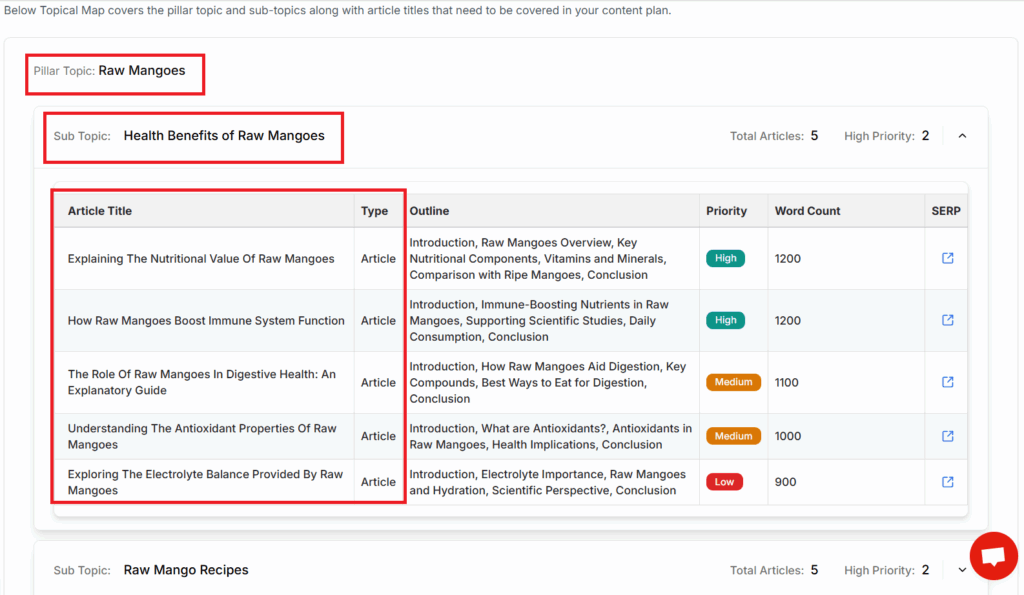
Strong SEO doesn’t start with keywords; it starts with understanding topics, questions, and problems your audience actually cares about. Keywordly helps you turn loose seed ideas like “creator economy tools” or “B2B SaaS onboarding” into structured topical maps that reveal content opportunities beyond individual keywords.
Begin by inputting a few seed topics into Keywordly. The platform automatically surfaces related themes, subtopics, and audience questions, then clusters them using its AI engine. For example, a DTC skincare brand might see clusters form around “acne routines,” “ingredient education,” and “dermatologist tips,” each packed with long‑tail opportunities.
Use Keywordly’s clustering view to generate visual topical maps from your raw ideas. Refine and label each cluster so it reflects your blog’s positioning, like “beginner education,” “product comparisons,” or “advanced technical breakdowns” for a SaaS brand. This makes it easier for content, SEO, and stakeholders to see where to invest effort and where gaps exist.
Map pillar pages, hubs, and supporting articles
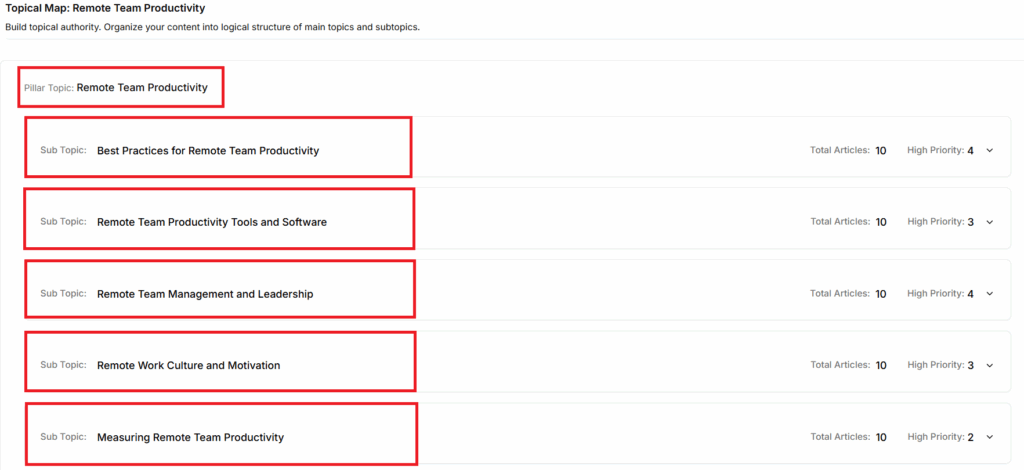
Keywordly – Topical Map Feature – Map pillar pages, hubs, and supporting articles
Once your topical map is clear, you can architect a content structure that search engines understand and users love. Keywordly makes it straightforward to translate abstract clusters into concrete pillar pages, hubs, and supporting articles with clear internal links.
Designate pillar pages in Keywordly for your highest-value topics—like “email marketing for ecommerce” or “AI content strategy”—and attach in-depth briefs. Then define hub or category pages that connect related clusters, similar to how HubSpot groups “Blogging,” “SEO,” and “Lead Generation” under broader marketing hubs.
Assign supporting articles to each pillar so each piece has a defined role. For instance, a pillar on “local SEO for dentists” might link to supporting posts on “Google Business Profile setup,” “local citation building,” and “patient review strategies,” creating a clean internal link path that reinforces topical authority.
Prioritize topics by demand, difficulty, and business impact
Not every cluster deserves equal attention. Keywordly’s metrics let you weigh search demand, competition, and business value so you focus on topics that can actually move revenue, leads, or sign-ups—not just vanity traffic.
Use search volume and difficulty metrics to compare clusters like “AI SEO tools” versus “manual keyword research.” Then layer on your own priorities: if you sell an AI SEO platform, a smaller but highly qualified cluster might beat a big, generic one. A common mistake is chasing only high-volume keywords; Keywordly helps you see topic groups where you can realistically win and still align with product fit.
Build a ranked list inside Keywordly that balances traffic, competition, and commercial intent. For example, prioritize “SEO content workflows for agencies” over broader “SEO tips” if you’re targeting agency retainers, even if the latter has more volume but weaker monetization potential.
Integrate Keywordly into your ongoing workflow
To build a true SEO content engine, Keywordly needs to become your operational source of truth—not just a one-off research tool. Treat your topical maps as living assets that evolve as you publish, learn, and see performance data.
Adopt a simple workflow: 1) plan topics and clusters in Keywordly, 2) create and optimize content from its briefs, 3) publish and track performance, and 4) revisit maps monthly to add new questions, prune underperformers, and expand winning clusters. This helps you uncover content opportunities like emerging queries from Search Console or customer support tickets and fold them back into your map.
Use Keywordly to align SEO, content marketing, and leadership around the same roadmap. Agencies can share topical maps with clients during strategy reviews, while in‑house teams can use them to justify budget for new content pillars, instead of relying on scattered spreadsheets and one-off keyword lists.
Reference: Keywordly – SEO Content Workflow Platform & Tools
“The brands that dominate search don’t publish more — they structure smarter.”
Read this Article : Topical Clusters Examples: How Leading Sites Organize Content
Read this Article : What Is Topical Authority? A Must-Know SEO Strategy
6. Validate, Qualify, and Prioritize Topics with Data

6. Validate, Qualify, and Prioritize Topics with Data
Evaluate search demand, competition, and intent
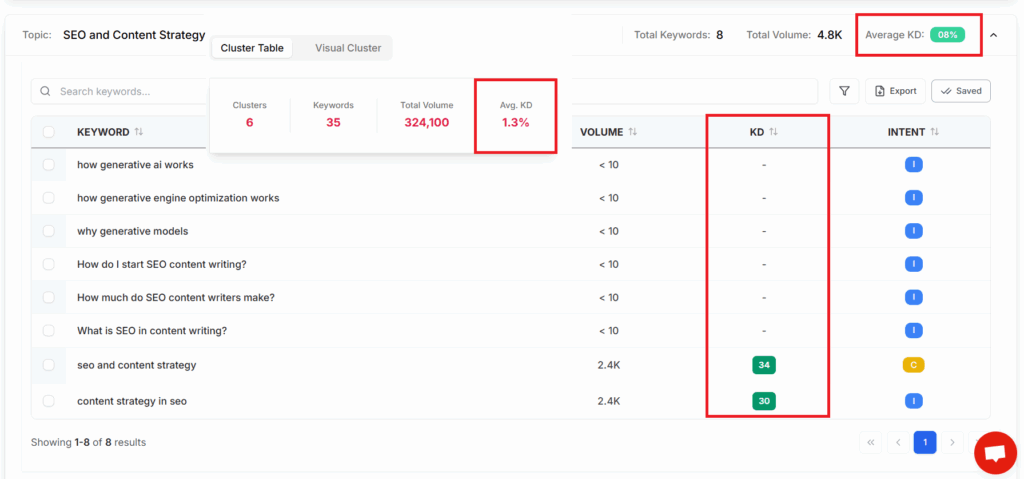
Once you’ve mapped potential topics, validate them with real numbers. Start by checking search volume and trend data in tools like Google Keyword Planner, Ahrefs, or Semrush to confirm each topic has meaningful demand. For example, “headless SEO” may show 2,000–3,000 US monthly searches with a steady 2-year uptrend, making it a stronger bet than a similar term stuck under 100 searches.
Then review competition on the SERPs. Look at domain authority, content depth, and brand presence of top results. If pages from HubSpot, Shopify, and Moz dominate with 3,000-word guides, you’ll need a differentiated angle or supporting cluster to compete. Finally, verify search intent: if “SEO content template” surfaces mostly downloadable resources, a short opinion article will likely miss the mark and underperform.
Use SERP analysis to refine angles and formats
Deep SERP analysis helps you see how Google currently “expects” the topic to be covered. Review the top 5–10 pages for structure, H2s, media types, and content depth. For example, searches for “content brief template” show comparison posts, free templates, and how-to guides, signaling that a hybrid guide-plus-template format works best.
Look for content gaps: maybe no one addresses AI-assisted briefing or workflow automation. That’s where Keywordly’s content planning and topical maps can surface missing subtopics across clusters, so you can position your piece as the most complete resource instead of another lookalike list post.
Choose topics for quick wins vs. long-term authority
Balance your editorial calendar between quick wins and long-term authority plays. Quick wins are lower-difficulty, moderate-demand topics like “SEO content checklist PDF,” where you can outrank weaker blogs within a few months. These posts drive early traffic and prove your strategy to stakeholders.
At the same time, plan pillar pieces for high-value, competitive themes such as “SaaS content marketing strategy.” Treat these as cornerstone pages supported by multiple cluster posts. Keywordly helps by visualizing topical maps, so you can see which supporting articles to publish first to gradually strengthen your authority around each pillar.
Related Articles:
Reference: → keyword-clustering-boost-your-seo-content-strategy
Reference: → best-ai-keyword-research-tools
Reference: The 6 Data Quality Dimensions with Examples
7. Turn Topics into High-Impact Content Briefs and Editorial Calendars
Translate topics into detailed content briefs
Once you’ve validated your topics and clusters, the next step is turning them into repeatable, high-impact briefs. Keywordly makes this easier by pulling topic intent, SERP data, and related questions directly into your brief so writers don’t start from a blank page.
For each topic, define a clear target audience, goal, and primary angle. For example, a brief on “AI content workflows for agencies” might target mid-size agencies (10–50 employees), aim to reduce production time by 30%, and angle around replacing 5 disconnected tools with a single workflow platform like Keywordly.
Then outline key subtopics, FAQs, and competitor references. You might include headings inspired by top results from HubSpot and Ahrefs, plus SERP-driven requirements like comparison tables or FAQ schema. Add target query families, internal link targets, and notes on E‑E‑A‑T signals (author bio, data sources) directly in the brief.
Map internal links across topic clusters
Strong topical authority comes from how your content connects, not just what it covers. Before a single draft is written, plan how each article will link to your pillar page and to related sibling posts within the same cluster.
For a “topical map SEO” cluster, your pillar might be “SEO Content Workflows,” supported by posts on topical maps, content briefs, and content calendars. In Keywordly, you can visualize these relationships and specify required links in the brief so every writer knows to link “content brief templates” back to the main workflow guide and across to “internal linking strategies.”
Keep an internal linking plan or diagram in a shared doc or within your content planning tool. This reduces missed opportunities and keeps new content reinforcing existing authority instead of becoming isolated orphan pages.
“Internal linking is the distribution engine of topical authority.”
Build a realistic editorial calendar from your pipeline
Topic research only drives results when it’s translated into a cadence you can sustain. Start by prioritizing briefs based on potential impact and capacity: high-intent, bottom-funnel clusters first, then supporting educational content.
Build in buffers for editing, design, and optimization. A common mistake is scheduling by publication date only; instead, reverse-plan from publish date to draft, review, and SEO QA milestones so every article fully covers its topic and passes quality checks.
Collaborate around topics, not just keywords
High-performing SEO teams align around topics and clusters, not isolated keywords. Share your topical maps and cluster plans with writers, editors, and stakeholders so everyone understands why a piece exists and how it advances your visibility on Google and ChatGPT.
Use a shared workspace—whether in Notion, Asana, or directly in Keywordly—to centralize briefs, topical maps, and internal linking plans. Invite feedback at the topic level: your sales team might suggest a “content ROI dashboard” article after seeing prospects ask about reporting, which then becomes a supporting piece in your “SEO analytics & reporting” cluster.
This topic-first collaboration prevents redundant content, uncovers content opportunities beyond obvious keywords, and keeps every new article strengthening a coherent, long-term topical strategy instead of chasing one-off trends.
Reference: 7 Steps to a More Strategic Editorial Calendar
8. Measure, Optimize, and Expand Your Topic Coverage Over Time
Track performance at page, cluster, and topical levels
Once your topical map is live, you need consistent feedback loops, not guesswork. Track how each article, cluster, and overarching topic performs so you can double down on what actually drives business results, not just clicks.
In Google Analytics and Search Console, monitor organic traffic, rankings, and on-page engagement (time on page, scroll depth, conversions) for each URL in a cluster. For example, a B2B SaaS blog might see that a single post on “sales playbooks” ranks for 300 queries and drives a 4% demo conversion rate, making it a priority page for ongoing optimization.
Then, roll metrics up by cluster in Keywordly’s content planning views to see which topic collections are moving the needle. A marketing agency might learn that its “local SEO” cluster brings 40% of organic leads, while “branding” drives traffic but almost no form fills.
Watch for signs that you’re gaining topical authority: higher average positions across a cluster, more long-tail variations, and rising impressions for related entities. This kind of pattern is what helped Backlinko grow from a few SEO guides into a recognized authority on search marketing.
Identify underperforming topics and refresh content
Not every topic will perform as expected, even with a strong topical map. The key is spotting underperformers quickly and deciding whether to fix, merge, or retire them.
Use Keywordly and Search Console to flag posts that stay stuck beyond page two for 3–6 months or receive very low impressions relative to search volume. At the cluster level, you might find your “AI content tools” group lagging while “content strategy frameworks” surges.
Diagnose why: Is the content thin compared to HubSpot or Ahrefs? Does it miss intent (e.g., offering a high-level guide when searchers want templates)? Is internal linking weak, or are statistics outdated? Each issue suggests a different fix.
Then refresh systematically. Add new data points (like 2024 pricing or benchmarks), expand sections that users dwell on, and restructure with clearer H2s and FAQs. Content Refresh case studies from Siege Media show traffic lifts of 50–100% after targeted updates to posts that were previously stuck on page two.
Use performance data to find adjacent topics
Performance data often reveals topics you never planned but your audience clearly wants. Instead of focusing only on pre-selected keywords, mine your queries and landing pages for emerging angles and questions.
In Search Console, filter by a strong-performing page and look at the “Queries” report. You might see that a guide about “email marketing strategy” is unexpectedly driving clicks for terms like “newsletter welcome series examples” or “B2B onboarding email flow.” Those are content opportunities beyond your original keyword list.
Turn recurring related queries into new subtopics, gated resources, or even fresh clusters. For instance, Buffer noticed sustained interest around “social media content calendar” and eventually built a dedicated cluster and template resources, which now attract thousands of signups per month.
With Keywordly, you can map these adjacent ideas directly onto your topical map, attaching them to parent clusters so your site structure grows logically instead of chaotically.
Automate recurring topic research with tools like Keywordly
Manual research works for a launch, but ongoing topical coverage requires automation. You want a system that continually surfaces new angles, entities, and questions without starting from zero each quarter.
Set up recurring topic audits inside Keywordly to re-check demand, competition, and content gaps for each major cluster. For a Shopify store blog, this might reveal new long-tail searches around “eco-friendly packaging examples 2025” long before competitors notice.
Use automation to collect related queries, People Also Ask questions, and entity data around your core topics, then sync these insights into your editorial calendar. This keeps your roadmap aligned with how people actually search and how SERPs evolve.
Finally, let Keywordly’s topical map view guide prioritization: extend clusters that are winning, prune those that stall, and plan spin-off clusters where interest spikes. Over time, this creates a living, evolving content ecosystem that strengthens both Google and AI search visibility while staying tightly aligned with your business goals.
Reference: 8 Tips to Measure & Maximize Your Content
“Topic research turns random blog posts into a scalable content ecosystem.”
Conclusion: Turn SEO Topic Research into a Repeatable Growth System
Recap the Shift Toward Strategic SEO Topic Research
SEO has evolved from chasing one-off keywords to building topic ecosystems that match how people actually research and buy. Instead of creating isolated posts like “best CRM tools,” teams now cover connected angles such as implementation, integrations, pricing comparisons, and use cases to build true topical authority.
Brands like HubSpot and Ahrefs rank so consistently because they map out entire topic clusters around entities like “content marketing,” “keyword research,” or “technical SEO,” not just single phrases. That breadth and depth makes them more visible in Google, featured snippets, and AI-driven answers in tools like ChatGPT and Gemini.
Blogs structured around well-planned topical maps are also more resilient to algorithm and SERP feature changes. When one post dips, the cluster still drives impressions and links, giving you a more stable organic growth engine instead of volatile, keyword-by-keyword wins.
Summarize the Core Steps and Next Actions
Turning topic research into a system starts with a clear focus and a defined audience. For example, a B2B SaaS analytics tool might choose “marketing analytics for SaaS startups” as its core focus, then interview 5–10 customers to uncover real questions, objections, and decision triggers that go beyond what keyword volumes show.
From there, cluster related topics, use research tools to validate demand, prioritize by business value, and then execute content in logical sprints. A practical starting point is to build one simple topical map, such as a cluster around “content opportunity discovery,” with pillars on zero-volume keywords, SERP gap analysis, and competitor content audits.
Track performance in Google Search Console and analytics, then iterate on what works. If you see a cluster driving assisted conversions or strong engagement, expand it with deeper guides, comparison pages, and supporting FAQs until it becomes a self-reinforcing content system.
Scale with Tools Like Keywordly
As your library grows, managing topic discovery, clustering, briefs, and optimization manually becomes hard to sustain. Keywordly helps centralize this workflow by combining SEO topic research, content planning, and topical map visualization in one AI-powered platform so you can see exactly where to build next.
For example, you can use Keywordly to uncover content opportunities beyond keywords by analyzing SERPs, entities, and competitor gaps, then auto-generate a topical map around themes like “local SEO for multi-location retailers.” That map can feed briefs, internal links, and publishing cadence without juggling spreadsheets.
By running research, planning, drafting, and optimization inside Keywordly, agencies and in-house teams can turn topic research into a repeatable process instead of ad-hoc brainstorming. If you want an end-to-end workflow that supports topic-led SEO—from ideation to publishing and performance feedback—Keywordly is built to make that system achievable and manageable at scale.
“In competitive niches, topical authority isn’t optional — it’s the differentiator.”
Read this Article : What Is Semantic Keyword Clustering? A Simple Guide
Read this Article : SERP Keyword Clustering Tool: How and Why to Use
FAQs About SEO Topic Research for Your Blog
What is topic research in SEO, and how is it different from keyword research?
Topic research looks at the broader subject your audience cares about, not just isolated phrases. Instead of only targeting “best running shoes,” you’d map the whole subject: training plans, injury prevention, shoe lifespan, and surface types.
Keyword research then refines each node in that map. Keywordly helps you see both the cluster and the specific queries inside it so you’re not guessing what to write next.
How do I know when a topic is worth creating a full cluster around?
A topic deserves a cluster when you see multiple related questions and consistent demand. If “email marketing” surfaces queries like “welcome series,” “abandoned cart flows,” and “Klaviyo vs Mailchimp,” you’re looking at a pillar plus many supporting posts, not a one-off article.
In Keywordly, you can group these ideas under a single pillar page and instantly see search volume, difficulty, and intent. This makes it easier for agencies managing dozens of clients to prioritize clusters that both drive traffic and support revenue, such as “B2B SaaS onboarding emails” for a CRM brand.
How to find content opportunities beyond keywords (with Keywordly)
Focusing only on obvious keywords misses gaps where competitors are weak. Look for under-served angles like formats (checklists, calculators), audiences (beginner vs advanced), or stages (post-purchase, churn risk).
Keywordly’s topical mapping lets you spot these gaps visually. You can see where a cluster has no comparison guides, no case studies, or no “how-to” workflows, then plan those assets. This turns your SEO strategy from chasing single keywords into building a complete, search-friendly resource library around each topic.