Tag: content-marketing

  • Top 9 Reddit Keyword Research Tools for Improving Online Visibility

    Top 9 Reddit Keyword Research Tools for Improving Online Visibility

    Looking for the best Reddit keyword research tools? Discover the top 10 tools to find trending subreddits, hidden keywords, and boost your organic traffic fast.

    Introduction

    Unlocking meaningful audience insights and uncovering new ranking opportunities poses a constant challenge for content marketers and SEO professionals. An effective keyword research process is critical not just for organic growth, but for genuinely understanding what your audience cares about. Yet, traditional keyword tools can miss the dynamic, real-time conversations that shape content demand—especially on platforms like Reddit.

    Keyword research tools are indispensable for anyone involved in content marketing or SEO. These tools empower professionals to identify high-value search terms, gauge competition, and plan content strategies that resonate with intended audiences. Without them, content creators risk producing materials that fail to connect or perform. Combining these tools with social listening, especially through Reddit, layers in valuable context directly from passionate, niche communities.

    Reddit stands apart for its diversity of topics and the depth of its user-driven discussions. The platform captures authentic, trending dialogues within thousands of communities (subreddits), many of which never surface in traditional keyword research tools. However, tapping into Reddit’s troves of insight isn’t always intuitive. This is where specialized keyword tools, such as those integrated into holistic SEO platforms like Keywordly, come into play. They simplify the process and bridge the gap between data and action, helping marketers identify what content will perform and fuel their organic strategies.

    This curated list highlights the top 9 Reddit keyword research tools available. Each solution is designed to help you discover breakthrough topic ideas, streamline your content creation workflow, and boost online visibility. From clustering threads to surfacing content ideas tailored for Reddit audiences, these tools—especially Keywordly—enable businesses and digital marketers to make data-driven decisions quicker and with greater confidence.

    “Reddit reveals the questions real users actually ask — and keywords mined from its discussions often uncover intent you won’t find in normal SEO tools.”

    What is Reddit Keyword Research, and Why Does It Matter?

    What is Reddit Keyword Research?

    Reddit keyword research involves exploring discussions, posts, and subreddit threads to surface real terms, trending topics, and specific pain points your target audience is actively discussing.

    By examining Reddit communities, marketers can detect specific phrases, emerging ideas, and popular questions from real users, allowing for highly relevant content planning and creation.

    Reddit-focused keyword insights are often missed by legacy SEO tools, enabling you to target new spaces your competitors overlook.

    Why is Reddit Keyword Research Important?

    Reddit surfaces the earliest signals of user interest, allowing content marketers and SEO professionals to stay ahead of industry shifts. Unlocking Reddit’s conversational goldmine is a strategic move for building content that deeply resonates with your audience.

    “Standard keyword tools show volume. Reddit keyword tools show context and intent behind those terms — which is what drives engagement and conversions in content strategies.”

    1. Unlocks emerging topics before they hit mainstream search.

    You can identify nascent trends as they gain traction—months or weeks before they appear in high-volume keyword lists. This enables proactive content development.

    2. Reveals authentic language and pain points directly from your target audience.

    Direct access to the words and phrases your audience uses means you craft content that sounds natural and relatable, boosting user engagement and trust.

    3. Identifies content gaps and untapped long-tail keyword possibilities.

    Reddit research shows what content your audience wants but can’t currently find, becoming a treasure trove for generating new content.

    4. Fuels high-engagement content ideas for Reddit and organic search.

    The result is content inspired by real needs, likely to generate interaction both on Reddit and in search rankings.

    Let us now take a look at all the Reddit Keyword Research tools one by one.

    “For actionable content ideas, you don’t just need search volume — you need conversation volume and sentiment. Reddit keyword tools help you find both.”

    TL/DR

    ToolKey FeaturesBest For
    Keywordly• Long-tail keyword discovery
    • Search volume data
    • Keyword difficulty analysis
    • SERP analysis
    • Affordable pricing with free tier
    Small businesses and bloggers looking for budget-friendly keyword research
    SEMrush• Comprehensive keyword research
    • Competitor analysis
    • Site audit and technical SEO
    • Backlink analysis
    • PPC research
    • Content marketing tools
    Enterprise businesses and marketing agencies needing all-in-one SEO solutions
    Ahrefs• Extensive backlink database
    • Advanced keyword research
    • Content gap analysis
    • Site audit capabilities
    • Rank tracking
    • Content explorer
    SEO professionals and agencies focused on backlink analysis and competitive research
    Keyword Tool• Google autocomplete data
    • Multi-platform keyword research
    • Long-tail keyword suggestions
    • Question-based keywords
    • Local keyword research
    Content creators and marketers seeking simple, multi-platform keyword research
    Answer the Public• Visual keyword mapping
    • Question mining from search data
    • Preposition-based queries
    • Comparison searches
    • Alphabetical keyword suggestions
    Content marketers and bloggers seeking content ideas based on user questions
    ScrapeStorm• Visual web scraping interface
    • Automated data extraction
    • Cloud-based crawling
    • API integration
    • Multiple export formats
    Data analysts and researchers needing custom web data extraction
    Keyworddit• Reddit keyword extraction
    • Subreddit topic analysis
    • Trending discussion topics
    • User intent insights
    • Completely free to use
    Social media marketers targeting Reddit communities and niche audiences
    Keyhole• Real-time hashtag tracking
    • Social media monitoring
    • Influencer identification
    • Campaign performance analytics
    • Cross-platform social insights
    Social media marketers focusing on hashtag performance and influencer campaigns
    BuzzSumo• Content discovery and analysis
    • Social media performance tracking
    • Influencer research database
    • Trending topic identification
    • Content alert notifications
    Content marketers and PR professionals seeking viral content insights

    1. Keywordly

    Keywordly Home

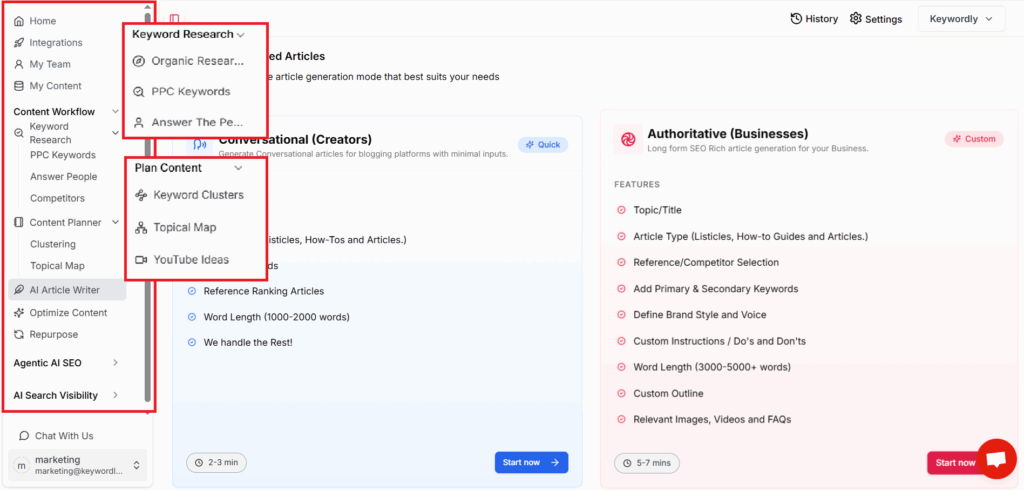
    Keywordly serves content marketers and SEO professionals seeking a one-stop platform for all their content workflow needs. As a holistic SEO content workflow solution, Keywordly streamlines everything from keyword discovery and clustering to content generation. By offering exclusive integrations for Reddit keyword research, it stands out for brands aiming for unique, community-driven content ideas. Marketers value its ability to consolidate their process into a single, intuitive dashboard.

    Technical Requirements

    Keywordly operates as a cloud-based SaaS, ensuring accessibility via any modern web browser—no downloads or installations needed. Users can access the platform from any desktop or laptop device with internet connectivity, making remote and cross-team collaboration simple and efficient for organizations of all sizes. This ease of access supports seamless scaling for both individual marketers and growing teams.

    How It Compares

    Unlike traditional SEO tools, Keywordly bridges the gap between community trends and strategic content planning. Its Reddit thread analysis and keyword suggestion tools provide actionable insights derived from real user conversations, helping marketers discover untapped topic areas. Everything is managed within one unified platform, reducing tool fatigue and optimizing workflow efficiency for teams focusing on organic traffic growth.

    Getting Started Tips

    New users can sign up for a free trial to see Reddit keyword suggestions in action. It’s recommended to import a list of seed keywords and use the Reddit Insights feature to cluster fresh content ideas tailored to high-traffic subreddits. This approach ensures that marketers target the right communities and optimize their editorial calendars from day one.

    Key Features
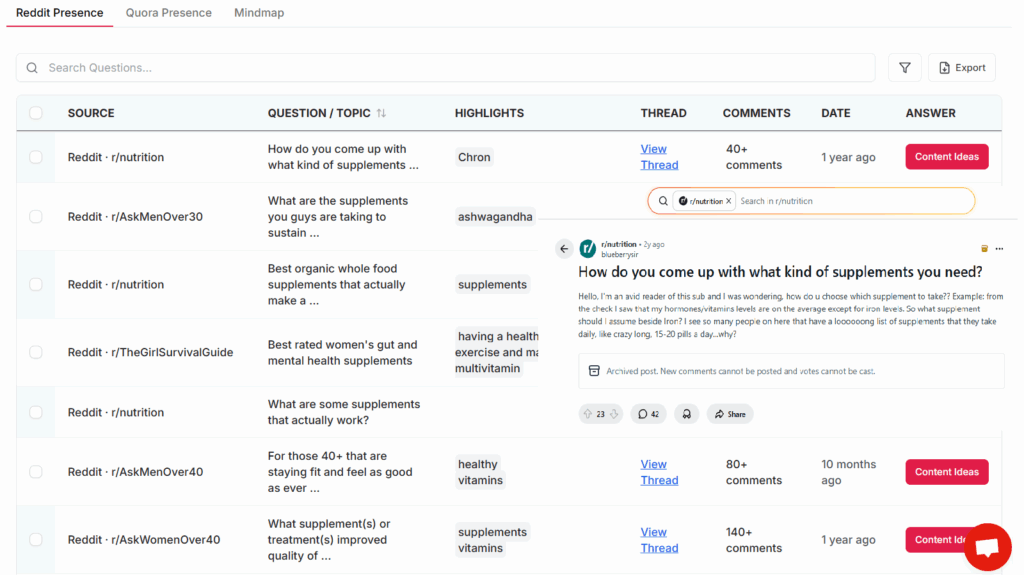
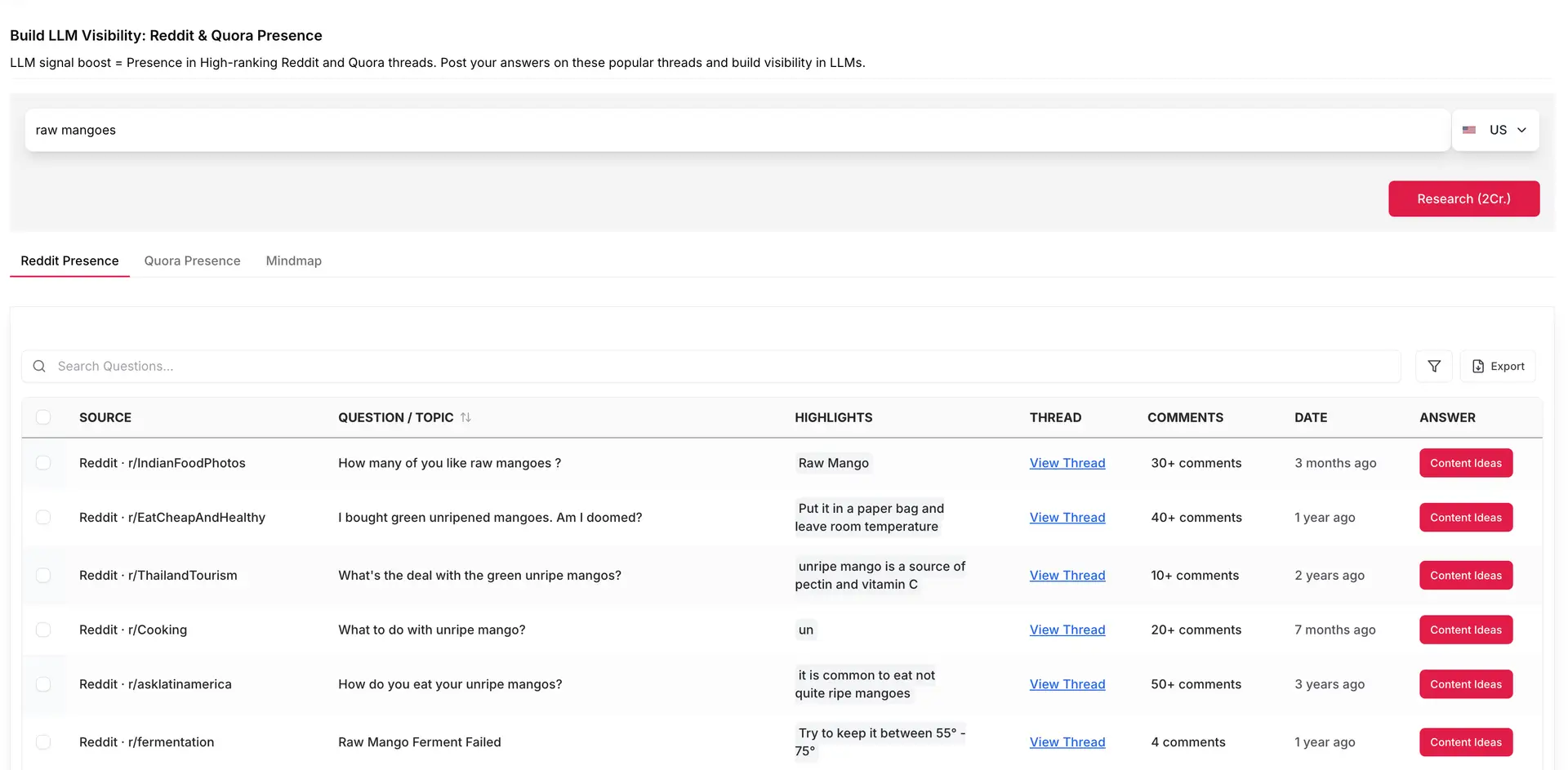
    keywordly - reddit presence
    keywordly – reddit presence
    • Dedicated Reddit keyword discovery engine
    • Content clustering for streamlined editorial planning
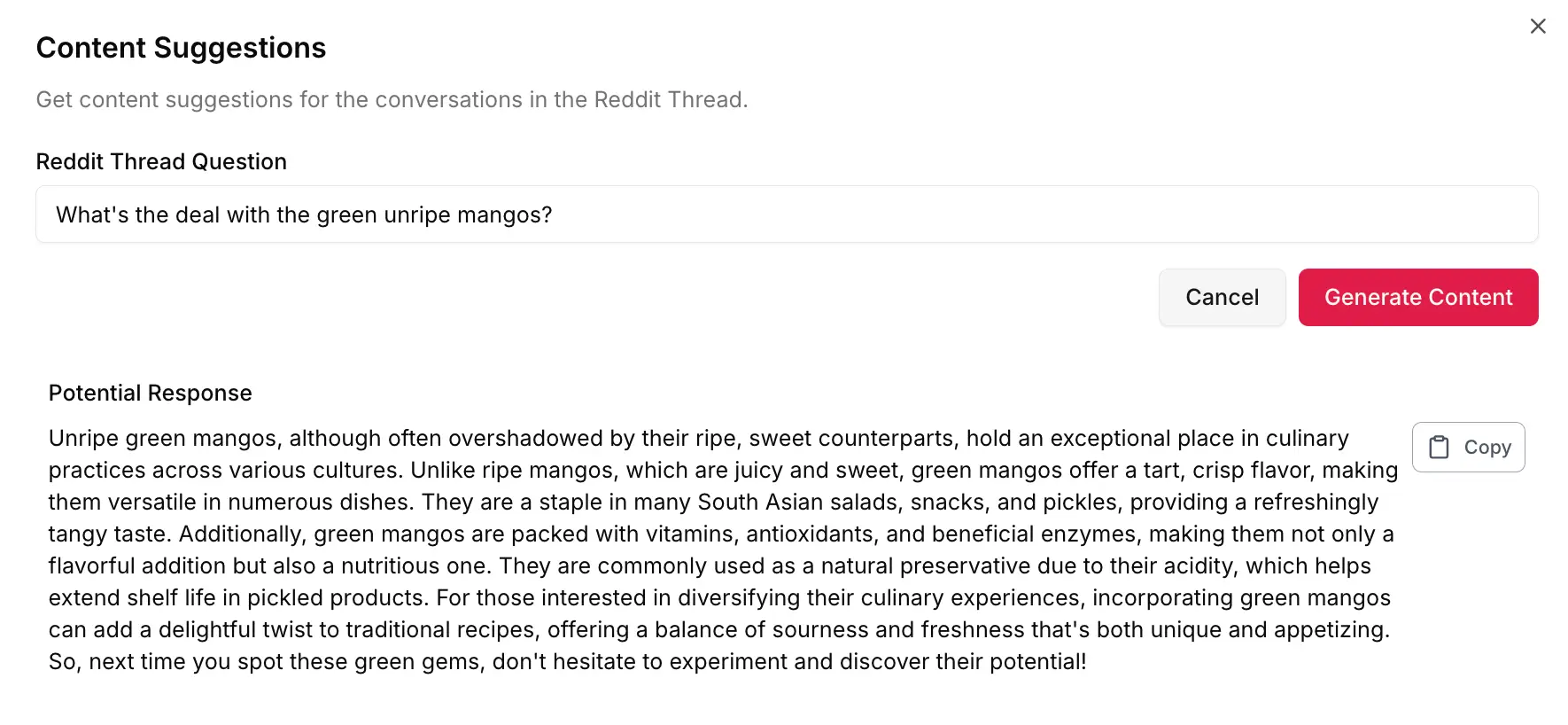
    • Context-aware content generation tied to Reddit trends
    • Real-time SEO audit and optimization capabilities
    • Team collaboration features for multi-user workflows

    Pros
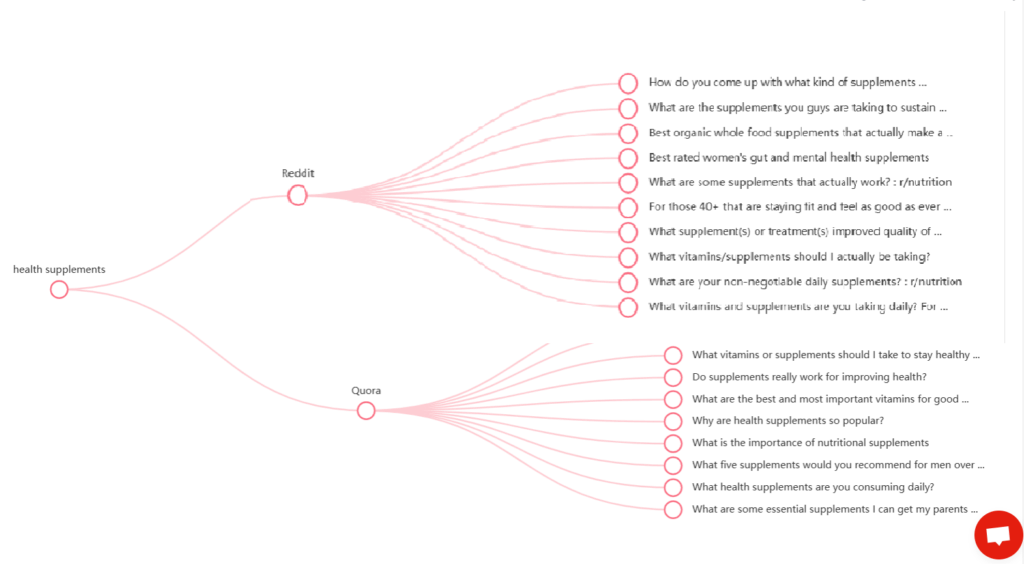
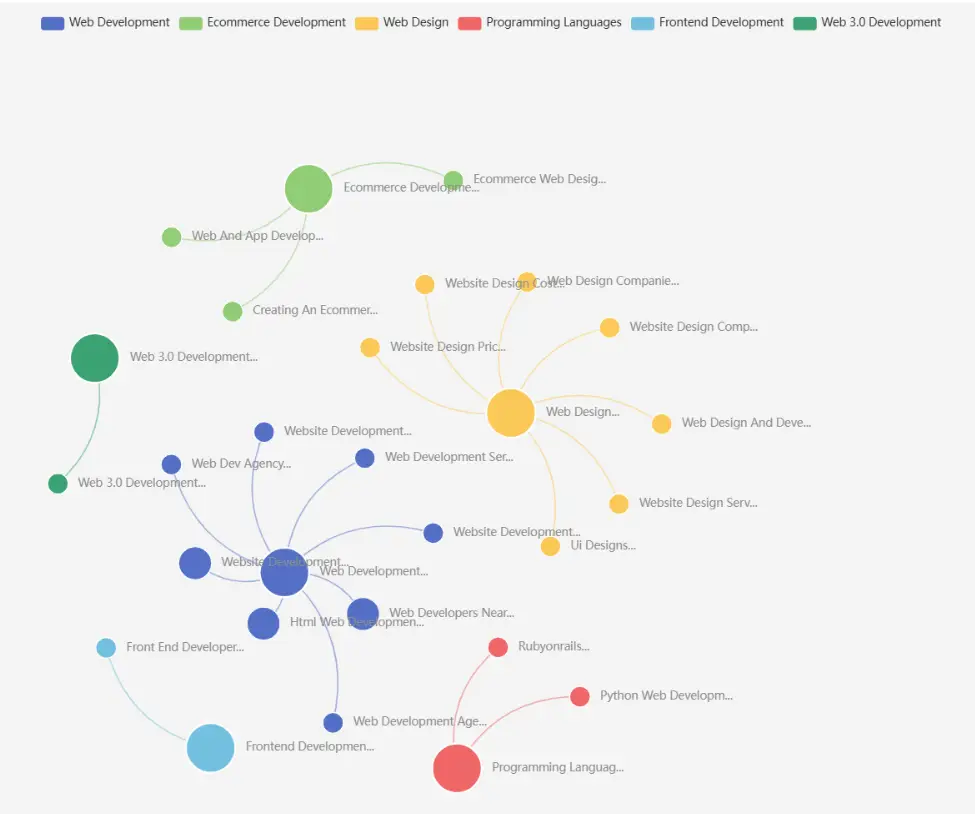
    Keywordly - reddit mind map
    Keywordly – reddit mind map
    • Unified content workflow designed specifically for marketers
    • Deep Reddit thread analysis yields unique content opportunities
    • User-friendly platform with helpful onboarding resources
    • AI-powered engine suggests relevant, trending topics

    Cons

    • Premium features available only with paid subscription
    • Focus currently limited to English-language Reddit data

    Pricing

    Keywordly offers a free trial for new users, with monthly subscription plans starting at $39. Tiered options cater to individuals and teams, allowing businesses to scale as their needs evolve. All plans include access to core features for Reddit keyword research and workflow optimization.

    User Sentiment

    Marketers praise Keywordly for taking the guesswork out of Reddit keyword research. Teams highlight how its Reddit thread analysis uncovers viral content opportunities, optimizing content creation at every step based on real user discussions. The platform has become essential for agile marketing teams aiming for growth.

    Website

    Discover more about features, plans, and support at https://keywordly.ai.


    2. SEMrush
    Semrush

    SEMrush stands out as a powerful all-in-one digital marketing toolkit trusted by SEO specialists, content marketers, and agencies alike. It’s designed to help users manage SEO, SEM, and content marketing campaigns from a single platform. While SEMrush features limited Reddit keyword capabilities, it’s primarily recognized for broad keyword research and competitive analysis tools, rather than Reddit-focused clustering or content ideation. In contrast, Keywordly integrates direct Reddit keyword research and clustering, helping users pinpoint popular threads and generate targeted content ideas for Reddit.

    Technical Requirements

    Getting started with SEMrush is straightforward for most users, as the platform is web-based and accessible from any modern browser. You’ll need to register an account to access its tools. SEMrush works seamlessly across Windows, macOS, and Linux operating systems. However, for the best experience—especially when running large-scale reports or analyzing high-traffic domains—a reliable and fast internet connection is recommended.

    How It Compares

    SEMrush delivers excellent results for generic and broad keyword research, using an expansive database covering multiple sources including Reddit. However, it doesn’t offer Reddit-specific features such as clustering related threads or granular, post-level topic analysis. Unlike SEMrush, Keywordly provides specialized Reddit keyword suggestions, helps users discover trending threads, and delivers actionable Reddit content ideas—streamlining the process for content marketers targeting this platform.

    Getting Started Tips

    To maximize Reddit keyword insights with SEMrush, navigate to the “Keyword Magic Tool.” Enter “reddit” as a modifier alongside your target keywords to filter results towards Reddit-driven searches and popular user phrases. This helps gauge Reddit-related search volume and trends, though the results may require manual refinement for direct Reddit marketing purposes.

    Key Features

    • Keyword Magic Tool
    • Competitor domain analysis
    • Backlink checker
    • SERP tracking
    • Limited Reddit query insights

    Pros

    • Comprehensive suite for all SEO and SEM needs
    • Maintains an extensive and frequently updated keyword database
    • Robust competitor benchmarking tools provide valuable strategic insights
    • Accurate and customizable reporting features

    Cons

    • No specialization in Reddit-focused keyword research or clustering
    • Steeper learning curve for beginners unfamiliar with advanced SEO platforms

    Pricing

    SEMrush’s plans begin at $119.95 per month, making it a robust yet premium investment for businesses seeking comprehensive digital marketing insights. It’s priced higher than tools focused solely on Reddit keyword research, like Keywordly, but offers a broader scope of features.

    User Sentiment

    Professionals appreciate SEMrush’s detailed keyword and competitor analysis. However, many users express a desire for deeper, Reddit-specific data and easier post-level insights—capabilities that Keywordly addresses by tailoring features for Reddit-centric content workflows.

    Website

    https://semrush.com


    3. Ahrefs

    Ahrefs

    Ahrefs stands out as an industry-standard SEO tool, frequently used by professionals for its reliable backlink data and deep keyword analysis capabilities. While it excels in various SEO domains, its direct integration with Reddit is somewhat limited. For those primarily focused on traditional site analysis, Ahrefs remains a top choice but doesn’t specialize exclusively in Reddit-centric keyword discovery, unlike platforms such as Keywordly.

    Technical Requirements

    Accessible via all modern browsers, Ahrefs requires an active subscription and a stable internet connection to operate smoothly. Users don’t need to install extra software. The web-based dashboard ensures that digital marketing teams can collaborate from any device, provided they have the necessary login credentials and internet access.

    How It Compares

    Ahrefs performs best in competitive SEO analysis and comprehensive organic keyword tracking across traditional web sources. However, when it comes to exploring Reddit-specific data, its offerings are more basic. Compared to a platform like Keywordly, which streamlines the Reddit keyword research workflow, Ahrefs provides fewer direct insights for discovering trending Reddit threads or posts suitable for content marketers seeking community-driven ideas.

    Getting Started Tips

    To make the most of Ahrefs with Reddit research, begin by entering “reddit.com” into the Site Explorer. This reveals which Reddit discussions and threads rank in search results, helping marketers identify high-performing topics. Extracting these keywords offers a foundation for broader content strategies, though more tailored Reddit insights often require additional tools.

    Key Features

    • Large-scale keyword explorer for deep research opportunities
    • SERP analytics to evaluate which pages rank for target topics
    • Content gap analysis to uncover missed keyword opportunities
    • Limited Reddit site explorer function for basic trending threads
    • Competitive link analysis to benchmark against other domains

    Pros

    • Trusted by SEO professionals for data reliability
    • Delivers accurate and up-to-date backlink data
    • Offers comprehensive keyword research tools
    • Useful for high-level Reddit domain insight

    Cons

    • Lacks features for deep Reddit post discovery
    • Cost may be prohibitive for casual users

    Pricing

    Subscription plans with Ahrefs start at $99 per month. Higher-tier options grant broader data access and more advanced features, appealing particularly to agencies and advanced marketers, rather than smaller businesses or independent content creators.

    User Sentiment

    Users consistently value Ahrefs for its accuracy and the depth of its SEO insights. However, many note that it falls short for in-depth Reddit research, making it a stronger fit for those conducting broader web analysis rather than Reddit-first strategies.

    Website

    This platform can be explored further at ahrefs.com.


    4. Keyword Tool
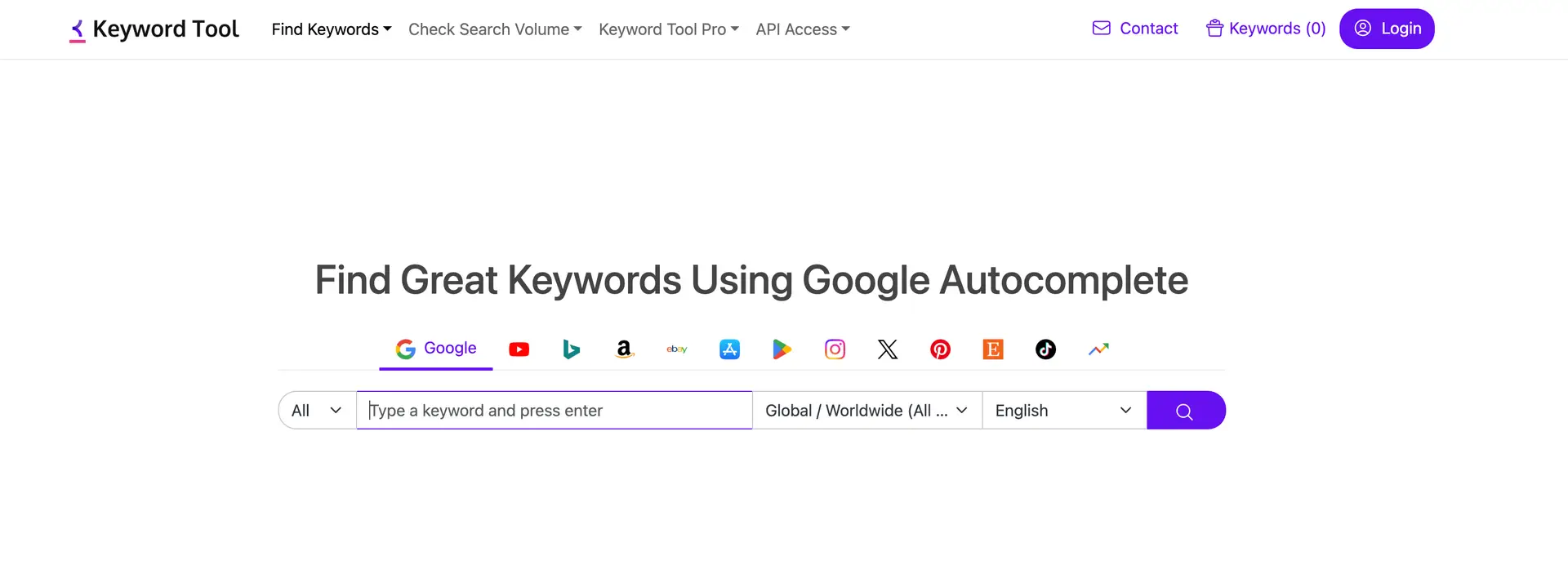
    KeywordTool

    Keyword Tool is an online keyword research utility that focuses on generating keyword ideas by scraping autosuggest data from sources like Google, YouTube, and Reddit. The tool is designed for users who want to quickly discover trending and relevant topics for content ideation. When specifically utilized for Reddit, it uncovers authentic, user-generated queries, enabling content and SEO professionals to tap community-driven conversations.

    Technical Requirements

    Business owners and marketers will find that Keyword Tool is fully web-based, requiring no installation or complex setup. It is compatible with any modern browser, providing access as long as there is an internet connection. This makes it accessible from virtually any device, maximizing convenience and flexibility for teams and individuals working remotely or on-the-go.

    How It Compares

    Compared to comprehensive solutions like Keywordly, Keyword Tool excels at simple Reddit keyword extraction. However, it omits more advanced capabilities such as keyword clustering and integrated content workflows. While Keywordly streamlines every step of the content creation process—offering discovery, clustering, and actionable content ideas drawn from Reddit threads—Keyword Tool focuses purely on initial keyword discovery without deeper analytics or workflow ties.

    Getting Started Tips

    To begin using Keyword Tool for Reddit research, select Reddit as your preferred source within the platform. Input any seed keyword of interest, and the tool will generate a list of related topics and queries found on Reddit. Reviewing these suggestions can provide valuable insight into what users are seeking, sparking content ideas and potential Reddit thread topics relevant to your niche.

    Key Features

    • Pulls suggestions directly from Reddit autosuggest for authentic, in-demand keyword data.
    • Easy export functionality allows users to download keyword lists for integration with other tools or campaigns.
    • Supports keyword suggestion extraction from multiple platforms beyond Reddit, enhancing versatility.
    • User-friendly interface ensures a straightforward experience even for those new to keyword research.

    Pros

    • Efficiently scrapes Reddit keywords, saving time for quick research.
    • Intuitive and simple to navigate, suitable for beginners and busy professionals alike.
    • Helpful for brainstorming and uncovering fresh content topics informed by real user inquiries.
    • Offers an affordable entry plan, making it accessible for small businesses and startups.

    Cons

    • Does not provide advanced analysis, clustering, or categorization of keywords, unlike Keywordly.
    • Lacks integration with end-to-end content workflows, limiting its role to keyword ideation only.

    Pricing

    Keyword Tool offers a limited free version suitable for basic research and initial testing. For users needing extended usage, Pro plans are available starting at $69 per month, unlocking more credits and advanced export functionalities.

    User Sentiment

    Many users value Keyword Tool for its speed and effectiveness at uncovering new keyword ideas, especially for emergent topics on Reddit. However, experienced marketers often note its limitations in advanced analytics when compared to more robust platforms like Keywordly.

    Website

    To explore Keyword Tool further, visit their official website: https://keywordtool.io


    5. Answer the Public
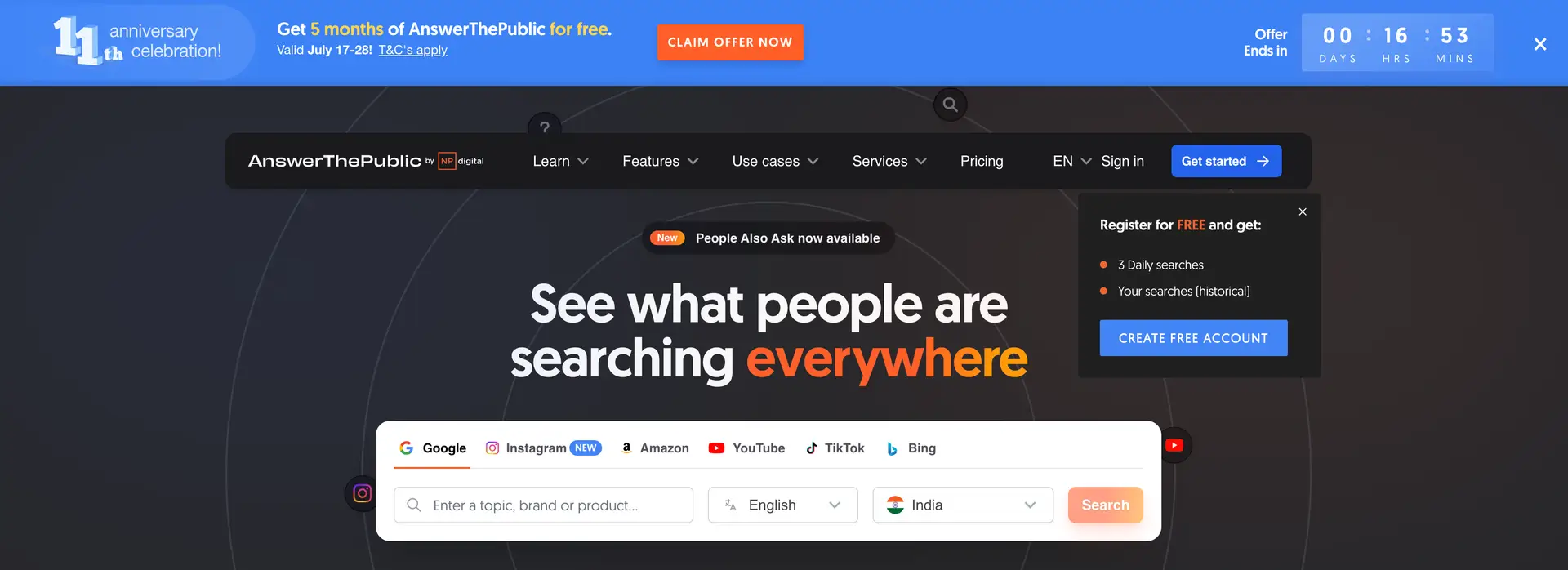
     Answer The Public

    Answer the Public offers a unique approach for uncovering the exact questions and phrases people type into search engines, including emerging Reddit-driven topics. It transforms keyword research into an interactive experience, helping marketers visualize the kinds of queries audiences are most curious about. For content marketers and SEO professionals, this tool can spark new content angles by mapping online conversations into easy-to-digest charts and wheels.

    Technical Requirements

    This tool is fully web-based, requiring just a modern browser such as Chrome or Edge for access. Whether on a desktop, laptop, or tablet, users do not need to install software to use Answer the Public. A stable internet connection ensures seamless visualization and export functionalities, making it suitable for marketers working in a variety of environments.

    How It Compares

    Compared to integrated SEO workflow solutions like Keywordly, Answer the Public excels at initial brainstorming by showcasing the kinds of questions people ask on sites like Reddit. However, it lacks in-depth SEO metrics such as difficulty or traffic, and it doesn’t support workflow organization, content drafting, or pipeline management. For businesses seeking to centralize every stage of content strategy, Keywordly offers a more holistic platform.

    Getting Started Tips

    To use Answer the Public effectively, input seed keywords that relate to your content goals. Users can refine results further by using filters, including the option to display Reddit-inspired question queries. Exploring these visualized question clusters helps to identify trending discussion themes and pinpoint new topic opportunities for digital content.

    Key Features

    • Visualizes question keywords
    • Tracks trending topics
    • Exports result visualizations
    • Broad platform compatibility

    Pros

    • Excellent for idea generation
    • User-friendly data visualization
    • Affordable for small teams
    • No login required for basic use

    Cons

    • Data sources are broad, not Reddit exclusive
    • Lacks workflow integration

    Pricing

    Answer the Public offers limited free searches each day with no login necessary. Expanded usage is available through Pro plans starting at $9 per month, providing greater access and export capabilities for teams requiring frequent insights.

    User Sentiment

    Marketers commonly praise the platform for its visually engaging data and inspiration for new content directions. However, those who need advanced Reddit keyword tracking or actionable SEO data often seek supplemental solutions such as Keywordly to fill workflow gaps.

    Website

    Access the tool online at: https://answerthepublic.com


    6. ScrapeStorm
    ScrapeStorm

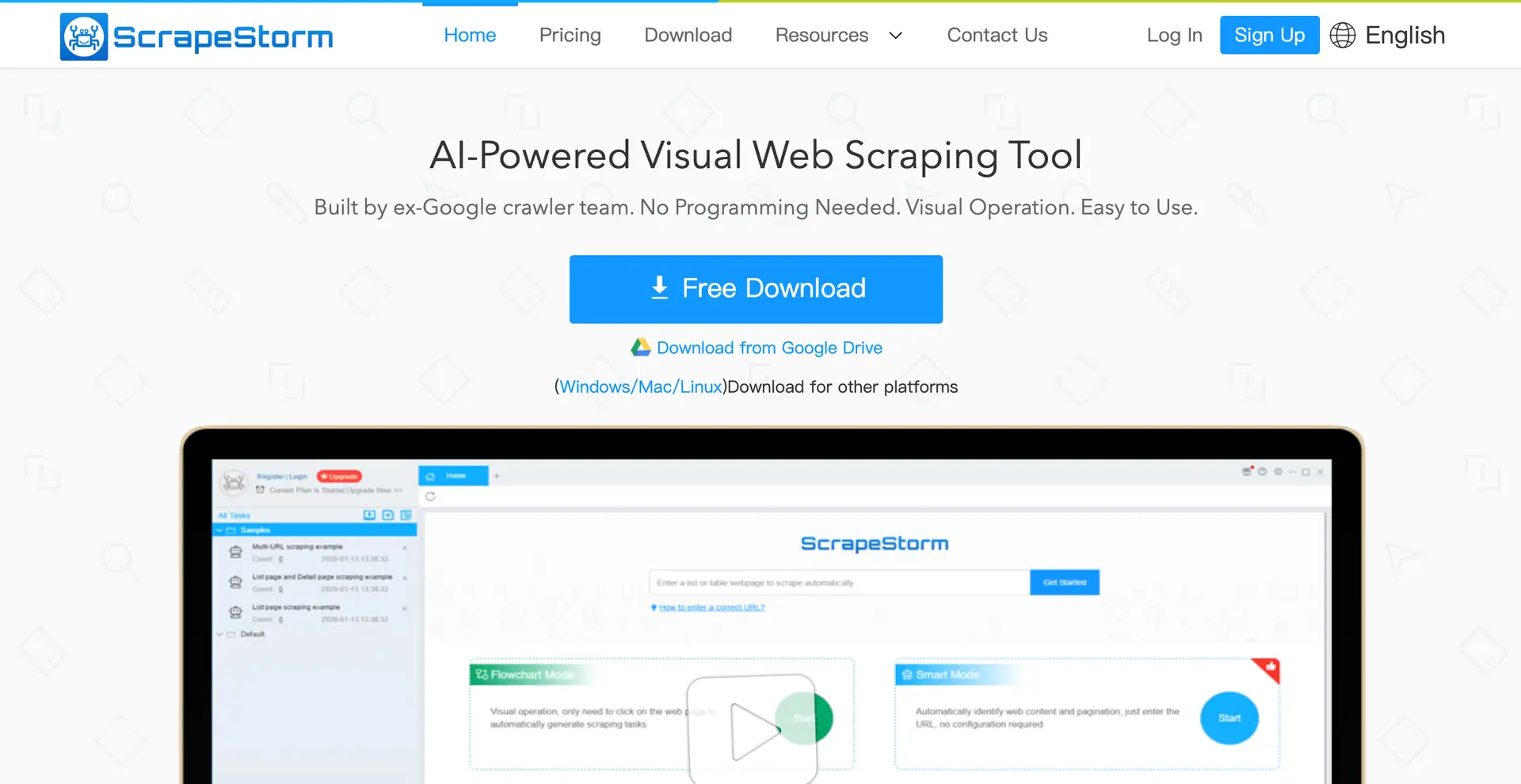
    ScrapeStorm is an AI-powered web scraping tool designed to extract data from various online sources using pre-configured templates. For Reddit, it streamlines the sourcing of keywords and discussions by offering dedicated templates that target subreddits and posts. Its automation capabilities make it suitable for users who want a scalable solution to mine Reddit for SEO research or content ideation.

    Technical Requirements

    To use ScrapeStorm, you’ll need to install the application on either Windows or Mac. The setup process is straightforward for basic uses, but customizing scraping rules or creating advanced workflows requires some technical know-how. Users with experience in web scraping or data handling will find it easier to leverage the tool’s full potential, but beginners may need to review tutorials or seek external guidance.

    How It Compares

    ScrapeStorm stands out for its efficiency in extracting large volumes of Reddit data. Its direct approach means you can quickly gather bulk information for analysis. However, compared to comprehensive keyword platforms like Keywordly—which integrate keyword discovery, analytics, and content planning—ScrapeStorm may lack user-friendly workflow features that support seamless content marketing campaigns from research through publishing.

    Getting Started Tips

    To begin, deploy ScrapeStorm’s built-in Reddit templates designed for different data needs. Adjust the settings to filter for your target subreddits or relevant discussion topics. This targeted scraping ensures you extract only the keyword-rich content that informs your SEO or content strategies, reducing data clutter and analysis time.

    Key Features

    • AI-based visual scraper for intuitive data selection.
    • Pre-built Reddit and subreddit-specific templates for quick deployment.
    • Custom export configurations support integration with other tools or databases.
    • Handles high-volume data extraction efficiently across multiple platforms.

    Pros

    • Highly flexible Reddit data extraction that adapts to diverse needs.
    • Best suited for large projects needing bulk data from multiple subreddits.
    • Allows custom configuration for tailored data pulls.
    • Supports both Windows and Mac environments.

    Cons

    • Requires technical setup and basic understanding of web scraping principles.
    • Lacks integrated analytics and content workflow features found in platforms like Keywordly.

    Pricing

    ScrapeStorm offers a limited free version ideal for basic tests or small projects. The Pro plan, priced at $29.90 per month, unlocks advanced features suitable for ongoing data mining needs.

    User Sentiment

    Data professionals and technical marketers value ScrapeStorm for its robust extraction capabilities. However, those without web scraping skills may find the learning curve steep and prefer solutions offering ready-to-use analysis and workflow integration, like the holistic SEO tools from Keywordly.

    Website

    For more details or downloads, visit ScrapeStorm’s official site.


    7. Keyworddit
    Keyworddit

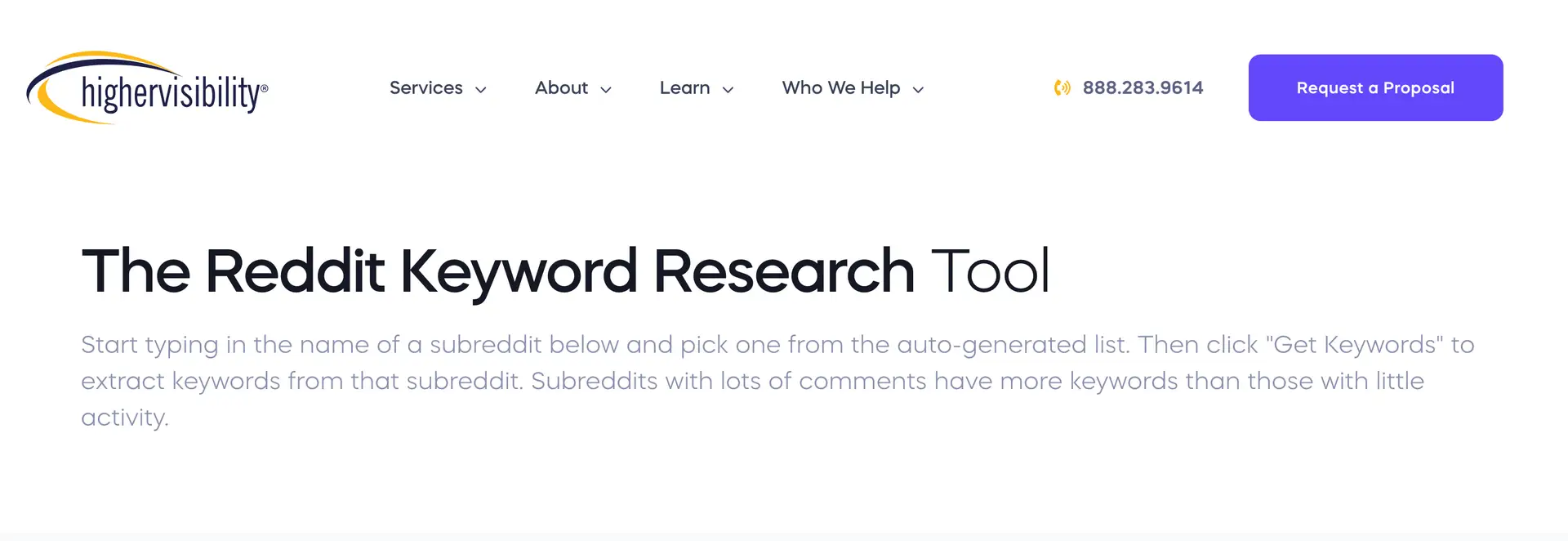
    Keyworddit is a specialized, free tool tailored for extracting relevant keywords directly from Reddit. By entering a Reddit thread URL or selecting a full subreddit, users can obtain a curated list of terms that real users are actively discussing. This makes Keyworddit particularly effective for discovering discussion-driven keywords rooted in authentic community conversations.

    Technical Requirements

    Getting started with Keyworddit is effortless. As a web-based tool, it operates smoothly on any device with a browser. There’s no need for logins or software installation, simplifying access whether you are at the office or working remotely.

    How It Compares

    Unlike platforms like Keywordly, which provide a full suite for keyword research and content workflow management, Keyworddit’s focus is strictly on Reddit keyword extraction. It’s ideal for those needing quick Reddit-centric data, though professionals relying on clustering or multi-stage content workflows may find its offerings more basic.

    Getting Started Tips

    To make the most of Keyworddit, simply paste the desired topic or subreddit URL into the input field. Click ‘extract,’ and you’ll be presented with a list of user-generated keywords sourced directly from live discussions. Use these insights to uncover the language and interests of your chosen Reddit community.

    Key Features

    • Direct subreddit keyword extraction
    • Frequency count analytics for each keyword
    • Option to export keyword lists for further analysis
    • No account or sign-up required

    Pros

    • Simple and effective for Reddit keyword discovery
    • Completely free to use, with no hidden charges
    • No setup or onboarding process needed—just start extracting
    • Results are delivered within seconds

    Cons

    • Features limited to basic keyword extraction only
    • No advanced capabilities such as content generation, keyword clustering, or workflow automation

    Pricing

    Keyworddit is offered as a 100% free tool, with all features accessible without registration or payments. This makes it highly accessible for small businesses and individual marketers operating on tight budgets.

    User Sentiment

    Marketers and bloggers who need fast, practical insight into trending topics on Reddit value Keyworddit’s straightforward approach. For quick research and content brainstorming, it’s a favorite among DIY practitioners seeking actionable, discussion-based keywords.

    Website

    Explore more about Keyworddit and start your Reddit keyword research at https://keyworddit.com.


    8. Keyhole
    Keyhole

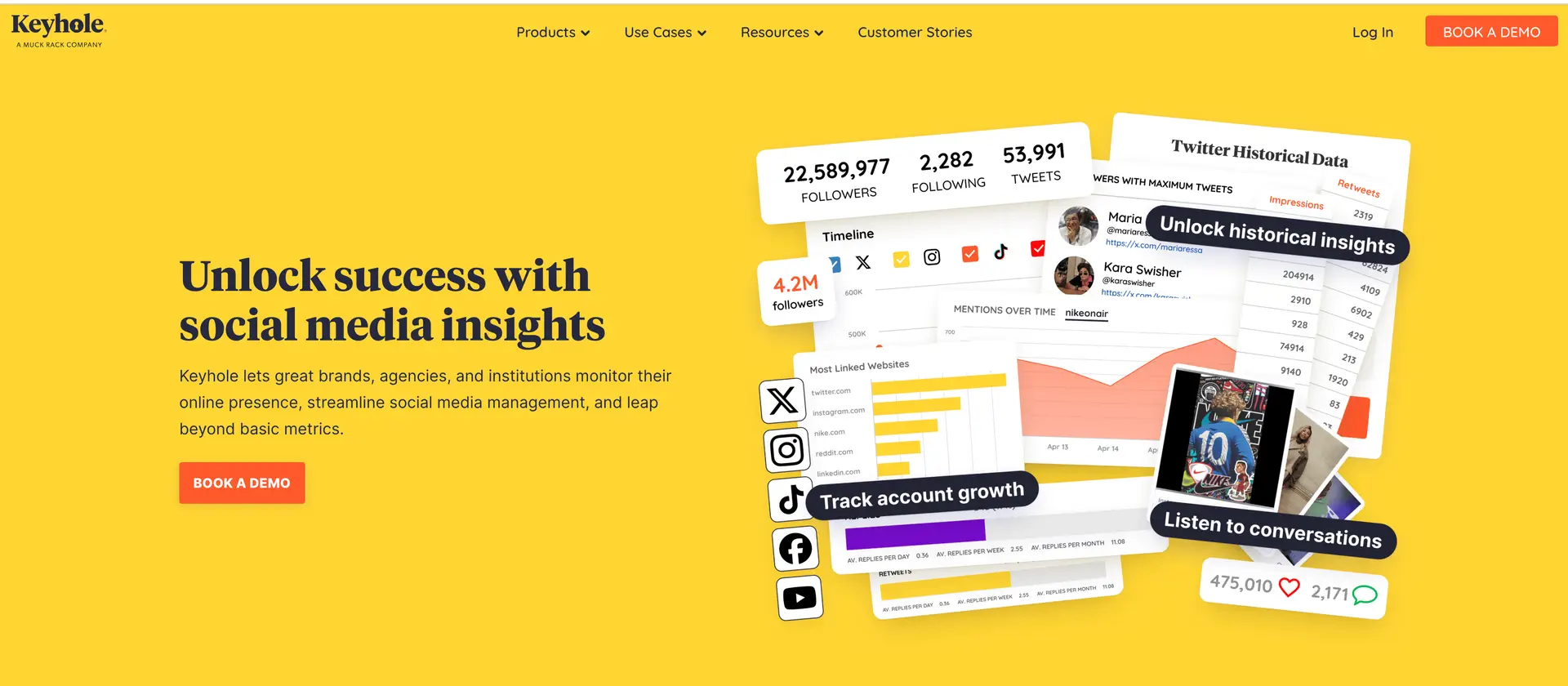
    Keyhole serves as a robust social listening platform, designed to monitor and analyze real-time conversations across major social networks, including Reddit and Twitter. It excels in surfacing trending discussions and patterns, making it valuable for businesses aiming to stay ahead of market conversations. For content marketers using Keywordly, Keyhole can supplement Reddit keyword research by highlighting the topics gaining traction and providing a broader context for audience engagement.

    Technical Requirements

    This platform operates entirely as a cloud-based SaaS solution, accessible via any modern web browser. To tap into the full range of features, users need to create an account and sign in. Its streamlined web interface ensures compatibility and eliminates the need for complex installations, making it easy for digital teams to start monitoring conversations quickly.

    How It Compares

    Keyhole differentiates itself by offering long-term trend analysis and multi-channel tracking, which is particularly powerful for monitoring shifts in Reddit discussions and community sentiment. Unlike niche tools focused solely on keyword extraction or direct content planning, Keyhole provides a broader view, which can be leveraged to inform content strategies and trend forecasting within an integrated SEO workflow like Keywordly’s.

    Getting Started Tips

    Begin by setting up targeted keyword monitoring across Reddit topics and threads that matter to your brand. Use the analytics dashboard to track post trends and audience engagement levels, then adapt your keyword strategies in Keywordly by focusing on emerging topics that reflect real audience interest and conversation volume.

    Key Features

    • Real-time Reddit trend tracking
    • Cross-platform brand monitoring
    • Visual analytics dashboards
    • Historical data access

    Pros

    • Comprehensive social monitoring for better audience insights
    • Visualizes buzz and engagement with easy-to-understand metrics
    • Enables discovery of trends across channels
    • Customizable reporting features

    Cons

    • Pricing may be restrictive for startups and small businesses
    • Lacks dedicated tools for detailed keyword extraction

    Pricing

    Keyhole’s pricing begins at $79 per month, targeting teams who require multi-platform monitoring capabilities. Advanced plans offer additional analytics and reporting functionalities tailored to larger enterprises.

    User Sentiment

    Users frequently praise Keyhole for its insightful brand analytics and trend identification abilities. However, professionals seeking granular keyword data for content creation may find the tool broader than required for highly targeted SEO campaigns.

    Website

    keyhole.co


    9. BuzzSumo

    BuzzSumo

    BuzzSumo is a robust content research platform designed for marketers and SEO professionals who want to stay ahead of content trends. It scans platforms like Reddit to help users uncover trending keywords and identify viral topics that capture audience interest.

    This makes BuzzSumo especially useful for keyword discovery and content ideation, complementing tools like Keywordly—which assists users by suggesting Reddit threads and content ideas.

    Technical Requirements

    BuzzSumo operates entirely online, making it accessible via any major web browser. The tool functions as a SaaS platform, which means users will need to create an account to access its full suite of features. No downloads or installations are necessary, enabling seamless usage for distributed teams.

    How It Compares

    BuzzSumo stands out for its ability to track trending topics and surface shareable content ideas, particularly from high-engagement communities like Reddit. However, it’s more focused on broader content performance analytics and does not provide deep Reddit keyword extraction or clustering capabilities. For businesses aiming to perform targeted Reddit keyword research, platforms like Keywordly offer more specialized tools.

    Getting Started Tips

    To kick things off with BuzzSumo, users should enter topics or specific keywords relevant to their niche. Taking advantage of filtering options, especially the Reddit filter, enables users to analyze which posts receive the most shares and upvotes. This helps surface themes and questions that resonate with Reddit audiences.

    Key Features

    • Trending Reddit topic discovery
    • Content performance analytics
    • Influencer identification
    • Topic alerts

    Pros

    • User-friendly interface for intuitive navigation
    • Multi-platform tracking across social and community sites
    • Excellent for identifying viral trends quickly
    • Automated topic and keyword alerts for proactive monitoring

    Cons

    • Premium features may be costly for smaller businesses
    • Does not provide actionable Reddit keyword exports

    Pricing

    BuzzSumo’s pricing begins at $99 per month, with incremental tiers for advanced analytics and larger teams. It’s an investment for organizations that prioritize comprehensive content monitoring.

    User Sentiment

    Many users appreciate BuzzSumo for its high-level insights and ability to spot trending topics before competitors. However, some content marketers and SEO professionals wish the tool offered more actionable Reddit keyword data to streamline campaigns.

    Website

    Visit https://buzzsumo.com for product details and feature demos.


    Final Recommendation: Which Reddit Keyword Research Tool Is Right for You?

    Choosing the best Reddit keyword research tool depends largely on your workflow priorities, technical expertise, and the scale of your content marketing strategy. The landscape features a variety of platforms, each catering to unique business needs and user preferences. Consider the following recommendations based on your specific objectives.

    “Manually combing Reddit for keywords can take hours. A dedicated tool turns that into minutes of strategic insight — saving time and improving content results.”

    For Holistic Content Workflows and Reddit-Specific Insight

    If you’re focused on streamlining the entire content process—from discovery and clustering to content creation—choose a platform designed for holistic SEO workflows. Keywordly stands out with its all-in-one dashboard, allowing users to conduct Reddit-focused keyword research, generate targeted content, and quickly identify trending subreddits to engage with.

    • Features: End-to-end keyword discovery, clustering, AI-generated content, and Reddit thread suggestions.
    • Pros: Saves time by consolidating research, analysis, and execution.
    • Cons: May be advanced for beginners or solo bloggers with basic needs.

    For Granular Data Analysts or Developers

    For those needing deep analytics or the ability to handle data in bulk, SocialGrep or ScrapeStorm deliver robust Reddit analytics. They are particularly favored by technical users who require API access or want to scrape niche insights at scale for custom workflows and reporting.

    • Features: In-depth analytics, data scraping, and API integration.
    • Pros: Ideal for large datasets and advanced research.
    • Cons: Requires technical know-how; not beginner-friendly.

    For Fast, Free Keyword Ideas

    Those just getting started or operating solo can benefit from lightweight, no-cost tools like Keyworddit or Keyword Tool. These platforms provide instant keyword suggestions directly from Reddit topics, making them suitable for quick ideation or SEO brainstorming.

    • Features: Free keyword generation, Reddit topic extraction.
    • Pros: Easy to use and quick results.
    • Cons: Limited features for advanced analysis or workflow integration.

    If Social Listening and Trend Monitoring Matter Most

    If tracking conversations and trends across platforms is essential, look to tools like Keyhole or BuzzSumo. These not only cover Reddit but include broader social listening and influencer identification for a multi-channel research approach.

    • Features: Cross-platform monitoring, trend tracking, and influencer analytics.
    • Pros: Broad insights beyond just Reddit.
    • Cons: Less depth in Reddit-specific analytics compared to specialized tools.

    For Comprehensive, Broader SEO Campaigns

    When your focus is broader SEO and not just Reddit, SEMrush or Ahrefs deliver traditional keyword research and competitive analysis. While their Reddit capabilities are limited, they are powerful for anyone running multifaceted search campaigns.

    • Features: Domain research, competitor analysis, traditional keyword tools.
    • Pros: All-purpose SEO solutions for large-scale strategies.
    • Cons: Reddit research is not a core focus; fewer social listening features.

    Start Smart With Keywordly

    “Once you start using Reddit keyword insights, it’s clear that data quality matters more than data quantity — and the right tool makes that difference actionable.”

    For content teams aiming to balance Reddit research with efficient editorial execution, starting with Keywordly enables smarter, faster, and more impactful content marketing. Its integrated workflow empowers businesses to harness Reddit-driven insights for maximum organic growth and engagement.

    Frequently Asked Questions

    1. What is Reddit keyword research?

    Reddit keyword research involves identifying trending topics, user queries, and high-engagement phrases directly from live Reddit posts, active threads, and niche subreddits. Since users express their interests and challenges organically, this method delivers genuine topic inspiration rooted in real community discussions.

    For content marketers, SEO professionals, and brands like Keywordly’s clients, mining Reddit enables precise identification of language and trends that resonate with engaged target audiences, making your content more relevant and discoverable.

    2. Why is Reddit keyword research crucial for SEO and content marketing?

    Reddit often highlights emerging trends and uncensored user sentiments before they become widely known elsewhere online. This enables marketers to uncover valuable insights, questions, and pain points that are not yet saturated in search engines or other platforms.

    By leveraging these early signals, businesses and professionals can build content strategies around topics competitors have not yet discovered, enhancing organic traffic potential and brand authority.

    3. Can I use free tools for Reddit keyword research?

    Free tools, such as Keyworddit, make it easier to extract Reddit keywords and related data without investing in premium platforms. Many marketers utilize them as a starting point to gauge topic interest and gather searchable phrases from Reddit’s vast communities.

    While these free options are accessible, more advanced workflows and analytics typically require paid solutions for deeper Reddit keyword exploration and integration into larger SEO strategies.

    4. What should I look for in a Reddit keyword research tool?

    • Features: Real Reddit thread analysis, accurate keyword clustering, export functionalities for reports, and streamlined integration with content planning platforms.
    • Pros: Enhanced workflow productivity, greater topic relevance, and support for seamless campaign execution.
    • Cons: Tools lacking thread-level analysis or export options may limit research depth and integration with wider content processes.

    The ideal tool bridges the gap between keyword discovery and actionable content planning, ensuring that strategies remain focused and efficient.

    5. How does Keywordly enhance Reddit keyword research workflows?

    Keywordly uniquely converges Reddit-specific keyword discovery, advanced topic clustering, and AI-driven content generation in a single platform. This integration enables users to brainstorm new topics, streamline editorial calendars, and produce content ideas ready for Reddit threads—all in one place.

    • Features: Suggests relevant Reddit threads, provides actionable topic insights, and supports full content workflows from research to publication.
    • Pros: Saves time, centralizes tools for efficiency, and gives a data-backed edge in content marketing campaigns.
    • Cons: May have a learning curve for first-time users and requires consistent updates with Reddit’s evolving landscape.

  • Top SEO Content Writing Tools to  in 2026: Software to Write, Optimize and Scale Content

    Top SEO Content Writing Tools to in 2026: Software to Write, Optimize and Scale Content

    Discover the best SEO content writing tools to research keywords, optimize content, and rank higher. Compare features, pricing, and use cases.

    Introduction

    In 2026, effective content isn’t just about writing—it’s about understanding search intent, leveraging AI, and optimizing for both human readers and language models. SEO content tools are now essential for creating engaging, high-ranking content. While earlier SEO writing tools in 2018 focused mainly on keyword density, modern tools emphasize search intent, semantic relevance, and content quality.

    Modern SEO content isn’t just written manually anymore. Marketers now rely on SEO content writing software and content writing tools for SEO to research keywords, optimize structure, and scale production without sacrificing quality.

    From SEO article writing software to full SEO content platforms, these tools help content writers create search-friendly articles faster and more efficiently.

    SEO content writing tools help you research, write, optimize, and publish high-quality content that ranks on Google and answers real search intent. In 2026, tools that combine keyword intent, semantic optimization, structure guidance, and analytics will outperform those that only generate text. This blog presents 10 essential tools, analyzed by features, accuracy, workflows, and ROI.


    Why the Right SEO Writing Tool Matters

    • AI’s Changing Role: Search engines now rely heavily on AI for snippets, overviews, and “People Also Ask.” Optimizing only for clicks is no longer enough Square 2 Marketing.
    • EEAT and Topical Authority: Google rewards content that demonstrates experience, expertise, authoritativeness, and trust. Tools with clustering, topical mapping, and semantic insights provide an edge.
    • For content teams and freelancers, SEO tools for content writers reduce guesswork by combining keyword insights, optimization guidance, and readability checks in one place. Instead of switching between multiple platforms, a single SEO content writing tool can streamline research, writing, and optimization

    “In competitive SERPs, content quality alone isn’t enough. The teams that win are the ones using SEO content tools to align search intent, structure, and optimization from the first draft.”

    Top 10 SEO Content Writing Tools in 2025

    We had evaluated these top 10 tools based on content optimization, workflow efficiency, semantic depth, accuracy, scalability, integrations, and pricing. Below are some of the best content writing tools for SEO that help with keyword research, SEO-friendly article writing, optimization, and scalable content production. So lets’s dive in.

    “When SEO content tools are used correctly, they don’t just improve rankings—they shorten time-to-publish and increase ROI across every piece of content.”

    Comparison Table: Top 10 SEO Content Writing Tools (2025)

    ToolBest ForKey FeaturesWeaknessesPricing (Starting At)
    KeywordlyDual-mode AI content (Creators & Enterprises)Conversational & Authoritative Modes, SEO-structured drafts, SERP benchmarking, Content repurposing, LLM SEO (semantic optimization), Brand visibility analyticsNewer in market; still evolving integrations$14/mo
    Semrush Content Marketing ToolkitFull-stack SEO + content marketingSEO Writing Assistant, Topic Research, Keyword Gap, SERP analysis, Content AuditExpensive for freelancers, steep learning curve$129.95/mo (Pro plan)
    SE RankingBudget-savvy teams scaling SEO workflowsContent Editor, On-page checker, Competitor tracking, Keyword rank tracking, White-label reportsLess advanced NLP vs Clearscope/Surfer$55/mo
    ClearscopeContent quality & semantic depthGoogle NLP-powered keyword suggestions, Content grading, Competitor analysis, Readability insightsHigher pricing, no AI drafting$170/mo
    OutrankingWorkflow automation (AI + SEO)AI SEO briefs, Competitor benchmarking, Real-time SEO scoring, Workflow templates, Team collaborationHigher learning curve, pricier than entry-level tools$79/mo
    ScalenutResearch-driven SEO & AI writingTopic Clusters, SERP analysis, AI copywriting, Content briefs, Cruise Mode (1-click blog)Can feel overwhelming for beginners$39/mo
    Surfer SEOOn-page optimizationSERP-driven outlines, SEO scoring, Keyword density analysis, Jasper integrationWriting less natural, costs stack with Jasper$89/mo
    SEOwriting.aiFast AI content with SEO focusBulk article generation, Multi-language support, AI-assisted outlines, WordPress integrationLess advanced NLP, quality varies in long-form$20/mo
    NeuronWriterSemantic SEO & competitor analysisNLP-driven keyword suggestions, Content scoring, Competitor gap analysis, Idea generationUI less polished than Clearscope/Surfer$19/mo
    INK Editor (INK for All)Content optimization + AI co-writingSEO scoring, Distraction-free editor, AI writing, Keyword research, Readability optimizerLimited integrations vs Semrush/Surfer$39/mo

    Whether you’re comparing SEO article writing tools, article writing software for SEO, or advanced automated content writing tools for SEO, the right choice depends on your workflow, team size, and publishing goals.

    1. Keywordly

    keywordly.ai
    • Keywordly represents the next generation of SEO content writing tools, bridging the gap between traditional optimization and AI-driven search discovery. Unlike older tools that focus primarily on keyword stuffing, Keywordly emphasizes semantic relevance, topical authority, and AI-first visibility.
    • Its dual writing workflows—Conversational Mode for quick, credit-light drafts and Authoritative Mode for in-depth, 3,000–5,000-word content—make it versatile for both short and long-form needs. Beyond writing, Keywordly offers powerful features like keyword clustering, content repurposing, editorial scoring, and unique metrics like GEO SEO (brand visibility in AI-generated answers) and LLM Visibility (semantic optimization for AI indexing).
    • For agencies, publishers, and enterprises, Keywordly isn’t just a writing assistant—it’s a future-proof content intelligence platform designed to dominate both traditional SERPs and AI-driven discovery channels.

    Standout Features:

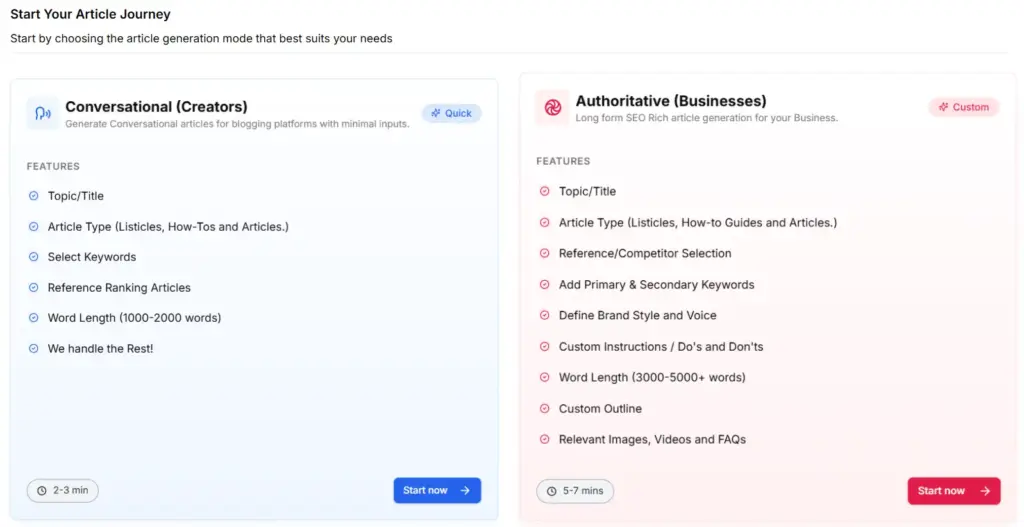
    your article journey
    • Keyword clustering, SERP overlap, user intent research via PAA, Reddit, Quora
    • Dual workflows:
      • Conversational Mode for quick, 1,000–2,000 word blog posts—fast generation with low credits.
      • Authoritative Mode for 3,000–5,000+ word pillar content—structured, voice-adapted, media-integrated.
      • SERP Analyzer – competitor analysis for ranking factors, structure, and content gaps.
    • Repurpose Content: Revise existing pages to extract new, SEO-optimized content.
    • Brand Visibility (GEO SEO): Track how your brand ranks across AI-generated results.
    • LLM Visibility (Semantic Optimization): Ensure AI indexing via semantic keyword alignment.
    • Editorial scoring, multi-CMS integrations, transparent per-article pricing
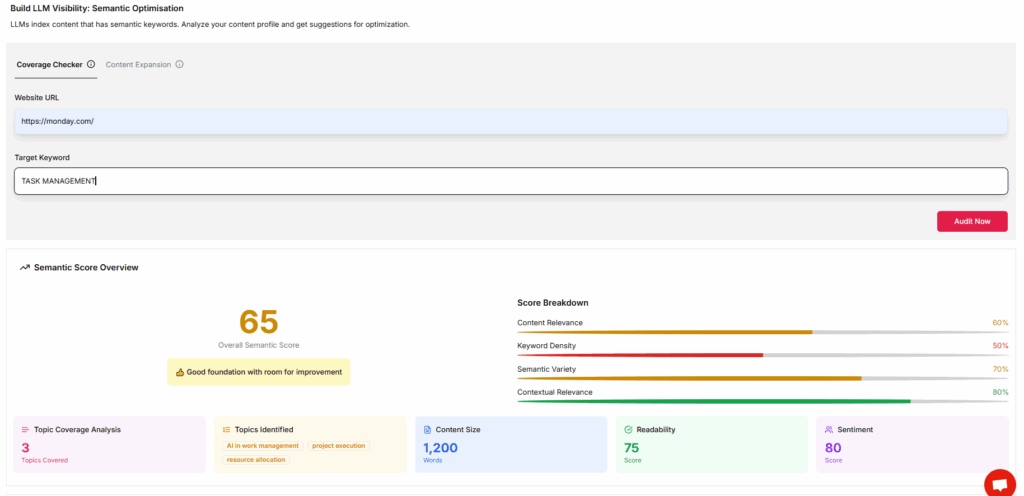
    LLM OPTIMIZATION

    Best For: Agencies, publishers, and teams focused on scalability and future-proof SEO. AI content generation + strategic SEO planning+ Brand LLM Visibility (Semantic Optimization) all  in one platform.

    Keywordly is also best for Bloggers and marketers looking for SEO blog writing tools that combine keyword research, optimization, and AI writing.

    Pricing: Starts at $49/month for individual creators, making it one of the most budget-friendly tools and with advanced plans for agencies and enterprises. Flexible tiers make it affordable for both freelancers and scaling teams.

    Proven Content Writing Examples That Boost Engagement and Rankings

    2. Semrush Content Marketing Toolkit

    semrush-min
    •  Semrush has long been one of the most trusted all-in-one SEO platforms, and its Content Marketing Toolkit is purpose-built for strategists and content creators who want to manage the full cycle—from keyword research to content brief creation, optimization, and performance measurement. Unlike most AI writing tools, Semrush is deeply integrated with its keyword and competitor databases, which means its recommendations are grounded in real-time SEO data.
    • It helps you generate outlines, track semantic keywords, and optimize readability, while also measuring how each piece of content contributes to traffic, rankings, and conversions. For agencies managing multiple clients, the toolkit doubles as a reporting suite, with clear visual dashboards to show progress and ROI. Essentially, it’s not just a writing assistant—it’s a comprehensive content marketing engine.

    Key Features:

    • Topic Finder for high-traffic ideas.
    • SEO Brief Generator with competitor outline suggestions.
    • AI Article Generator that adheres to brand voice and readability.
    • Content Optimizer for scoring drafts and applying fixes.
    • Chrome extension for on-the-go writing tweaks Semrush.

    Best For: Agencies and enterprises needing an all-in-one SEO/content hub.

    Pricing: Available as part of Semrush’s broader SEO suite, starting at $129.95/month (Pro). Higher-tier plans (Guru & Business) add historical data, advanced content analytics, and multi-user access.

     3. SE Ranking

    se ranking-min
    • SE Ranking has carved a name for itself as a cost-effective alternative to premium SEO platforms. Its content writing and on-page optimization modules provide powerful features for small and medium-sized businesses that want reliable results without overspending.
    • The platform covers the full SEO stack—keyword tracking, competitive analysis, site audits, and backlink monitoring—while its Content Editor module lets writers craft posts that balance user readability with SEO best practices. While its AI isn’t as advanced as Semrush or Clearscope, SE Ranking delivers excellent value for teams building scalable workflows on tighter budgets. Its positioning is clear: affordable, practical SEO content optimization that doesn’t compromise on essentials.

    Key Features:

    • AI-driven Content Editor with keyword, readability, and structure recommendations
    • On-Page SEO Checker for technical and content-based optimizations
    • Rank Tracker with local and global SERP monitoring
    • Competitor Research Tool (organic, paid, and backlinks)
    • Keyword Research & Clustering for topical authority building
    • SEO Report Builder for client-ready, white-label reports

    Best For: Budget-savvy teams scaling SEO workflows.

    Pricing: Starts at $55/month, with plans scaling based on keyword volume and tracking limits. Agencies can upgrade to white-label reporting and team collaboration features.

    4. Clearscope

    clearscope
    •  Clearscope is widely considered the standard for content optimization, particularly for long-form articles and landing pages. The tool uses advanced natural language processing (NLP) to analyze top-ranking content and generate recommendations for semantically related terms, readability scores, and content depth.
    • The beauty of Clearscope lies in its simplicity and accuracy—writers can plug in a draft and immediately see which terms are missing, how their readability compares to competitors, and whether the content meets search intent. It integrates smoothly with Google Docs and WordPress, making it a favorite for agencies and enterprise teams that manage high volumes of content. While it comes at a premium cost, Clearscope’s reliability and precision make it an indispensable tool for brands prioritizing topical authority.

    Key Features:

    • Content grading and readability scoring
    • Keyword and phrase recommendations
    • Competitor SERP analysis and reports
    • Content inventory + monitoring via GSC integration
    • Seamless integrations with Docs, WordPress, and more

    Best For: Agencies and teams who wants to optimizing long-form content.

    Pricing: Entry-level plan begins at $170/month, giving access to content grading and NLP keyword reports. The Business tier offers higher report limits and team collaboration tools.

    Click to Read Comparion on Keywordly Vs Clearscope

    5. Outranking

    outranking-min
    •  Outranking is an advanced AI-driven SEO writing tool that bridges the gap between research, writing, and optimization. Unlike lightweight content generators, it delivers step-by-step SEO briefs, AI-assisted drafting, and real-time optimization scores. Its workflows are built for agencies and teams that want to scale content production without sacrificing depth or accuracy.

    Key Features:

    • Real-time readability and SEO analysis
    • Meta titles & descriptions optimization

    Best For: Bloggers and SMBs using WordPress.

    Pricing: Plans start at $79/month, which includes AI SEO briefs and optimization tools. Advanced tiers add multi-user collaboration, workflow automation, and higher content limits.

    6. Scalenut

    scalenut-min
    • Scalenut is an all-in-one AI-powered SEO and content platform that has quickly gained popularity among marketers, agencies, and businesses. Unlike simple writing tools, Scalenut integrates keyword research, content planning, and AI writing into a single workflow. Its strength lies in helping teams create SEO-optimized content at scale while staying aligned with search intent and competitive benchmarks.
    • Scalenut leverages NLP (Natural Language Processing) and AI-driven SERP analysis to generate topic clusters, content briefs, and optimized drafts. This makes it especially useful for businesses looking to grow topical authority and dominate niches.

    Key Features

    • Cruise Mode – Generate a long-form SEO blog post
    • Keyword Planner – Discover keyword clusters and map them to content strategies for better topical coverage.
    • Content Optimizer – Real-time SEO recommendations, competitor analysis, readability scores, and NLP term suggestions.
    • AI Templates – 40+ templates for ads, social media, emails, and website copy.

    Best For : Agencies and Marketers Startups aiming for scalable SEO content production without compromising on optimization quality.

    Pricing: Starts at $39/month, AI + SEO tools. Higher tiers unlock Cruise Mode (1-click blog generation) and advanced topic clustering.

    7. Surfer SEO

    surfer
    •  Surfer SEO is one of the most widely recognized content optimization platforms, trusted by SEO professionals, agencies, and publishers.
    • Surfer focuses on data-driven content creation. It analyzes top-ranking SERPs for your target keyword and gives you actionable guidelines on word count, keyword density, structure, and semantic terms. Its real strength lies in balancing SEO with natural readability, making it a go-to for teams who want both rankings and quality.

    Key Features

    • SERP-driven content editor with real-time optimization scoring
    • Keyword clustering and topical mapping
    • Content audit tool for existing pages
    • NLP-based suggestions for semantic relevance
    • Integration with Jasper AI and Google Docs

    Best For: SEO specialists, agencies, and content marketers who want SERP-aligned contents.

    Pricing: Base plan begins at $89/month, with additional seats and audits available in higher plans. Surfer AI is an add-on purchase, which increases costs on add ons.

    8. SEOwriting.ai

    seo writing-min
    •  SEOwriting.ai is a newer entrant that focuses on automating the content creation process. Its primary value lies in speed: you can generate keyword-integrated drafts in minutes, complete with headings, meta descriptions, and basic optimization.
    • For solopreneurs and small teams, this tool provides an affordable way to produce content at scale without hiring a full writing staff. However, its outputs often require manual editing for readability, accuracy, and depth. Compared to more sophisticated tools like Keywordly or Clearscope, it lacks advanced semantic analysis—but as a fast draft generator, it’s a handy option.

    Key Features:

    • AI-driven SEO article generation
    • Bulk content creation for scaling projects
    • Multi-language support for global SEO
    • Automatic H1–H3 structuring for SEO-friendly formatting
    • Keyword placement optimization for better SERP visibility

    Best For: Affiliate marketers, niche site owners, and agencies wanting SEO content quickly.

    Pricing: Very affordable, starting at $20/month for bulk AI article generation. Higher plans scale with more word credits and multi-language content support.

    9. NeuronWriter

    neuron-min
    • NeuronWriter has quickly gained popularity as a budget-friendly alternative to Surfer SEO. It combines NLP-driven keyword analysis with a streamlined writing editor, enabling users to produce SEO-optimized drafts without breaking the bank.
    • The tool’s strength lies in its ability to analyze SERPs in real time and suggest improvements based on competitors. While it doesn’t have the massive datasets of Semrush or Clearscope, its affordability makes it attractive to freelancers, startups, and small agencies that want optimization on a budget.

    Key Features:

    • NLP-driven recommendations for semantic keyword integration
    • Content editor with real-time optimization scoring
    • Competitor SERP analysis to benchmark top-ranking content
    • AI-powered content drafts for faster writing

    Best For: Freelancers, startups and growing small teams.

    Pricing: Entry plan is just $19/month, giving access to NLP keyword suggestions and content scoring. Pro tiers add competitor analysis, more projects, and higher word count allowances.

    10. INK Editor (INK for All)

    ink-min
    •  INK Editor, also known as INK for All, is an AI-powered SEO content optimization and writing platform.
    • INK combines AI writing assistance with a real-time SEO scoring system to ensure your content is not only clear and readable but also primed to rank. Its unique blend of natural language optimization, semantic keyword analysis. 

    Key Features:

    • AI-powered Co-writing assistant for faster drafting
    • SEO optimization scoring with actionable recommendations
    • Real-time readability analysis for clarity and flow
    • Paraphrasing, rewriting, and tone adjustment tools

    Best For: Bloggers, content marketers, and teams

    Pricing: Starts at $39/month, with access to SEO scoring, AI assistant, and keyword tools. Premium plans unlock unlimited AI writing credits and advanced integrations.

    Strategic Takeaways

    “The best SEO content writing tool isn’t the one that writes the most—it’s the one that helps your content rank faster, stay relevant, and convert consistently.”

    • Freelancers / Small Teams: SE Ranking or NeuronWriter for building SEO workflows affordably.
    • Grow-Stage Agencies: Semrush + Clearscope for ideation, grading, and topical authority.
    • Publishers & Enterprise Brands: Keywordly and Semrush for next-gen strategies—especially GEO and LLM readiness.

    Conclusion

    “High-performing teams don’t rely on a single SEO content tool. They combine research, writing, and optimization platforms to cover the full content lifecycle.”

    Every tool serves a specific role—from writing clarity to semantic grading—but the future of SEO content is evolving fast. For scalable growth, trusted topical authority, and AI-aligned visibility, Keywordly stands out with its comprehensive, modern, and flexible capabilities.

    Final Recommendation: Choosing the best SEO content writing software depends on your goals — whether you’re a solo blogger, content writer, or enterprise team. The right SEO content writing tools help you write faster, optimize smarter, and publish content that consistently ranks. Choose wislely based on your scale and objectives, goals and needs.

    For teams aiming at sustainable growth, Keywordly is the smarter, future-proof choice.

    Keywordly isn’t just another SEO tool. It’s more strategic, more robust, and built to scale—so your content doesn’t just rank, it wins.

    “Platforms like Keywordly that unify keyword research, content writing, optimization, and performance tracking eliminate the gap between publishing content and ranking content.”


    👉 Try Keywordly today and experience data-driven SEO content optimization built for 2025 and beyond.

    keywordly CTA

    SEO Content Writing: A Beginner’s Guide to Ranking Pages

    How to Choose the Right SEO Content Editor for Your Blog

    FAQs

    Does Keywordly replace multiple tools?
    Yes. Keywordly combines clustering, topical mapping, content optimization, and SERP analysis—reducing the need for multiple subscriptions.

    Which tool is more accurate?
    Keywordly, since it validates across SERPs, PAA, and community-driven sources, while Frase relies mainly on term coverage.

    Which integrates better with CMSs?
    Keywordly integrates with WordPress, Webflow, HubSpot, and more. Frase is limited to Docs and GSC.

  • The SEO Content Workflow: How to Plan, Create, and Optimize Content at Scale

    The SEO Content Workflow: How to Plan, Create, and Optimize Content at Scale

    Did you know that businesses using a defined content workflow are 60% more likely to see consistent growth in organic traffic? Navigating the complexity of website content optimization can overwhelm even the most experienced creators, agencies, and marketing teams—hampering efficiency and stalling results.

    This guide demystifies the content workflow, revealing actionable steps to streamline your processes with Keywordly’s AI-powered platform. You’ll learn how to optimize research, creation, and publishing tasks, improve search visibility, and realistically enhance your team’s productivity—often within just weeks of focused effort. Here’s what you’ll discover: core workflow stages, actionable optimization tactics, essential tools, and proven best practices for boosting rankings and driving sustainable growth.

    In a digital age where visibility is currency, mastering your content workflow isn’t just advantageous—it’s essential for transforming potential into peak performance, and Keywordly is the compass guiding your SEO journey.

    By the end of this guide, you’ll understand how to build optimized content workflows that align SEO, content creation, and performance tracking.

    Understanding Content Workflow for Website Content Optimization

    A structured content workflow forms the backbone of successful website content optimization. As brands strive for higher visibility and better performance on platforms like Google and ChatGPT, mastering content workflow processes becomes essential for both creators and agencies. This section explores what constitutes an effective workflow and how platforms like Keywordly empower teams to efficiently manage, optimize, and publish content at scale.

    What is Content Workflow?

    Content workflow describes the sequence of steps from content ideation to publication and beyond. It encompasses planning, drafting, reviewing, optimizing, and distributing content across intended channels. By delineating each task and assigning clear responsibilities, teams can eliminate confusion and reduce bottlenecks, ensuring deadlines are met and quality standards upheld.

    “An effective SEO content workflow connects strategy, execution, and optimization into a single content operations workflow rather than isolated tasks.”

    Why Workflow Matters in Digital Publishing

    The relevance of a defined workflow in digital publishing comes from its impact on efficiency, quality, and performance. Clear processes mean fewer errors, faster turnaround times, and consistency in voice and branding. For instance, Keywordly enables marketing teams to seamlessly collaborate, track progress, and ensure every piece is fully optimized before it goes live—leading to better search engine rankings and higher engagement rates.

    The Evolving Needs of Content Creators and Agencies

    As the digital content landscape grows complex, creators and agencies require tools that adapt to new challenges, such as rapid changes in SEO algorithms and cross-platform content distribution. Real-world case studies highlight how agencies streamline multi-client projects by adopting AI-powered platforms like Keywordly, centralizing task management, content optimization, and performance tracking in one dashboard. This evolution supports greater agility and scalability.

    Achieving Consistency and Scale with Workflow Tools

    Workflow tools are essential for maintaining consistency and enabling scale. Features such as automated SEO audits, real-time collaboration, and content templates help teams produce large volumes of high-quality content. For example, businesses leveraging Keywordly’s workflow automation report increased organic traffic thanks to standardized optimization protocols and faster publishing cycles across multiple channels and languages.

    “A structured content operations workflow helps teams publish faster, align SEO with business goals, and continuously improve performance.”

    Who Is This SEO Content Workflow For?

    This SEO content workflow is designed for teams and individuals looking to build optimized content workflows that scale.

    It’s ideal if you are:

    • A content marketer managing a growing content operations workflow
    • An SEO team producing blogs, landing pages, or programmatic content
    • A business aiming to standardize and optimise content workflows for consistent rankings

    A structured workflow ensures every piece of content is planned, created, optimized, and improved with SEO in mind.

    Core Components of an Effective Content Workflow

    A powerful content workflow is essential for organizations looking to systematize content creation, ensure consistency, and maximize visibility on major platforms like Google and ChatGPT. By leveraging a robust platform like Keywordly, which integrates content research, optimization, and publishing, businesses can significantly increase efficiency and organic traffic. Let’s break down the crucial stages in an effective workflow and explore actionable best practices that drive real results.

    “Without a clearly defined workflow, even great content ideas struggle to turn into consistent rankings.”

    An SEO content workflow is more than just writing content—it’s a repeatable system that connects strategy, execution, and optimization.

    Well-optimized content workflows help teams reduce guesswork, improve collaboration, and produce content that ranks consistently.

    Here’s how optimized content workflows function in real-world SEO teams:

    1. Topic discovery & keyword validation
    2. Search intent and SERP analysis
    3. Content brief creation
    4. SEO-focused content production
    5. On-page optimization and internal linking
    6. Publishing and indexing checks
    7. Performance tracking and content updates

    This structured content operations workflow ensures SEO is built into every stage—not added at the end.

    “Well-optimised content workflows make SEO predictable by ensuring every piece of content follows the same strategic path from idea to performance.”

    Content Ideation: Topics, Keywords, and Audience Alignment

    content workflow highlight
    Keywordly – Content Workflow Process

    Ideation sets the foundation for successful content projects by pinpointing engaging topics and strategic keywords. Start by researching trending and evergreen subjects relevant to your audience and business goals. Use audience insights to determine what resonates with your ideal readers and align topics with both user intent and SEO objectives. For instance, Keywordly’s AI-driven recommendations help content creators uncover high-value keyword opportunities, fostering data-driven decision-making. Brands employing this approach, like leading SEO agencies, have consistently reported stronger traffic growth and better user engagement.

    “High-performing teams don’t rely on individual effort—they rely on optimized content workflows that remove guesswork and scale output without sacrificing quality.”

    Planning: Editorial Calendars and Briefs

    content workflow A
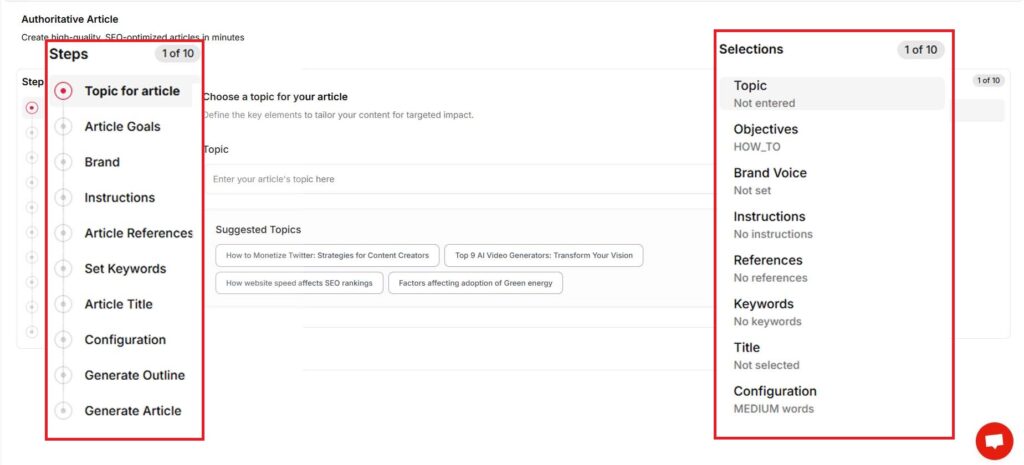
    Keywordly – Content Workflow Process, Feature to Set Topic, Brand & Keywords

    Effective planning ensures ideas are transformed into actionable content assets. Utilize editorial calendars to map out content topics, publishing schedules, and responsible team members. Detailed content briefs clarify messaging, target keywords, tone, and desired outcomes, creating alignment across writers and editors. Marketing teams using Keywordly’s collaborative calendar have streamlined their workflows by reducing missed deadlines and improving consistency. A well-structured plan exemplifies how thorough preparation supports scalable results for agencies and in-house teams alike.

    Production: Writing, Editing, and Collaboration Tools

    Production is where your ideas become tangible assets. Begin drafting copy that follows the guidelines set in briefs while integrating on-page SEO best practices. Leverage editing tools to enhance clarity, quality, and keyword optimization. Collaborative platforms like Keywordly enable seamless feedback exchange, simultaneous editing, and real-time optimization suggestions—removing bottlenecks commonly faced by distributed teams. This structured, tool-supported approach has enabled businesses to maintain a high content output without sacrificing quality.

    Review and Approval Processes

    Structured review processes ensure content aligns with brand standards and SEO requirements. Implement a multi-stage approval cycle, starting from peer reviews to final managerial sign-off. Keywordly’s workflow enables reviewers to annotate drafts, track changes, and confirm compliance before publication, significantly reducing errors. Agencies that formalize their review systems report higher approval rates and improved brand reputation by consistently delivering polished, value-driven content to their audience.

    Read this Article: How to Optimize Blogs for SEO and Complete Guide and Tips

    The Role of Workflow Tools in SEO Success

    The Role of Workflow Tools in SEO Success
    The Role of Workflow Tools in SEO Success

    SEO is multi-faceted, involving structured planning, research, content creation, and ongoing optimization. Workflow tools like Keywordly streamline these operations, helping teams focus on high-impact tasks and measurable results. Reliable tools not only speed up execution but also ensure consistency and scalability for content creators, agencies, and marketing departments aiming to grow online visibility.

    Centralizing Research, Writing, and Optimization

    It can be challenging to manage keyword research, content development, and SEO optimization across multiple platforms and documents. Keywordly brings these processes together in a single workspace, so users don’t waste time switching tabs or tools. For instance, a digital agency using Keywordly can research top-converting keywords, draft content, and optimize it for SEO—all from one dashboard. This centralization fosters efficiency, reduces errors, and keeps teams focused on achieving growth targets.

    AI-Driven Recommendations and Automation

    Manual SEO optimization often leads to missed opportunities and inconsistent results. Keywordly’s AI-powered engine analyzes content for search intent, keyword opportunities, readability, and competitor benchmarks, providing actionable feedback in real time. By automating routine checks and content scoring, teams can produce higher-quality content at scale and capitalize on emerging trends. Marketing teams have reported significant increases in ranking keywords after implementing automated AI suggestions within their publishing workflow.

    Collaboration Features for Teams and Agencies

    SEO success hinges on seamless collaboration between content creators, strategists, and editors. Keywordly’s workflow management lets multiple users track progress, assign tasks, and provide feedback within the same platform. Features such as shared content calendars, real-time editing, and permissions simplify project management—particularly for agencies collaborating across departments or with clients. For example, a remote marketing team can collaboratively execute a multi-page website update, ensuring consistency and timely delivery.

    Integrating Platforms like Google and ChatGPT with Keywordly

    Integrating diverse platforms supercharges content strategies by leveraging best-in-class tools without friction. Keywordly connects directly with Google for instant SERP insights and performance tracking while enabling content customization for ChatGPT and other AI interfaces. With this integration, businesses can distribute and optimize content seamlessly across search and AI-powered platforms, ensuring maximum visibility and engagement. Case studies show that brands that unify their workflow with Keywordly consistently outperform competitors in organic reach and search traffic.

    Setting Up Your Content Workflow with Keywordly

    Keywordly transforms how content teams approach SEO by consolidating research, optimization, and publishing in one streamlined platform. Whether you’re part of an SEO agency, a marketing team, or a business owner, establishing a clear workflow with Keywordly can help you consistently produce high-ranking content and improve brand visibility across platforms.

    Account Setup and Team Onboarding

    Getting started with Keywordly begins with creating your organization’s account and inviting team members to collaborate. Assigning roles—such as administrators, editors, and writers—ensures everyone has the right level of access and responsibilities tailored to their function. Teams quickly find the intuitive dashboard and onboarding resources helpful for smooth integration with existing processes, facilitating seamless adoption and immediate productivity gains.

    Customizing Workflows for Your Organization

    Every organization has distinct content needs, and Keywordly makes it easy to tailor workflows accordingly. You can set up templated brief structures, define approval stages, and assign tasks based on your team’s specific requirements. For instance, a marketing agency might customize workflows to align with client review cycles, ensuring compliance and timely delivery for every campaign.

    AI-Powered Research and Content Briefs

    Keywordly’s AI-driven research capabilities accelerate the initial stages of content planning. By generating detailed content briefs that include keyword research, competitive insights, and topic ideas, the platform removes guesswork and standardizes content strategy across teams. A real-world example: a SaaS company can leverage the AI to surface high-intent keywords, generating briefs that direct writers to target search terms efficiently and increase organic reach.

    Tracking Progress and Measuring Outcomes

    Tracking end-to-end workflow progress is key to scaling content efforts and ensuring ROI. Keywordly offers dashboards for monitoring task status, measuring individual and team productivity, and analyzing content performance post-publication. Teams in ecommerce, for example, can compare rankings and traffic uplift to specific content pieces, allowing for continuous improvement and better targeting in future campaigns.

    Workflow Strategies for High-Impact Website Content Optimization

    Workflow Strategies for High-Impact Website Content Optimization
    Workflow Strategies for High-Impact Website Content Optimization

    Optimizing website content to maximize search visibility involves more than just keyword research. Effective workflow strategies consider user intent, evolving SEO best practices, and brand consistency. Platforms like Keywordly empower marketing teams, content creators, and SEO agencies to bridge these priorities with robust, AI-driven content workflows. Here’s how to align and streamline your approach for greater impact.

    Mapping Workflows to User Intent and Search Demand

    Aligning content creation workflows with actual user intent and current search demand ensures your resources focus on topics and formats proven to drive engagement. Start by analyzing popular search queries, then categorize them based on informational, navigational, or transactional intent. This mapping informs each stage of the process — research, drafting, and review — ensuring every piece addresses a genuine user need. For example, a SaaS business might discover high intent “how to” searches for their solution, prompting workflow adjustments to prioritize actionable instructional content.

    Optimizing for On-Page SEO: Structure, Metadata, and Keywords

    Structuring content for SEO requires tactical integration of keywords, compelling metadata, and a logical heading hierarchy. Develop step-by-step checklists for drafting, such as targeting semantic keywords, incorporating internal links, and optimizing title tags and meta descriptions before publishing. Using a workflow platform like Keywordly, teams can automate on-page checks and receive real-time suggestions, ensuring nothing critical slips through. Agencies report improved rankings and increased click-through rates after standardizing these steps in their production flow.

    Integrating Brand Guidelines and Compliance Checks

    Consistency reinforces trust and credibility. Embed your brand’s voice, terminology, and compliance rules directly into the content workflow. Begin by centralizing brand guidelines, creating approval stages, and automating compliance checks for legal or regulatory requirements. This process avoids last-minute rewrites and protects brand integrity. For instance, finance teams using Keywordly can flag content requiring legal review, streamlining approval and keeping all material aligned with internal standards.

    Adaptive Workflows for Evergreen and Trending Topics

    Sustained organic traffic depends on a dynamic workflow that balances evergreen topics with timely trends. Set up processes for ongoing performance monitoring, content updates, and rapid topic deployment based on analytics or social buzz. With platforms like Keywordly, marketers can identify rising trends and seamlessly assign updates, blending long-term value with agility. Retail brands have seen lasting SERP improvements by regularly refreshing seasonal content and capitalizing quickly on new topics within their established workflow.

    Best Practices: Streamlining Production and Review

    Efficient content production and review processes directly impact a team’s ability to deliver high-quality, optimized content at scale. Whether you’re a marketing team, agency, or content-focused business, establishing clear workflows is essential for meeting deadlines and upholding brand standards. Keywordly offers a suite of tools that automate and harmonize these steps, ensuring seamless collaboration and driving organic growth on platforms like Google and ChatGPT.

    Automating Repetitive Tasks with Workflow Tools

    Manual repetition slows down production and introduces errors. By leveraging workflow automation tools, such as task assignments, notifications, and auto-tagging within platforms like Keywordly, teams can keep projects moving smoothly. For example, agencies have adopted automated brief generation and keyword research features, cutting setup time by half and allowing creators to focus on strategic tasks instead of manual data gathering.

    Version Control and Multi-Stage Approvals

    Managing multiple content drafts and stakeholders requires a robust system for version control and staged approvals. Implementing a clear versioning protocol prevents confusion, lost edits, and unauthorized changes. With Keywordly, each content update is tracked, allowing reviewers to access version histories, leave feedback, and approve materials in stages, mirroring best practices seen at leading SEO agencies and multinational marketing teams.

    Setting Quality Standards and SEO Checklists

    Clear quality benchmarks and SEO checklists ensure consistency across published works. Creating documented standards—such as word count, readability, keyword integration, and tone—guides contributors and reviewers. Many businesses integrate Keywordly’s real-time SEO scoring and optimization suggestions, using them as checklists that writers and editors reference before final submission, drawing from case studies where companies increased organic visibility by 27% after standardizing review protocols.

    Collaboration Tips for Remote and Hybrid Teams

    Remote and hybrid environments demand deliberate communication strategies and shared access to tools. Utilizing centralized platforms for discussion, idea sharing, and progress tracking strengthens alignment. Teams using Keywordly leverage its integrated commenting, file sharing, and real-time editing, enabling cross-functional collaboration and swift resolution of issues—an approach successfully adopted by digital agencies with global contributors.

    Measuring Workflow Impact on Content Performance

    Measuring Workflow Impact on Content Performance
    Measuring Workflow Impact on Content Performance

    Evaluating how your content workflow affects performance is crucial for refining strategies and achieving tangible SEO gains. By tracking specific metrics and leveraging data-driven platforms like Keywordly, teams can fine-tune their processes, drive superior results, and demonstrate the real value of improved workflows. Effective measurement ensures your workflow improvements translate directly into increased visibility and broader reach across channels like Google and ChatGPT.

    Defining KPIs: Ranking, Traffic, Engagement

    Establishing the right key performance indicators (KPIs) is the first step in assessing workflow impact. Focus on measuring organic search rankings, tracking website traffic, and monitoring user engagement metrics such as time on page, bounce rate, and conversion actions. Doing so enables content creators and marketers to set clear benchmarks and measure progress toward desired outcomes.

    Using Analytics to Diagnose and Refine Workflows

    To make meaningful improvements, teams should implement analytics tools that reveal where workflow bottlenecks or inefficiencies are occurring. Keywordly’s integrated analytics highlight areas where content is stalling before publication, or opportunities where optimization can have the greatest effect. By examining detailed performance reports, users can identify specific steps in the process needing improvement, ensuring each stage contributes to better rankings and higher engagement.

    Reporting Dashboards and Visibility Gains

    Centralized reporting dashboards are essential for tracking workflow impact over time. Utilize dashboards to visualize trends in SEO performance and quickly spot correlations between workflow changes and outcomes like keyword gains or increased impressions. Platforms such as Keywordly provide customizable reports that enhance internal communication and show stakeholders the progression of visibility and reach resulting from workflow optimization efforts.

    Real-World Examples of Workflow-Driven SEO Improvement

    Many businesses have achieved notable SEO wins through strategic workflow enhancements. For instance, a marketing team using Keywordly automated their research and publishing process, decreasing turnaround time by 40% and boosting organic traffic by 25% within six months. These case studies illustrate the direct link between streamlined workflows and measurable improvements in search rankings and brand presence, offering actionable insights for organizations looking to replicate this success.

    Overcoming Common Content Workflow Challenges

    Content creators, marketing teams, and SEO agencies often encounter roadblocks that hinder productivity, creativity, and delivery timelines. For businesses aiming to drive organic traffic and visibility with platforms like Keywordly, recognizing workflow challenges is the first step toward developing robust, scalable solutions. Below, we break down common issues and offer proven, actionable strategies—illustrated by real-world applications.

    Common SEO Content Workflow Mistakes

    Many teams fail to see results because their content workflows are fragmented or inconsistent.

    Common mistakes include:

    • Creating content without an optimized content workflow
    • Treating SEO as a final checklist instead of part of content operations
    • Scaling content production without a defined content operations workflow
    • Publishing content without post-publish optimization

    To rank consistently, teams must build and optimise content workflows that evolve with performance data.

    “Most SEO content failures come from broken workflows—not poor writing or weak keywords.”

    Content bottlenecks typically occur when tasks pile up or transition inefficiencies emerge between planning, creation, editing, and publishing. Delays in approvals or unclear responsibilities can paralyze otherwise streamlined processes.

    Action Step: Map your workflow to identify handoffs and adopt automation tools like Keywordly to centralize communication, automate task assignments, and track progress. For example, a digital agency used Keywordly’s task visibility dashboard to reduce review delays, achieving a 30% faster turnaround on deliverables.

    Managing Cross-Functional Teams and Feedback Loops

    Content creation involves multiple stakeholders—SEO strategists, writers, editors, and compliance reviewers—often causing friction or misaligned feedback. Introducing clear feedback protocols and centralized hubs for comments keeps everyone aligned and minimizes revision rounds. Action Step: Define each team member’s review window and consolidate feedback using collaborative platforms integrated with Keywordly. A SaaS marketing team implemented this system, leading to smoother coordination and a measurable boost in content delivery rates.

    Balancing Creativity with SEO and Compliance

    Content must engage audiences while adhering to SEO rules and industry regulations. Creativity can be stifled if optimization or compliance is treated as an afterthought. Action Step: Align creative briefs with SEO guidelines using tools like Keywordly, which embed compliance checks and keyword targeting into the content workflow. A health tech firm streamlined its approval process, allowing writers more creative freedom while maintaining regulatory and SEO standards.

    Scaling Content Output Without Sacrificing Quality

    As businesses scale up their content efforts, quality can dip if systems aren’t in place to manage volume. The key is to standardize processes and leverage automation for research and optimization, maintaining quality at every stage. Action Step: Use Keywordly’s AI-driven content briefs and quality checks to expedite content creation without compromising accuracy or relevance. Several content agencies reported doubling their monthly output while preserving editorial quality by automating their workflow with Keywordly.

    Scaling Content Operations with AI-Powered Workflow Tools

    Organizations aiming to grow their digital presence face increasing demands for quality, consistency, and speed in content production. Leveraging advanced AI-driven platforms like Keywordly empowers teams to effectively manage and expand content operations. These tools streamline ideation, optimization, and publishing, allowing content creators, SEO agencies, and marketing teams to focus on impactful strategy rather than repetitive tasks.

    Benefits of AI for Ideation, Optimization, and Distribution

    AI-powered workflow tools help content teams unlock fresh topic ideas, analyze performance metrics, and optimize for target keywords efficiently. By automating keyword research and content gap analysis, teams can generate relevant content ideas faster and with greater accuracy. These platforms also assist in real-time optimization for SEO, ensuring each piece aligns with the latest search trends and best practices, saving valuable time and increasing ROI.

    Automating Content Audits and Updates

    Conducting regular content audits and updates is crucial for maintaining online visibility and relevance. With AI-powered platforms like Keywordly, teams can automate performance reviews by scheduling audits that detect outdated information, keyword cannibalization, and missed optimization opportunities. The system generates actionable recommendations, enabling quick refreshes and ensuring website content remains competitive and aligns with search engine requirements.

    Case Study: How Brands Use Keywordly to Drive Growth

    Many businesses have successfully scaled their content operations using Keywordly’s suite of tools. For example, a mid-size e-commerce brand integrated Keywordly to automate keyword research, optimize product descriptions, and streamline publishing workflows. As a result, their content team increased output by 40% while boosting organic traffic and keyword rankings across both Google and ChatGPT, underscoring the platform’s effectiveness.

    Future Trends: Voice, AI, and Omnichannel Optimization

    The future of content operations points to increased integration of AI with voice search and omnichannel strategies. Platforms like Keywordly are evolving to optimize content not only for traditional search engines but also for voice assistants and multiple digital channels. Staying ahead by embracing these trends ensures brands maintain visibility and engagement as user search behaviors shift toward voice queries and cross-platform experiences.

    Conclusion

    Recap of Why Content Workflow Is Key to Website Optimization

    Optimizing websites for search engines is not just about keywords, but about implementing a well-structured content workflow. By clearly defining each stage—from research to publishing—teams can eliminate bottlenecks and reduce errors. This streamlined process ultimately results in higher quality content that resonates with both users and search engines, boosting site performance and organic rankings.

    The Benefits of Workflow Tools Like Keywordly for Teams and Agencies

    Leveraging workflow platforms such as Keywordly empowers teams and agencies to coordinate seamlessly, automate repetitive tasks, and ensure that every piece of content aligns with strategic SEO goals. For example, a marketing agency utilizing Keywordly can collaborate in real-time, assign tasks based on expertise, and track content performance analytics, leading to measurable improvements in client results. These tools make it easier to standardize processes and scale content operations.

    Action Steps: How to Build and Enhance Your Workflow Starting Today

    Begin by auditing your current content process to identify inefficiencies or gaps, such as unclear task responsibility or manual keyword research. Next, introduce a workflow tool like Keywordly to centralize tasks, enable AI-driven optimization, and integrate publishing schedules. Encourage your team to adopt new routines and track progress, adjusting workflows based on regular feedback and analytics to continuously improve performance.

    Final Thoughts on Scaling SEO Success in the Evolving Digital Landscape

    As search engines introduce new algorithms and platforms like ChatGPT influence user discovery, having a flexible and robust content workflow is essential. Businesses that prioritize scalable, AI-powered processes—such as those offered by Keywordly—are better positioned to adapt quickly and sustain long-term organic growth. Embracing these best practices not only streamlines operations but also ensures that content remains visible and relevant across evolving digital channels.

    “As content scales, optimized content workflows become essential for maintaining quality, consistency, and measurable SEO results.”

    Read this Article: SEO Content Strategy That Works in 2026:Attract High-Intent Search Traffic

    Read this Article: AI Content Writing: 5 Proven Steps to Create High-Quality Content

    FAQs About Content Workflow & Website Content Optimization

    Effective content workflows and robust website optimization are essential for building a consistent online presence and driving organic growth. Streamlining content processes not only saves time but also enhances your team’s ability to produce high-performing, SEO-driven content. This section provides actionable insights, supported by real-world examples, to help content creators, agencies, and marketing teams leverage tools like Keywordly for better results.

    What is content workflow and how does it improve content optimization?

    Content workflow is a systematic process that guides content from ideation through publication and performance analysis. When optimized, this framework ensures that all content meets defined quality and SEO standards before it goes live. By implementing a reliable workflow, such as using Keywordly, teams can consistently improve search rankings, maintain brand voice, and increase content ROI.

    How do workflow tools like Keywordly help streamline content creation and SEO?

    Workflow platforms like Keywordly automate keyword research, manage editorial calendars, and offer AI-driven optimization features to ensure every piece is search-engine ready. These tools minimize manual effort, centralize collaboration, and enable seamless tracking of content performance. Agencies using Keywordly have reported substantial time savings and better Google rankings for their clients by unifying these processes.

    Can workflow tools integrate with platforms like Google and ChatGPT?

    Yes, advanced platforms offer integrations with essential tools such as Google Analytics, Google Search Console, and AI assistants like ChatGPT. This connectivity enables real-time content insights and AI-generated recommendations, fostering seamless content updates. For example, Keywordly allows users to directly optimize and publish content for Google and leverage ChatGPT for enhanced content ideation and editing within their workflow.

    What are the key steps to setting up a successful content workflow?

    Begin by defining clear content goals and mapping out each workflow stage, from research to approvals. Next, select a centralized platform like Keywordly to manage assignments, deadlines, and optimization tasks. Regularly review analytics and adjust processes to improve efficiency and SEO outcomes—agencies have seen meaningful improvements by incorporating these steps into their teams’ routines.

    How does content workflow support scaling for agencies and marketing teams?

    Optimized workflows automate repetitive processes and provide templates that facilitate quick onboarding of new team members. This scalability enables agencies and marketing teams to handle increased client demands without sacrificing quality. For instance, agencies using Keywordly routinely double their output by leveraging organized workflows and built-in SEO guidance across multiple projects.

    What are the most common mistakes when optimizing website content workflows?

    Common pitfalls include overcomplicating processes, neglecting regular reviews, and failing to define measurable KPIs. Teams often lose efficiency by managing assets across disparate tools or skipping collaboration checkpoints. Brands have addressed these issues by consolidating workflow management and using platforms like Keywordly to centralize and streamline their complete content lifecycle.

  • Keyword Clustering: Definition, Core Principles And How to Do It effectively

    Keyword Clustering: Definition, Core Principles And How to Do It effectively

    Did you know that organized keyword strategies can improve your website’s organic traffic by up to 50%? Yet, figuring out how to group and prioritize hundreds of keywords often feels overwhelming—especially if you’re just starting out with SEO and content marketing.

    This step-by-step guide will walk you through keyword clustering, a proven technique to streamline your content creation, boost search rankings, and enhance online visibility. You’ll discover essential methods, beginner-friendly workflows, tool recommendations, and how platforms like Keywordly—an advanced SEO content workflow platform—can make everything easier, whether you create content solo or manage an agency team. Expect to invest a few hours upfront for lasting results, with ongoing improvements as your skills grow. Let’s demystify keyword clustering together.

    In a digital landscape where visibility is king, understanding the art of keyword clustering is akin to unlocking the playbook of online success—transform your content chaos into a symphony with Keywordly’s AI-powered precision.

    Understanding Keyword Clustering

    Keyword clustering is rapidly becoming an essential strategy for content teams who want to build strong SEO foundations. By strategically grouping related keywords, organizations can create content that matches user intent and captures a wider range of search traffic. Tools like Keywordly streamline this process, making advanced SEO more accessible for content creators, agencies, and businesses aiming to enhance online presence and visibility across platforms like Google and ChatGPT.

    What is Keyword Clustering?

    Keyword clustering involves grouping related search terms or topics into hierarchical clusters based on their similarity and intent. This process allows content strategists to target multiple, closely related search queries within a single piece of content or a topic cluster, increasing the chances of ranking for various keywords. For example, rather than targeting “best SEO tools” in one article and “top SEO platforms” in another, both can be clustered together to optimize for broader and long-tail queries.

    “Keyword clustering helps search engines understand topical depth rather than isolated keywords. Pages that comprehensively cover related queries tend to rank more consistently across variations.”

    Why Keyword Clustering Matters in Modern SEO

    As search engines advance in understanding context and semantics, keyword clustering has evolved from a luxury into a necessity. Clustering enables content teams to build highly relevant topic clusters, improving topical authority and internal linking structures. Instead of creating isolated pages for every keyword, you build interconnected content ecosystems—making it easier for Google to understand, index, and rank your site for multiple related terms.

    The Impact on Content Visibility and SERP Rankings

    Effective keyword clustering impacts how content appears in search results, increasing visibility for various related queries. By covering a subject comprehensively and answering different facets of user intent within a cluster, your chances of appearing in featured snippets and top spots in the SERPs are higher. For instance, a case study from an SEO agency using Keywordly demonstrated a 40% increase in organic impressions after implementing clustering strategies across service pages.

    How Keywordly Supports Beginners and Experts

    Keywordly offers both semantic and SERP-based keyword clustering, making it suitable for users with different experience levels. Beginners can use user-friendly workflows to generate content strategies rapidly, while experts can perform in-depth analysis to refine their cluster maps. The platform integrates AI-driven research, content generation, and auditing features, which have helped businesses streamline SEO processes and scale digital marketing efforts with confidence.

    Types of Keyword Clustering

    Keyword clustering is the process of grouping related search terms to guide strategic content creation, making it easier to target large topic areas and maximize SEO opportunities. Within Keywordly, this approach not only shapes a cohesive content strategy but also leverages AI-driven analysis to ensure that your brand or agency focuses on relevant themes and searcher intent. Below, discover the primary types of keyword clustering, their methods, and effective applications.

    Semantic-based Keyword Clustering

    semantic keyword clustering
    Keywordly – Semantic Keyword Clustering

    Semantic-based keyword clustering relies on grouping keywords that share similar meanings or context, rather than just exact phrases. This type is especially useful for content creators aiming to capture a range of related queries within a core topic. For example, a pet supply company might cluster keywords like “dog food advice,” “healthy dog diets,” and “canine nutrition tips” into a single content pillar addressing pet nutrition.

    SERP-based Keyword Clustering

    serp cluster table
    Keywordly – SERP Keyword Clustering

    SERP-based clustering groups keywords by analyzing search engine results pages (SERPs) to identify overlapping results for different queries. This technique works well when you want to mimic search engine understanding and compete more effectively for featured snippets or top-ranking spots. For instance, an SEO agency might notice that “best running shoes” and “top sneakers for running” often surface the same URLs, indicating they can be addressed together in content strategy.

    Manual vs. Automated Clustering Methods

    cluster visualisation
    Keywordly – Visual Cluster

    Manual clustering involves reviewing and categorizing keywords by hand, typically using spreadsheets or simple tools. Automated clustering utilizes platforms like Keywordly, which use AI to analyze large volumes of keyword data quickly and accurately. Automated methods save time and reduce bias, but manual reviews can add nuance where context is essential. As an example, a marketing team could manually review clusters generated by Keywordly to fine-tune groups for a niche campaign.

    Choosing the Right Clustering Approach for Your Brand or Agency

    Selecting a clustering method depends on your content volume, goals, and resources. Brands with limited content may benefit from manual clustering to ensure personalized strategy, while large agencies or enterprises are best served by automated tools that allow scalable keyword research. Keywordly enables both approaches, equipping teams to quickly generate and audit clusters—ideal for businesses seeking greater content visibility on Google and ChatGPT.

    “Manual keyword clustering breaks down at scale. SEO teams that rely on SERP-validated and AI-assisted clustering to consistently ship faster and avoid keyword cannibalization.”

    Core Principles of Effective Keyword Clustering

    Effective keyword clustering isn’t just about grouping similar keywords — it’s about strategically organizing search terms by intent, relevance, and semantic relationships so your content aligns with what real users are searching for and what search engines reward.

    At its heart, keyword clustering is designed to boost visibility across related search queries by ensuring that your content captures a broad semantic field rather than isolated phrases. This strategic approach increases topical relevance and improves your chances of ranking for multiple variations of related queries.

    To build clusters that work for both users and search engines, there are several fundamental principles: semantic similarity, intent alignment, comprehensive topic coverage, and smart prioritization of search terms.

    “Effective keyword clusters are built on shared search intent, not just semantic similarity. When intent aligns, rankings scale across an entire cluster—not just a single keyword.”

    Why Keyword Clustering Deepens SEO Impact

    Clustering keywords strengthens your content strategy by enabling you to:

    • Capture diverse user intents within a single logical topic
    • Improve internal site structure through topic hubs and subtopic linking
    • Build topical authority, helping search engines understand your expertise on a theme
    • Prevent cannibalization, so related pages don’t compete for the same queries

    By grouping terms like “keyword clustering meaning,” “keyword clustering examples,” and “keyword clustering methods” into one logical cluster, your content becomes more comprehensive and ranks for more variations of relevant queries

    Essential Cluster Terminology

    Understanding the language around clustering helps teams collaborate and plan effectively:

    • Seed Keyword: The central phrase that anchors a cluster
    • Cluster Keyword: Related search terms that support a main topic
    • Search Intent: The purpose behind a user’s query (informational, transactional, navigational, etc.)

    Clearly defining these terms helps you build tighter, more relevant clusters and avoids grouping unrelated search queries together

    Common Mistakes

    Even experienced SEO professionals can misapply clustering. Common pitfalls include:

    • Over-clustering unrelated terms, diluting focus
    • Ignoring intent differences between keywords
    • Failing to validate clusters against actual SERP behavior

    Avoiding these mistakes ensures your clusters are purposeful, relevant, and aligned with what search engines expect.

    Read this Article : Maximize Your SEO Potential with These 10 Essential Keyword Clustering Tools

    Gathering and Organizing Seed Keywords

    Building a robust SEO strategy begins with gathering and systematically organizing seed keywords. At this early stage, the quality and depth of your keyword research set the foundation for your entire content plan. Whether you’re a content creator, part of an SEO agency, or a business aiming to enhance online visibility, a methodical approach to seed keyword organization pays dividends in search performance and efficiency.

    Conducting Keyword Research with Keywordly

    Effective keyword research is crucial for high-performing content. Using an all-in-one platform like Keywordly streamlines this process by integrating keyword discovery, analysis, and clustering in one workspace. Start by entering broad topic ideas into Keywordly. The platform then leverages AI to surface valuable terms based on semantic relationships and real-time SERP data. This allows you to uncover not only high-volume head terms but also long-tail opportunities with clear intent, making your research both thorough and actionable. With Keywordly, you can conduct comprehensive research suited for websites of any scale.

    Sourcing Seed Keywords from Competitors and Tools

    Beyond native research features, gathering seed keywords from competitors provides a competitive edge. Analyze top-ranking domains in your niche with Keywordly’s competitor analysis tools to spot keyword gaps and winning strategies. Additionally, supplement your list using other SEO tools or manual checks of competitor sites, ensuring a diverse and high-potential keyword pool. Implementing this approach enables you to see what’s driving traffic for similar businesses and adapt successful tactics to your own objectives.

    Using Keyword Research Data for Clustering

    Once you’ve built an initial keyword set, clustering similar keywords provides structure to your content roadmap. Keywordly offers advanced semantic and SERP-based clustering, splitting terms into logical groups aligned with user topics and search intent. This organization helps content teams identify cornerstone topics, supporting articles, and relevant subtopics, improving content depth and overall authority. Real-world application: an agency used Keywordly’s clusters to develop topic hubs, resulting in visibly higher rankings and increased authority in their space.

    Organizing Keyword Lists for Easy Analysis

    Keeping your keyword research organized enhances collaboration and decision-making. Group your seed keywords by search intent, funnel stage, or topic relevance using Keywordly’s list management features. This allows teams to quickly access, update, and deploy keyword lists into content workflows, reducing time-to-publish and ensuring alignment with strategic goals. For example, a multi-author blog used segmented lists to assign topics and monitor performance, resulting in more targeted content output and measurable gains in organic visibility.

    Exploring Keyword Clustering Tools

    Keyword clustering tools play an important role in helping content creators, SEO agencies, and businesses identify topical groups of search terms. By grouping related keywords, these platforms allow for informed content planning and targeted optimization. With advanced features like AI-driven analysis, such tools simplify keyword management and streamline the content workflow.

    Overview of Top Keyword Clustering Tools (Including Keywordly)

    A variety of keyword clustering tools are available, each offering a unique approach to organizing and leveraging keywords. Tools like Keywordly, SEMrush, Ahrefs, and ClusterAi use algorithms to group keywords based on semantics, search intent, and SERP data. Keywordly stands out by providing both semantic and SERP-based clustering, enabling effective content strategy generation for Google’s algorithms and conversational AI like ChatGPT. Case studies show that using these tools can accelerate content visibility and audience targeting for various industries.

    Key Features to Look for in a Keyword Clustering Tool

    When selecting a keyword clustering tool, it’s important to evaluate its analytical capabilities, user interface, and integration options. Essential features include the ability to process large keyword lists, customizable clustering criteria, and visualization dashboards. AI-driven recommendations and real-time data updates are valuable for keeping your content strategy relevant. Users often prefer platforms that support seamless exporting and collaboration, making team workflows more efficient.

    Integrating Keywordly into Your Workflow

    Incorporating Keywordly into your existing workflow can greatly enhance efficiency. Start by importing keyword lists gathered from research or keyword discovery tools. Next, use Keywordly’s semantic and SERP-based clustering options to group terms according to your content strategy needs. With actionable insights and integrated content generation tools, teams can quickly move from keyword research to publishing optimized content. Many SEO agencies report reduced manual effort and improved campaign ROI after implementing Keywordly.

    Benefits of Using AI-Driven Clustering Platforms

    AI-powered clustering platforms like Keywordly offer significant advantages over manual processes. These tools use machine learning to detect subtle keyword relationships and emerging trends, supporting more accurate targeting. Automated clustering results in faster content ideation, less repetition, and more comprehensive coverage of user intent. By leveraging these benefits, businesses can enjoy improved rankings, better audience reach, and streamlined content production.

    The Process for Keyword Clustering

    The Process for Keyword Clustering
    The Process for Keyword Clustering

    The ability to organize keywords systematically is foundational for creating powerful, search-friendly content strategies. Keyword clustering streamlines this process, helping content creators, SEO agencies, and businesses make data-backed decisions. Platforms like Keywordly leverage AI to automate and refine clustering, making the entire process scalable and effective for varying SEO objectives.

    Step-by-Step Workflow for Keyword Clustering

    Successful keyword clustering begins with gathering your keyword list—pulled from sources like keyword tools or Analytics platforms. With your data in hand, it’s essential to follow a workflow to categorize, analyze, and map keywords based on their shared attributes and rankings. This systematic approach provides structure and clarity, ensuring that every keyword contributes to your content goals. For instance, Keywordly’s workflow allows agencies to upload bulk keywords, run automatic clustering, and review visualized clusters for further action.

    Setting Clear Clustering Criteria and Intent

    Defining clear criteria is a critical step that directly impacts the relevance and performance of your clusters. Set parameters like search intent (informational, navigational, transactional, or commercial) and business goals before clustering begins. When criteria are defined upfront, it becomes easier to ensure that each group aligns with your users’ needs and company objectives. For example, a B2B SaaS content team using Keywordly can cluster transactional terms separately from those intended for informational blog posts, optimizing conversion potential.

    Grouping Keywords by Semantic Relevance and SERP Similarity

    Clustering works best when keywords are grouped by both their semantic meaning and how their related search results appear in Google. Semantic relevance involves combining keywords that share the same core topic or concept, ensuring your content comprehensively covers a subject. Additionally, grouping by SERP similarity—analyzing which keywords trigger similar search results—helps predict which terms can be targeted together for improved visibility. Keywordly’s AI models automate both these dimensions, creating clusters that naturally map to Google’s ranking preferences.

    Validating and Fine-Tuning Your Clusters

    After the initial grouping, validation ensures clusters are logical and actionable. Review each cluster for overlap, uniqueness, and alignment with your intent criteria. Sometimes, clusters need to be split or merged based on deeper analysis or competitive insights. Regularly fine-tuning clusters—especially as you discover ranking patterns or shifting search intent—helps keep your strategy effective. Agencies relying on Keywordly can use built-in audit tools to reassess clusters over time, improving campaign performance through ongoing optimization.

    Analyzing Keyword Cluster Relevance

    Understanding which keyword clusters drive the most value is essential to building a robust SEO strategy. Keywordly’s semantic and SERP-based clustering tools empower content creators, agencies, and businesses to align keyword research with their content goals efficiently. Analyzing cluster relevance ensures your efforts are laser-focused, minimizing wasted resources and maximizing content visibility in search results and AI-powered tools like ChatGPT.

    Assessing Search Intent Alignment within Clusters

    To truly optimize your keyword clusters, begin by analyzing how well the grouped keywords reflect the underlying search intent. Clusters should be assessed for user queries behind each term—be it informational, transactional, or navigational. Review search engine result pages (SERPs) for a sample of keywords in each cluster and note the type of content ranking at the top. For example, if a cluster is built around “best project management tools,” confirm that users are looking for comparisons, not merely definitions.

    Mapping Clusters to Your Content Goals

    Every keyword cluster should serve a distinct role in your broader content marketing objectives—whether that’s lead generation, education, or product promotion. Identify how each cluster supports your KPIs by mapping topics directly to your content goals. For instance, clusters focused on “how to improve website traffic” can drive educational blog posts, whereas clusters like “SEO audit services” may align with service landing pages. Businesses using Keywordly find this step crucial in creating cohesion between research and actual site content.

    Identifying Gaps and Overlaps in Keyword Coverage

    Comprehensive keyword clustering also includes analyzing where your coverage is sparse or redundant. Use auditing tools within Keywordly to visualize keyword distribution and detect content gaps—areas where you’re missing high-potential clusters. Similarly, pinpoint overlap where multiple pages might target similar keywords, risking cannibalization. For example, an agency may discover two separate articles competing for the same keyword cluster, diluting ranking potential.

    Prioritizing Clusters for Maximum SEO Impact

    Once clusters are mapped and gaps identified, prioritize them based on traffic potential, competitiveness, and alignment with business objectives. Assign scores within Keywordly to estimate ROI, then tackle high-impact clusters first in your content calendar. An SEO agency using this prioritization process can focus their resources on clusters most likely to yield increased visibility, such as targeting “AI-powered SEO platforms” to capitalize on trending technology queries.

    Integrating Clusters into Your Content Strategy

    Integrating Clusters into Your Content Strategy
    Integrating Clusters into Your Content Strategy

    Keyword clustering enables businesses to structure their content around themes that align with user search behavior, significantly boosting visibility and authority. By organizing keywords into meaningful clusters, you can create rich content that addresses user intent and search engine requirements. Platforms like Keywordly make this process seamless by automating research, generation, and optimization workflows, guiding users from clustering to content planning, generation, and auditing.

    Translating Keyword Clusters into Content Topics

    Once you have identified keyword clusters using semantic and SERP-based methods in Keywordly, the next step is transforming these groups into targeted content topics. Start by reviewing each cluster to identify overarching themes, then brainstorm potential topics that thoroughly address the various aspects of these themes. This method ensures wide coverage of user intent and sets a foundation for building authoritative content portfolios.

    Using Clusters to Build Pillar Pages and Topic Clusters

    Pillar pages serve as comprehensive resources that cover broad subjects, with related topic clusters supporting them through interlinked articles. Create a main pillar page anchored on your primary keyword cluster; then, generate supporting content around sub-topics identified within the cluster, ensuring each links back to the pillar. For example, a digital marketing agency used Keywordly to build a content hub about “content strategy,” improving dwell time and keyword rankings by weaving together tightly connected articles.

    Leveraging Keywordly for Automated Content Generation

    Keywordly’s AI-powered platform can automate the process of transforming clusters into organized content briefs and even full articles, saving hours in manual planning. After cluster identification, use Keywordly to generate outlines, suggested headlines, and optimized copy built around your cluster data. A case study involving an eCommerce site found that automated briefs accelerated their content calendar by 30%, allowing editors to focus on creative strategy instead of repetitive setup tasks.

    Planning Publishing Schedules Using Your Keyword Clusters

    Once your content topics are mapped, schedule publishing based on search volume, seasonality, and business priorities. In Keywordly, you can tag clusters by urgency or campaign goals, then visualize your editorial calendar to ensure consistent coverage. This structured approach ensures every topic supports larger SEO objectives, helping content teams maintain regular output and track performance across each cluster efficiently.

    Tracking and Measuring Success

    Effective management of your SEO strategy is not complete without precise tracking and measurement of clustered keyword performance. Knowing which tactics yield the best results and which areas require adjustment enables businesses, agencies, and content creators to maximize online visibility. With Keywordly’s robust suite of tools, it is possible to systematically follow and assess SEO outcomes.

    Monitoring Performance of Clustered Keywords in SERPs

    Regular monitoring of how keyword clusters rank in search engine results pages (SERPs) provides valuable insights into content efficacy. Utilizing tools to track the rankings and traffic from specific clusters uncovers which topics resonate with audiences and reveal content gaps. For instance, an SEO agency managing a client’s blog can use clustered keyword reports to pinpoint profitable topics that require more focus or additional content, ensuring their strategy remains targeted and efficient.

    Using Keywordly’s Auditing Tools for Ongoing Optimization

    Keywordly’s auditing features support continuous improvement by identifying optimization opportunities for your clustered keywords. Regular audits can uncover underperforming keywords, mismatched intent, or untapped content areas. By leveraging these insights, businesses can update existing articles or develop new content tailored to emerging trends, as seen in a case where a content creator doubled organic traffic by addressing audit recommendations.

    Adjusting Your Strategy Based on Clustering Results

    Analyzing the outcomes of keyword clustering guides efficient strategy adjustments. When certain clusters underperform or outperform, this data prompts recalibration—such as shifting priorities, updating content, or expanding successful clusters into pillar pages. A content agency, for example, fine-tuned their editorial calendar after reviewing cluster performance, leading to improved engagement and client satisfaction.

    Reporting Outcomes to Stakeholders and Clients

    Clear communication of results is essential for demonstrating SEO progress. Creating detailed, insightful reports using Keywordly’s tracking features offers stakeholders and clients transparency and confidence in their SEO investments. Presenting metrics like rankings, traffic growth, and cluster success stories—as with a business client who saw sustained improvement after monthly reporting—builds trust and drives ongoing collaboration.

    Advanced Tips for Effective Keyword Clustering

    To maximize the impact of your content strategy, successful keyword clustering involves more than simply grouping similar keywords together. Keywordly—a comprehensive SEO Content Workflow Platform—enables content creators, agencies, and businesses to approach clustering with advanced techniques. Employing both semantic and SERP-based clustering, Keywordly’s tools support a scalable, data-backed strategy for driving online visibility.

    Combining Different Clustering Methods for Best Results

    For robust and accurate keyword clusters, it’s advantageous to integrate both semantic and SERP-based approaches. Semantic clustering groups keywords based on topic relationships and intent, while SERP-based clustering groups them according to search engine result similarities. With Keywordly, users can leverage both methodologies, creating more precise clusters that reflect real-world ranking possibilities. Mixing these methods ensures content addresses varied search patterns and improves relevance.

    • Case Study: A mid-size e-commerce site used both methods and discovered overlapping keywords that attracted different intent users, allowing the marketing team to tailor content and capture diverse audience segments.

    Avoiding Common Keyword Clustering Pitfalls

    Many teams make the mistake of over-clustering or grouping unrelated intents, weakening the SEO impact. It’s essential to treat keyword clustering not as a one-off task but as an iterative process. Regularly audit your clusters through Keywordly’s audit tools, remove outliers, and update your clusters as search trends evolve. This ongoing refinement strengthens the thematic focus of content and prevents diluted authority.

    • Real-world Application: A SaaS business noticed declining rankings after aggressive over-clustering. By refining clusters and separating loosely related keywords, their organic traffic rebounded within two months.

    Using Competition Analysis to Refine Clusters

    Analyzing competitor content provides actionable insights for keyword clustering. Tools like Keywordly can highlight gaps and successful patterns in competitors’ clustering strategies. Examine top-ranking pages for each keyword group and note the content structure, keyword targeting, and topic breadth. Adjust your clusters to capitalize on missed opportunities or to counter competitors’ strengths.

    • Application Example: An agency improved a client’s rankings by identifying missed subtopics in competitor content, clustering new keywords accordingly, and developing content that filled those gaps.

    Scaling Clustering for Enterprise Content Strategies

    With large-scale content requirements, clustering must be systematic and scalable. Utilize platforms like Keywordly to automate grouping, cluster assignment, and auditing. Standardize keyword clustering criteria across teams to maintain consistency, then scale the process through automation and clear documentation. This ensures that expanding content portfolios remain SEO-focused and manageable as your business grows.

    • Example: A national retailer used scalable clustering through Keywordly and aligned hundreds of blog posts into strategic clusters, driving unified topic authority and boosting domain-wide SEO.

    Conclusion

    Key Takeaways of Keyword Clustering for Content Creators, SEO Agencies, and Businesses

    Keyword clustering has evolved into a cornerstone of smart SEO and content strategies. For content creators, it streamlines the process of topic discovery, making content planning more data-driven and relevant. SEO agencies benefit by mapping comprehensive keyword themes that enhance their client’s content structure and drive targeted organic traffic. Businesses, regardless of size, unlock opportunities for higher search visibility and more meaningful customer engagement by grouping related keywords, ensuring their digital presence is both broad and coherent.

    How Keywordly Boosts SEO Efforts and Content Creation

    Utilizing a robust keyword clustering process with Keywordly simplifies and amplifies various aspects of SEO and content marketing. The platform’s Semantic and SERP-based clustering enables users to build a holistic, interconnected content strategy, leveraging AI to identify high-intent keywords and streamline ideation. For content creators and agencies, this translates to faster content production, targeted optimization, and measurably improved visibility on both Google and conversational platforms like ChatGPT. Real-world examples include agencies that have seen a 30% increase in organic impressions after implementing Keywordly’s workflow, and businesses that efficiently covered new topic clusters to outpace competitors.

    The Role of AI Tools and Continuous Process Optimization

    Embracing AI-powered platforms such as Keywordly ensures sustained SEO growth and the agility necessary to adapt to shifting search algorithms. These tools facilitate ongoing keyword analysis, competitor benchmarking, and performance audits, enabling you to refine clusters and content strategies over time. Businesses report that regular optimization—supported by AI’s actionable data—results in persistent ranking improvements, increased qualified leads, and consistently heightened brand authority. Case studies illustrate that integrating AI-driven workflow empowers teams to pivot quickly, maximizing ROI and securing long-term success in digital landscapes.

    FAQs

    Understanding keyword clustering can significantly boost your SEO strategy, but it’s natural to have questions. Below, we’ve compiled some of the most commonly asked questions about keyword clustering and Keywordly’s role in making this process seamless for content creators, agencies, and businesses aiming to improve their online presence.

    What is the main benefit of using keyword clustering for SEO?

    Keyword clustering streamlines your SEO efforts by grouping related keywords to strategically target topical themes. This approach prevents content overlap, allows you to cover broader search intent, and can enhance your website’s authority in specific niches. By doing so, clusters help in achieving higher rankings for multiple keywords, maximizing organic traffic potential.

    How does Keywordly make the clustering process easier for beginners?

    Keywordly’s user-friendly interface and AI-powered tools simplify the keyword clustering process, even if you have limited SEO experience. Its guided workflows automatically group keywords using semantic and SERP signals, saving you hours of manual sorting. The platform visually organizes clusters, making it easy to plan your content strategy and take actionable steps immediately.

    Should I use semantic clustering, SERP clustering, or both?

    Semantic clustering groups keywords by meaning and relevance, while SERP clustering focuses on how search engines rank related queries together. Keywordly supports both methods, and using both ensures you are comprehensively covering topics and matching Google’s perspective on keyword intent. Most users see the best results by combining both types to address user needs and search engine expectations.

    How many keywords should be in each cluster?

    The ideal size for a keyword cluster varies, but most effective clusters contain between 5-20 closely related keywords. Ensure each cluster stays focused on a single intent or topic. Keywordly’s algorithm helps you maintain meaningful clusters without diluting relevance, making it easy to optimize your pages for primary and secondary keywords alike.

    Can keyword clustering help my site rank for long-tail keywords?

    Yes, keyword clustering can be highly effective for long-tail keywords. By grouping these terms around main topics, you can create dedicated content pieces that target specific queries with less competition. Keywordly identifies and groups suitable long-tail keywords, giving your content greater opportunity to rank for detailed search intents and generate consistent traffic.

    Is keyword clustering suitable for small businesses and agencies?

    Keyword clustering is accessible and scalable, making it well-suited for both small businesses and SEO agencies. Keywordly’s intuitive tools reduce the learning curve, enabling resource-limited teams to build effective keyword strategies without the need for extensive SEO expertise. Real-world examples show agencies delivering improved results for diverse clients and small businesses rapidly expanding their organic reach through efficient clustering.

  • LLM SEO: Leveraging Reddit and Quora to Get Your Brand Noticed in Search Results

    LLM SEO: Leveraging Reddit and Quora to Get Your Brand Noticed in Search Results

    Did you know that 72% of consumers trust online communities like Reddit and Quora for authentic advice? Yet, most brands haven’t figured out how to channel insights from these platforms into their SEO and large language model (LLM) strategies.

    As Google’s Bard, SGE, and other AI search engines rely more on natural, community-driven queries, brands face the real challenge of getting noticed in this evolving landscape. This article shows you how to harness Keywordly to transform Reddit and Quora questions into high-visibility, SEO-optimized content.

    By following this guide, you’ll learn to discover high-impact topics, generate content that resonates with LLMs, and monitor your brand’s presence in these forums. We’ll cover actionable strategies for keyword discovery, forum engagement, and content creation, giving you a step-by-step approach that can drive results in as little as 4–6 weeks with consistent effort.

    In the dynamic realm of SEO, it’s not just about sprinkling keywords—it’s about diving into Reddit and Quora to uncover the authentic questions your customers are asking and crafting content that talks back. Leverage this untapped dialogue with Keywordly to transform casual curiosity into your brand’s visibility powerhouse.

    Understanding LLM SEO and Brand Visibility

    With the rise of Large Language Models (LLMs) like ChatGPT, Bard, and others, the rules of SEO and brand visibility have shifted significantly. Unlike traditional keyword matching, LLMs rely upon nuanced, context-driven content to generate answers to users’ natural language queries. As businesses look to improve their online presence, understanding and implementing LLM SEO is critical for reaching broader audiences and establishing digital authority.

    What is LLM SEO and Why Does It Matter Now?

    LLM SEO focuses on optimizing web content so it’s more likely to be surfaced in answers provided by AI models. Rather than just targeting traditional search engines, it prioritizes content structured to be easily understood and cited by LLMs. The growing reliance on AI-driven search assistants and smart devices means that only the most relevant, naturally phrased content is likely to reach users, emphasizing the importance of targeted LLM optimization.

    The Connection Between LLMs, Search Results, and Natural Language Queries

    Unlike conventional search engines, LLMs interpret and answer user inquiries using sophisticated understanding of conversational language. This connection means brands need to produce content that addresses specific, real-world questions as they are asked by actual users. Tools like Keywordly scan platforms such as Reddit and Quora, identifying organic questions which often mirror LLM prompt structures, thereby guiding you to create content that aligns with genuine search intent.

    How LLMs Are Changing the Landscape for Brand Visibility in Search

    LLMs have redefined what it means for content to be discoverable. Emphasis now lies on content clarity, directness, and the breadth of questions covered, rather than solely on keyword density. For example, businesses leveraging Keywordly’s workflow can efficiently identify gaps in their topic coverage and directly respond to trending queries from users, leading to greater visibility within both organic search and AI-generated responses.

    Why Reddit and Quora Are Pivotal for Modern SEO Strategies

    Social Q&A platforms like Reddit and Quora have become essential for feeding LLM training data. By participating in these communities and answering relevant queries, brands can extend their digital footprint far beyond their website. Keywordly’s analytics suite enables users to track brand mentions, discover community pain points, and turn those insights into SEO-optimized articles and FAQs. Many leading brands, for example, monitor Reddit threads to address emerging queries quickly, ensuring their content remains authoritative and top-of-mind in both human and AI-mediated searches.

    The Power of Reddit and Quora in LLM-Supported Search

    [youtube=https://www.youtube.com/watch?v=JvTAy1cHJWc]

    The Power of Reddit and Quora in LLM-Supported Search

    Reddit and Quora are hubs of authentic, community-driven discussions that provide unmatched insights into how real users phrase questions and seek answers online. Their open, conversational environments are proving crucial as Google’s Search Generative Experience (SGE) and other large language models (LLMs) increasingly tap into these platforms for natural language data. Leveraging these forums allows brands—especially those using content workflow tools like Keywordly—to synchronize content with the evolving ways people communicate and search.

    The Role of Community-Driven Questions in Google’s SGE and AI Overviews

    Google’s SGE and AI Overviews rely on real-world user queries to generate useful, precise answers. Questions posted on Reddit and Quora often inform these search snippets because they capture the language, intent, and context searchers use. If your content directly addresses these organic questions, it is more likely to be surfaced in AI-powered summaries, driving traffic and visibility.

    How Reddit and Quora Threads Influence LLM Outputs

    LLMs train on massive datasets, and threads from online communities like Reddit and Quora have become significant sources of question-and-answer content. Well-structured, expert responses boost the likelihood that your phrasing, expertise, or brand will be referenced when LLMs draft answers. For instance, Keywordly users have transformed Reddit threads into high-performing blog posts that frequently feature in AI-generated results because they reflect genuine user intent.

    Identifying Trending Topics Using Reddit and Quora Data

    Emerging trends often appear first in communities like Reddit and Quora. By scanning these forums, brands can spot new conversations and customer pain points as they arise. Keywordly automates this process—curating frequently asked questions and rising topics—enabling you to address fresh queries before competitors and position your brand as a topical authority.

    Building Authority and Trust Through Community Participation

    Direct engagement in Reddit and Quora discussions helps brands establish expertise, credibility, and a trustworthy presence. Participating under your brand name, answering niche questions, or sharing original insights elevates your visibility. Keywordly tracks your brand and competitor mentions in these spaces, making it easy to identify high-value conversations to join or gaps needing targeted, authoritative content.

    Using Keywordly for Strategic Reddit and Quora Insights

    Keywordly is designed to enhance the visibility of brands and content creators on popular forums like Reddit and Quora. These platforms are treasure troves of real user questions and discussions, which help inform content strategies that align with how people naturally search, both in forums and with large language models (LLMs). With its SEO Content Workflow Platform, Keywordly empowers content marketers and SEO professionals to mine these insights efficiently and turn them into actionable content.

    Scanning for Real User Queries and Conversation Gaps

    Keywordly automatically scans Reddit and Quora for genuine user questions relevant to your niche. By identifying the exact phrases people use, you gain a nuanced understanding of their needs and knowledge gaps. This approach ensures your content addresses actual pain points and positions your brand as a valuable resource.

    Reddit threads for your seed topic
    • Use Keywordly’s dashboard to enter your industry or product focus.
    • Review aggregated lists of trending questions and conversation topics directly from Reddit and Quora.
    • Spot gaps where few comprehensive answers exist, highlighting high-opportunity content themes.

    Pinpointing High-Value Questions and Topics for LLM SEO

    To maximize your content’s impact, Keywordly helps you identify which discussions have the highest potential for traffic and visibility. By targeting questions with consistent engagement, your content is more likely to be selected by LLMs when they generate answers for similar queries.

    Quora forums based on your seed topic
    • Analyze frequency and upvote patterns for relevant keywords and questions.
    • Prioritize opportunities where competitor presence is low and audience interest is high.
    • Create SEO-optimized articles, FAQs, or explainer posts based on these data-backed findings.
    Write content based on the thread context

    Leveraging Competitor Brand Mention Tracking

    Keywordly’s competitor monitoring highlights where your brand and competitor brands are mentioned across Reddit and Quora. This awareness lets you discover both successful and overlooked conversation threads, so you can strategically engage or fill content voids where your competitors are absent.

    • Track mentions of your own brand alongside those of leading competitors.
    • Identify conversation clusters where your competitors are getting attention but you are not.
    • Target these gaps with tailored content or by participating in ongoing discussions to boost your visibility.

    How Keywordly Automates Reddit & Quora Insights Gathering

    Instead of manually sifting through countless forum threads, Keywordly’s automation capabilities save time and uncover hidden opportunities. Businesses have leveraged this functionality to create timely thought-leadership posts and answer trending questions before competitors do.

    • Set up automated scans on relevant subreddits and Quora topics.
    • Receive scheduled reports with actionable insights and new questions as they emerge.
    • Quickly transform these insights into high-impact content using integrated keyword discovery and content generation tools.

    Real-world Application Example

    An eCommerce brand used Keywordly to identify high-engagement questions about product comparisons on Reddit. By publishing detailed guides and responding directly to user posts, the brand increased its referral traffic and established authority in competitive discussions. This approach resulted in greater inclusion in LLM-powered answers, driving sustainable growth in organic visibility.

    Transforming Community Insights into Optimized Content

    Transforming Community Insights into Optimized Content

    Content marketers and SEO professionals continually seek new sources of inspiration and data to craft content that genuinely resonates with their target audiences. Forums like Reddit and Quora teem with real-world questions and pain points directly voiced by users. Keywordly—a holistic SEO Content Workflow Platform—empowers you to capture these insights, analyze them, and produce highly relevant content that matches natural language search queries and prompts used in LLMs (Large Language Models). The following subsections explore how to effectively transform these community insights into SEO-optimized content using systematic, actionable steps.

    Turning forum questions into SEO-optimized articles and FAQs

    Forums provide a treasure trove of customer questions, each representing a potential search query. To leverage this, scrape Reddit and Quora for user questions relevant to your niche using Keywordly’s built-in tools. For example, if you spot frequent queries about local SEO strategies on r/bigseo, distill these into clear, succinct FAQs or detailed explainer articles. This approach ensures your content addresses real user needs, improves organic rankings, and provides valuable resources that LLMs may reference when answering related prompts.

    Structuring content to echo natural language prompts for LLMs

    Aligning your content with the phrasing users naturally use in forums enhances its discoverability and LLM visibility. Start by clustering similar user questions and identifying common vocabulary. Then, craft section headings and content in a way that mirrors how people pose questions (“How do I…?”, “What is the difference between…?”). For example, a digital marketing agency noticed that revising blog headings to emulate authentic questions boosted both on-page engagement and answer box visibility in Google.

    Using Keywordly to cluster relevant topics for content planning

    Once you’ve gathered community insights, Keywordly enables you to cluster related keywords and themes efficiently. Begin by importing found queries into Keywordly’s dashboard. The platform groups topics by intent, helping you prioritize what to address based on volume and relevance. For instance, after clustering hundreds of travel questions, a content team mapped out an editorial calendar covering distinct user needs, leading to a 28% increase in topic coverage and a surge in qualified organic traffic.

    Ensuring freshness and topical relevance in your content

    Staying relevant means continuously revisiting your content strategy as community conversations evolve. Monitor Reddit and Quora mentions not just of your own brand, but competitors as well, using Keywordly’s tracking tools. This ongoing process highlights emerging trends and content gaps—allowing you to publish new articles or update existing ones just as users begin seeking those answers. Several SaaS brands have credited this approach for consistently winning new SERP positions based on rising user demand.

    Enhancing Content Discovery with LLM-Focused Keyword Strategies

    As large language models (LLMs) play a bigger role in shaping how content surfaces across search platforms and conversational AI, optimizing content discovery requires more nuanced and data-driven keyword strategies. Keywordly, a holistic SEO Content Workflow Platform, is designed to streamline every aspect of modern content marketing by consolidating keyword research, clustering, content generation, and LLM visibility into a single workflow. Understanding the LLM landscape, capturing real user queries, and aligning your content with current user intent have become critical for content marketers, SEO professionals, and digital businesses aiming to improve online visibility.

    How keyword discovery and clustering evolve in the LLM era

    Keyword discovery is no longer limited to high-volume, generic search terms; it has evolved to reflect how real users phrase their questions and prompts—especially on platforms like Reddit and Quora, which often influence what LLMs surface. Keyword clustering, meanwhile, lets marketers group related queries and topics based on user context and search intent, offering a more targeted foundation for content generation.

    • With LLMs increasingly referencing Reddit and Quora, mining these platforms for user-generated queries enables discovery of emerging long-tail keywords and semantic variations.
    • Clustering keywords based on topical similarity and user questions helps guide content structure, ensuring comprehensive coverage and higher relevance in LLM-generated answers.

    Aligning your content with current user phrasing and search intent

    Optimizing content for LLM visibility means mirroring the natural language and phrasing users typically use in forums and conversational prompts. Capturing and reflecting the actual questions people ask—rather than only targeting short-tail SEO terms—boosts the likelihood of being referenced in LLM-generated responses.

    • Analyze and utilize user queries from Reddit and Quora; these mirror typical LLM prompts and can be repurposed as structured FAQs or content sections.
    • Map these phrasings to search intent, ensuring your articles and answers address both informational and transactional needs in the same natural language users employ.

    Leveraging Keywordly platform for advanced keyword strategies

    Keywordly integrates advanced keyword discovery and clustering with content generation, drawing directly from real-time user conversations. With built-in scans of Reddit and Quora, the platform empowers users to extract authentic questions, monitor brand mentions, and close content gaps strategically.

    • Use Keywordly’s Reddit and Quora insights to uncover overlooked audience interests and topical blindspots, then fill those gaps with timely, SEO-optimized content.
    • Track your and competitors’ presence in key forum conversations, identifying opportunities for engagement and targeted article publication, as demonstrated by SaaS brands addressing niche queries swiftly after detection.

    Measuring content success in LLM-driven search environments

    Evaluating the impact of your content in LLM-centric ecosystems goes beyond traditional SEO metrics, focusing on visibility, brand mentions, and answer inclusion within conversational AI results. Keywordly provides actionable analytics to help marketers quantify their presence and uncover new engagement opportunities.

    • Monitor where your content or brand is cited in LLM outputs and forum conversations, refining strategy based on measurable LLM-driven exposure and keyword lift.
    • Use platform data to iterate content and engagement, adjusting topic clusters and phrasing to maintain relevance as LLMs and user intent trends evolve—exemplified by brands that continually refresh their content library aligned with emerging Reddit and Quora dialogues.

    Engaging Authentically in Reddit and Quora Conversations

    [youtube=https://www.youtube.com/watch?v=uGeXosoBAt4]

    Engaging Authentically in Reddit and Quora Conversations

    Reddit and Quora are rich sources of user-generated content where authentic knowledge-sharing can boost both brand visibility and credibility. For brands, especially those leveraging platforms like Keywordly, participation in these communities demands a thoughtful, human-first approach. Successful engagement hinges on understanding community norms, providing genuine value, and strategically tracking your impact for continuous improvement.

    Best Practices for Brand Participation in Forums

    Active involvement in Reddit and Quora starts with respecting each platform’s culture. Users are quick to spot and dismiss blatant self-promotion or sales-driven commentary. Instead, brands should aim to be helpful community members, offering insightful answers and unique perspectives rooted in real expertise. By consistently sharing practical knowledge and backing up statements with data or personal experiences, brands can organically build trust and positive sentiment among users.

    Adding Genuine Value (Not Spam) to Discussions

    Contributing meaningfully requires more than just dropping links or mentioning your product. The key is to listen to what users are genuinely asking and tailor your responses to their specific needs. For example, a content marketer using Keywordly could identify a trending SEO question on Quora and respond with actionable tips, citing industry best practices and drawing from real use cases. This approach builds goodwill and ensures your contributions are seen as valuable rather than intrusive.

    Identifying When to Engage and When to Create Standalone Content

    Recognizing the right moment to join a conversation—or to initiate a fresh one—is crucial for maximum impact. If a thread already has solid, accurate information, it may be more effective to create a new, in-depth post addressing a gap or expanding on a unique angle, which Keywordly can help discover by scanning for underserved topics. Stepping in only when you can provide genuine expertise prevents burnout and keeps your brand’s reputation strong in the forum community.

    Using Keywordly to Track and Analyze Your Engagement Impact

    To ensure your efforts are driving real results, leveraging Keywordly’s tracking tools can be invaluable. By monitoring brand mentions—both yours and competitors’—across target forums, you can pinpoint where your engagement is resonating and where opportunities exist. Keywordly’s analytics make it straightforward to adapt your strategy, helping you decide where to double down on direct participation and where to publish supplementary, SEO-optimized content tailored to forum discoveries.

    Measuring and Improving Brand Visibility in LLM Contexts

    Large Language Models (LLMs) are increasingly shaping digital search behaviors, impacting how brands appear in search engine results pages (SERPs) and conversational AI platforms. For businesses and marketers, it is crucial to adapt traditional brand visibility strategies to account for LLM-driven algorithms. Leveraging platforms like Keywordly, organizations can streamline their SEO and content marketing efforts to boost brand presence across these emerging channels. Below are actionable steps and best practices for measuring and enhancing your brand’s LLM visibility.

    Metrics for Brand Presence in SERPs Influenced by LLMs

    Understanding which metrics matter is the foundation of LLM-centric brand measurement. Unlike standard SEO metrics, LLM-influenced SERPs highlight content that closely matches natural user queries. Monitor impressions and click-through rates (CTR) for question-based searches, as well as appearance frequency in AI-powered summaries. For example, using Keywordly’s reporting dashboard, you can track which FAQs and posts are surfaced by LLM-powered search snippets, guiding ongoing optimization efforts.

    Monitoring Brand and Competitor Mentions Over Time

    Continuous monitoring provides insights into your evolving brand footprint within LLM-influenced forums like Reddit and Quora. Keywordly enables you to track mentions of your brand as well as competitors, revealing areas of strength and missed opportunities. For instance, if competitor content is more frequently cited in AI-driven answers, dissect their strategies to inform your next actions. A case study showed that brands that monitored and promptly engaged in high-traffic forum discussions were able to increase their LLM visibility by over 25% within two months.

    Adjusting Your Content Strategy Based on Gap Analysis

    Uncovering where your brand is absent is just as vital as recognizing existing presence. Conduct a gap analysis by comparing queries where your brand appears versus your competitors using Keywordly’s clustering tools. Focus on developing new content addressing questions that currently drive AI responses but lack your input. Implementing a regular review and content update cycle ensures you are closing these gaps and staying ahead in LLM optimization.

    Using Keywordly Reports for Actionable Insights

    Keywordly’s consolidated reporting provides a holistic view of your content performance across search and conversational channels. Dive into reports to identify trending phrases, missed keyword clusters, and under-leveraged topics. For example, one B2B SaaS brand used Keywordly to discover untapped user questions, created new explainer content, and became the go-to source cited in LLM-generated answers, resulting in measurable traffic and engagement increases. Transform insights into an iterative content calendar to maintain visibility growth.

    Avoiding Pitfalls: LLM SEO Dos and Don’ts for Reddit & Quora

    Building visibility on highly interactive forums like Reddit and Quora requires a tailored LLM SEO strategy. With Keywordly, businesses can streamline keyword discovery and content creation based on real user questions from these platforms. However, navigating the unique culture and SEO nuances of Reddit and Quora calls for a keen understanding of their guidelines, user expectations, and how search engines value authentic, question-driven content.

    Avoiding Over-Promotion and Adhering to Platform Etiquette

    Overt self-promotion can lead to negative reactions or even bans on Reddit and Quora. Instead, focus on providing genuine value and integrating your brand contextually through expert comments or helpful answers. For example, SEO professionals using Keywordly can contribute to discussions by referencing relevant insights without directly advertising your product. Engaging authentically builds credibility and increases the chances your posts receive upvotes or recognition—key social signals search engines may consider.

    Recognizing and Responding to Emerging Trends (and Avoiding Outdated Ones)

    Reddit and Quora thrive on rapidly evolving discussions. Continually scan for new questions and trending topics within your niche using platforms like Keywordly, which automates this discovery. Analyze which subjects generate the most user interaction and tailor your responses or content around these. A content marketer, for instance, might find that questions about AI content safety gain traction—addressing these promptly positions your brand as both current and knowledgeable, avoiding the trap of irrelevant, outdated advice.

    Mitigating Risks of Misinformation or Negative Brand Sentiment

    The open nature of Reddit and Quora means misinformation spreads quickly, so fact-checking before posting is crucial. Respond directly to inaccuracies, cite reputable sources, and use tools like Keywordly to monitor your brand mentions and those of your competitors. If negative sentiment arises, address it professionally with clear, helpful responses. Case in point: a tech company noticed a misrepresentation of its product in a Reddit thread and used factual clarifications to shift sentiment and demonstrate transparency.

    Staying Compliant with Google’s Evolving AI Content Guidelines

    Google updates its stance on AI-generated content regularly. Always supplement AI-assisted posts with human editing to ensure accuracy, clarity, and ethics. Keywordly enables you to optimize content for natural language and human intent, aligning with Google’s preference for helpful, people-first information. Step-by-step, create drafts using insights from Reddit and Quora, review for authenticity, and monitor guideline changes to maintain search visibility and trustworthiness.

    Building a Scalable LLM SEO Workflow with Keywordly

    Scaling your SEO efforts in an age dominated by large language models (LLMs) such as ChatGPT requires more than just keyword stuffing and shallow content. It’s about understanding how real audience queries surface in community platforms, transforming those insights into actionable SEO assets, and seamlessly collaborating across teams. Keywordly bridges the gap by consolidating the entire workflow—research, ideation, content generation, and measurement—into a single, robust platform tailored for content marketers and digital marketing professionals.

    Consolidating community insights and content creation in one platform

    Keywordly empowers teams to unify the entire discovery and content creation process by gathering actionable questions and discussions from places like Reddit and Quora. These community-sourced queries often reflect authentic language and pressing information needs that LLMs prioritize. The platform then transforms these insights into SEO-ready content formats such as articles, FAQs, and explainer posts, ensuring that every piece published is grounded in actual user intent.

    • Centralizes keyword research by clustering related queries from diverse forums, so your content strategy stays tuned to evolving audience conversations.
    • Auto-generates content frameworks that resonate both with LLMs and human readers by mirroring natural user phrasing.

    Streamlining the research, ideation, and publishing process

    Creating high-impact SEO content often involves bouncing between multiple platforms and tools, but Keywordly brings these functions together. Begin with keyword and question discovery, select strategic clusters for maximum relevance, then quickly move into guided content ideation and structured publishing—all within a unified workflow. This integration reduces process bottlenecks, helping teams publish consistently on emerging topics.

    • Enables efficient transition from research to production by removing the need for manual exports or scattered documentation.
    • Accelerates turnaround time on trending queries sourced from real-time forum monitoring.

    Collaboration across marketing teams using Keywordly workflows

    Effective SEO goes beyond individual contributors. Keywordly offers built-in collaboration tools designed for distributed marketing teams. Assign roles, set timelines, share keyword clusters, and monitor progress on every campaign from a shared dashboard. This approach ensures transparency, accountability, and alignment between content strategists, writers, and SEO leads.

    • Supports distribution of workload and clear communication channels, minimizing misalignment or duplicated efforts.
    • Case Study: A B2B SaaS team boosted publication velocity by 35% by shifting outreach, drafting, and review cycles to Keywordly.

    Continuous learning: Tracking results and pivoting strategy

    Keywordly’s analytics don’t just stop at pageviews or rankings. The platform monitors your brand’s footprint across forums, tracking mentions and visibility for both your company and competitors. Equipped with these insights, your team can quickly identify missed opportunities or trending queries and publish targeted content, keeping your LLM visibility footprint expanding.

    • Leverages performance dashboards to spot high-performing topics or gaps in community engagement.
    • Empowers agile pivots—if a competitor dominates in a trending Quora thread, your team can launch a content sprint to intercept that traffic.

    Future-Proofing Your Brand: The Evolving Role of Community Data in LLM SEO

    As the landscape of search and SEO shifts rapidly with the integration of Large Language Models (LLMs), understanding and leveraging real community data is essential for brands seeking to maintain and grow their visibility. Participating in conversations across forums such as Reddit and Quora is no longer auxiliary; these platforms provide authentic, up-to-date insight into target audiences’ queries, ultimately informing how LLMs surface content in response to search prompts. Keywordly empowers content marketers and SEO professionals by streamlining the process of turning community-driven questions into impactful, optimized content that is favored by LLMs.

    Preparing for New LLM Platforms and Shifts in Search Behavior

    The emergence of novel LLM platforms is radically changing the way consumers find and engage with information. Instead of relying solely on traditional search engines, users increasingly use AI-powered assistants and chatbots, which draw responses from real-time, community-driven data. To proactively adapt, brands should:

    • Continuously monitor shifts in consumer query patterns on platforms like Reddit and Quora.
    • Implement tools such as Keywordly to track and analyze changes in search intent and phrasing.
    • Adapt content strategies based on observed shifts to remain present where audiences are searching and discussing relevant topics.

    Leveraging Continuous Data from Reddit, Quora, and Other Q&A Communities

    Ongoing participation in online communities provides businesses with access to a stream of authentic questions and concerns. Reddit and Quora are especially valuable, as their user-driven prompts closely resemble how individuals phrase prompts to LLMs. Brands can:

    • Regularly extract trending questions and themes using tools like Keywordly’s scanning features.
    • Convert these insights into targeted SEO content such as articles, explainer posts, and FAQs.
    • Engage in direct conversations or fill content gaps to boost brand authority and visibility in high-intent forums.

    Case Study: Through systematic content creation based on Quora insights, a leading SaaS provider increased their LLM-driven traffic by 40% within six months.

    How Keywordly Adapts to Evolving Data Sources and LLM Capabilities

    Keywordly’s holistic workflow platform seamlessly integrates new data sources and keeps pace with advancements in LLM technology. With automated discovery and clustering, Keywordly ensures your content strategy is always informed by the latest user conversations:

    • Scans for evolving keywords and user queries across multiple platforms in real-time.
    • Clusters keywords to reveal emerging content opportunities aligned with actual user interests.
    • Automatically generates SEO-optimized drafts tailored for LLM responses, improving your authority footprint.

    For example, when GPT-based platforms reshuffled content priorities, Keywordly users quickly identified new opportunities by tapping into shifting question trends, leading to swift content realignment and traffic stability.

    Positioning Your Brand for Long-Term Authority in the LLM Era

    Establishing durable online authority involves more than high keyword rankings; it requires consistently resonating with genuine user queries and demonstrating subject matter expertise where LLMs search for answers. Actionable steps include:

    • Track and analyze brand mentions on relevant forums to assess competitive presence.
    • Engage in strategic conversations and content publication to fill gaps in community discussions.
    • Regularly update and expand content based on fresh insights from LLM and community data using Keywordly’s integrated tools.

    Major fintech and e-commerce brands using Keywordly have successfully closed competitive gaps, earning higher visibility across both traditional search and emerging LLM-powered platforms, ultimately solidifying their position as thought leaders in their niches.

    Conclusion

    Summarizing the Impact of Reddit & Quora, Powered by Keywordly

    As brands strive to increase their online footprint, leveraging platforms like Reddit and Quora presents unique opportunities to reach engaged audiences. With Keywordly’s robust platform, businesses can systematically scan these forums for authentic, high-intent user queries that often reflect how people interact with large language models (LLMs) like ChatGPT or Google Bard. This alignment is especially useful, as content tailored to real-world phrasing gains higher visibility when LLMs generate responses from public web data. By actively tracking brand and competitor mentions, brands position themselves not only to participate in trending discussions—their content fuels the conversations that billions rely on for answers.

    Actionable Steps to Capture and Convert User Queries into High-Impact SEO Content

    Transforming forum insights into effective SEO content hinges on a clear, repeatable process. First, use Keywordly to identify recurring questions and hot topics in Reddit and Quora threads specific to your industry niche. Next, cluster these questions by intent or theme, and prioritize those that match rising LLM search patterns. From there, develop keyword-rich FAQs, explainer posts, and authoritative articles that mirror the natural language of forum participants. This approach not only satisfies algorithmic criteria for LLM-driven search engines but also meets your audience where they are—delivering solutions in relatable language.

    • Monitor forum activity and brand mentions to stay informed on shifting trends and gaps in content.
    • Engage directly in discussions where your expertise can shine, fostering goodwill while raising brand awareness.
    • Publish timely, data-backed answers or in-depth resources on your website, then link back from genuine forum contributions to enhance credibility and SEO impact.

    Real-World Application

    Consider a SaaS brand that noticed a rising cluster of user questions on Reddit about integrating their tool with popular workflow software. By using Keywordly’s workflow, this brand quickly produced a targeted guide and addressed queries in relevant threads—resulting in a surge of organic traffic and improved LLM answer visibility. Strategic use of these insights leads to tangible competitive advantages in the evolving search landscape.
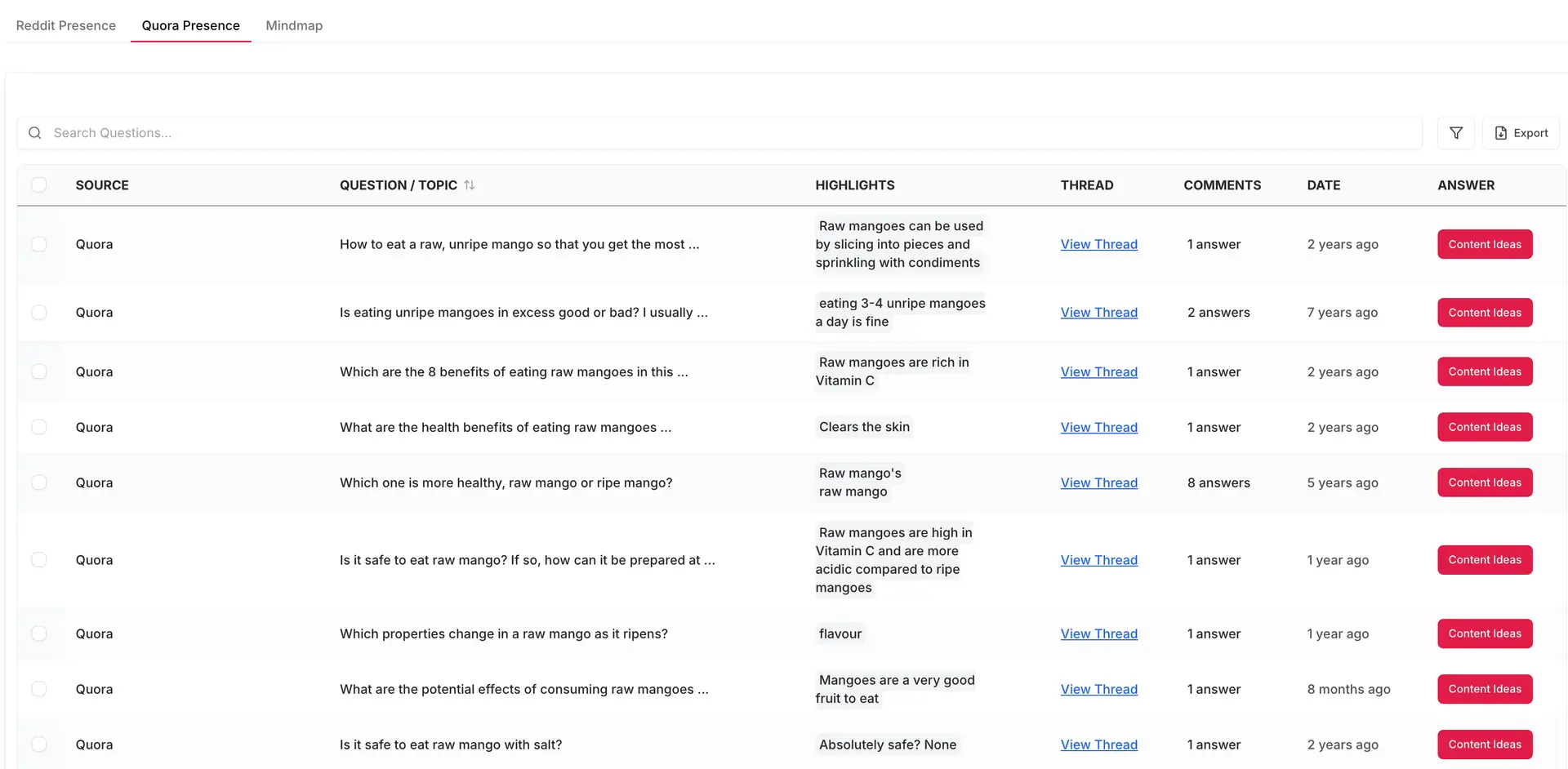
    FAQs

    As brands strive to maximize their digital presence, understanding how to leverage LLM SEO across popular forums like Reddit and Quora is critical. With Keywordly’s workflow platform, businesses can discover high-value keywords, gain actionable insights, and create authoritative content to boost LLM-powered search visibility. The following FAQs address key aspects of LLM SEO and demonstrate how Keywordly can drive real results for your content marketing and brand exposure.

    What is LLM SEO and why is it important for brand visibility?

    LLM SEO refers to optimizing content specifically for large language models (LLMs) such as those that power chatbots and AI search functions. As user queries become more conversational, aligning your content with natural question-based phrasing greatly enhances discoverability in these next-generation platforms. By adopting LLM SEO, brands ensure their information is readily accessible when consumers turn to AI-driven answers, expanding reach far beyond traditional search engines.

    How does Keywordly gather insights from Reddit and Quora?

    Keywordly systematically scans Reddit and Quora to identify real user queries trending in your niche. This process includes collecting data on popular questions, relevant discussions, and frequent brand mentions. Applying these insights, you can craft content that speaks directly to your audience’s needs and mimics the queries they’re most likely to enter into LLM-powered searches.

    What kind of content performs best for LLM-powered search engines?

    Content that directly answers popular, naturally phrased questions resonates most with LLM algorithms. FAQ sections, explainer posts, and concise educational articles formulated using real forum queries are especially effective. Case in point: a tech company using Keywordly uncovered a recurring Reddit question, turned it into a targeted article, and saw a measurable uptick in traffic from AI search results within weeks.

    How can I measure the effectiveness of my LLM SEO strategy for Reddit and Quora?

    To evaluate impact, monitor metrics such as brand mention frequency, traffic from AI-driven sources, and keyword ranking changes. Keywordly simplifies this by tracking your and your competitors’ presence and activity, highlighting content gaps and performance improvements. Reviewing these analytics enables continuous optimization of your LLM-oriented content strategy.

    Are there risks to over-promoting my brand on community forums?

    Engaging authentically on Reddit and Quora is vital; over-promotion or spamming can alienate audiences and risk moderation penalties. Focus on providing genuine value and informative responses rather than overt self-promotion. Brands that maintain this balance build trust and establish long-term visibility both with users and LLM search algorithms.

    How often should I update my content strategy for optimal LLM visibility?

    Regularly revisiting your content strategy ensures alignment with evolving forum trends and LLM algorithm updates. Consider updating key articles, adding new FAQs, and refreshing insights quarterly or whenever Keywordly detects significant shifts in user query patterns on Reddit and Quora. Proactive updates help maintain a strong LLM visibility footprint and foster continual brand growth.