Tag: SEO Content Optimization Tool

  • How to Improve SEO rankings with AI tools: Step-by-Step Guide

    How to Improve SEO rankings with AI tools: Step-by-Step Guide


    How to Improve SEO Rankings with AI Tools — Step-by-Step Guide (2026)


    How to Improve SEO Rankings with AI Tools — Step-by-Step Guide (2026)

    how to improve SEO rankings with AI tools — step by step guide | Keywordly Editorial Team | 4-6 weeks to full workflow adoption | Beginner


    What You’ll Learn

    This guide walks you through a practical five-step workflow for using AI to improve your SEO rankings — from keyword research to content generation, on-page optimization, and visibility tracking.

    • How to use AI for keyword research and topic clustering that matches real search intent.
    • How to build content briefs that keep AI-generated drafts accurate and E-E-A-T compliant.
    • How to optimize AI-assisted content so it satisfies both Google’s ranking systems and generative engines.
    • How to track ranking and AI citation progress so you know what’s actually working.

    Prerequisites: a live website with basic analytics access (Google Search Console recommended), no coding required, and roughly 3-5 hours per week to run the workflow consistently.


    Why Improving SEO Rankings with AI Tools Matters in 2026

    Search behavior has shifted dramatically. By Q1 2026, AI Overviews appeared in more than 50 percent of all Google searches, and Google’s market share dropped below 90 percent for the first time since 2015. Nearly 69% of all searches ended without a click to any website by May 2025 — according to Similarweb’s research on zero-click searches — which means content has to earn both a position and a citation.

    AI tools can improve SEO rankings by 49.2% when used strategically, and nearly seven in 10 companies report better returns after integrating AI into their SEO workflows. However, purely AI-generated content ranks in the top spot just 9% of the time, while human-written texts rank high in 80% of analyzed cases. The solution is using AI for speed while keeping human judgment for quality. For supporting data, see AI SEO Statistics for 2026: Search Trends, AI Visibility & ….


    The Process at a Glance

    Step Action Time Outcome
    1 Run AI-powered keyword research and clustering 1-2 hours Prioritized keyword clusters by intent
    2 Build a data-backed content brief 30-45 minutes Structured outline with target signals
    3 Generate and edit content with AI 1-3 hours Publish-ready draft with human edits
    4 Optimize on-page and technical SEO elements 30-60 minutes Page fully aligned to ranking signals
    5 Track rankings and AI visibility over time 15 minutes weekly Ongoing ranking and citation data

    Total time: roughly 4-7 hours per content piece initially, dropping to 2-3 hours once the workflow is repeatable. Ranking movement typically appears within 4-12 weeks depending on competition.


    Step 1: Run AI-Powered Keyword Research and Clustering

    What You’re Doing

    Group search terms into topic clusters based on real search intent rather than chasing isolated keywords. This approach identifies exactly what your audience is searching for. For a more detailed walkthrough, see How to Use AI for Keyword Research: A 6-Step Practical Guide.

    To help you visualize this process, check out the video below for a step-by-step demonstration of AI-powered keyword research and clustering.

    How to Do It

    1. Enter your seed topic into an AI-powered keyword tool like Keywordly, Ahrefs, or Semrush to generate a broad keyword list.
    2. Use AI clustering to group keywords by shared intent, catching conversational variants that traditional tools miss.
    3. Prioritize clusters where you have topical relevance and a realistic shot at outranking competitors.
    4. Export your top 3-5 clusters as your content roadmap for the next 30 days.

    Best Practices

    • Include question-format keywords (who, what, how, why) since these map directly to how people phrase queries to AI search tools.
    • Re-run clustering quarterly — search intent shifts faster now that AI Overviews reshape how queries get answered.

    Step 2: Build a Data-Backed Content Brief

    What You’re Doing

    Turn raw keyword data into a structured roadmap that tells writers and AI tools exactly what to cover. A strong brief prevents wasted time and bad drafts.

    How to Do It

    1. List the target keyword cluster, primary search intent, and 3-5 subtopics competitors are already ranking for.
    2. Specify structural requirements: a direct-answer opening paragraph, H2/H3 subheadings phrased as questions, at least one table, and FAQ schema.
    3. Note E-E-A-T requirements — author credentials, original data points, and first-hand experience. E-E-A-T is the number one factor in AI search optimization.
    4. Set a word count range and a “must include” list of statistics or sources.

    Example

    Brief Element Weak Version Strong Version
    Opening paragraph Generic intro with no direct answer Direct answer to the target query in first 100 words
    Headings “Overview,” “Benefits,” “Conclusion” “How does X work?”, “What does X cost in 2026?”
    Data No statistics or vague claims Specific stat with source, timeframe, and number

    Step 3: Generate and Edit Content with AI Tools

    What You’re Doing

    Use AI to speed up drafting while keeping a human editing pass to add originality, verify accuracy, and inject voice. This combination is what actually ranks.

    How to Do It

    1. Feed your content brief into an AI content workflow platform like Keywordly, which turns keyword research and briefs directly into structured drafts.
    2. Generate the first draft, then fact-check every statistic and claim against a primary source before publishing.
    3. Add first-hand insight, examples, or data the AI couldn’t have generated on its own.
    4. Run a final human edit pass for tone, accuracy, and flow.

    Common Mistakes

    Publishing AI drafts with no fact-checking or human editing: Unedited AI output is far less likely to rank. Human-written texts rank high in 80% of analyzed cases, compared to just 9% for purely AI-generated content.


    Step 4: Optimize On-Page and Technical SEO with AI

    What You’re Doing

    Align the page with both traditional Google ranking signals and the structural cues that generative engines use to extract and cite content. This double optimization ensures maximum visibility across all search types.

    How to Do It

    1. Run the draft through an AI content optimization tool like Keywordly to score keyword coverage, readability, and structural completeness against top-ranking pages.
    2. Add FAQ, HowTo, and Article schema markup. Structured data — particularly FAQ, HowTo, and Article schema — measurably improves inclusion likelihood in AI-generated answers.
    3. Confirm technical health: fast load times, mobile-first layout, and crawlable HTML.
    4. Rewrite any keyword-stuffed sentences into natural language. Keyword stuffing performed below baseline, and adding repetitive keyword phrases actively reduced citation probability.

    Best Practices

    • Add specific statistics with a number, timeframe, and named source in every major section.
    • Keep paragraphs short and scannable. AI extraction tools favor clearly segmented, self-contained sections.

    Step 5: Track Rankings and AI Search Visibility Over Time

    What You’re Doing

    Monitor both traditional Google rankings and how often your content gets cited inside AI answers. This dual tracking proves the workflow is working.

    How to Do It

    1. Track keyword position changes weekly in Google Search Console alongside an AI-focused rank tracker.
    2. Use an AI visibility tracking feature — like the one built into Keywordly — to see whether your pages are being cited by ChatGPT, Perplexity, or Google AI Overviews.
    3. Compare organic click data before and after AI Overviews appear on your target queries.
    4. Re-optimize any page that ranks well but gets zero AI citations.

    Example

    A page ranking position 4 on Google but absent from AI Overviews usually just needs a clearer direct-answer opening and a table. When Google shows an AI summary, only 8% of users click the regular results below it, compared to nearly 15% when no summary appears. Position matters less if you’re not being cited.


    What to Do After Completing the Process

    Phase 1 — Stabilize (Weeks 1-4): Publish 3-5 pieces using the full workflow and confirm each passes fact-checking and validation before going live.

    Phase 2 — Scale (Weeks 5-10): Increase publishing cadence and build topic clusters around your highest-performing pages.

    Phase 3 — Optimize for AI Visibility (Ongoing): Shift focus toward citation rate and AI referral traffic as a core KPI. AI-referred traffic converts at 23 times higher rates than traditional search in current benchmarks.


    Resources You’ll Need

    Resource Role Requirement Price
    Keywordly End-to-end AI SEO workflow: keyword research, briefs, content generation, optimization, AI visibility tracking Required Paid, plans vary
    Google Search Console Ranking, indexing, and click data Required Free
    Ahrefs Supplementary keyword and backlink data Recommended Paid
    Schema.org Reference for FAQ, HowTo, and Article schema markup Recommended Free
    ChatGPT Drafting assistance and fact-checking support Optional Free/Paid tiers

    Keywordly treats SEO as a continuous, evolving process where automation, AI-driven insights, and content optimization work together to improve visibility across both traditional and AI search. The platform simplifies and scales SEO through an agentic AI-powered content workflow — from keyword research and clustering to content creation, optimization, auditing, and AI visibility tracking. See also, see Search Engine Optimization (SEO) Starter Guide.


    Common Plateaus & How to Break Through

    Rankings improve but traffic doesn’t grow

    Likely cause: Pages rank but get bypassed by AI Overviews that answer the query directly. Fix: Restructure the opening paragraph as a direct answer and add schema markup so you’re more likely to be cited.

    AI-generated drafts read as generic and never rank

    Likely cause: No human editing pass, no original data, and no first-hand experience. Fix: Treat AI output as a first draft only — add unique examples, verify every stat, and rewrite thin sections before publishing.

    Keyword rankings stall despite consistent publishing

    Likely cause: Content targets isolated keywords instead of full topic clusters. Fix: Rebuild your content calendar around clusters and interlink cluster pages heavily.

    Good rankings but zero AI citations

    Likely cause: Content lacks specific, sourced statistics that generative engines extract. Fix: Add statistics with a number, timeframe, and named source in every major section. For more troubleshooting advice, see 10 AI SEO Mistakes That Are Killing Your Rankings.


    Conclusion

    Improving SEO rankings with AI tools in 2026 comes down to a repeatable five-step workflow: research with AI-powered clustering, brief with structure in mind, generate content and edit it rigorously, optimize for both Google and AI extraction, then track rankings and citations together. Human editing and original data still decide what ranks.

    Key Takeaways

    • AI tools accelerate research, drafting, and optimization, but human editing and original data still decide what ranks.
    • Ranking and AI citation are now separate goals that require separate tracking and optimization tactics.
    • Pick one keyword cluster, run it through the five-step workflow this week, and measure both ranking movement and AI citation frequency after 30 days.

    FAQ

    How to improve SEO rankings with AI tools?

    Follow a five-step workflow: run AI-powered keyword research and clustering, build a data-backed content brief, generate and edit content with AI, optimize on-page and technical SEO elements, then track rankings and AI citation frequency weekly. Platforms like Keywordly combine all five steps, while Google Search Console handles measurement. Always pair AI speed with human fact-checking and original insight before publishing.

    Can AI-generated content actually rank on Google in 2026?

    Yes, but rarely without human editing — purely AI-generated content ranks in the top spot just 9% of the time, while human-written texts rank high in 80% of analyzed cases. An editing and fact-checking pass is essential.

    How long does it take to see ranking improvements from AI-assisted SEO?

    Most sites see measurable ranking movement within 4-12 weeks of consistently applying an AI-assisted workflow, though highly competitive terms can take longer.

    Do AI Overviews reduce the value of ranking well on Google?

    52% of all search queries still produce no AI Overview, so ranking well remains valuable even as AI citation becomes a parallel goal.

    Which AI SEO tools should beginners start with?

    Start with one consolidated platform rather than juggling separate tools. An all-in-one option like Keywordly covers keyword research, briefs, content generation, optimization, and AI visibility tracking in a single workflow, paired with free Google Search Console data.

    Does adding statistics and data actually help AI tools cite my content?

    Yes — including specific statistics improved AI citation rates by up to 40% compared to unoptimized content. Every statistic should include a number, a timeframe, and a named source.

    Is keyword stuffing still an effective SEO tactic in 2026?

    No — keyword stuffing performed below baseline, and adding repetitive keyword phrases actively reduced citation probability. Natural, question-format language performs better.

    Methodology: This guide was compiled using publicly available industry research and statistics on AI adoption in SEO current as of 2026, including data from Similarweb, Semrush, SEOmator, and SEOprofy. Outcomes vary by industry, competition, and execution quality.


  • SEO Content Optimization Tools Comparison: Keywordly vs Clearscope

    SEO Content Optimization Tools Comparison: Keywordly vs Clearscope

    Compare the top SEO content optimization tools, Keywordly vs Clearscope : features, pricing, and use cases, so you can pick the right platform for scalable, high-impact content in 2026

    Introduction

    Today, creating content that ranks is no longer about stuffing keywords—it’s about semantic relevance, topical authority, and optimization at scale. Search engines are smarter, competition is tougher, and every content team faces the same challenge: how do you consistently produce content that actually drives traffic and conversions?

    This is where SEO content optimization tools come in. Among the leaders in this space, Clearscope has long been a trusted name for enterprise teams, while Keywordly is an emerging platform that’s quickly gaining traction with agencies and fast-scaling businesses.

    If you’re deciding between the two, this in-depth guide breaks down:

    • How Keywordly and Clearscope compare on features, pricing, and ease of use
    • Where each tool excels and falls short of
    • ROI considerations with a real cost-per-article breakdown
    • User review and insights
    • You get a clarity on which tool is better for your content strategy

    Let’s dive in.

    “The right SEO content optimization tool doesn’t just improve articles — it compounds organic growth across your entire content library.”

    Quick Comparison: Keywordly vs Clearscope

    Feature / CategoryKeywordly.aiClearscope.io
    PricingStarts $39/monthStarts $189/month
    Content ScoreAI + SERP semantic modeling, competitor term extractionNLP-based term suggestions, content grade scoring
    Content BriefsAI-powered, customizable, SERP-drivenManual or template-driven, basic SERP overview
    Keyword ClusteringBuilt-in clustering & topical mapLimited (requires external tools for clustering)
    IntegrationsGoogle Docs, WordPress, Notion, CMS APIsGoogle Docs, WordPress
    Team CollaborationMulti-user roles, approvals, editorial workflowsTeam access available, but less flexible
    AI Writing AssistanceBuilt-in AI writing + content rewriterLimited AI support (requires third-party tools)
    Best ForStartups, SMBs, agencies scaling contentEnterprises, established SEO teams

    “When content production scales, manual optimization becomes the bottleneck — the right platform removes that friction.”


    What is Keywordly.ai ?

    keywordly home image

    Keywordly is a newer platform built for the modern SEO environment—where content teams need both strategic planning and scalable execution.

    Its strengths include:

    • AI-Powered Content Briefs: Automated outline and brief generation based on SERP + competitor analysis.
    • Keyword Clustering & Topical Maps: Groups keywords by intent and topic, helping build topic authority.
    • Integrated Optimization: Real-time recommendations, readability checks, and authority-driven term usage.
    • AI Writing & Editing: Built-in rewriter and AI suggestions for speeding up drafts.
    • Team-Friendly Workflows: Role-based access and editorial approval processes.

    Pros of Keywordly

    keywordly coustomer reviews
    • More affordable pricing tiers compared to Clearscope.
    • Richer strategic features like clustering and topical authority maps.
    • Seamless AI integration into content briefs and optimization.
    • Easier to scale across multiple clients or large content calendars.

    Cons of Keywordly

    • Newer tool → smaller community and support ecosystem than Clearscope.
    • Advanced features may feel complex for beginners.

    Read this Article : Top 7 AI Content Optimization Tools to Boost SEO

    Read this Article : What Is On-Page SEO Optimization? A Comprehensive Guide

    What is Clearscope.io ?

    clearscope home image

    Founded in 2016, Clearscope has become a go-to optimization platform for large brands and agencies. Its strength lies in:

    • Content Grading: Assigns grades (A+ to F) based on term usage and content completeness.
    • NLP Term Suggestions: Extracts semantically relevant keywords from top-ranking pages.
    • Integrations: Works with Google Docs and WordPress.
    • Simplicity: Minimalist interface that writers find easy to adopt.

    Pros of Clearscope

    clearscope reviews
    • Trusted by enterprise SEO teams at HubSpot, Shopify, and Conde Nast.
    • Excellent for content writers needing a simple grading system.
    • Clear UI with minimal learning curve.

    Cons of Clearscope

    • Expensive for small teams or freelancers.
    • Lacks advanced keyword clustering and topical mapping.
    • Limited AI automation compared to modern tools.

    Feature-by-Feature Comparison

    1. Content Briefs & Optimization Workflow
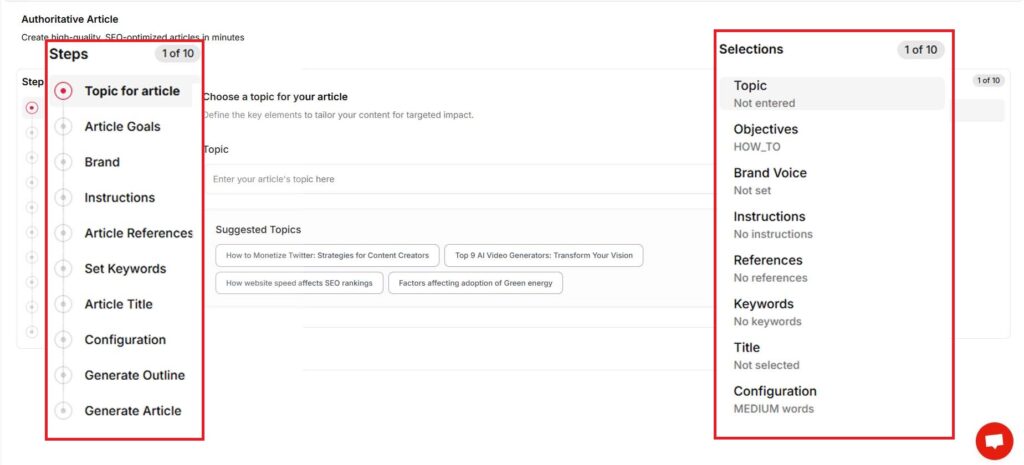
    content workflow A
    Keywordly Content Generation workflow
    • Keywordly: AI builds detailed briefs (H1–H3, competitor gaps, keyword clusters). Great for scaling content teams.
    • Clearscope: Manual or basic SERP-based briefs. Reliable but lacks automation.

    “Agencies that standardize their content optimization stack deliver faster results — and retain clients longer.”

    2. Keyword Research & Topical Mapping
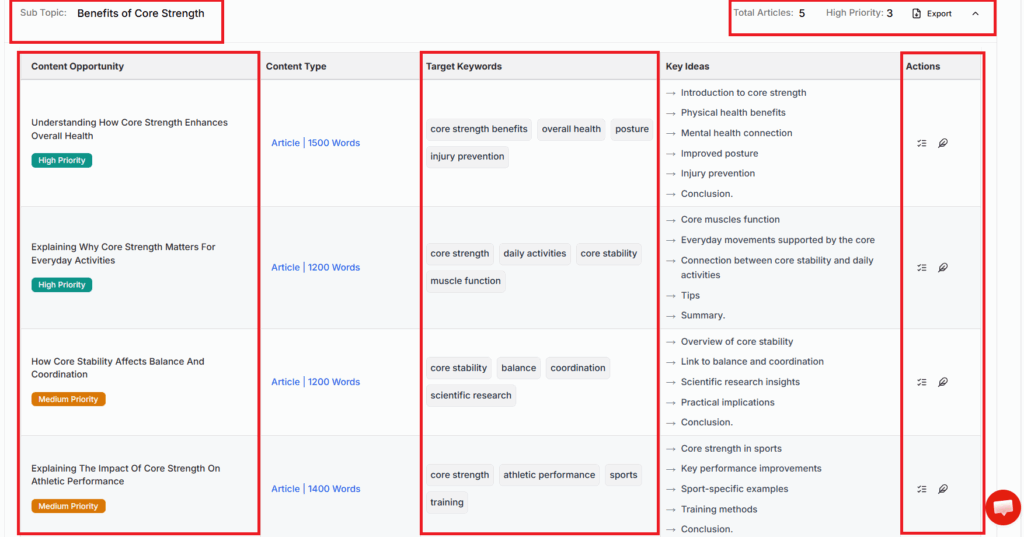
    topical map subtopics with target keywords
    Keywordly Topical Map and Target Keywords
    • Keywordly: Built-in keyword clustering → helps build topical maps for authority-building.
    • Clearscope: Focused on term suggestions → requires external tools for clustering.

    3. AI Writing & Automation
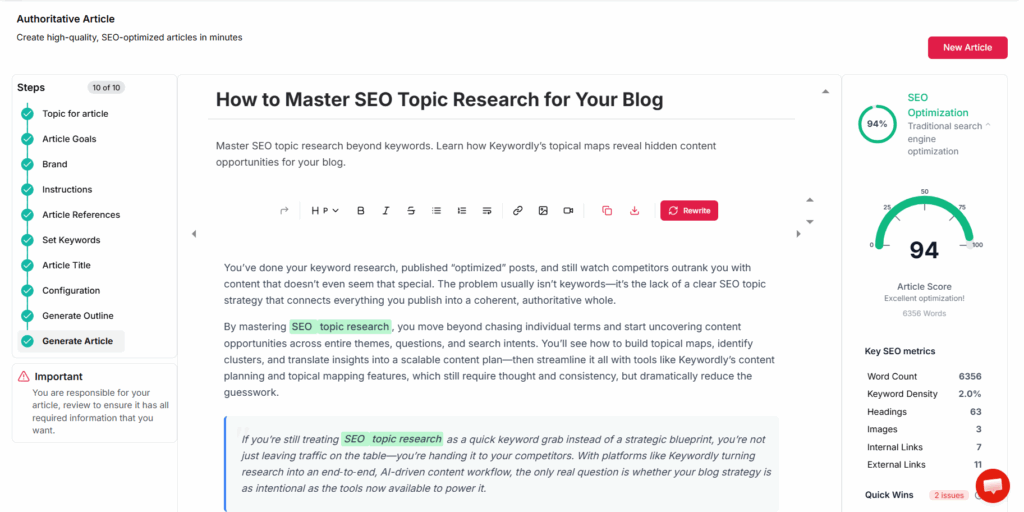
    CONTENT GENERATION
    Keywordly Content Generation
    • Keywordly: AI Content generation, content rewriter, optimization suggestions.
    • Clearscope: Limited AI, mainly grading system.

    4. Integrations & Ease of Use
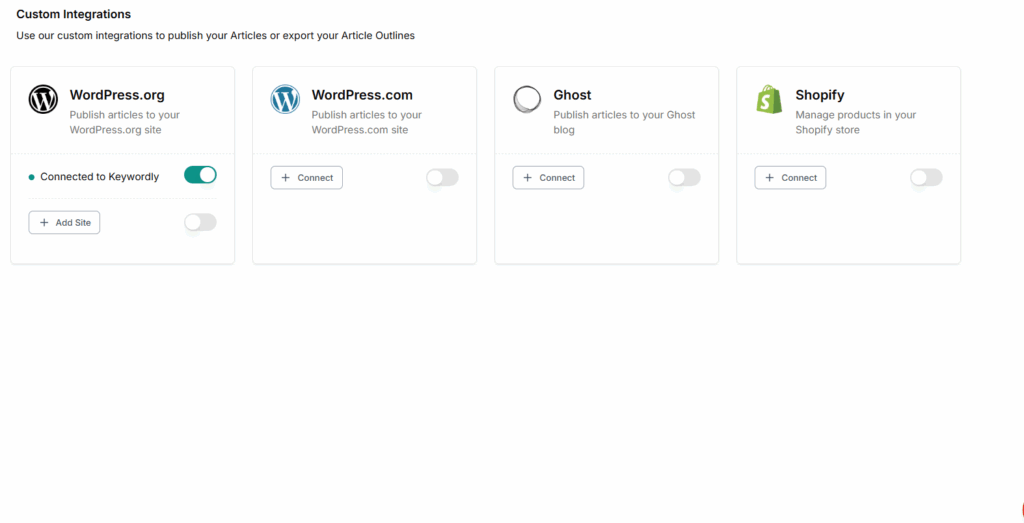
    keywordly Integerations
    Keywordly Integrations
    • Both integrate with Google Docs and WordPress.
    • Keywordly adds Notion + API for scaling.

    5. Team Collaboration

    • Keywordly: Role-based workflows, approvals, better for agencies.
    • Clearscope: Basic team accounts.

    6. Support & Community

    • Clearscope: Established user base, lots of case studies.
    • Keywordly: Growing, but fewer third-party resources.

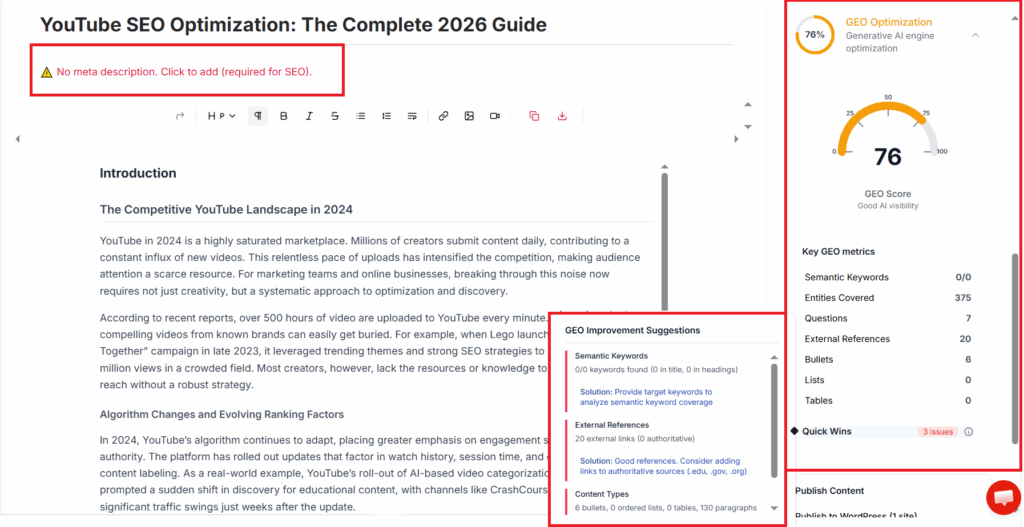
    7. AI Search / GEO Optimization
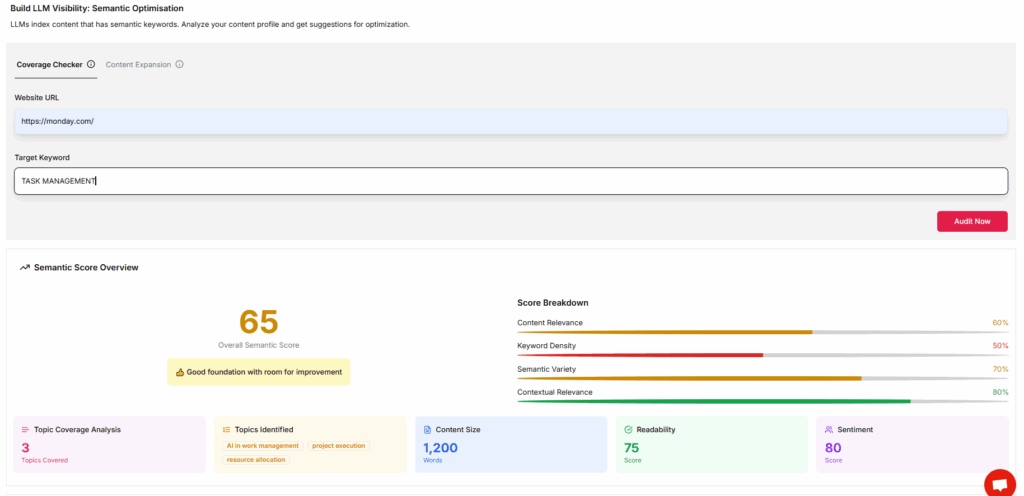
    LLM OPTIMIZATION
    Keywordly LLM Brand Visibility Optimization

    Both optimize content for traditional Google SERPs.

    • Keywordly adds LLM visibility tracking + AI search intent alignment (AI search optimization).
    • ClearScope focuses primarily on Google keyword relevance scoring.

    “AI-driven SEO isn’t about replacing writers — it’s about giving teams real-time optimization intelligence.”

    8. Content Optimization / Content Scoring System
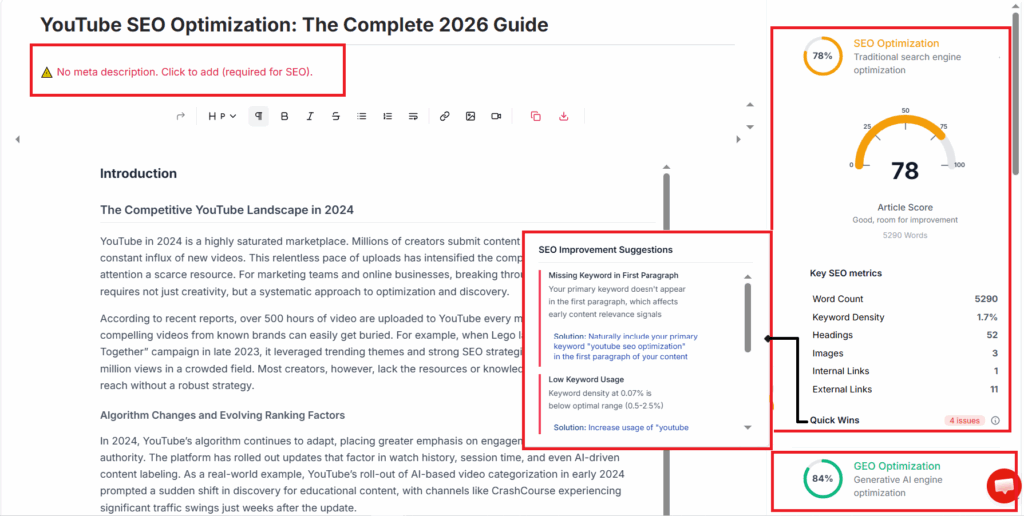
    seo optimization 1
    Keywordly SEO Content Optimization & SEO Content Score
    geo optimization 2
    Keywordly GEO Content Optimization & GEO Content Score

    Both offer real-time content grading.

    • Keywordly grades for SEO + GEO + entity coverage + AI citation readiness.
    • ClearScope grades mainly based on keyword coverage and NLP scoring.

    Pricing & ROI Comparison

    Keywordly Pricing (2026)
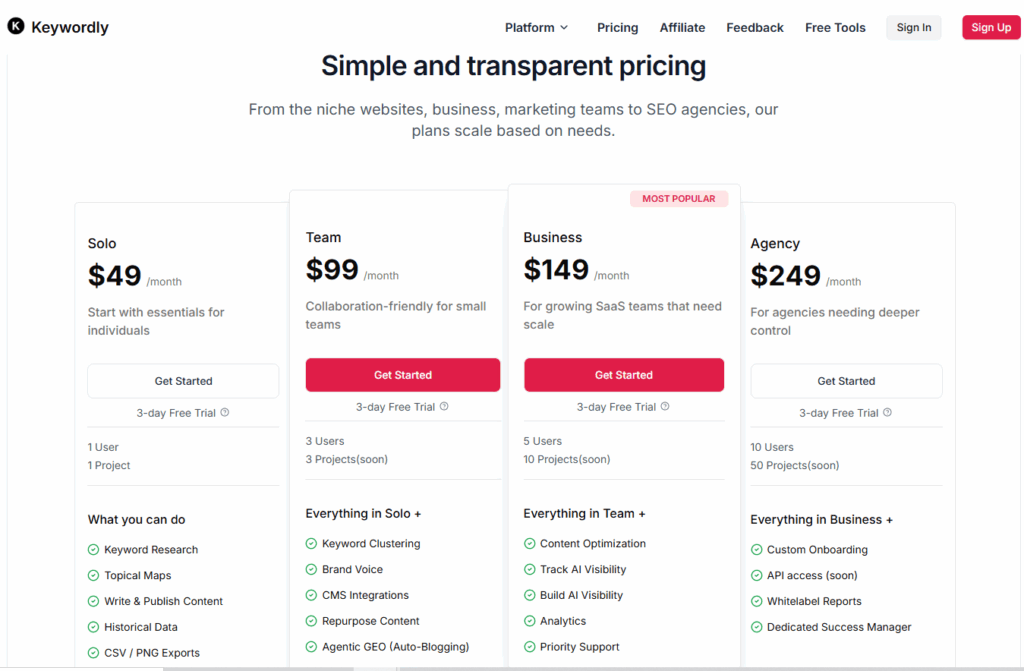
    keywordly pricings
    Keywordly Pricing
    • Solo: $49/month
    • Team: $99/month
    • Business: $149/month

    The cost of the wrong tool isn’t the subscription — it’s months of under-optimized content and lost rankings.”

    Read this Article : AI-Content Optimization Tips to Improve SEO Without Rewriting Content

    Read this Article : AI Content Optimization Strategy: 5 Actionable Ways to Improve Engagement and Ranking

    Clearscope Pricing (2026)

    clearscope pricing
    • Essentials: $189/month (includes 20 reports)
    • Business Plans: Custom pricing

    ROI Example (Cost-per-Article Calculation)

    Let’s assume your team publishes 20 optimized articles per month:

    • Clearscope → $189/month ÷ 20 articles = $9.45 optimization cost/article
    • Keywordly → $49/month ÷ 20 articles = $2.49 optimization cost/article

    Result: Keywordly offers a 55% lower cost per optimized article, making it more viable for agencies or startups scaling content.

    Pros & Cons Summary Table

    ToolProsCons
    KeywordlyAffordable, AI-driven, keyword clustering, scalable workflowsSlightly steeper learning curve
    ClearscopeEasy to use, Benefits for enterprisesExpensive, lacks clustering, limited AI

    Which Tool Fits Your Content Strategy?

    • On Choosing Clearscope
      • You’re an enterprise team with big budgets.
      • Your writers prefer a simple, minimal interface.
    • On Choosing Keywordly 
    • You’re a startup, SMB, or agency scaling content production.
    • You value AI-driven briefs, clustering, and topical authority mapping.
    • ROI matters — you need more affordable optimization.

    “If your competitors are using structured content optimization workflows and you’re not, the ranking gap will widen — not close.”

    Conclusion

    If you’re a modern content team looking to scale smarter, Keywordly is the more strategic investment. With its AI briefs, keyword clustering, and affordable pricing, Keywordly ensures you’re not just optimizing content—you’re building long-term authority. Eventually a good topical authority that leads to better ranking of the website.


    👉 So, ready to scale your content strategy without burning budget?

    “The difference between ranking occasionally and ranking consistently is having a repeatable content optimization system.”

    Read this Article : 10 Best AEO Tools for Content Optimization — How to Rank in AI Answers

    Read this Article : Keyword Optimization: 7 Techniques for Better Rankings And Traffic

    FAQs

    1. Is Clearscope worth it for small businesses?
    Probably not. At $170/month, it’s better suited for enterprise teams.

    2. How does Keywordly help with topical authority?
    By clustering keywords into topical maps, Keywordly helps content teams build authority signals Google favors.

    3. Do Kewordly  tool integrate with Google Docs?
    Yes. Both Keywordly and Clearscope support Docs and WordPress.

    4. Which tool has better ROI?
    Keywordly — with a 65% lower cost per optimized article compared to Clearscope.