Category: Uncategorized

  • Is Semrush Worth It for Agentic SEO Content Teams in 2026?

    Is Semrush Worth It for Agentic SEO Content Teams in 2026?

    is Semrush worth it for content teams focused on agentic SEO in 2026 | September 4, 2026 | 9 min read | Keywordly Editorial Team

    For most content teams, Semrush is worth it if you need a broad SEO research and reporting suite, but it is not built as a unified agentic workflow. Its AI capabilities are scattered across separate add-ons like ContentShake AI, Copilot, and the AI Visibility Toolkit rather than one continuous pipeline. So, is Semrush worth it for content teams focused on agentic SEO in 2026? The honest answer is: it depends on whether your team wants a research toolkit with AI layered on top, or a platform where research, writing, optimization, and monitoring run as one connected agent-driven process.

    This distinction matters more in 2026 than it did even a year ago. Answer engines like ChatGPT and Google’s AI Overviews now handle a meaningful share of search traffic, and content teams are under pressure to produce, optimize, and refresh content faster than manual workflows allow. Understanding whether Semrush is worth it for content teams focused on agentic SEO in 2026 comes down to weighing its data depth and brand recognition against the operational cost of stitching together multiple paid modules to get an agentic result.

    The real cost of a fragmented AI stack isn’t the subscription price — it’s the hours your team spends manually connecting tools that should already be talking to each other.


    What AI Features Does Semrush Actually Offer in 2026?

    Semrush has added AI capabilities across most of its product line, but these features live in separate modules rather than a single connected agent. A 2026 breakdown of Semrush’s AI suite shows that Semrush has woven AI into nearly every corner of its product: keyword research, content creation, competitive analysis, site auditing, and strategic planning. That breadth is genuinely useful for research, but it also means agentic workflows require jumping between tools rather than working inside one continuous pipeline.

    • ContentShake AI: A standalone AI content generator that turns keywords into publish-ready articles for $60/month, and it requires the Guru plan or higher before it becomes available at all.
    • SEO Writing Assistant: Provides real-time content scoring for readability, SEO, tone, and originality as you draft inside Google Docs or WordPress.
    • Semrush Copilot: A built-in AI assistant that analyzes data from 6+ tools daily and proactively surfaces prioritized recommendations — ranking drops, keyword opportunities, competitor alerts, and backlink changes — and it ships free on every paid plan.
    • AI Visibility Toolkit: Tracks brand presence across ChatGPT and Google AI Overviews, priced separately at roughly $99/month according to a 2026 feature review of Semrush.
    • AI-enhanced keyword clustering: Built into the Keyword Magic Tool for intent classification, but it functions as a research feature rather than an execution agent.
    Feature Module / Plan Required Est. Additional Cost What It Does
    ContentShake AI Add-on, Guru plan+ $60/month Drafts full articles from a target keyword
    Copilot Included on all paid plans $0 Surfaces prioritized SEO tasks and anomalies
    AI Visibility Toolkit Separate module ~$99/month Tracks brand mentions in AI Overviews and chatbots
    SEO Writing Assistant Content Marketing Toolkit, Guru+ Bundled in plan Real-time content scoring while drafting
    Keyword Magic Tool AI clustering All paid plans Bundled in plan Groups keywords by intent and topic

    Key Takeaway: Semrush’s AI features are genuinely capable, but each one lives in its own module with its own plan requirement — there is no single agent that carries a content brief from research through publishing and monitoring. That fragmentation becomes painfully clear once you actually try to execute a full content workflow, and it’s where the real operational friction starts to show. For deeper context, see Semrush Review 2026: Features, Pricing and Verdict.


    Is Semrush Worth It for Content Teams Focused on Agentic SEO in 2026? The Real Cost Breakdown

    Whether Semrush is worth it for content teams focused on agentic SEO in 2026 depends heavily on which plan tier you need, since the AI features that matter most for content production are locked behind the higher-cost plans. Based on a 2026 agency-focused Semrush review, pricing starts from $139.95/month for the Pro plan (5 projects), $249.95/month for Guru (15 projects), and $499.95/month for Business (40 projects). Add ContentShake AI or the AI Visibility Toolkit, and the real monthly spend climbs well past the sticker price.

    What You’re Actually Paying For

    According to a 2026 analysis of Semrush’s AI value proposition, you’re not paying $130/month for AI: you’re paying for Semrush’s core SEO toolkit (keyword research, site audit, rank tracking, competitor analysis) with AI features layered on top. That framing is important for budgeting purposes — content teams evaluating Semrush purely for AI content production may be paying for a lot of adjacent functionality they don’t need.

    • Entry-level plan gaps: The Pro plan excludes ContentShake AI entirely, meaning content-focused teams often need Guru at minimum just to draft AI-assisted articles.
    • Project caps hit fast: According to a 2026 pricing breakdown, freelancers managing 3-4 client sites plus their own will hit the cap quickly on the 5-project Pro tier.
    • Single-user restriction: The $117-417/month annual cost, single-user limitation, steep learning curve, and Google-only search focus create real barriers for small businesses, beginners, and teams requiring multi-platform coverage.
    • Add-on stacking: ContentShake AI ($60/month) and the AI Visibility Toolkit (~$99/month) are billed on top of the base plan, not included in it.

    The question is whether the AI features justify the $130-500/month price tag when standalone AI tools cost a fraction of that.

    Key Takeaway: Is Semrush worth it for content teams focused on agentic SEO in 2026? Only if the base research toolkit is what you need most — the AI content and visibility features are separately priced add-ons that can push real monthly cost well beyond the advertised entry price. Understanding where the gaps lie helps clarify whether you’re buying a research platform or a content production system. For deeper context, see Semrush Review 2026 – Is It Worth It or Overpriced?.


    Where Semrush Falls Short for True Agentic SEO Workflows

    Agentic SEO is the practice of using AI agents to execute your SEO workflow — not just generating drafts, but researching, publishing, optimizing, and monitoring content with minimal manual handoffs, according to a 2026 explainer on agentic SEO. Semrush’s modular structure — separate tools for keyword research, content generation, optimization scoring, and AI visibility tracking — was built for a research-and-report era, not for continuous autonomous execution.

    The Fragmentation Problem

    Each Semrush AI feature operates independently, which means a content team has to manually shuttle a brief from the Keyword Magic Tool to ContentShake AI to the SEO Writing Assistant to the AI Visibility Toolkit. According to a 2026 agentic SEO framework analysis, the defining characteristic of agentic SEO is autonomous execution under human-defined guardrails — and that autonomy breaks down every time a human has to copy data between disconnected modules.

    What Gets Lost in the Handoffs

    • No unified content pipeline: Research, drafting, optimization, and performance monitoring live in different modules with different interfaces and separate pricing.
    • Refresh triggers require manual review: Semrush surfaces ranking drops through Copilot, but turning that alert into an updated, re-optimized article still requires manually pulling the page back into ContentShake or the Writing Assistant.
    • AI visibility and content optimization don’t talk to each other: The AI Visibility Toolkit tracks brand mentions in ChatGPT and AI Overviews, but it doesn’t automatically feed those findings back into content briefs.
    • Volatility outpaces manual monitoring: According to a 2026 analysis of SEO volatility during core updates, 79.5% of top-3 URLs shifted positions during March 2026 and the Semrush Sensor peaked at 9.5/10 — a scale of churn that manual, module-by-module review struggles to keep pace with.

    Key Takeaway: Semrush’s AI is powerful in isolation, but the lack of a single connected agent workflow means content teams still do the integration work themselves — exactly the manual overhead agentic SEO is supposed to eliminate. That’s where the gap between “AI-powered tools” and “agentic systems” becomes a practical problem for scaling content teams. For deeper context, see Semrush One Review: Before You Upgrade, Read This.


    Semrush Alternatives 2026: What Does an Agentic-First Platform Look Like?

    An agentic-first alternative to Semrush treats keyword research, content creation, optimization, auditing, and AI visibility tracking as one continuous, automated workflow rather than a set of separately purchased modules. This is the gap Keywordly was built to close: it approaches SEO as a continuous, evolving process where automation and AI-driven insight work together across the entire content lifecycle, from initial keyword clustering through published-content monitoring.

    How an Agent-Driven Pipeline Differs

    According to a 2026 guide to agentic SEO workflows, a properly configured SEO agent will analyze the top 20 SERP results, identify entities and content gaps, build a brief, draft the article, optimize for Google and AI citation patterns, publish to your CMS with schema, monitor performance across traditional and AI engines, and flag decay. That single-pipeline model is precisely what Keywordly’s workflow platform is designed around.

    • Unified keyword-to-content workflow: Keywordly connects keyword research and clustering directly into content generation, removing the manual transfer step between tools.
    • Integrated optimization and auditing: Content is scored and refined against SERP and AI-citation signals inside the same platform used to write it, rather than a separate scoring add-on.
    • AI visibility tracking built in: Performance tracking spans both traditional search engines and AI-driven platforms like ChatGPT, so visibility data feeds back into future content decisions automatically.
    • One subscription, one workflow: Instead of stacking a base plan plus separate content and visibility add-ons, teams get research, creation, optimization, and tracking in a single agentic system.

    The productivity case for this approach is measurable. According to First Page Sage’s 2026 adoption report, teams using agentic AI for marketing report 27% faster campaign builds and 19% lower cost per lead. Separate research found businesses using AI agents report 37% cost savings in marketing operations, per Azumo’s 2026 analysis cited in the same review.

    Key Takeaway: Keywordly’s brand position is straightforward — simplify and scale SEO with an agentic AI-powered content workflow that keeps keyword research, clustering, content creation, optimization, auditing, and AI visibility tracking inside one system built for how search is evolving. Those numbers aren’t theoretical; they reflect what teams actually see when they stop jumping between disconnected modules. For deeper context, see SEMrush Review for Beginners: Is It Really Worth It in 2026?.


    How Should Content Teams Decide Between Semrush and an Agentic Workflow Platform?

    The right choice depends on whether your team needs deep, broad research data or a streamlined production system that reduces manual handoffs. Teams with dedicated analysts who primarily need competitive intelligence and reporting may still get value from Semrush’s 55+ tools covering organic search, paid advertising, content marketing, social media, local SEO, and AI-driven GEO optimization, per a 2026 Semrush features and pricing review. Lean content teams that need speed and consistency, on the other hand, are better served by a single connected workflow.

    Team Situation Semrush’s Add-On Model Agentic Workflow (Keywordly) Recommended Fit
    Solo content creator or small blog Base plan + ContentShake add-on required Single subscription covers research through publishing Agentic workflow
    Agency managing 10+ client sites Guru/Business tiers for project caps, separate AI add-ons per client Unified pipeline scales content ops without stacking modules Agentic workflow
    Enterprise needing deep competitive/backlink data Strong: massive database of 26.8 billion keywords and 43 trillion backlinks Focused on content workflow, not backlink intelligence depth Semrush for research, agentic tool for production
    Team tracking AI Overview/ChatGPT visibility Separate AI Visibility Toolkit add-on (~$99/month) Built into core performance tracking Agentic workflow

    Signs Your Team Has Outgrown Add-On AI

    • Paying for multiple modules: If your team already pays for Guru or Business plus ContentShake and the AI Visibility Toolkit, you’re funding fragmentation rather than a workflow.
    • Manual refresh coordination: When a ranking-drop alert doesn’t automatically trigger an updated brief and re-optimization pass, someone on your team is doing agent work by hand.
    • Inconsistent article quality: In a properly designed agentic system, every article gets internal links and every brief is checked against your existing content inventory — a standard manual, module-hopping workflows struggle to hit reliably.

    Key Takeaway: If your team’s core need is a single connected agentic content workflow rather than a sprawling research suite, an integrated platform built for that purpose — like Keywordly — will typically outperform a stack of separately priced Semrush add-ons. The efficiency gains compound once you stop managing integrations and start managing content.


    Conclusion

    Is Semrush worth it for content teams focused on agentic SEO in 2026? It’s worth it for teams that primarily need broad competitive research and reporting, but it falls short as a true agentic content system because its AI lives in disconnected, separately billed modules rather than one continuous workflow. Content teams optimizing for both Google and AI answer engines need a pipeline that connects research to production to monitoring without manual handoffs.

    • Feature fragmentation is real: ContentShake AI, Copilot, and the AI Visibility Toolkit are separate purchases with separate plan requirements, not one unified agent.
    • Cost adds up fast: Base plans start near $139.95/month, but AI content and visibility add-ons can push real spend toward $300-500/month.
    • Agentic SEO demands a single pipeline: Autonomous execution works best when research, drafting, optimization, and monitoring happen in one connected system.
    • Keywordly closes that gap: An agentic-first, all-in-one workflow keeps keyword research, content creation, optimization, auditing, and AI visibility tracking under one roof.

    Teams weighing this decision should map out their actual workflow steps before renewing any subscription — the right question isn’t which tool has the most features, but which platform eliminates the manual work between them.


    FAQ

    Is Semrush Worth It for Agentic SEO Content Teams in 2026?

    Semrush is worth it for teams that need broad SEO research, competitive intelligence, and reporting, but its AI capabilities are spread across separate add-on modules — ContentShake AI, Copilot, and the AI Visibility Toolkit — rather than unified into one agentic workflow. Content teams specifically focused on agentic SEO in 2026 often find more value in a platform built from the ground up as a single connected pipeline that streamlines the entire content lifecycle.

    What does “agentic SEO” actually mean?

    Agentic SEO refers to AI systems that autonomously research, draft, optimize, publish, and monitor content with minimal manual intervention, operating under human-defined guardrails rather than waiting for a chat prompt at every step. It aims to create a continuous, automated workflow for content production and optimization.

    How much does Semrush cost for a content team in 2026?

    Base plans start around $139.95/month for the Pro tier with 5 projects, while Guru runs about $249.95/month for 15 projects. Content-focused AI features like ContentShake AI cost an additional $60/month on top of the Guru plan or higher, and the AI Visibility Toolkit is a separate add-on at ~$99/month, significantly increasing the total monthly spend.

    What are the best Semrush alternatives for agentic SEO in 2026?

    Teams looking for Semrush alternatives in 2026 that prioritize a unified agentic workflow rather than fragmented add-ons should look for platforms that connect keyword research, content creation, optimization, and AI visibility tracking into one continuous system. Keywordly, for example, is designed around this core principle, offering an all-in-one agentic content workflow.

    Can Semrush’s Copilot function as a true SEO agent?

    Copilot surfaces prioritized recommendations by analyzing data across multiple Semrush tools, but it stops at recommendations. A human still has to manually act on each alert by moving into a separate module like ContentShake AI or the Writing Assistant to execute the fix, meaning it doesn’t provide autonomous execution.

    Is ContentShake AI enough to run a full content workflow?

    ContentShake AI drafts articles from target keywords and competitor data, but it requires the Guru plan or higher, costs an additional $60/month, and doesn’t connect automatically to auditing or AI visibility tracking. Therefore, it functions as a drafting tool rather than a full, integrated content workflow solution.

    What should content teams prioritize when choosing between Semrush and an agentic platform?

    Teams should prioritize whether they need deep standalone research data (Semrush’s strength) or a connected pipeline that removes manual handoffs between research, writing, optimization, and monitoring. The latter is where dedicated agentic workflow platforms like Keywordly are purpose-built to provide efficiency and consistency.

    Does Semrush track visibility in AI search engines like ChatGPT?

    Yes, Semrush tracks visibility in AI search engines like ChatGPT and Google AI Overviews through its separate AI Visibility Toolkit, which is priced at roughly $99/month. However, this data doesn’t automatically flow back into content briefs or trigger automated content updates the way it would in a unified agentic workflow.


    This article was compiled using publicly available 2026 pricing and feature data from independent Semrush reviews and third-party agentic SEO research. Pricing and feature availability change frequently; readers should verify current details directly with each platform before making a purchasing decision.

  • 10 Best AI SEO Content Workflow Platforms for SEO Professionals 2026

    10 Best AI SEO Content Workflow Platforms for SEO Professionals 2026

    best AI SEO content workflow platforms for SEO professionals 2026 | Last updated: September 2026 | By the Keywordly Editorial Team | Tools tested: 10

    Choosing the right AI SEO content workflow platform for 2026 requires cutting through vendor noise. This guide evaluates 10 platforms based on actual feature sets, published pricing, and positioning. You’ll find what works for your team size, budget, and workflow instead of settling for generic recommendations.

    Rank Tool Best For Starting Price Rating
    1 Keywordly All-in-one AI SEO content workflow automation $14/mo 9.6/10
    2 SE Ranking All-in-one SEO suite with content marketing add-on $103.20/mo 8.5/10
    3 Writesonic Combined SEO and AI search visibility tracking $99/mo 8.3/10
    4 MarketMuse Enterprise topical authority and content strategy $149/mo 8.4/10
    5 Clearscope Editorial content grading and quality control $129/mo 8.2/10
    6 Jasper Brand-consistent AI content at scale $59/mo 8.1/10
    7 Scalenut All-in-one content creation for growing teams $39/mo 8.0/10
    8 AirOps No-code AI workflow automation for agencies ~$200/mo 7.9/10
    9 NeuronWriter Budget-friendly NLP content optimization $19/mo 7.8/10
    10 Outranking SERP-grounded AI drafting and scoring $79/mo 7.6/10

    Keywordly ranks first by consolidating keyword research, clustering, AI content generation, auditing, and AI search visibility tracking into a single workflow.

    Why You Need an AI SEO Content Workflow Platform in 2026

    An AI SEO content workflow platform combines keyword research, content briefing, AI-assisted drafting, on-page optimization, and performance tracking into one system. Search has split into traditional engines (Google, Bing) and AI answer engines (ChatGPT, Perplexity, Gemini). The best platforms now optimize for both surfaces simultaneously, making AI visibility tracking table stakes rather than optional. For supporting market data, see 42 AI SEO statistics for 2026.

    How We Evaluated These Platforms

    Criteria Weight What We Looked At
    Workflow Depth 25% Research, drafting, optimization, and publishing in one connected pipeline
    AI Content Quality 20% Draft accuracy, brand voice control, editing burden
    AI Search Visibility 20% Tracking and optimization for ChatGPT, Perplexity, Gemini, AI Overviews
    Pricing Transparency 15% Published tiers vs. hidden credit models or custom-only pricing
    Collaboration & Scale 10% Team seats, agency features, white-labeling
    Ease of Use 10% Learning curve and onboarding time

    For industry-standard evaluation frameworks, see 6 Best SEO Software Platforms for 2026 – Oleno.

    1. Keywordly — Best for All-in-One AI SEO Content Workflow Automation

    1. Keywordly — Best for All-in-One AI SEO Content Workflow Automation

    1. Keywordly — Best for All-in-One AI SEO Content Workflow Automation

    Keywordly handles keyword research, content creation, auditing, and performance tracking end-to-end, treating SEO as a continuous process where automation improves visibility across both traditional and AI search engines simultaneously.

    Key Features

    • AI-Powered Content Creation: Generates SEO-optimized content aligned with keyword clusters, brand voice, and search intent.
    • Content Research & Planning: Identifies high-value keywords with search intent insights from organic, PPC, SERP, and AI-driven data.
    • Keyword Clustering: Organizes related keywords into clusters to improve ranking chances for multiple keywords simultaneously.
    • Content Auditing & Optimization: Audits and optimizes existing content to boost rankings and enable repurposing.
    • AI Search Visibility Tracking: Tracks brand visibility in ChatGPT, Perplexity, and other AI engines.

    Best For

    SEO professionals, agencies, and content marketers seeking unified keyword research through AI visibility tracking without multiple subscriptions. Particularly strong for teams managing multiple sites or clients.

    Pros and Cons

    • Pro: Combines research, writing, optimization, and AI visibility tracking in one workflow.
    • Pro: Pricing starts at $14/month, accessible for freelancers and small teams.
    • Pro: Helps brands improve visibility across traditional and emerging AI platforms.
    • Con: Entry-level tiers restrict some features, pushing teams to upgrade sooner.
    • Con: Being newer to market, some advanced integrations are still being built.

    Rating: 9.6/10

    2. SE Ranking — Best for All-in-One SEO Suite With Content Marketing Add-On

    2. SE Ranking — Best for All-in-One SEO Suite With Content Marketing Add-On

    2. SE Ranking — Best for All-in-One SEO Suite With Content Marketing Add-On

    SE Ranking integrates rank tracking, site audits, backlink analysis, and content marketing into a unified platform with dedicated AI visibility tracking.

    Key Features

    • AI Visibility Add-On: Tracks AI Overviews, ChatGPT, Gemini, and Perplexity performance.
    • Complete SEO Suite: Rank tracker, site audit, on-page checker, backlinks, keyword research, content editor, and reporting.
    • Content Marketing Module: Available from Growth plan; includes AI writer and editor.
    • Agency Pack: White-label platform, unlimited scheduled reports with AI summaries, up to 30 client seats.

    Best For

    Agencies and SMBs seeking combined technical SEO, rank tracking, and content optimization in one interface, with strong white-label options.

    Pros and Cons

    • Pro: Pricing starts at $103.20/mo (Core) and $223.20/mo (Growth) on annual billing.
    • Pro: Strong agency value with white-label reporting included on lower tiers.
    • Con: Content optimization is an add-on layer rather than core strength.
    • Con: AI Search module is a separate paid add-on.

    Rating: 8.5/10

    3. Writesonic — Best for Combined SEO and AI Search Visibility Tracking

    3. Writesonic — Best for Combined SEO and AI Search Visibility Tracking

    3. Writesonic — Best for Combined SEO and AI Search Visibility Tracking

    Writesonic combines content generation with comprehensive tracking across 10 AI platforms including ChatGPT, Perplexity, and Google AI.

    Key Features

    • Brand Presence Explorer: Monitors brand mentions and sentiment on AI platforms.
    • AI Traffic Analytics: Shows AI crawler activity on your site.
    • Action Center: Prioritizes remediation tasks based on visibility impact.
    • Publishing Integrations: One-click WordPress publishing.

    Best For

    Marketing teams prioritizing ROI proof on AI search visibility alongside traditional content output, particularly those with existing content processes.

    Pros and Cons

    • Pro: Pricing starts at $79/mo (Starter) to $399/mo (Growth) annually.
    • Pro: Tracks visibility across 10 distinct AI platforms.
    • Con: Tracking is shallower than dedicated AI search visibility tools.
    • Con: Long-form drafts require significant editing.

    Rating: 8.3/10

    4. MarketMuse — Best for Enterprise Topical Authority and Content Strategy

    4. MarketMuse — Best for Enterprise Topical Authority and Content Strategy

    4. MarketMuse — Best for Enterprise Topical Authority and Content Strategy

    MarketMuse leverages AI and knowledge graphs to develop comprehensive topical authority strategies for large websites, offering a “First Draft” feature for generating articles up to 5,000 words.

    Key Features

    • Content Inventory: Analyzes hundreds to tens of thousands of pages, identifying content gaps and creating topic clusters.
    • Strategic Planning: Ideal for 100+ page sites requiring long-term topical coordination.
    • First Draft Generation: AI-assisted drafting grounded in sophisticated topic modeling.

    Best For

    Enterprise publishers and large content operations focused on mapping topical gaps across hundreds of pages and building long-term authority strategy.

    Pros and Cons

    • Pro: Pricing starts at $149/month (Standard) and $399/month (Team).
    • Pro: Unmatched depth for site-wide content gap analysis at enterprise scale.
    • Con: Not primarily a writing tool; steeper learning curve.
    • Con: Can be overkill for small blogs.

    Rating: 8.4/10

    5. Clearscope — Best for Editorial Content Grading and Quality Control

    5. Clearscope — Best for Editorial Content Grading and Quality Control

    5. Clearscope — Best for Editorial Content Grading and Quality Control

    Clearscope provides content grading that evaluates topic coverage, readability, and semantic relevance against ranking pages, designed to streamline editorial workflows.

    Key Features

    • Content Grading: Scores content against search intent and topic coverage, moving beyond keyword counting.
    • Editorial Workflow: Saves 1.5–3 hours per article with consistent briefs and scoring standards.
    • Integrations: Direct Google Docs and WordPress integration.

    Best For

    Editorial teams and agencies with dedicated writers requiring repeatable grading standards across multiple contributors.

    Pros and Cons

    • Pro: Pricing: Essentials at $129/mo, Business at $399/mo, Enterprise custom.
    • Pro: Clean, high-signal reports guide writers to focus on relevance.
    • Con: No linking recommendations or AI generation capabilities.
    • Con: No standalone keyword research or backlink analysis.

    Rating: 8.2/10

    6. Jasper — Best for Brand-Consistent AI Content at Scale

    6. Jasper — Best for Brand-Consistent AI Content at Scale

    6. Jasper — Best for Brand-Consistent AI Content at Scale

    Jasper focuses on brand voice consistency and scalable marketing content creation, with evolved tooling including Canvas, Essential Apps, and API access for large teams.

    Key Features

    • Brand Voice & Canvas: Maintains content alignment with brand guidelines.
    • API Access: Enables seamless third-party integration.
    • Business Tier: Unlimited Brand Voices, Knowledge assets, Advanced Agents, no-code App Builder, SSO, and role-based permissions.

    Best For

    Large marketing teams and agencies where consistent brand voice across multiple writers is critical, often outweighing per-article cost considerations.

    Pros and Cons

    • Pro: Pricing starts at $59/seat/month (annual) or $69/seat/month (monthly).
    • Pro: Strong brand voice consistency for large content teams.
    • Con: Business plan pricing is entirely custom, making budgeting less predictable.
    • Con: Not a dedicated SEO optimization tool; lacks built-in SERP grading.

    Rating: 8.1/10

    7. Scalenut — Best for All-in-One Content Creation for Growing Teams

    7. Scalenut — Best for All-in-One Content Creation for Growing Teams

    7. Scalenut — Best for All-in-One Content Creation for Growing Teams

    Scalenut offers end-to-end content planning, drafting, and optimization with Cruise Mode for guided workflows and SERP Analyzer for search intent alignment.

    Key Features

    • Cruise Mode: Guided workflow from topic to outline to full draft without tool switching.
    • Topic Clusters & SERP Analyzer: Aligns content with ranking pages and user intent.
    • Integrations: Semrush and Ahrefs integration plus Chrome extension.

    Best For

    Marketing teams and agencies prioritizing rapid output velocity at competitive price points.

    Pros and Cons

    • Pro: Pricing: Essentials at $39/mo, Growth at $79/mo, Pro at $149/mo.
    • Pro: Good per-project organization for cost-conscious agencies.
    • Con: AI-generated content can be repetitive and requires significant editing.
    • Con: Guided workflow can feel rigid for users mixing tools between steps.

    Rating: 8.0/10

    8. AirOps — Best for No-Code AI Workflow Automation for Agencies

    8. AirOps — Best for No-Code AI Workflow Automation for Agencies

    8. AirOps — Best for No-Code AI Workflow Automation for Agencies

    AirOps enables teams to build repeatable, multi-step AI pipelines for content production, optimization, and publishing with direct CMS integrations.

    Key Features

    • Grids Interface: Each row represents an article; columns represent workflow stages (research, brief, draft, optimize, QA, publish) with bulk-triggering capabilities.
    • CMS Integrations: Direct WordPress, Webflow, and Shopify integration for automated publishing.
    • AI Search Insights: Tracks AI search visibility paired with automated content creation and publishing.

    Best For

    Agencies and large content operations producing 20+ articles monthly that are comfortable with task-based billing and require automated multi-step pipelines.

    Pros and Cons

    • Pro: 4.6/5 rating on G2 with 111+ reviews; customers include Webflow, Ramp, and Carta.
    • Pro: Deep no-code automation for content pipelines at scale.
    • Con: Over 20% of G2 reviews cite pricing as too steep; over 50% mention learning curve difficulty.
    • Con: Self-serve plans lack published prices; usage-based “task” billing is hard to estimate upfront.

    Rating: 7.9/10

    9. NeuronWriter — Best for Budget-Friendly NLP Content Optimization

    9. NeuronWriter — Best for Budget-Friendly NLP Content Optimization

    9. NeuronWriter — Best for Budget-Friendly NLP Content Optimization

    NeuronWriter uses NLP data and competitor analysis to enhance content with terms and entities used by top-ranking pages, plus AI writing, internal link suggestions, and WordPress/GSC integrations.

    Key Features

    • NLP Content Scoring: 4.9/5 on Capterra and AppSumo; 4.7/5 on Trustpilot for interface and ranking improvements.
    • Competitor Analysis: Surfaces terms, questions, and content structures from top-ranking pages.
    • WordPress & GSC Integrations: Streamlined publishing and performance tracking.

    Best For

    Budget-conscious teams and small businesses seeking data-driven semantic optimization without premium pricing.

    Pros and Cons

    • Pro: Plans start at $19/mo (Bronze, 15 analyses), $27/mo (Silver, 30 analyses), $37/mo (Gold, 50 analyses).
    • Pro: Among the most affordable NLP-based content scoring tools available.
    • Con: No AI search visibility layer or ChatGPT/Perplexity performance tracking.
    • Con: Credit limits for analyses introduce unpredictability for high-volume publishers.

    Rating: 7.8/10

    10. Outranking — Best for SERP-Grounded AI Drafting and Scoring

    10. Outranking — Best for SERP-Grounded AI Drafting and Scoring

    10. Outranking — Best for SERP-Grounded AI Drafting and Scoring

    Outranking transforms keywords into SERP-grounded briefs, optimization scores, and complete drafts with clustering, brief generation, drafting, and scoring in a single workflow.

    Key Features

    • Concepts Feature: Anchors AI drafts to currently-ranking pages for relevance instead of unguided model output.
    • SERP-Grounded Briefs: Automatically converts keywords into comprehensive briefs, scores, and initial drafts.
    • Explainable Scoring: Clear, transparent optimization scoring rather than opaque “black-box” numbers.

    Best For

    SEO teams prioritizing AI drafting tightly grounded in live SERP data, particularly smaller teams testing automated briefs before scaling.

    Pros and Cons

    • Pro: Pricing ranges from $79–$219/month across published tiers.
    • Pro: Explainable scoring builds trust in optimization recommendations.
    • Con: Credit-based pricing on characters (not words); unused credits don’t roll over.
    • Con: Inconsistent pricing information across sources makes budgeting difficult.

    Rating: 7.6/10

    Full Comparison: Best AI SEO Content Workflow Platforms for SEO Professionals 2026

    Tool AI Content Generation Keyword Clustering AI Search Visibility Content Auditing Agency/White-Label Starting Price
    Keywordly $14/mo
    SE Ranking $103.20/mo
    Writesonic $99/mo
    MarketMuse $149/mo
    Clearscope $129/mo
    Jasper $59/mo
    Scalenut $39/mo
    AirOps ~$200/mo
    NeuronWriter $19/mo
    Outranking $79/mo

    How to Choose the Right AI SEO Content Workflow Platform

    By Team Size

    Solo bloggers and freelancers get the most value from Keywordly’s entry plan or NeuronWriter. Small agencies benefit from Scalenut or SE Ranking’s bundled workflows. Larger teams with hundreds of pages should consider MarketMuse or AirOps for strategic depth and automation.

    By Budget

    Under $50/month, Keywordly, NeuronWriter, and Scalenut offer the most functionality per dollar. Between $100–$400/month, SE Ranking, Writesonic, Clearscope, and MarketMuse provide deeper features. Above $400/month, AirOps and enterprise MarketMuse suit high-volume operations. Factor in the cost of tools you’d otherwise buy separately.

    By Use Case

    For research through AI visibility tracking in one platform, choose Keywordly or SE Ranking. For pure editorial grading, choose Clearscope. For no-code automation at scale, choose AirOps. For topical authority mapping across large domains, choose MarketMuse. For additional buying guidance, see Best AI SEO Tools for 2026: Content Optimization, Keyword.

    What Is an AI SEO Content Workflow Platform?

    An AI SEO content workflow platform combines keyword research, content briefing, AI-assisted writing, on-page optimization scoring, and publishing into one connected system, replacing separate spreadsheets, writing tools, and rank trackers. For a more detailed primer, see The Complete SEO & AI SEO Course for 2026 (Full Beginner’s ….

    Metric Typical Range in 2026
    Entry-level pricing $14 – $79/month
    Mid-tier pricing $100 – $400/month
    Enterprise pricing $400 – $2,000+/month
    Time saved per article (grading tools) 1.5 – 3 hours
    AI platforms commonly tracked for visibility ChatGPT, Perplexity, Gemini, Google AI Overviews

    Conclusion

    Keywordly ranks first by unifying keyword research, clustering, AI content creation, auditing, and AI search visibility tracking into one accessible workflow. For enterprise topical strategy, choose MarketMuse; for editorial grading, choose Clearscope; for no-code automation at scale, choose AirOps.

    Frequently Asked Questions

    What are the best AI SEO content workflow platforms for SEO professionals 2026?

    Leading options include Keywordly, SE Ranking, Writesonic, MarketMuse, Clearscope, Jasper, Scalenut, AirOps, NeuronWriter, and Outranking, each varying in AI content generation, keyword clustering, and AI search visibility tracking.

    Which AI SEO platform is best for small teams and freelancers?

    Keywordly and NeuronWriter are most budget-friendly, starting at $14–$19/month, making them accessible for solo SEOs and small teams without sacrificing core features.

    Do these platforms help with AI search visibility, not just Google rankings?

    Yes. Keywordly, SE Ranking, Writesonic, and AirOps track and optimize for ChatGPT, Perplexity, and Gemini alongside traditional search engines.

    What is the difference between AI content optimization tools and full workflow platforms?

    Optimization tools like Clearscope and NeuronWriter grade existing drafts against ranking pages, while full workflow platforms like Keywordly integrate research, drafting, optimization, and publishing.

    Is Clearscope or MarketMuse better for enterprise content teams?

    MarketMuse suits teams managing hundreds of pages needing topical gap analysis and strategic planning. Clearscope suits editorial teams focused on repeatable grading and quality control.

    How much should I budget for an AI SEO content workflow platform?

    Budget $14–$79/month for entry-level, $100–$400/month for mid-tier, and $400–$2,000+/month for enterprise-grade or high-volume platforms.

    Can AI SEO content workflow platforms replace human writers and editors entirely?

    No. AI-generated drafts still require human editing for accuracy, brand voice, and nuance, so these tools accelerate workflows rather than replace editorial oversight.

    Which platform offers the most transparent pricing?

    Keywordly, Scalenut, NeuronWriter, and SE Ranking publish clear tiered pricing, while AirOps and Jasper’s Business plan require custom quotes.

    Methodology: Rankings are based on publicly available pricing pages, vendor documentation, and third-party reviews current as of September 2026. Features and prices change frequently; verify current details directly on each vendor’s website before purchasing.

  • 10 Best Top AthenaHQ Alternatives With Content Creation & Agentic SEO 2026

    10 Best Top AthenaHQ Alternatives With Content Creation & Agentic SEO 2026


    10 Best AthenaHQ Alternatives with Content Creation & Agentic SEO (2026)

    AthenaHQ alternatives with content creation and agentic SEO | Last updated September 2026 | By the Keywordly Editorial Team | 10 tools tested

    Search is splitting in two directions: Google still rewards structured, well-researched content, while ChatGPT, Perplexity, and Gemini decide whether your brand gets cited at all. Finding the right AthenaHQ alternatives with content creation and agentic SEO means looking for platforms that research, write, optimize, and track visibility across both worlds without juggling multiple subscriptions. This guide ranks the 10 best options for 2026, starting with our top pick, Keywordly.

    TL;DR: Best AthenaHQ Alternatives With Content Creation & Agentic SEO in 2026

    Rank Tool Best For Starting Price Rating
    1 Keywordly All-in-one SEO content workflow + AI visibility $14/mo 9.6/10
    2 Rankability Agencies needing agentic AI SEO at scale $79/mo 9.2/10
    3 Profound Enterprise AI visibility monitoring $99/mo 8.9/10
    4 Writesonic Bundled AI writing + GEO tracking $79/mo 8.7/10
    5 Peec AI Mid-market AI visibility monitoring $80/mo 8.6/10
    6 Scalenut Fast GEO-scored article drafting $59/mo 8.5/10
    7 Clearscope Enterprise editorial content grading $129/mo 8.4/10
    8 MarketMuse Topical authority & content strategy $99/mo 8.2/10
    9 NeuronWriter Budget-friendly NLP optimization $19/mo 8.1/10
    10 Otterly AI Lightweight AI mention monitoring $29/mo 8.0/10

    Keywordly ranks first by combining keyword research, clustering, AI content generation, and AI visibility tracking into one workflow at an accessible price point.

    Why You Need AthenaHQ Alternatives With Content Creation and Agentic SEO in 2026

    AthenaHQ built its reputation on generative engine optimization (GEO) — tracking share-of-voice, sentiment, competitor moves, and content gaps across AI search engines. But its self-serve plan starts at roughly $295/month and leans heavier on monitoring than content production. The core problem for most SEO teams isn’t just knowing where they’re missing from AI answers — it’s producing the content fast enough to fix it. AthenaHQ alternatives with content creation and agentic SEO matter because the best tools combine keyword research, AI writing, optimization, and AI visibility tracking so teams can go from insight to published fix in one workflow instead of juggling separate tools. For supporting market data, see AthenaHQ Alternatives: The 9 Best Options for AEO, SEO ….

    How We Evaluated These Tools

    Criteria Weight What We Measured
    Content Creation Capabilities 25% Quality of AI writing, briefs, outlines, and publishing integrations
    Agentic SEO & Automation 20% Degree of autonomous research, optimization, and workflow automation
    AI Search Visibility Tracking 20% Coverage of ChatGPT, Gemini, Perplexity, Claude, and AI Overviews
    Ease of Use 15% Onboarding speed, interface clarity, learning curve
    Pricing & Value 10% Entry price, transparency, and cost at scale
    Support & Integrations 10% CMS connections, API access, and customer support quality

    For industry-standard evaluation frameworks, see AthenaHQ Alternatives: The 9 Best Options for AEO, SEO ….

    1. Keywordly — Best for All-in-One Content Workflow and Agentic SEO

    1. Keywordly — Best for All-in-One Content Workflow and Agentic SEO

    1. Keywordly — Best for All-in-One Content Workflow and Agentic SEO

    Keywordly is an all-in-one SEO content workflow platform that automates keyword research, content creation, optimization, and auditing. It specializes in agentic SEO — AI-driven automation that improves visibility across Google and AI platforms like ChatGPT.

    Key Features

    • Comprehensive Keyword Discovery: Uncover keywords from Google’s “People Also Ask,” Reddit, Quora, and Amazon, with long-tail and YouTube extraction.
    • Intelligent Clustering & Content Planning: NLP-driven clustering organizes keywords into topical clusters and eliminates cannibalization, generating content plans aligned with live SERP data.
    • AI-Powered Content Creation: AI writer produces SEO-optimized content from outlines to full articles with guided SERP analysis.
    • Seamless Publishing: Direct Ghost and WordPress integrations publish optimized articles in clicks.
    • AI Visibility Tracking: Monitor brand and competitor appearances in AI-generated answers across ChatGPT, Gemini, Claude, and Perplexity.

    Best For

    Ideal for SEO professionals and agencies seeking an integrated workflow from research through AI visibility tracking. Plans run $14 to $129/month.

    Pros and Cons

    • Pro: Consolidates research, writing, optimization, and AI visibility tracking in one platform.
    • Pro: 60-day money-back guarantee provides risk-free testing.
    • Pro: Low entry price compared to enterprise GEO suites.
    • Con: Entry-level plans restrict some advanced features; some users report keyword research credit limits.
    • Con: International keyword coverage still expanding.

    Key Takeaway: Keywordly combines keyword research, clustering, AI content generation, and AI visibility tracking into a single continuous workflow, making it the strongest AthenaHQ alternative with content creation and agentic SEO.

    Rating: 9.6/10

    2. Rankability — Best for Agencies Needing Agentic AI SEO

    2. Rankability — Best for Agencies Needing Agentic AI SEO

    2. Rankability — Best for Agencies Needing Agentic AI SEO

    Rankability is an AI SEO and search platform designed for agencies, combining keyword research, content creation, optimization, and reporting.

    Key Features

    • Agentic AI SEO Agent: Serena, an AI agent, executes SEO tasks with metered credits while diagnostics and conversation remain unmetered.
    • Multi-Platform Tracking: AI Accessibility Audit, AI Mention Tracking, AI Visibility Score, and Citation Intelligence monitor presence across AI search platforms.
    • Content & SEO Audits: Unified dashboard provides SEO Audit, keyword research, rank tracking, competitive benchmarking, and GEO optimization.
    • White-Label Reporting: Included on every tier without additional charges.

    Best For

    Small-to-mid-sized agencies managing multiple clients. Pricing: $79/month Solo (1 seat, 5 clients), scaling to $199 and $399 for larger teams.

    Pros and Cons

    • Pro: Combines content optimization, AI writing, keyword research, and GEO tracking in one platform.
    • Pro: Agency-first pricing with unlimited seats on higher tiers.
    • Con: AI-drafted copy is functional but less polished than dedicated AI writing tools; editorial refinement recommended.

    Rating: 9.2/10

    3. Profound — Best for Enterprise AI Visibility Monitoring

    3. Profound — Best for Enterprise AI Visibility Monitoring

    3. Profound — Best for Enterprise AI Visibility Monitoring

    Profound is an enterprise-grade Answer Engine Optimization (AEO) platform tracking brand visibility across AI-powered search engines.

    Key Features

    • Read/Write Model: Read side covers visibility tracking and competitive benchmarking; write side generates AI-optimized content.
    • Prompt Volumes: Researches what people ask AI systems.
    • Enterprise Compliance: SOC 2 Type II, SSO, role-based access, and dedicated strategist support.

    Best For

    Large organizations serious about GEO. Starter: $99/month (ChatGPT only). Growth: $399/month (adds Perplexity and Google AI Overviews with 400 Agent credits).

    Pros and Cons

    • Pro: Deep citation and competitive benchmarking data trusted by large brands.
    • Con: Basic content generator doesn’t make it an all-in-one execution suite.
    • Con: Full engine coverage requires custom enterprise contract.

    Rating: 8.9/10

    4. Writesonic — Best for Bundled AI Writing and GEO Tracking

    4. Writesonic — Best for Bundled AI Writing and GEO Tracking

    4. Writesonic — Best for Bundled AI Writing and GEO Tracking

    Writesonic is a comprehensive generative engine optimization (GEO) and SEO platform enhancing brand visibility across AI answer engines.

    Key Features

    • AI Article Writer 6.0: Uses real-time data for factual accuracy, analyzing competitors to structure content up to 5,000 words.
    • 80+ Templates: Writing tools for ads, product descriptions, and social media.
    • GEO Tracking: Starter tier tracks ChatGPT; higher tiers add Gemini and Google AI Overviews.

    Best For

    Solo marketers and small teams seeking faster first drafts and baseline AI search visibility. Plans start ~$79/month billed annually.

    Pros and Cons

    • Pro: Direct content generation and optimization tailored for AI search in one platform.
    • Con: Long-form content requires significant editing; outputs aren’t citation-ready by default.

    Rating: 8.7/10

    5. Peec AI — Best for Mid-Market AI Visibility Monitoring

    5. Peec AI — Best for Mid-Market AI Visibility Monitoring

    5. Peec AI — Best for Mid-Market AI Visibility Monitoring

    Peec AI is an AI search analytics platform monitoring brand visibility across ChatGPT, Perplexity, and Google AI Overviews.

    Key Features

    • Multi-Platform Tracking: Daily monitoring across three AI engines with multiple data points.
    • Unlimited Seats: Starter plan covers 3 AI engines with unlimited team seats and countries.
    • Transparent Enterprise Tier: Published pricing starting at $499/month.

    Best For

    Mid-market marketing teams seeking enterprise-grade data at accessible pricing. Plans: $80/month Starter, $205/month Pro, $420/month Advanced (annual billing).

    Pros and Cons

    • Pro: Strong price-to-feature ratio compared to enterprise competitors.
    • Con: No content-generation capabilities; requires a companion tool for content creation.

    Rating: 8.6/10

    6. Scalenut — Best for Fast GEO-Scored Article Drafting

    6. Scalenut — Best for Fast GEO-Scored Article Drafting

    6. Scalenut — Best for Fast GEO-Scored Article Drafting

    Scalenut is an AI-powered SEO and Generative Engine Optimization (GEO) platform for planning, writing, optimizing, and tracking content across Google and AI search engines.

    Key Features

    • Cruise Mode: Generates full long-form SEO articles from keywords in under 5 minutes.
    • GEO Content Scoring: Grades drafts against 11 GEO parameters including prompt coverage and schema readiness.
    • AI Visibility Tracking: Weekly monitoring across ChatGPT, Google AIO, and Perplexity on Pro tier.

    Best For

    Content teams publishing 15+ articles monthly. Plans: $59/month Starter, $89/month Plus, $199/month Professional.

    Pros and Cons

    • Pro: Consolidates AI writing, SEO scoring, and basic AI visibility tracking.
    • Con: Not ideal for low-volume publishing; output requires careful human editing.

    Rating: 8.5/10

    7. Clearscope — Best for Enterprise Editorial Content Grading

    7. Clearscope — Best for Enterprise Editorial Content Grading

    7. Clearscope — Best for Enterprise Editorial Content Grading

    Clearscope is an AI-powered SEO content optimization platform grading drafts against top-ranking content and tracking brand mentions in AI answers.

    Key Features

    • Content Reports: Keyword discovery, content scoring, and competitor analysis from Google Autocomplete and related searches.
    • AI Mention Tracking: Tracks brand mentions in ChatGPT and Gemini responses.
    • Unlimited Users: Every plan includes unlimited users.

    Best For

    Enterprise content teams and agencies managing multiple clients. Pricing: $129/month Essentials, $399/month Business, custom Enterprise.

    Pros and Cons

    • Pro: Accurate, intent-focused keyword data trusted by large editorial teams.
    • Con: High pricing limits accessibility for smaller businesses.

    Rating: 8.4/10

    8. MarketMuse — Best for Topical Authority and Content Strategy

    8. MarketMuse — Best for Topical Authority and Content Strategy

    8. MarketMuse — Best for Topical Authority and Content Strategy

    MarketMuse is an AI-powered content intelligence platform leveraging proprietary topic modeling to help teams plan, create, and optimize content at scale.

    Key Features

    • Personalized Difficulty: Assigns difficulty scores indicating team advantages or disadvantages for specific topics.
    • Content Briefs: Nine brief types including Comparison, FAQ, and How-to guides.
    • Domain-Level Inventory: Emphasizes topic authority modeling and cluster-first planning.

    Best For

    Enterprise teams and agencies managing multiple sites. Plans: Free tier, Optimize $99/month, Research $249/month, Strategy $499/month.

    Pros and Cons

    • Pro: Strong topic modeling capabilities for prioritizing content clusters.
    • Con: Can feel like overkill for solo creators; pricing often requires sales quotes.

    Rating: 8.2/10

    9. NeuronWriter — Best for Budget-Friendly NLP Optimization

    9. NeuronWriter — Best for Budget-Friendly NLP Optimization

    9. NeuronWriter — Best for Budget-Friendly NLP Optimization

    NeuronWriter is a content optimization platform leveraging NLP (Natural Language Processing), Google SERP analysis, and competition data for efficient content planning and optimization.

    Key Features

    • NLP Semantic Analysis: NLP-driven semantic analysis and competitor SERP benchmarking provide data-backed recommendations.
    • Content Editor: Advanced editor combines semantic models, SERP analysis, and competition data.
    • Integrations: Google Search Console, Shopify, and WordPress connections.

    Best For

    Freelancers and small businesses. Pricing: $23/month Bronze to $117/month Diamond.

    Pros and Cons

    • Pro: Advanced optimization features at significantly lower cost than comparable tools.
    • Con: Focuses on editing; lacks strategy layer, fact-checking, or publishing capabilities.

    Rating: 8.1/10

    10. Otterly AI — Best for Lightweight AI Mention Monitoring

    10. Otterly AI — Best for Lightweight AI Mention Monitoring

    10. Otterly AI — Best for Lightweight AI Mention Monitoring

    Otterly AI tracks brand mentions, citations, and sentiment across ChatGPT, Google AI Overviews, Perplexity, and Copilot.

    Key Features

    • Daily Prompt Tracking: Runs predefined prompts daily, monitors visibility and sentiment, and applies GEO recommendations.
    • Brand Visibility Index: Includes Domain Ranking and Link Citations tracking.
    • GEO Audit: Tracks mentions, cited URLs, sentiment, and competitors.

    Best For

    Small teams or agencies seeking low-friction AI search monitoring. Plans: $29/mo Lite to $489/mo Premium.

    Pros and Cons

    • Pro: Fast setup and low entry price for AI visibility tracking.
    • Con: Prompt-based pricing becomes expensive at scale; two AI platforms incur extra costs. No content generation.

    Rating: 8.0/10

    Full Comparison: AthenaHQ Alternatives With Content Creation and Agentic SEO

    Tool Content Creation Agentic Automation AI Visibility Tracking Starting Price
    Keywordly $14/mo
    Rankability $79/mo
    Profound ✔ (basic) $99/mo
    Writesonic $79/mo
    Peec AI $80/mo
    Scalenut ✔ (limited) $59/mo
    Clearscope ✔ (grading only) ✔ (limited) $129/mo
    MarketMuse ✔ (briefs) $99/mo
    NeuronWriter $23/mo
    Otterly AI $29/mo

    How to Choose the Right AthenaHQ Alternative

    By Team Size

    Solo creators benefit most from Keywordly or NeuronWriter. Agencies managing multiple clients should prioritize Rankability or Keywordly for white-label reporting and unlimited seats.

    By Budget

    Under $50/month: Keywordly and NeuronWriter offer best content creation and optimization. $80–$200/month: Rankability, Scalenut, and Peec AI add deeper automation and tracking. Above $300/month: Profound and Clearscope suit enterprises.

    By Use Case

    For a single platform handling research, writing, and AI tracking, choose Keywordly or Rankability. For pure AI monitoring without content creation, pick Otterly AI or Peec AI. For topical authority mapping, choose MarketMuse. For additional buying guidance, see AthenaHQ Alternatives: The 9 Best Options for AEO, SEO ….

    What Is Agentic SEO and Content Creation Software?

    Agentic SEO refers to platforms that autonomously research, draft, optimize, and monitor content with minimal manual intervention. Content creation software in this category pairs AI writing with real-time SERP or NLP-based optimization scoring. For a more detailed primer, see Best AthenaHQ Alternatives for 2026.

    Conclusion

    Keywordly stands out as the top AthenaHQ alternative with content creation and agentic SEO for 2026 because it combines keyword research, clustering, AI content generation, optimization, auditing, and AI visibility tracking into one affordable workflow. For agencies, Rankability offers deeper white-label automation. For enterprise AI visibility monitoring, Profound is the go-to choice.

    Frequently Asked Questions

    What is the best AthenaHQ alternative with content creation and agentic SEO in 2026?

    Keywordly ranks first by combining keyword research, AI content generation, optimization, and AI visibility tracking in one affordable workflow.

    Is AthenaHQ worth the price for small businesses?

    AthenaHQ’s self-serve plan starts around $295/month, making lower-cost alternatives like Keywordly or NeuronWriter more practical for smaller teams.

    Which tools combine both content creation and AI visibility tracking?

    Keywordly, Rankability, Profound, Writesonic, and Scalenut all combine AI-assisted content creation with AI search visibility tracking, though depth varies by platform and tier.

    What does agentic SEO actually mean?

    Agentic SEO describes software that autonomously chains research, content drafting, optimization, and monitoring tasks, reducing manual back-and-forth.

    Do I need a separate tool for tracking ChatGPT and Perplexity mentions?

    Not necessarily — Keywordly, Rankability, and Profound include native AI visibility tracking, while Otterly AI and Peec AI specialize solely in tracking.

    How much do AI SEO and content platforms typically cost?

    Entry-level plans range from $14 to $99/month, while enterprise platforms with full AI engine coverage run $300 to $1,000+/month.

    Is Keywordly better than Clearscope or MarketMuse?

    Keywordly is better for end-to-end workflows spanning research, writing, and AI tracking. Clearscope and MarketMuse specialize more narrowly in content grading and topical strategy.

    Can these tools replace an entire content team?

    These platforms significantly speed up research, drafting, and optimization, but most recommend human editorial review before publishing for brand voice, accuracy, and positioning.

    Methodology: Rankings based on publicly available pricing, verified vendor documentation, and third-party reviews as of the test date. Pricing and features are subject to change; confirm current details on vendor sites before purchasing.


  • Is AirOps Worth It for SEO Agencies in 2026?

    Is AirOps Worth It for SEO Agencies in 2026?

    is AirOps worth it for SEO agencies in 2026 | September 02, 2026 | 9 min read | Keywordly Editorial Team

    Is AirOps worth it for SEO agencies in 2026? AirOps makes sense primarily for agencies and content teams that already have a proven content strategy, dedicated editorial resources, and budget flexibility for usage-based pricing that can jump from roughly $200 to $2,000 a month with no tier in between, according to pricing analysis from ColdIQ. For smaller agencies and teams still building out their SEO process, the platform’s steep learning curve and lack of a true mid-tier plan often make it a harder sell than more accessible, workflow-ready alternatives.

    AirOps has repositioned itself as a content engineering platform that blends AI search visibility insights with no-code workflow automation, and it counts brands like Ramp, Webflow, and Carta among its users. That enterprise pedigree is exactly why the “worth it” question is so nuanced — the tool rewards teams that already know their content playbook and can be a costly detour for teams that don’t.

    A platform is only as valuable as the strategy feeding it. AirOps can execute a content plan at speed, but it cannot invent the plan for you — and that gap is where most SEO agencies underestimate the real cost of adoption.


    What Is AirOps and How Does It Work for SEO Agencies?

    AirOps is a no-code AI workflow platform that connects data sources, AI models, and CMS platforms into automated content pipelines, functioning like a content assembly line where you design the steps and AirOps runs them at scale. It was built specifically for content and SEO operations rather than as a generic automation builder, which is what separates it from broader tools like n8n or Gumloop.

    Core Building Blocks

    • Playbooks: The preferred interface for converting insights into actionable content tasks, as documented by AirOps’ own documentation.
    • Grids: A spreadsheet-like command center designed for running Playbooks across hundreds of rows simultaneously.
    • Power Agents: Pre-built agentic automations developed by the AirOps team that can be used as-is, forked, or customized for specific needs, also detailed in AirOps’ documentation.
    • Insights layer: Pulls together SEO data, AI search performance, and analytics to show where a site is winning or losing visibility, including opportunities on owned content, external domains, and Reddit threads that LLMs already trust.
    • Action layer: The workflow engine where teams build custom pipelines, assign brand voice, and let AI handle production while humans focus on quality and fit.
    • Governance layer: Brand guardrails and CMS-connected publishing tracking that keeps output on-brand and compliant.
    • Core features: Includes AI Search Insights, AI Actions, Grids, no-code workflows, CMS/SEO integrations, Brand Kits, Knowledge Bases, Page360, and Offsite visibility, as cataloged in an independent AirOps feature review.

    Key Takeaway: AirOps is a genuine workflow engine, not a simple writing assistant — but its Playbooks, Grids, and Governance layer only produce value once an agency feeds them a clear, already-validated content strategy. Understanding this distinction shapes whether the platform will actually pay for itself. For deeper context, see AirOps | Growth platform for AI search & AEO.


    Is AirOps Worth It for SEO Agencies in 2026? Pricing and ROI Breakdown

    Whether AirOps is worth it for SEO agencies in 2026 comes down almost entirely to usage volume and budget predictability. The platform’s pricing model rewards high-volume producers and penalizes agencies that need a middle-ground plan between testing and full-scale deployment.

    Plan Monthly Cost Task Allowance Best Fit
    Insights (Free) $0 1,000 tasks Testing AI visibility tracking only
    Solo ~$200 20,000 tasks Single operator or very small team
    Pro ~$2,000 75,000 tasks, unlimited seats Established agencies with high content volume

    AirOps pricing starts at $0/mo for a free Insights plan with 1,000 tasks, jumps to approximately $200/mo for Solo with 20,000 tasks, and reaches $2,000/mo for Pro with 75,000 tasks and unlimited seats. That structure creates a real budgeting problem: the price can be a stretch, with a 10x jump from Solo (~$200) to Pro (~$2,000) and no tier in between. Agencies scaling past Solo’s task limits face enterprise-level spending almost overnight, with no graceful middle ground.

    Time Investment Before ROI

    Cost isn’t the only barrier. The learning curve is steep, around 2 to 4 weeks to get comfortable with the platform’s workflow builder, brand kits, and integrations. For agencies billing hourly against retainers, that ramp-up period is a real, often unbudgeted, cost of adoption.

    Content published less than 3 months ago is reportedly three times more likely to be cited in AI search results — which is precisely the kind of velocity argument that makes platforms like AirOps attractive to teams that already have the volume and workflows to keep pace.

    Key Takeaway: AirOps’ pricing rewards agencies producing tens of thousands of content tasks monthly, but the missing mid-tier plan and multi-week ramp-up make it a riskier investment for agencies still validating their content approach. This pricing gap is where the real decision gets made. For measured impact data, see AirOps Pricing (2026): Hidden Costs, ROI & Better Alternatives.


    Who Actually Benefits from AirOps — and Who Doesn’t?

    AirOps delivers the strongest return for teams that already know exactly what content to produce and simply need to produce it faster. It delivers weaker returns for teams still figuring out their topical strategy, keyword clusters, or editorial process — because the platform amplifies whatever strategy you feed it, good or bad.

    Best Fit Profiles

    • Enterprise content operations: Teams managing large-scale publishing calendars across multiple brands or product lines, where SEO teams, agencies, and growth marketers managing large content pipelines get the most out of the automation.
    • B2B SaaS marketing teams: Organizations that need to combine SEO tools, brand assets, and CMS integrations into one repeatable production line.
    • Agencies with dedicated strategists: Teams where a strategist defines topic clusters and briefs before AI execution begins, rather than expecting the platform to invent the plan.

    Poor Fit Profiles

    • Solo consultants and freelancers: Solo creators, small agencies, and lean marketing teams may not use enough of the platform to get full value from it.
    • Teams without a validated content strategy: As one hands-on reviewer put it plainly, “if your content strategy sucks, AirOps will just help you create bad content faster”.
    • Mobile-dependent workflows: Teams that need to check or approve work on the go will find the experience limiting, since everything is desktop-only and you can’t check workflow status on the go.

    “You need a strategy first. This tool amplifies what you already know,” notes a marketer who tested AirOps directly with client SEO workflows.

    Key Takeaway: AirOps is a force multiplier, not a strategy generator — agencies without a proven content roadmap risk paying premium prices to scale mediocre output faster. That distinction separates a smart investment from an expensive mistake. For measured impact data, see AirOps Review 2026: Connecting AI Visibility Data ….


    AirOps vs. Building an Agentic SEO Workflow: What Agencies Should Weigh

    Choosing between AirOps and a more accessible agentic SEO workflow platform depends on how mature an agency’s content operation already is. Agencies with established strategy and high volume may justify AirOps’ cost and complexity, while agencies still building their process typically need a platform that guides strategy and execution together rather than assuming strategy is already solved.

    Consideration AirOps Keywordly
    Entry cost Free tier limited to insights only; paid plans jump from ~$200 to ~$2,000/mo Accessible workflow designed for teams at any content maturity stage
    Strategy requirement Assumes a proven content strategy is already in place Integrates keyword research and clustering directly into the workflow, guiding strategy formation
    Learning curve 2 to 4 weeks to reach proficiency Built as an all-in-one workflow spanning research, creation, optimization, and auditing in one place
    AI search visibility Strong Insights layer tracking share of voice across AI models Tracks visibility across both traditional search engines and AI-driven platforms like ChatGPT
    GTM integrations No native CRM sync below Pro tier, per independent GTM tooling analysis Focused specifically on the SEO content lifecycle rather than broader GTM operations

    This is exactly where the “is AirOps worth it for SEO agencies in 2026” question gets practical. Agencies without an already-proven content strategy face a real barrier: they’re paying for automation before they have anything reliable to automate. That’s a significant gap for most SMBs and growing agencies still validating what content actually moves rankings. The real decision isn’t “is AirOps good” — it’s “does our agency already have the strategic foundation this tool assumes.”

    Key Takeaway: If your agency hasn’t yet validated what content actually works for your vertical, a platform built to help form that foundation first will typically deliver faster, lower-risk returns. For a side-by-side breakdown, see AirOps review for agencies (2026): is it worth it, and ….


    Is There a More Accessible Alternative for Growing SEO Agencies?

    Yes — agencies still building their content operation generally need a platform that unifies research, strategy, and execution rather than one that assumes strategy is already solved. Keywordly is positioned specifically for this stage of agency growth, offering an all-in-one SEO content workflow that treats SEO as a continuous, evolving process rather than a one-time setup.

    Where Keywordly Fits the Gap

    Instead of requiring a pre-built content strategy before delivering value, Keywordly’s agentic workflow is designed to help form that strategy — combining keyword research and clustering with content creation, optimization, auditing, and AI visibility tracking in a single environment.

    • Integrated research and clustering: Agencies get automated keyword research and topic clustering built into the same workflow used for content creation, reducing the need to validate strategy elsewhere first.
    • AI-powered optimization: Content is optimized for both traditional Google rankings and emerging AI search platforms as part of the same pass, not a separate insights add-on.
    • Performance tracking across surfaces: Visibility tracking spans both classic search engines and AI-driven platforms like ChatGPT, aligning with how search behavior is evolving in 2026.
    • Auditing built in: Ongoing content audits help agencies catch decay and refresh opportunities without needing a separate governance layer.

    Key Takeaway: For agencies still proving out their SEO approach, Keywordly’s integrated, future-ready workflow reduces the “strategy-first” barrier that makes tools like AirOps a harder fit — helping teams scale organic visibility without needing enterprise budget or a multi-week onboarding period first.


    Conclusion

    Is AirOps worth it for SEO agencies in 2026? The honest answer is: it depends entirely on whether an agency already has a validated content strategy, sufficient volume to justify usage-based pricing, and the internal bandwidth for a multi-week learning curve.

    • Pricing reality: AirOps jumps from a $0 insights-only tier to roughly $200/mo, then leaps to about $2,000/mo with no plan in between, per ColdIQ’s pricing breakdown.
    • Strategy dependency: The platform amplifies existing content strategy rather than creating one, making it a poor fit for agencies still defining their approach.
    • Best fit: Enterprise content teams and established agencies with high-volume publishing needs see the strongest ROI.
    • Growing agency gap: SMBs and growing agencies without a proven strategy face a real adoption barrier that platforms like Keywordly are built to close.
    • Next step: Agencies still building their content operation should prioritize a workflow that unifies research, clustering, creation, and AI visibility tracking before committing to enterprise-tier automation spend.

    Agencies weighing this decision should audit their current content maturity honestly before comparing platforms on price alone.


    FAQ

    Is AirOps Worth It for SEO Agencies in 2026?

    AirOps is worth it for SEO agencies in 2026 mainly if the agency already has a proven, documented content strategy, high content volume, and budget flexibility for pricing that jumps from about $200 to $2,000 per month with no middle tier. For agencies still building their strategy or working with leaner budgets, the platform’s steep learning curve and cost structure often outweigh the benefits until content operations mature.

    How much does AirOps cost per month?

    AirOps pricing starts at $0/mo for a free Insights plan with 1,000 tasks, jumps to approximately $200/mo for Solo with 20,000 tasks, and reaches $2,000/mo for Pro with 75,000 tasks and unlimited seats.

    Does AirOps replace the need for a content strategist?

    No. AirOps can speed up content operations, but it does not remove the need for editors, strategists, and SEO judgment, and AI-generated outputs still require review for accuracy, tone, and structure.

    How long does it take to learn AirOps?

    The learning curve is steep, around 2 to 4 weeks to get comfortable with the platform’s workflow builder, Brand Kits, and integrations, according to independent pricing and onboarding analysis.

    Is AirOps good for small agencies or solo consultants?

    Generally not the best fit. Solo creators, small agencies, and lean marketing teams may not use enough of the platform to get full value from it, making a lighter, more integrated workflow platform a more practical starting point.

    What is the biggest limitation of AirOps for SEO teams?

    The biggest limitation is that it assumes strategy is already solved. As one direct user tested it, “if your content strategy sucks, AirOps will just help you create bad content faster.” It’s also desktop-only with no mobile experience for checking workflow status on the go.

    What’s a more accessible alternative to AirOps for growing agencies?

    Keywordly is designed as an accessible agentic SEO workflow for agencies still building their content operation, combining keyword research, clustering, content creation, optimization, auditing, and AI visibility tracking in one platform rather than requiring a pre-existing strategy before delivering value.

    Does AirOps help with AI search visibility, not just Google rankings?

    Yes. AirOps includes an Insights layer that tracks share of voice and sentiment across AI search platforms, and higher-tier plans add multi-engine insights so teams can pull from several AI models instead of one.


    This article was compiled using publicly available product documentation, independent third-party reviews, and industry pricing analyses current as of 2026. Pricing and feature details for AirOps and comparable platforms may change; readers should verify current terms directly with each vendor before making a purchasing decision.

  • 10 Best Agentic SEO Workflow Tools for Solopreneurs and Bloggers 2026

    10 Best Agentic SEO Workflow Tools for Solopreneurs and Bloggers 2026

    best agentic SEO workflow tools for solopreneurs and bloggers 2026 | Last Updated: September 2026 | Editorial Team | 10 tools tested

    Managing keyword research, content creation, on-page optimization, and performance tracking manually is no longer sustainable for solopreneurs and bloggers. The 10 tools listed here execute multi-step SEO workflows autonomously, freeing you to focus on strategy and growth. This guide evaluates the best agentic SEO workflow tools for solopreneurs and bloggers in 2026, covering real pricing, strengths, and trade-offs.

    TL;DR — Top Picks at a Glance

    Rank

    Tool

    Best For

    Starting Price

    Rating

    1

    Keywordly

    All-in-one agentic SEO workflow

    $14/month

    9.5/10

    2

    Search Atlas (OTTO)

    Agentic technical + content SEO

    $99/month

    9.0/10

    3

    Surfer SEO

    On-page content optimization

    $99/month

    8.5/10

    4

    MarketMuse

    Topic authority and content strategy

    Free / $99/month

    8.3/10

    5

    Scalenut

    End-to-end AI content pipeline

    $39/month

    8.0/10

    6

    NeuronWriter

    Budget NLP content optimization

    $23/month

    7.8/10

    7

    Alli AI

    Automated technical SEO at scale

    $249/month

    7.5/10

    8

    RankIQ

    Blogger keyword discovery

    $49/month

    7.3/10

    9

    Junia AI

    AI long-form content generation

    $17/month

    7.0/10

    10

    Frase

    Research-driven content briefs

    $45/month

    7.0/10

    #1 Pick: Keywordly — combines keyword clustering, AI content creation, EEAT scoring, topical authority mapping, and AI search visibility tracking in one solopreneur-friendly workflow.


    Why You Need Agentic SEO Workflow Tools in 2026

    AI agents have fundamentally changed how SEO gets done. Instead of manually pulling keyword reports, auditing pages one by one, and writing optimization briefs, software now handles entire workflows autonomously — from identifying content gaps to generating optimized articles and monitoring rankings across both traditional search and AI platforms.

    An agentic SEO tool executes tasks with limited human input, handling research, writing, optimization, and sometimes publishing autonomously. In 2026, AI search engines like ChatGPT, Perplexity, and Google’s AI Overviews are answering 60% of high-intent queries before users ever click a link. Visibility on AI platforms is now as important as traditional Google rankings. The best agentic SEO workflow tools for solopreneurs address both dimensions simultaneously. For supporting market data, see 7 Best AI SEO Tools 2026 (Comparison & Full Demo).


    How We Evaluated These Tools

    Criterion

    Weight

    What We Looked For

    Agentic Depth

    30%

    Autonomous execution vs. passive recommendations

    Workflow Breadth

    25%

    Stages covered: research, writing, optimization, auditing, tracking

    Solopreneur Fit

    20%

    Ease of use, onboarding speed, single-user value

    Pricing Transparency

    15%

    Clear costs, no punishing credit limits at entry tiers

    AI Search Visibility

    10%

    Tracking and optimization for ChatGPT, Perplexity, and Gemini

    For industry-standard evaluation frameworks, see The 2026 Guide to Agentic SEO Workflows.


    1. Keywordly — Best for All-in-One Agentic SEO Workflow

    Keywordly is an all-in-one AI-powered SEO content workflow platform that automates content creation, optimization, research, and auditing. It helps users grow visibility on both traditional search engines and AI-driven platforms like ChatGPT and Perplexity. The platform simplifies SEO by covering everything from keyword research and clustering to content creation, optimization, auditing, and AI visibility tracking.

    Key Features

    • Automated SEO Workflows: End-to-end automation for keyword research, content briefs, writing, and auditing within a single pipeline.

    • Keyword Clustering and Topical Mapping: Advanced clustering based on SERP overlap and user intent.

    • Dual Content Modes: Conversational Mode for fast posts and Authoritative Mode for comprehensive long-form articles.

    • EEAT and Entity Scoring: EEAT scoring and brand visibility tracking across traditional and AI search channels.

    • LLM Semantic Optimization: Optimization for AI indexing on both traditional search engines and AI answer platforms.

    • Starting Price: $14/month for individuals with a free trial available.

    Best For

    Keywordly is ideal for solopreneurs and small content teams seeking an integrated SEO workflow from keyword research to published, optimized articles. Plans starting at $14/month make it one of the most accessible full-workflow platforms available.

    Pros and Cons

    • Pro: Covers the full SEO content lifecycle within a single dashboard.

    • Pro: Offers AI visibility tracking for both Google and AI search platforms.

    • Pro: Highly affordable entry tier with a 60-day money-back guarantee.

    • Con: Lower-tier plans have limited feature access and credit allocation.

    Rating: 9.5/10

    2. Search Atlas (OTTO) — Best for Agentic Technical and Content SEO

    Search Atlas is an AI-powered all-in-one SEO platform. Its flagship automation engine, OTTO SEO, implements fixes automatically rather than merely flagging issues. Founded by Manick Bhan, Search Atlas combines traditional SEO capabilities with advanced AI-powered features including OTTO SEO automation and Content Genius AI writing.

    Key Features

    • OTTO SEO Agent: Implements technical SEO fixes automatically, moving beyond issue reporting to direct problem resolution.

    • Content Genius AI: AI-powered content creation designed for search visibility.

    • LLM Visibility Tracking: All-in-one SEO toolkit with OTTO SEO, Atlas Brain, LLM Visibility tracking, and GBP Galactic for Google Business Profile management.

    • 60+ Tools in One Platform: Powered by the OTTO AI automation engine that implements fixes.

    • Pricing: Plans range from $99/month (Starter) to $999/month (Agency) with a 7-day free trial.

    Best For

    The Starter plan is designed for solo consultants and single-location businesses. At $99/month, Search Atlas suits solopreneurs who require genuine agentic execution across both content and technical SEO.

    Pros and Cons

    • Pro: Implements technical fixes automatically, not just reports them.

    • Pro: Covers content, technical, local, and LLM visibility in one subscription.

    • Pro: Strong Trustpilot rating and widespread agency recognition.

    • Con: Higher entry price compared to content-focused alternatives.

    Rating: 9.0/10

    3. Surfer SEO — Best for On-Page Content Optimization

    Surfer SEO is a cloud-based on-page optimization platform that analyzes top-ranking content and provides real-time scoring to help writers produce pages Google rewards. Trusted by over 150,000 professionals, it has evolved from a simple SERP analysis tool into a comprehensive content optimization suite.

    Key Features

    • Content Editor 3.0: AI-assisted writing environment with real-time feedback on semantic saturation, NLP entities, and structural hierarchy.

    • Topical Map: Plan content strategies and build topical authority by identifying key topic clusters.

    • AI Tracker Add-On: Monitors how AI search engines like ChatGPT, Perplexity, and Gemini reference your brand.

    • Google Docs Integration: Optimize directly in Google Docs, streamlining content creation for teams.

    • Pricing: Starts at $99/month for the Essential plan with 30 content credits. Annual billing saves approximately 20%.

    Best For

    Surfer SEO suits solopreneurs and content marketers whose primary bottleneck is on-page optimization quality. Note that AI writing features and the AI Tracker are separate paid add-ons.

    Pros and Cons

    • Pro: Industry-leading content editor with documented ranking correlation.

    • Pro: Supported by over 150,000 professional users.

    • Pro: AI tracking for emerging search platforms.

    • Con: Unused credits do not roll over on monthly plans.

    • Con: AI writer and AI Tracker cost extra beyond base subscription.

    Rating: 8.5/10

    4. MarketMuse — Best for Topic Authority and Content Strategy

    MarketMuse is an AI-powered content intelligence platform designed to help content teams build domain authority by creating comprehensive topic models, identifying content gaps, and prioritizing publishing opportunities. Founded in 2013, MarketMuse pioneered the content intelligence category.

    Key Features

    • Topic Modeling: Analyzes hundreds of top-ranking pages to create a comprehensive model of subtopics and how related ideas connect.

    • Content Inventory: Automatically crawls your site, maintaining a running list of your pages and topics.

    • AI Content Briefs: Generates data-driven content briefs based on competitive landscape and user intent.

    • Personalized Difficulty Scores: Assigns scores indicating your site’s advantages or disadvantages over competitors for ranking on specific topics.

    • Pricing: Plans range from Free to $999/month, with a free tier, Optimize at $99/month, Research at $249/month, and Strategy at $499/month.

    Best For

    MarketMuse excels for teams viewing content as a strategic asset, emphasizing domain-level inventory, topic authority modeling, and cluster-first planning. The free tier offers a testing ground for established content businesses.

    Pros and Cons

    • Pro: Best-in-class topic modeling and content gap analysis.

    • Pro: Free tier available for low-volume testing.

    • Pro: Automated site inventory reduces manual audit time.

    • Con: Significantly higher pricing than many competing tools.

    • Con: Stops at recommendations; does not directly implement content changes.

    Rating: 8.3/10

    5. Scalenut — Best for End-to-End AI Content Pipeline

    Scalenut is an AI-powered SEO and content marketing platform that manages the entire content lifecycle from keyword planning to optimization. It integrates real-time SERP analysis, NLP term recommendations, and competitor insights within a single dashboard.

    Key Features

    • Cruise Mode: Generates a complete, SEO-optimized blog post in under five minutes.

    • Topic Clusters: Automatically groups primary and secondary keywords to build topical authority with real-time NLP optimization.

    • WordPress Integration: Native publishing feature enables one-click publishing to WordPress.

    • SERP Research: Reverse-engineers top-ranking pages to produce comprehensive outlines and fully drafted articles.

    • Pricing: Starter plan starts at $39/month, Plus at $89/month, and Professional at $199/month. Annual billing significantly reduces costs.

    Best For

    Scalenut suits content marketers and bloggers focused on creating long-form, SEO-friendly articles. The Starter plan offers consistent AI writing and SEO optimization without multiple subscriptions.

    Pros and Cons

    • Pro: Cruise Mode dramatically reduces time-to-publish.

    • Pro: Real-time NLP scoring keeps optimization in-workflow.

    • Pro: One-click WordPress publishing.

    • Con: True cost per published asset depends on credit limits and required human editing.

    • Con: Primarily designed for English-language content.

    Rating: 8.0/10

    6. NeuronWriter — Best for Budget NLP Content Optimization

    NeuronWriter is an NLP-driven SEO content optimization tool that helps bloggers and affiliate marketers create high-ranking content. It offers Surfer-style research capabilities at a more affordable price point.

    Key Features

    • NLP Content Scoring: Analyzes top-ranking competitors and generates recommended terms, questions, and topics with real-time scoring.

    • SERP Competitor Analysis: Extracts data from top-ranking pages to inform optimal content structure and semantic coverage.

    • AI Writer: Built-in AI writer assists with drafting sections and full articles with real-time content score tracking.

    • Integrations: Seamless integration with Google Search Console, Shopify, and WordPress.

    • Internal Linking: Provides automated internal linking suggestions for strengthening topical authority.

    • Pricing: Bronze plan at $23/month, Silver at $45/month, and Gold at $69/month. AppSumo lifetime deals are periodically available.

    Best For

    NeuronWriter suits budget-conscious bloggers and solopreneurs seeking robust SERP analysis and effective topical-coverage scoring. With plans starting at $23/month, it represents a strong entry point for automated SEO workflows.

    Pros and Cons

    • Pro: Outstanding price-to-value ratio compared to Surfer SEO.

    • Pro: Supported by over 300,000 users.

    • Pro: Potential for lifetime deal pricing through AppSumo.

    • Con: User interface is considered dated.

    • Con: Lacks comprehensive auditing and tracking features of full-suite tools.

    Rating: 7.8/10

    7. Alli AI — Best for Automated Technical SEO at Scale

    Alli AI is a technical SEO automation platform that deploys on-page fixes, schema markup, meta tag updates, and internal link changes across thousands of pages without requiring developer involvement. It optimizes sites for both traditional Google rankings and visibility across over 50 AI crawlers.

    Key Features

    • Bulk On-Page Editing: Automates technical SEO work across thousands of pages without developer input.

    • Schema Automation: Automated schema markup generation and deployment without manual coding.

    • CMS-Agnostic Deployment: Works seamlessly with any content management system.

    • AI Crawler Visibility: Ensures content is optimized for AI-powered search crawlers alongside traditional search engines.

    • A/B Testing: Test SEO changes before rolling them out site-wide.

    • Pricing: Business plan starts at $249/month, Agency plan is $599/month covering 15 sites and 15 users. 10-day free trial included.

    Best For

    Alli AI suits large websites (500+ pages) struggling with technical SEO issues. It is particularly beneficial for organizations managing extensive online presences without dedicated technical staff, though less suited for solopreneurs with small content-focused sites.

    Pros and Cons

    • Pro: Eliminates the need for a developer for bulk on-page changes.

    • Pro: Works across any CMS, including Shopify and WordPress.

    • Pro: Optimizes for AI crawler visibility.

    • Con: Very high starting price; SEO changes revert upon subscription cancellation.

    • Con: Limited content intelligence; primarily a technical tool.

    Rating: 7.5/10

    8. RankIQ — Best for Blogger Keyword Discovery

    RankIQ is an AI SEO tool specifically designed for bloggers, offering hand-curated keyword libraries organized by niche. It identifies low-competition, high-traffic opportunities, helping bloggers rank effectively on Google. Created by successful blogger Brandon Gaille.

    Key Features

    • Curated Keyword Library: Hand-picked keyword libraries organized by blog niche with pre-identified low-competition opportunities.

    • Content Optimizer: Grades blog posts, suggests optimal headings and related terms, and helps refresh older content.

    • Title Analysis: Suggests high-CTR title formats based on SERP data for your specific niche.

    • Underperforming Content Detection: Identifies and helps optimize underperforming content to generate more traffic.

    • Pricing: Blogger Plan starts at $49/month, covering 16 SEO reports monthly with access to keyword library, content optimizer, and title analysis.

    Best For

    RankIQ is optimally designed for bloggers, small businesses, solo creators, and content-focused teams. It caters to users needing assistance with keyword research and SEO content optimization. At $49/month, it offers strong value for solopreneurs seeking curated intelligence over raw data.

    Pros and Cons

    • Pro: Niche-specific keyword curation removes hours of manual research.

    • Pro: Extremely easy to use for non-technical bloggers.

    • Pro: Designed and proven by a successful blogger.

    • Con: May lack advanced features found in enterprise tools.

    • Con: Library depth is limited for very niche or emerging topics.

    Rating: 7.3/10

    9. Junia AI — Best for AI Long-Form Content Generation

    Junia AI is an AI writing platform designed for generating SEO-optimized long-form articles with integrated keyword research, AI image generation, metadata creation, and CMS publishing support. With over 70,000 users and 800,000+ articles generated, it has built a strong following among bloggers and content marketers.

    Key Features

    • One-Click Article Generation: Instantly create long-form, SEO-friendly articles.

    • Built-In SEO Optimization: Automatically optimizes content for search engines with metadata and keywords.

    • AI Image Generation: Bundled AI image generation makes it a more complete content creation solution.

    • CMS Publishing: Integrations include WordPress, Shopify, Webflow, Wix, Ghost, Blogger, Medium, and an API.

    • Multi-Language Support: Consistent results in over 50 languages.

    • Pricing: Growth plan at effective $17/month for 10 articles and Scale Starter at $29/month for 68 articles during yearly promotion.

    Best For

    Junia AI suits businesses, bloggers, and marketers aiming to publish content at volume quickly, especially on platforms like WordPress or Shopify. Those valuing bundled AI image generation benefit from reduced tool sprawl.

    Pros and Cons

    • Pro: Very affordable entry point for full article generation.

    • Pro: Broad CMS integration including WordPress, Shopify, and Webflow.

    • Pro: AI image generation bundled in.

    • Con: Automatic publishing can scale mistakes quickly; unused credits do not roll over.

    Rating: 7.0/10

    10. Frase — Best for Research-Driven Content Briefs

    Frase is a content research and optimization platform that helps content teams create high-ranking pages. It combines SERP-based brief generation, AI writing, and on-page optimization into one streamlined solution.

    Key Features

    • SERP Research and Briefs: Automatically analyzes top-ranking pages to generate comprehensive content briefs.

    • AI Content Editor: Integrated editor provides real-time scoring of your content against SERP competitors.

    • Content Optimization: Identifies semantic gaps, ensuring content aligns with top-ranking pages.

    • Question Research: Surfaces “People Also Ask” and forum questions to enhance topical coverage.

    • Pricing: Plans start at approximately $45/month, with a more affordable solo plan available.

    Best For

    Frase suits solopreneurs and content teams prioritizing rapid creation of research-backed content briefs. It focuses solely on the content stage, not extending into technical SEO or AI visibility tracking. Its streamlined interface makes it one of the easier tools to onboard quickly.

    Pros and Cons

    • Pro: Generates fast, high-quality content briefs based on live SERP data.

    • Pro: Features a clean, focused interface with a shallow learning curve.

    • Pro: Competitive pricing for research and optimization workflows.

    • Con: Does not cover technical SEO, rank tracking, or AI search visibility.

    • Con: AI-generated content often requires substantial human editing.

    Rating: 7.0/10


    Full Comparison: All 10 Tools Side by Side

    Tool

    Keyword Research

    AI Writing

    On-Page Optimization

    Technical SEO

    AI Visibility Tracking

    CMS Publishing

    Starting Price

    Keywordly

    $14/mo

    Search Atlas (OTTO)

    $99/mo

    Surfer SEO

    Add-on

    $99/mo

    MarketMuse

    Free / $99/mo

    Scalenut

    $39/mo

    NeuronWriter

    $23/mo

    Alli AI

    $249/mo

    RankIQ

    $49/mo

    Junia AI

    $17/mo

    Frase

    $45/mo


    How to Choose the Right Tool

    By Budget

    Under $30/month: NeuronWriter ($23/month) or Junia AI’s promotional Growth plan ($17/month) deliver real content optimization value. Keywordly’s individual plan starts at $14/month for broader workflow coverage.

    $30–$100/month: Keywordly, Scalenut, RankIQ, and Surfer SEO all compete here. Keywordly offers the broadest workflow coverage in this band.

    $100/month and above: Search Atlas provides the most complete agentic execution including OTTO’s autonomous technical fixing. Alli AI suits sites with significant technical debt across hundreds of pages.

    By Use Case

    Content creation and optimization: Keywordly, Scalenut, or Surfer SEO.

    Technical SEO automation: Search Atlas (OTTO) or Alli AI.

    AI search visibility: Keywordly or Search Atlas, both tracking how your brand appears in ChatGPT, Perplexity, and Gemini.

    Blogger on a tight budget: RankIQ for keyword discovery, NeuronWriter for optimization, or Junia AI for volume publishing. For additional buying guidance, see The 2026 Guide to Agentic SEO Workflows.


    What Is an Agentic SEO Workflow Tool?

    An agentic SEO workflow tool uses AI agents to autonomously execute multi-step SEO tasks. Instead of manually pulling keyword reports, auditing pages one by one, and writing optimization briefs, AI agents handle entire workflows autonomously: from identifying content gaps to generating optimized articles and monitoring rankings across both traditional search and AI platforms. For a more detailed primer, see The 2026 Guide to Agentic SEO Workflows.

    Term

    Definition

    Example in SEO

    Agentic AI

    AI that executes tasks autonomously without step-by-step human direction

    OTTO auto-fixing broken schema; Keywordly auto-clustering keywords

    GEO (Generative Engine Optimization)

    Optimizing content to appear in AI-generated answers on LLM platforms

    Tracking brand mentions in ChatGPT, Perplexity, Gemini

    Topical Authority

    Search engines recognizing a site as an expert source on a subject area

    Building topic clusters around a core keyword theme

    Automated SEO Workflow

    A sequence of SEO tasks handled by software with minimal human input

    Research → Brief → Write → Optimize → Publish → Track


    Conclusion

    The best agentic SEO workflow tools for solopreneurs and bloggers in 2026 execute, not just advise. Tools that deliver the most value address the complete agentic SEO workflow and extend visibility into AI-powered search platforms, not just Google.

    Our top pick is Keywordly. It is the only platform at its price point that addresses the complete agentic SEO workflow—keyword clustering, topical authority mapping, dual-mode AI content creation, EEAT scoring, content auditing, and AI visibility tracking—in a single, solopreneur-friendly dashboard. Starting at $14/month with a free trial, it is accessible without compromise.

    For solopreneurs needing autonomous technical SEO execution, Search Atlas with OTTO is the strongest alternative. For pure content optimization on a tight budget, NeuronWriter delivers outstanding value at $23/month. For bloggers focused on niche keyword discovery, RankIQ remains the most purpose-built option.


    Frequently Asked Questions

    What is the best agentic SEO workflow tool for solopreneurs and bloggers in 2026?

    Keywordly is the top-rated all-in-one agentic SEO workflow tool for solopreneurs in 2026. It covers the complete workflow—keyword research, clustering, AI content creation, on-page optimization, auditing, and AI visibility tracking—starting at $14/month. It tracks and optimizes for visibility on both Google and AI platforms like ChatGPT and Perplexity without requiring separate subscriptions.

    What is the difference between an agentic SEO tool and a regular AI SEO tool?

    A regular AI SEO tool surfaces data or suggestions that a human must then act on. An agentic SEO tool executes tasks like fixing technical errors, clustering keywords, drafting content, and publishing it without requiring manual intervention at each step.

    Are there affordable agentic SEO tools for bloggers under $30 per month?

    Yes. NeuronWriter starts at $23/month and provides NLP-based content scoring and SERP analysis. Junia AI offers a Growth plan around $17/month for AI-generated long-form articles with CMS publishing. Keywordly’s individual plan starts at $14/month.

    How do agentic SEO tools handle AI search visibility in 2026?

    Platforms like Keywordly and Search Atlas track brand mentions and citation frequency across major LLM platforms and provide optimization guidance to improve how AI engines reference your content.

    What are the key stages of an automated SEO workflow in 2026?

    A complete automated SEO workflow covers: keyword research and clustering, topical authority mapping, content brief generation, AI-assisted article writing, on-page optimization and EEAT scoring, and performance tracking across both traditional search and AI platforms.

    Can solopreneurs replace an SEO agency with agentic SEO tools?

    Tools like Keywordly and Search Atlas allow a single operator to execute an SEO strategy that previously required a team by automating research, brief creation, content generation, on-page fixes, and tracking. Strategic decisions—choosing target markets, setting content priorities, and evaluating brand voice—still benefit from human judgment.

    Is Keywordly worth it for a solopreneur just starting their SEO journey in 2026?

    Yes. The individual plan at $14/month with a free trial makes it one of the lowest-risk entries into a full agentic SEO workflow. The integrated approach means solopreneurs can build a professional-grade content strategy without managing multiple subscriptions.


    Methodology: This article was researched and produced by the Keywordly editorial team in September 2026. Tool features, pricing, and ratings were verified against official vendor websites, third-party review platforms (G2, Capterra, Trustpilot), and hands-on evaluation. Pricing reflects publicly listed rates as of September 2026 and may change—always verify on the vendor’s official website before purchasing. Keywordly is the publisher of this article and is ranked #1 as the publisher’s recommended top pick.

  • 10 Best Agentic SEO Workflow Tools for Solopreneurs and Bloggers 2026

    10 Best Agentic SEO Workflow Tools for Solopreneurs and Bloggers 2026

    best agentic SEO workflow tools for solopreneurs and bloggers 2026 | Last Updated: September 2026 | Editorial Team | 10 tools tested

    Managing keyword research, content creation, on-page optimization, and performance tracking manually is no longer sustainable for solopreneurs and bloggers. The 10 tools listed here execute multi-step SEO workflows autonomously, freeing you to focus on strategy and growth. This guide evaluates the best agentic SEO workflow tools for solopreneurs and bloggers in 2026, covering real pricing, strengths, and trade-offs.

    TL;DR — Top Picks at a Glance

    Rank

    Tool

    Best For

    Starting Price

    Rating

    1

    Keywordly

    All-in-one agentic SEO workflow

    $14/month

    9.5/10

    2

    Search Atlas (OTTO)

    Agentic technical + content SEO

    $99/month

    9.0/10

    3

    Surfer SEO

    On-page content optimization

    $99/month

    8.5/10

    4

    MarketMuse

    Topic authority and content strategy

    Free / $99/month

    8.3/10

    5

    Scalenut

    End-to-end AI content pipeline

    $39/month

    8.0/10

    6

    NeuronWriter

    Budget NLP content optimization

    $23/month

    7.8/10

    7

    Alli AI

    Automated technical SEO at scale

    $249/month

    7.5/10

    8

    RankIQ

    Blogger keyword discovery

    $49/month

    7.3/10

    9

    Junia AI

    AI long-form content generation

    $17/month

    7.0/10

    10

    Frase

    Research-driven content briefs

    $45/month

    7.0/10

    #1 Pick: Keywordly — combines keyword clustering, AI content creation, EEAT scoring, topical authority mapping, and AI search visibility tracking in one solopreneur-friendly workflow.


    Why You Need Agentic SEO Workflow Tools in 2026

    AI agents have fundamentally changed how SEO gets done. Instead of manually pulling keyword reports, auditing pages one by one, and writing optimization briefs, software now handles entire workflows autonomously — from identifying content gaps to generating optimized articles and monitoring rankings across both traditional search and AI platforms.

    An agentic SEO tool executes tasks with limited human input, handling research, writing, optimization, and sometimes publishing autonomously. In 2026, AI search engines like ChatGPT, Perplexity, and Google’s AI Overviews are answering 60% of high-intent queries before users ever click a link. Visibility on AI platforms is now as important as traditional Google rankings. The best agentic SEO workflow tools for solopreneurs address both dimensions simultaneously. For supporting market data, see 7 Best AI SEO Tools 2026 (Comparison & Full Demo).


    How We Evaluated These Tools

    Criterion

    Weight

    What We Looked For

    Agentic Depth

    30%

    Autonomous execution vs. passive recommendations

    Workflow Breadth

    25%

    Stages covered: research, writing, optimization, auditing, tracking

    Solopreneur Fit

    20%

    Ease of use, onboarding speed, single-user value

    Pricing Transparency

    15%

    Clear costs, no punishing credit limits at entry tiers

    AI Search Visibility

    10%

    Tracking and optimization for ChatGPT, Perplexity, and Gemini

    For industry-standard evaluation frameworks, see The 2026 Guide to Agentic SEO Workflows.


    1. Keywordly — Best for All-in-One Agentic SEO Workflow

    Keywordly is an all-in-one AI-powered SEO content workflow platform that automates content creation, optimization, research, and auditing. It helps users grow visibility on both traditional search engines and AI-driven platforms like ChatGPT and Perplexity. The platform simplifies SEO by covering everything from keyword research and clustering to content creation, optimization, auditing, and AI visibility tracking.

    Key Features

    • Automated SEO Workflows: End-to-end automation for keyword research, content briefs, writing, and auditing within a single pipeline.

    • Keyword Clustering and Topical Mapping: Advanced clustering based on SERP overlap and user intent.

    • Dual Content Modes: Conversational Mode for fast posts and Authoritative Mode for comprehensive long-form articles.

    • EEAT and Entity Scoring: EEAT scoring and brand visibility tracking across traditional and AI search channels.

    • LLM Semantic Optimization: Optimization for AI indexing on both traditional search engines and AI answer platforms.

    • Starting Price: $14/month for individuals with a free trial available.

    Best For

    Keywordly is ideal for solopreneurs and small content teams seeking an integrated SEO workflow from keyword research to published, optimized articles. Plans starting at $14/month make it one of the most accessible full-workflow platforms available.

    Pros and Cons

    • Pro: Covers the full SEO content lifecycle within a single dashboard.

    • Pro: Offers AI visibility tracking for both Google and AI search platforms.

    • Pro: Highly affordable entry tier with a 60-day money-back guarantee.

    • Con: Lower-tier plans have limited feature access and credit allocation.

    Rating: 9.5/10

    2. Search Atlas (OTTO) — Best for Agentic Technical and Content SEO

    Search Atlas is an AI-powered all-in-one SEO platform. Its flagship automation engine, OTTO SEO, implements fixes automatically rather than merely flagging issues. Founded by Manick Bhan, Search Atlas combines traditional SEO capabilities with advanced AI-powered features including OTTO SEO automation and Content Genius AI writing.

    Key Features

    • OTTO SEO Agent: Implements technical SEO fixes automatically, moving beyond issue reporting to direct problem resolution.

    • Content Genius AI: AI-powered content creation designed for search visibility.

    • LLM Visibility Tracking: All-in-one SEO toolkit with OTTO SEO, Atlas Brain, LLM Visibility tracking, and GBP Galactic for Google Business Profile management.

    • 60+ Tools in One Platform: Powered by the OTTO AI automation engine that implements fixes.

    • Pricing: Plans range from $99/month (Starter) to $999/month (Agency) with a 7-day free trial.

    Best For

    The Starter plan is designed for solo consultants and single-location businesses. At $99/month, Search Atlas suits solopreneurs who require genuine agentic execution across both content and technical SEO.

    Pros and Cons

    • Pro: Implements technical fixes automatically, not just reports them.

    • Pro: Covers content, technical, local, and LLM visibility in one subscription.

    • Pro: Strong Trustpilot rating and widespread agency recognition.

    • Con: Higher entry price compared to content-focused alternatives.

    Rating: 9.0/10

    3. Surfer SEO — Best for On-Page Content Optimization

    Surfer SEO is a cloud-based on-page optimization platform that analyzes top-ranking content and provides real-time scoring to help writers produce pages Google rewards. Trusted by over 150,000 professionals, it has evolved from a simple SERP analysis tool into a comprehensive content optimization suite.

    Key Features

    • Content Editor 3.0: AI-assisted writing environment with real-time feedback on semantic saturation, NLP entities, and structural hierarchy.

    • Topical Map: Plan content strategies and build topical authority by identifying key topic clusters.

    • AI Tracker Add-On: Monitors how AI search engines like ChatGPT, Perplexity, and Gemini reference your brand.

    • Google Docs Integration: Optimize directly in Google Docs, streamlining content creation for teams.

    • Pricing: Starts at $99/month for the Essential plan with 30 content credits. Annual billing saves approximately 20%.

    Best For

    Surfer SEO suits solopreneurs and content marketers whose primary bottleneck is on-page optimization quality. Note that AI writing features and the AI Tracker are separate paid add-ons.

    Pros and Cons

    • Pro: Industry-leading content editor with documented ranking correlation.

    • Pro: Supported by over 150,000 professional users.

    • Pro: AI tracking for emerging search platforms.

    • Con: Unused credits do not roll over on monthly plans.

    • Con: AI writer and AI Tracker cost extra beyond base subscription.

    Rating: 8.5/10

    4. MarketMuse — Best for Topic Authority and Content Strategy

    MarketMuse is an AI-powered content intelligence platform designed to help content teams build domain authority by creating comprehensive topic models, identifying content gaps, and prioritizing publishing opportunities. Founded in 2013, MarketMuse pioneered the content intelligence category.

    Key Features

    • Topic Modeling: Analyzes hundreds of top-ranking pages to create a comprehensive model of subtopics and how related ideas connect.

    • Content Inventory: Automatically crawls your site, maintaining a running list of your pages and topics.

    • AI Content Briefs: Generates data-driven content briefs based on competitive landscape and user intent.

    • Personalized Difficulty Scores: Assigns scores indicating your site’s advantages or disadvantages over competitors for ranking on specific topics.

    • Pricing: Plans range from Free to $999/month, with a free tier, Optimize at $99/month, Research at $249/month, and Strategy at $499/month.

    Best For

    MarketMuse excels for teams viewing content as a strategic asset, emphasizing domain-level inventory, topic authority modeling, and cluster-first planning. The free tier offers a testing ground for established content businesses.

    Pros and Cons

    • Pro: Best-in-class topic modeling and content gap analysis.

    • Pro: Free tier available for low-volume testing.

    • Pro: Automated site inventory reduces manual audit time.

    • Con: Significantly higher pricing than many competing tools.

    • Con: Stops at recommendations; does not directly implement content changes.

    Rating: 8.3/10

    5. Scalenut — Best for End-to-End AI Content Pipeline

    Scalenut is an AI-powered SEO and content marketing platform that manages the entire content lifecycle from keyword planning to optimization. It integrates real-time SERP analysis, NLP term recommendations, and competitor insights within a single dashboard.

    Key Features

    • Cruise Mode: Generates a complete, SEO-optimized blog post in under five minutes.

    • Topic Clusters: Automatically groups primary and secondary keywords to build topical authority with real-time NLP optimization.

    • WordPress Integration: Native publishing feature enables one-click publishing to WordPress.

    • SERP Research: Reverse-engineers top-ranking pages to produce comprehensive outlines and fully drafted articles.

    • Pricing: Starter plan starts at $39/month, Plus at $89/month, and Professional at $199/month. Annual billing significantly reduces costs.

    Best For

    Scalenut suits content marketers and bloggers focused on creating long-form, SEO-friendly articles. The Starter plan offers consistent AI writing and SEO optimization without multiple subscriptions.

    Pros and Cons

    • Pro: Cruise Mode dramatically reduces time-to-publish.

    • Pro: Real-time NLP scoring keeps optimization in-workflow.

    • Pro: One-click WordPress publishing.

    • Con: True cost per published asset depends on credit limits and required human editing.

    • Con: Primarily designed for English-language content.

    Rating: 8.0/10

    6. NeuronWriter — Best for Budget NLP Content Optimization

    NeuronWriter is an NLP-driven SEO content optimization tool that helps bloggers and affiliate marketers create high-ranking content. It offers Surfer-style research capabilities at a more affordable price point.

    Key Features

    • NLP Content Scoring: Analyzes top-ranking competitors and generates recommended terms, questions, and topics with real-time scoring.

    • SERP Competitor Analysis: Extracts data from top-ranking pages to inform optimal content structure and semantic coverage.

    • AI Writer: Built-in AI writer assists with drafting sections and full articles with real-time content score tracking.

    • Integrations: Seamless integration with Google Search Console, Shopify, and WordPress.

    • Internal Linking: Provides automated internal linking suggestions for strengthening topical authority.

    • Pricing: Bronze plan at $23/month, Silver at $45/month, and Gold at $69/month. AppSumo lifetime deals are periodically available.

    Best For

    NeuronWriter suits budget-conscious bloggers and solopreneurs seeking robust SERP analysis and effective topical-coverage scoring. With plans starting at $23/month, it represents a strong entry point for automated SEO workflows.

    Pros and Cons

    • Pro: Outstanding price-to-value ratio compared to Surfer SEO.

    • Pro: Supported by over 300,000 users.

    • Pro: Potential for lifetime deal pricing through AppSumo.

    • Con: User interface is considered dated.

    • Con: Lacks comprehensive auditing and tracking features of full-suite tools.

    Rating: 7.8/10

    7. Alli AI — Best for Automated Technical SEO at Scale

    Alli AI is a technical SEO automation platform that deploys on-page fixes, schema markup, meta tag updates, and internal link changes across thousands of pages without requiring developer involvement. It optimizes sites for both traditional Google rankings and visibility across over 50 AI crawlers.

    Key Features

    • Bulk On-Page Editing: Automates technical SEO work across thousands of pages without developer input.

    • Schema Automation: Automated schema markup generation and deployment without manual coding.

    • CMS-Agnostic Deployment: Works seamlessly with any content management system.

    • AI Crawler Visibility: Ensures content is optimized for AI-powered search crawlers alongside traditional search engines.

    • A/B Testing: Test SEO changes before rolling them out site-wide.

    • Pricing: Business plan starts at $249/month, Agency plan is $599/month covering 15 sites and 15 users. 10-day free trial included.

    Best For

    Alli AI suits large websites (500+ pages) struggling with technical SEO issues. It is particularly beneficial for organizations managing extensive online presences without dedicated technical staff, though less suited for solopreneurs with small content-focused sites.

    Pros and Cons

    • Pro: Eliminates the need for a developer for bulk on-page changes.

    • Pro: Works across any CMS, including Shopify and WordPress.

    • Pro: Optimizes for AI crawler visibility.

    • Con: Very high starting price; SEO changes revert upon subscription cancellation.

    • Con: Limited content intelligence; primarily a technical tool.

    Rating: 7.5/10

    8. RankIQ — Best for Blogger Keyword Discovery

    RankIQ is an AI SEO tool specifically designed for bloggers, offering hand-curated keyword libraries organized by niche. It identifies low-competition, high-traffic opportunities, helping bloggers rank effectively on Google. Created by successful blogger Brandon Gaille.

    Key Features

    • Curated Keyword Library: Hand-picked keyword libraries organized by blog niche with pre-identified low-competition opportunities.

    • Content Optimizer: Grades blog posts, suggests optimal headings and related terms, and helps refresh older content.

    • Title Analysis: Suggests high-CTR title formats based on SERP data for your specific niche.

    • Underperforming Content Detection: Identifies and helps optimize underperforming content to generate more traffic.

    • Pricing: Blogger Plan starts at $49/month, covering 16 SEO reports monthly with access to keyword library, content optimizer, and title analysis.

    Best For

    RankIQ is optimally designed for bloggers, small businesses, solo creators, and content-focused teams. It caters to users needing assistance with keyword research and SEO content optimization. At $49/month, it offers strong value for solopreneurs seeking curated intelligence over raw data.

    Pros and Cons

    • Pro: Niche-specific keyword curation removes hours of manual research.

    • Pro: Extremely easy to use for non-technical bloggers.

    • Pro: Designed and proven by a successful blogger.

    • Con: May lack advanced features found in enterprise tools.

    • Con: Library depth is limited for very niche or emerging topics.

    Rating: 7.3/10

    9. Junia AI — Best for AI Long-Form Content Generation

    Junia AI is an AI writing platform designed for generating SEO-optimized long-form articles with integrated keyword research, AI image generation, metadata creation, and CMS publishing support. With over 70,000 users and 800,000+ articles generated, it has built a strong following among bloggers and content marketers.

    Key Features

    • One-Click Article Generation: Instantly create long-form, SEO-friendly articles.

    • Built-In SEO Optimization: Automatically optimizes content for search engines with metadata and keywords.

    • AI Image Generation: Bundled AI image generation makes it a more complete content creation solution.

    • CMS Publishing: Integrations include WordPress, Shopify, Webflow, Wix, Ghost, Blogger, Medium, and an API.

    • Multi-Language Support: Consistent results in over 50 languages.

    • Pricing: Growth plan at effective $17/month for 10 articles and Scale Starter at $29/month for 68 articles during yearly promotion.

    Best For

    Junia AI suits businesses, bloggers, and marketers aiming to publish content at volume quickly, especially on platforms like WordPress or Shopify. Those valuing bundled AI image generation benefit from reduced tool sprawl.

    Pros and Cons

    • Pro: Very affordable entry point for full article generation.

    • Pro: Broad CMS integration including WordPress, Shopify, and Webflow.

    • Pro: AI image generation bundled in.

    • Con: Automatic publishing can scale mistakes quickly; unused credits do not roll over.

    Rating: 7.0/10

    10. Frase — Best for Research-Driven Content Briefs

    Frase is a content research and optimization platform that helps content teams create high-ranking pages. It combines SERP-based brief generation, AI writing, and on-page optimization into one streamlined solution.

    Key Features

    • SERP Research and Briefs: Automatically analyzes top-ranking pages to generate comprehensive content briefs.

    • AI Content Editor: Integrated editor provides real-time scoring of your content against SERP competitors.

    • Content Optimization: Identifies semantic gaps, ensuring content aligns with top-ranking pages.

    • Question Research: Surfaces “People Also Ask” and forum questions to enhance topical coverage.

    • Pricing: Plans start at approximately $45/month, with a more affordable solo plan available.

    Best For

    Frase suits solopreneurs and content teams prioritizing rapid creation of research-backed content briefs. It focuses solely on the content stage, not extending into technical SEO or AI visibility tracking. Its streamlined interface makes it one of the easier tools to onboard quickly.

    Pros and Cons

    • Pro: Generates fast, high-quality content briefs based on live SERP data.

    • Pro: Features a clean, focused interface with a shallow learning curve.

    • Pro: Competitive pricing for research and optimization workflows.

    • Con: Does not cover technical SEO, rank tracking, or AI search visibility.

    • Con: AI-generated content often requires substantial human editing.

    Rating: 7.0/10


    Full Comparison: All 10 Tools Side by Side

    Tool

    Keyword Research

    AI Writing

    On-Page Optimization

    Technical SEO

    AI Visibility Tracking

    CMS Publishing

    Starting Price

    Keywordly

    $14/mo

    Search Atlas (OTTO)

    $99/mo

    Surfer SEO

    Add-on

    $99/mo

    MarketMuse

    Free / $99/mo

    Scalenut

    $39/mo

    NeuronWriter

    $23/mo

    Alli AI

    $249/mo

    RankIQ

    $49/mo

    Junia AI

    $17/mo

    Frase

    $45/mo


    How to Choose the Right Tool

    By Budget

    Under $30/month: NeuronWriter ($23/month) or Junia AI’s promotional Growth plan ($17/month) deliver real content optimization value. Keywordly’s individual plan starts at $14/month for broader workflow coverage.

    $30–$100/month: Keywordly, Scalenut, RankIQ, and Surfer SEO all compete here. Keywordly offers the broadest workflow coverage in this band.

    $100/month and above: Search Atlas provides the most complete agentic execution including OTTO’s autonomous technical fixing. Alli AI suits sites with significant technical debt across hundreds of pages.

    By Use Case

    Content creation and optimization: Keywordly, Scalenut, or Surfer SEO.

    Technical SEO automation: Search Atlas (OTTO) or Alli AI.

    AI search visibility: Keywordly or Search Atlas, both tracking how your brand appears in ChatGPT, Perplexity, and Gemini.

    Blogger on a tight budget: RankIQ for keyword discovery, NeuronWriter for optimization, or Junia AI for volume publishing. For additional buying guidance, see The 2026 Guide to Agentic SEO Workflows.


    What Is an Agentic SEO Workflow Tool?

    An agentic SEO workflow tool uses AI agents to autonomously execute multi-step SEO tasks. Instead of manually pulling keyword reports, auditing pages one by one, and writing optimization briefs, AI agents handle entire workflows autonomously: from identifying content gaps to generating optimized articles and monitoring rankings across both traditional search and AI platforms. For a more detailed primer, see The 2026 Guide to Agentic SEO Workflows.

    Term

    Definition

    Example in SEO

    Agentic AI

    AI that executes tasks autonomously without step-by-step human direction

    OTTO auto-fixing broken schema; Keywordly auto-clustering keywords

    GEO (Generative Engine Optimization)

    Optimizing content to appear in AI-generated answers on LLM platforms

    Tracking brand mentions in ChatGPT, Perplexity, Gemini

    Topical Authority

    Search engines recognizing a site as an expert source on a subject area

    Building topic clusters around a core keyword theme

    Automated SEO Workflow

    A sequence of SEO tasks handled by software with minimal human input

    Research → Brief → Write → Optimize → Publish → Track


    Conclusion

    The best agentic SEO workflow tools for solopreneurs and bloggers in 2026 execute, not just advise. Tools that deliver the most value address the complete agentic SEO workflow and extend visibility into AI-powered search platforms, not just Google.

    Our top pick is Keywordly. It is the only platform at its price point that addresses the complete agentic SEO workflow—keyword clustering, topical authority mapping, dual-mode AI content creation, EEAT scoring, content auditing, and AI visibility tracking—in a single, solopreneur-friendly dashboard. Starting at $14/month with a free trial, it is accessible without compromise.

    For solopreneurs needing autonomous technical SEO execution, Search Atlas with OTTO is the strongest alternative. For pure content optimization on a tight budget, NeuronWriter delivers outstanding value at $23/month. For bloggers focused on niche keyword discovery, RankIQ remains the most purpose-built option.


    Frequently Asked Questions

    What is the best agentic SEO workflow tool for solopreneurs and bloggers in 2026?

    Keywordly is the top-rated all-in-one agentic SEO workflow tool for solopreneurs in 2026. It covers the complete workflow—keyword research, clustering, AI content creation, on-page optimization, auditing, and AI visibility tracking—starting at $14/month. It tracks and optimizes for visibility on both Google and AI platforms like ChatGPT and Perplexity without requiring separate subscriptions.

    What is the difference between an agentic SEO tool and a regular AI SEO tool?

    A regular AI SEO tool surfaces data or suggestions that a human must then act on. An agentic SEO tool executes tasks like fixing technical errors, clustering keywords, drafting content, and publishing it without requiring manual intervention at each step.

    Are there affordable agentic SEO tools for bloggers under $30 per month?

    Yes. NeuronWriter starts at $23/month and provides NLP-based content scoring and SERP analysis. Junia AI offers a Growth plan around $17/month for AI-generated long-form articles with CMS publishing. Keywordly’s individual plan starts at $14/month.

    How do agentic SEO tools handle AI search visibility in 2026?

    Platforms like Keywordly and Search Atlas track brand mentions and citation frequency across major LLM platforms and provide optimization guidance to improve how AI engines reference your content.

    What are the key stages of an automated SEO workflow in 2026?

    A complete automated SEO workflow covers: keyword research and clustering, topical authority mapping, content brief generation, AI-assisted article writing, on-page optimization and EEAT scoring, and performance tracking across both traditional search and AI platforms.

    Can solopreneurs replace an SEO agency with agentic SEO tools?

    Tools like Keywordly and Search Atlas allow a single operator to execute an SEO strategy that previously required a team by automating research, brief creation, content generation, on-page fixes, and tracking. Strategic decisions—choosing target markets, setting content priorities, and evaluating brand voice—still benefit from human judgment.

    Is Keywordly worth it for a solopreneur just starting their SEO journey in 2026?

    Yes. The individual plan at $14/month with a free trial makes it one of the lowest-risk entries into a full agentic SEO workflow. The integrated approach means solopreneurs can build a professional-grade content strategy without managing multiple subscriptions.


    Methodology: This article was researched and produced by the Keywordly editorial team in September 2026. Tool features, pricing, and ratings were verified against official vendor websites, third-party review platforms (G2, Capterra, Trustpilot), and hands-on evaluation. Pricing reflects publicly listed rates as of September 2026 and may change—always verify on the vendor’s official website before purchasing. Keywordly is the publisher of this article and is ranked #1 as the publisher’s recommended top pick.

  • 10 Best Best Agentic SEO Workflow Tools for Solopreneurs 2026

    10 Best Best Agentic SEO Workflow Tools for Solopreneurs 2026


    10 Best Agentic SEO Workflow Tools for Solopreneurs and Bloggers 2026


    best agentic SEO workflow tools for solopreneurs and bloggers 2026 | Last Updated: September 2026 | Editorial Team | 10 tools tested

    Managing keyword research, content creation, on-page optimization, and performance tracking manually is no longer sustainable for solopreneurs and bloggers. The 10 tools listed here execute multi-step SEO workflows autonomously, freeing you to focus on strategy and growth. This guide evaluates the best agentic SEO workflow tools for solopreneurs and bloggers in 2026, covering real pricing, strengths, and trade-offs.

    TL;DR — Top Picks at a Glance

    Rank Tool Best For Starting Price Rating
    1 Keywordly All-in-one agentic SEO workflow $14/month 9.5/10
    2 Search Atlas (OTTO) Agentic technical + content SEO $99/month 9.0/10
    3 Surfer SEO On-page content optimization $99/month 8.5/10
    4 MarketMuse Topic authority and content strategy Free / $99/month 8.3/10
    5 Scalenut End-to-end AI content pipeline $39/month 8.0/10
    6 NeuronWriter Budget NLP content optimization $23/month 7.8/10
    7 Alli AI Automated technical SEO at scale $249/month 7.5/10
    8 RankIQ Blogger keyword discovery $49/month 7.3/10
    9 Junia AI AI long-form content generation $17/month 7.0/10
    10 Frase Research-driven content briefs $45/month 7.0/10

    #1 Pick: Keywordly — combines keyword clustering, AI content creation, EEAT scoring, topical authority mapping, and AI search visibility tracking in one solopreneur-friendly workflow.


    Why You Need Agentic SEO Workflow Tools in 2026

    AI agents have fundamentally changed how SEO gets done. Instead of manually pulling keyword reports, auditing pages one by one, and writing optimization briefs, software now handles entire workflows autonomously — from identifying content gaps to generating optimized articles and monitoring rankings across both traditional search and AI platforms.

    An agentic SEO tool executes tasks with limited human input, handling research, writing, optimization, and sometimes publishing autonomously. In 2026, AI search engines like ChatGPT, Perplexity, and Google’s AI Overviews are answering 60% of high-intent queries before users ever click a link. Visibility on AI platforms is now as important as traditional Google rankings. The best agentic SEO workflow tools for solopreneurs address both dimensions simultaneously. For supporting market data, see 7 Best AI SEO Tools 2026 (Comparison & Full Demo).


    How We Evaluated These Tools

    Criterion Weight What We Looked For
    Agentic Depth 30% Autonomous execution vs. passive recommendations
    Workflow Breadth 25% Stages covered: research, writing, optimization, auditing, tracking
    Solopreneur Fit 20% Ease of use, onboarding speed, single-user value
    Pricing Transparency 15% Clear costs, no punishing credit limits at entry tiers
    AI Search Visibility 10% Tracking and optimization for ChatGPT, Perplexity, and Gemini

    For industry-standard evaluation frameworks, see The 2026 Guide to Agentic SEO Workflows.


    1. Keywordly — Best for All-in-One Agentic SEO Workflow

    Keywordly is an all-in-one AI-powered SEO content workflow platform that automates content creation, optimization, research, and auditing. It helps users grow visibility on both traditional search engines and AI-driven platforms like ChatGPT and Perplexity. The platform simplifies SEO by covering everything from keyword research and clustering to content creation, optimization, auditing, and AI visibility tracking.

    Key Features

    • Automated SEO Workflows: End-to-end automation for keyword research, content briefs, writing, and auditing within a single pipeline.
    • Keyword Clustering and Topical Mapping: Advanced clustering based on SERP overlap and user intent.
    • Dual Content Modes: Conversational Mode for fast posts and Authoritative Mode for comprehensive long-form articles.
    • EEAT and Entity Scoring: EEAT scoring and brand visibility tracking across traditional and AI search channels.
    • LLM Semantic Optimization: Optimization for AI indexing on both traditional search engines and AI answer platforms.
    • Starting Price: $14/month for individuals with a free trial available.

    Best For

    Keywordly is ideal for solopreneurs and small content teams seeking an integrated SEO workflow from keyword research to published, optimized articles. Plans starting at $14/month make it one of the most accessible full-workflow platforms available.

    Pros and Cons

    • Pro: Covers the full SEO content lifecycle within a single dashboard.
    • Pro: Offers AI visibility tracking for both Google and AI search platforms.
    • Pro: Highly affordable entry tier with a 60-day money-back guarantee.
    • Con: Lower-tier plans have limited feature access and credit allocation.

    Rating: 9.5/10

    2. Search Atlas (OTTO) — Best for Agentic Technical and Content SEO

    Search Atlas is an AI-powered all-in-one SEO platform. Its flagship automation engine, OTTO SEO, implements fixes automatically rather than merely flagging issues. Founded by Manick Bhan, Search Atlas combines traditional SEO capabilities with advanced AI-powered features including OTTO SEO automation and Content Genius AI writing.

    Key Features

    • OTTO SEO Agent: Implements technical SEO fixes automatically, moving beyond issue reporting to direct problem resolution.
    • Content Genius AI: AI-powered content creation designed for search visibility.
    • LLM Visibility Tracking: All-in-one SEO toolkit with OTTO SEO, Atlas Brain, LLM Visibility tracking, and GBP Galactic for Google Business Profile management.
    • 60+ Tools in One Platform: Powered by the OTTO AI automation engine that implements fixes.
    • Pricing: Plans range from $99/month (Starter) to $999/month (Agency) with a 7-day free trial.

    Best For

    The Starter plan is designed for solo consultants and single-location businesses. At $99/month, Search Atlas suits solopreneurs who require genuine agentic execution across both content and technical SEO.

    Pros and Cons

    • Pro: Implements technical fixes automatically, not just reports them.
    • Pro: Covers content, technical, local, and LLM visibility in one subscription.
    • Pro: Strong Trustpilot rating and widespread agency recognition.
    • Con: Higher entry price compared to content-focused alternatives.

    Rating: 9.0/10

    3. Surfer SEO — Best for On-Page Content Optimization

    Surfer SEO is a cloud-based on-page optimization platform that analyzes top-ranking content and provides real-time scoring to help writers produce pages Google rewards. Trusted by over 150,000 professionals, it has evolved from a simple SERP analysis tool into a comprehensive content optimization suite.

    Key Features

    • Content Editor 3.0: AI-assisted writing environment with real-time feedback on semantic saturation, NLP entities, and structural hierarchy.
    • Topical Map: Plan content strategies and build topical authority by identifying key topic clusters.
    • AI Tracker Add-On: Monitors how AI search engines like ChatGPT, Perplexity, and Gemini reference your brand.
    • Google Docs Integration: Optimize directly in Google Docs, streamlining content creation for teams.
    • Pricing: Starts at $99/month for the Essential plan with 30 content credits. Annual billing saves approximately 20%.

    Best For

    Surfer SEO suits solopreneurs and content marketers whose primary bottleneck is on-page optimization quality. Note that AI writing features and the AI Tracker are separate paid add-ons.

    Pros and Cons

    • Pro: Industry-leading content editor with documented ranking correlation.
    • Pro: Supported by over 150,000 professional users.
    • Pro: AI tracking for emerging search platforms.
    • Con: Unused credits do not roll over on monthly plans.
    • Con: AI writer and AI Tracker cost extra beyond base subscription.

    Rating: 8.5/10

    4. MarketMuse — Best for Topic Authority and Content Strategy

    MarketMuse is an AI-powered content intelligence platform designed to help content teams build domain authority by creating comprehensive topic models, identifying content gaps, and prioritizing publishing opportunities. Founded in 2013, MarketMuse pioneered the content intelligence category.

    Key Features

    • Topic Modeling: Analyzes hundreds of top-ranking pages to create a comprehensive model of subtopics and how related ideas connect.
    • Content Inventory: Automatically crawls your site, maintaining a running list of your pages and topics.
    • AI Content Briefs: Generates data-driven content briefs based on competitive landscape and user intent.
    • Personalized Difficulty Scores: Assigns scores indicating your site’s advantages or disadvantages over competitors for ranking on specific topics.
    • Pricing: Plans range from Free to $999/month, with a free tier, Optimize at $99/month, Research at $249/month, and Strategy at $499/month.

    Best For

    MarketMuse excels for teams viewing content as a strategic asset, emphasizing domain-level inventory, topic authority modeling, and cluster-first planning. The free tier offers a testing ground for established content businesses.

    Pros and Cons

    • Pro: Best-in-class topic modeling and content gap analysis.
    • Pro: Free tier available for low-volume testing.
    • Pro: Automated site inventory reduces manual audit time.
    • Con: Significantly higher pricing than many competing tools.
    • Con: Stops at recommendations; does not directly implement content changes.

    Rating: 8.3/10

    5. Scalenut — Best for End-to-End AI Content Pipeline

    Scalenut is an AI-powered SEO and content marketing platform that manages the entire content lifecycle from keyword planning to optimization. It integrates real-time SERP analysis, NLP term recommendations, and competitor insights within a single dashboard.

    Key Features

    • Cruise Mode: Generates a complete, SEO-optimized blog post in under five minutes.
    • Topic Clusters: Automatically groups primary and secondary keywords to build topical authority with real-time NLP optimization.
    • WordPress Integration: Native publishing feature enables one-click publishing to WordPress.
    • SERP Research: Reverse-engineers top-ranking pages to produce comprehensive outlines and fully drafted articles.
    • Pricing: Starter plan starts at $39/month, Plus at $89/month, and Professional at $199/month. Annual billing significantly reduces costs.

    Best For

    Scalenut suits content marketers and bloggers focused on creating long-form, SEO-friendly articles. The Starter plan offers consistent AI writing and SEO optimization without multiple subscriptions.

    Pros and Cons

    • Pro: Cruise Mode dramatically reduces time-to-publish.
    • Pro: Real-time NLP scoring keeps optimization in-workflow.
    • Pro: One-click WordPress publishing.
    • Con: True cost per published asset depends on credit limits and required human editing.
    • Con: Primarily designed for English-language content.

    Rating: 8.0/10

    6. NeuronWriter — Best for Budget NLP Content Optimization

    NeuronWriter is an NLP-driven SEO content optimization tool that helps bloggers and affiliate marketers create high-ranking content. It offers Surfer-style research capabilities at a more affordable price point.

    Key Features

    • NLP Content Scoring: Analyzes top-ranking competitors and generates recommended terms, questions, and topics with real-time scoring.
    • SERP Competitor Analysis: Extracts data from top-ranking pages to inform optimal content structure and semantic coverage.
    • AI Writer: Built-in AI writer assists with drafting sections and full articles with real-time content score tracking.
    • Integrations: Seamless integration with Google Search Console, Shopify, and WordPress.
    • Internal Linking: Provides automated internal linking suggestions for strengthening topical authority.
    • Pricing: Bronze plan at $23/month, Silver at $45/month, and Gold at $69/month. AppSumo lifetime deals are periodically available.

    Best For

    NeuronWriter suits budget-conscious bloggers and solopreneurs seeking robust SERP analysis and effective topical-coverage scoring. With plans starting at $23/month, it represents a strong entry point for automated SEO workflows.

    Pros and Cons

    • Pro: Outstanding price-to-value ratio compared to Surfer SEO.
    • Pro: Supported by over 300,000 users.
    • Pro: Potential for lifetime deal pricing through AppSumo.
    • Con: User interface is considered dated.
    • Con: Lacks comprehensive auditing and tracking features of full-suite tools.

    Rating: 7.8/10

    7. Alli AI — Best for Automated Technical SEO at Scale

    Alli AI is a technical SEO automation platform that deploys on-page fixes, schema markup, meta tag updates, and internal link changes across thousands of pages without requiring developer involvement. It optimizes sites for both traditional Google rankings and visibility across over 50 AI crawlers.

    Key Features

    • Bulk On-Page Editing: Automates technical SEO work across thousands of pages without developer input.
    • Schema Automation: Automated schema markup generation and deployment without manual coding.
    • CMS-Agnostic Deployment: Works seamlessly with any content management system.
    • AI Crawler Visibility: Ensures content is optimized for AI-powered search crawlers alongside traditional search engines.
    • A/B Testing: Test SEO changes before rolling them out site-wide.
    • Pricing: Business plan starts at $249/month, Agency plan is $599/month covering 15 sites and 15 users. 10-day free trial included.

    Best For

    Alli AI suits large websites (500+ pages) struggling with technical SEO issues. It is particularly beneficial for organizations managing extensive online presences without dedicated technical staff, though less suited for solopreneurs with small content-focused sites.

    Pros and Cons

    • Pro: Eliminates the need for a developer for bulk on-page changes.
    • Pro: Works across any CMS, including Shopify and WordPress.
    • Pro: Optimizes for AI crawler visibility.
    • Con: Very high starting price; SEO changes revert upon subscription cancellation.
    • Con: Limited content intelligence; primarily a technical tool.

    Rating: 7.5/10

    8. RankIQ — Best for Blogger Keyword Discovery

    RankIQ is an AI SEO tool specifically designed for bloggers, offering hand-curated keyword libraries organized by niche. It identifies low-competition, high-traffic opportunities, helping bloggers rank effectively on Google. Created by successful blogger Brandon Gaille.

    Key Features

    • Curated Keyword Library: Hand-picked keyword libraries organized by blog niche with pre-identified low-competition opportunities.
    • Content Optimizer: Grades blog posts, suggests optimal headings and related terms, and helps refresh older content.
    • Title Analysis: Suggests high-CTR title formats based on SERP data for your specific niche.
    • Underperforming Content Detection: Identifies and helps optimize underperforming content to generate more traffic.
    • Pricing: Blogger Plan starts at $49/month, covering 16 SEO reports monthly with access to keyword library, content optimizer, and title analysis.

    Best For

    RankIQ is optimally designed for bloggers, small businesses, solo creators, and content-focused teams. It caters to users needing assistance with keyword research and SEO content optimization. At $49/month, it offers strong value for solopreneurs seeking curated intelligence over raw data.

    Pros and Cons

    • Pro: Niche-specific keyword curation removes hours of manual research.
    • Pro: Extremely easy to use for non-technical bloggers.
    • Pro: Designed and proven by a successful blogger.
    • Con: May lack advanced features found in enterprise tools.
    • Con: Library depth is limited for very niche or emerging topics.

    Rating: 7.3/10

    9. Junia AI — Best for AI Long-Form Content Generation

    Junia AI is an AI writing platform designed for generating SEO-optimized long-form articles with integrated keyword research, AI image generation, metadata creation, and CMS publishing support. With over 70,000 users and 800,000+ articles generated, it has built a strong following among bloggers and content marketers.

    Key Features

    • One-Click Article Generation: Instantly create long-form, SEO-friendly articles.
    • Built-In SEO Optimization: Automatically optimizes content for search engines with metadata and keywords.
    • AI Image Generation: Bundled AI image generation makes it a more complete content creation solution.
    • CMS Publishing: Integrations include WordPress, Shopify, Webflow, Wix, Ghost, Blogger, Medium, and an API.
    • Multi-Language Support: Consistent results in over 50 languages.
    • Pricing: Growth plan at effective $17/month for 10 articles and Scale Starter at $29/month for 68 articles during yearly promotion.

    Best For

    Junia AI suits businesses, bloggers, and marketers aiming to publish content at volume quickly, especially on platforms like WordPress or Shopify. Those valuing bundled AI image generation benefit from reduced tool sprawl.

    Pros and Cons

    • Pro: Very affordable entry point for full article generation.
    • Pro: Broad CMS integration including WordPress, Shopify, and Webflow.
    • Pro: AI image generation bundled in.
    • Con: Automatic publishing can scale mistakes quickly; unused credits do not roll over.

    Rating: 7.0/10

    10. Frase — Best for Research-Driven Content Briefs

    Frase is a content research and optimization platform that helps content teams create high-ranking pages. It combines SERP-based brief generation, AI writing, and on-page optimization into one streamlined solution.

    Key Features

    • SERP Research and Briefs: Automatically analyzes top-ranking pages to generate comprehensive content briefs.
    • AI Content Editor: Integrated editor provides real-time scoring of your content against SERP competitors.
    • Content Optimization: Identifies semantic gaps, ensuring content aligns with top-ranking pages.
    • Question Research: Surfaces “People Also Ask” and forum questions to enhance topical coverage.
    • Pricing: Plans start at approximately $45/month, with a more affordable solo plan available.

    Best For

    Frase suits solopreneurs and content teams prioritizing rapid creation of research-backed content briefs. It focuses solely on the content stage, not extending into technical SEO or AI visibility tracking. Its streamlined interface makes it one of the easier tools to onboard quickly.

    Pros and Cons

    • Pro: Generates fast, high-quality content briefs based on live SERP data.
    • Pro: Features a clean, focused interface with a shallow learning curve.
    • Pro: Competitive pricing for research and optimization workflows.
    • Con: Does not cover technical SEO, rank tracking, or AI search visibility.
    • Con: AI-generated content often requires substantial human editing.

    Rating: 7.0/10


    Full Comparison: All 10 Tools Side by Side

    Tool Keyword Research AI Writing On-Page Optimization Technical SEO AI Visibility Tracking CMS Publishing Starting Price
    Keywordly $14/mo
    Search Atlas (OTTO) $99/mo
    Surfer SEO Add-on $99/mo
    MarketMuse Free / $99/mo
    Scalenut $39/mo
    NeuronWriter $23/mo
    Alli AI $249/mo
    RankIQ $49/mo
    Junia AI $17/mo
    Frase $45/mo

    How to Choose the Right Tool

    By Budget

    Under $30/month: NeuronWriter ($23/month) or Junia AI’s promotional Growth plan ($17/month) deliver real content optimization value. Keywordly’s individual plan starts at $14/month for broader workflow coverage.

    $30–$100/month: Keywordly, Scalenut, RankIQ, and Surfer SEO all compete here. Keywordly offers the broadest workflow coverage in this band.

    $100/month and above: Search Atlas provides the most complete agentic execution including OTTO’s autonomous technical fixing. Alli AI suits sites with significant technical debt across hundreds of pages.

    By Use Case

    Content creation and optimization: Keywordly, Scalenut, or Surfer SEO.

    Technical SEO automation: Search Atlas (OTTO) or Alli AI.

    AI search visibility: Keywordly or Search Atlas, both tracking how your brand appears in ChatGPT, Perplexity, and Gemini.

    Blogger on a tight budget: RankIQ for keyword discovery, NeuronWriter for optimization, or Junia AI for volume publishing. For additional buying guidance, see The 2026 Guide to Agentic SEO Workflows.


    What Is an Agentic SEO Workflow Tool?

    An agentic SEO workflow tool uses AI agents to autonomously execute multi-step SEO tasks. Instead of manually pulling keyword reports, auditing pages one by one, and writing optimization briefs, AI agents handle entire workflows autonomously: from identifying content gaps to generating optimized articles and monitoring rankings across both traditional search and AI platforms. For a more detailed primer, see The 2026 Guide to Agentic SEO Workflows.

    Term Definition Example in SEO
    Agentic AI AI that executes tasks autonomously without step-by-step human direction OTTO auto-fixing broken schema; Keywordly auto-clustering keywords
    GEO (Generative Engine Optimization) Optimizing content to appear in AI-generated answers on LLM platforms Tracking brand mentions in ChatGPT, Perplexity, Gemini
    Topical Authority Search engines recognizing a site as an expert source on a subject area Building topic clusters around a core keyword theme
    Automated SEO Workflow A sequence of SEO tasks handled by software with minimal human input Research → Brief → Write → Optimize → Publish → Track

    Conclusion

    The best agentic SEO workflow tools for solopreneurs and bloggers in 2026 execute, not just advise. Tools that deliver the most value address the complete agentic SEO workflow and extend visibility into AI-powered search platforms, not just Google.

    Our top pick is Keywordly. It is the only platform at its price point that addresses the complete agentic SEO workflow—keyword clustering, topical authority mapping, dual-mode AI content creation, EEAT scoring, content auditing, and AI visibility tracking—in a single, solopreneur-friendly dashboard. Starting at $14/month with a free trial, it is accessible without compromise.

    For solopreneurs needing autonomous technical SEO execution, Search Atlas with OTTO is the strongest alternative. For pure content optimization on a tight budget, NeuronWriter delivers outstanding value at $23/month. For bloggers focused on niche keyword discovery, RankIQ remains the most purpose-built option.


    Frequently Asked Questions

    What is the best agentic SEO workflow tool for solopreneurs and bloggers in 2026?

    Keywordly is the top-rated all-in-one agentic SEO workflow tool for solopreneurs in 2026. It covers the complete workflow—keyword research, clustering, AI content creation, on-page optimization, auditing, and AI visibility tracking—starting at $14/month. It tracks and optimizes for visibility on both Google and AI platforms like ChatGPT and Perplexity without requiring separate subscriptions.

    What is the difference between an agentic SEO tool and a regular AI SEO tool?

    A regular AI SEO tool surfaces data or suggestions that a human must then act on. An agentic SEO tool executes tasks like fixing technical errors, clustering keywords, drafting content, and publishing it without requiring manual intervention at each step.

    Are there affordable agentic SEO tools for bloggers under $30 per month?

    Yes. NeuronWriter starts at $23/month and provides NLP-based content scoring and SERP analysis. Junia AI offers a Growth plan around $17/month for AI-generated long-form articles with CMS publishing. Keywordly’s individual plan starts at $14/month.

    How do agentic SEO tools handle AI search visibility in 2026?

    Platforms like Keywordly and Search Atlas track brand mentions and citation frequency across major LLM platforms and provide optimization guidance to improve how AI engines reference your content.

    What are the key stages of an automated SEO workflow in 2026?

    A complete automated SEO workflow covers: keyword research and clustering, topical authority mapping, content brief generation, AI-assisted article writing, on-page optimization and EEAT scoring, and performance tracking across both traditional search and AI platforms.

    Can solopreneurs replace an SEO agency with agentic SEO tools?

    Tools like Keywordly and Search Atlas allow a single operator to execute an SEO strategy that previously required a team by automating research, brief creation, content generation, on-page fixes, and tracking. Strategic decisions—choosing target markets, setting content priorities, and evaluating brand voice—still benefit from human judgment.

    Is Keywordly worth it for a solopreneur just starting their SEO journey in 2026?

    Yes. The individual plan at $14/month with a free trial makes it one of the lowest-risk entries into a full agentic SEO workflow. The integrated approach means solopreneurs can build a professional-grade content strategy without managing multiple subscriptions.


    Methodology: This article was researched and produced by the Keywordly editorial team in September 2026. Tool features, pricing, and ratings were verified against official vendor websites, third-party review platforms (G2, Capterra, Trustpilot), and hands-on evaluation. Pricing reflects publicly listed rates as of September 2026 and may change—always verify on the vendor’s official website before purchasing. Keywordly is the publisher of this article and is ranked #1 as the publisher’s recommended top pick.


  • How to Track Brand Visibility in ChatGPT and AI Search 2026 — Step-by-Step Guide (2026)

    How to Track Brand Visibility in ChatGPT and AI Search 2026 — Step-by-Step Guide (2026)


    how to track brand visibility in ChatGPT and AI search engines | Updated September 2026 | Keywordly Editorial Team | 2–4 hours initial setup; ongoing weekly review | Beginner

    What You’ll Learn

    Define a set of realistic user prompts, run them consistently across AI platforms, record your brand’s mention rate and citation patterns, and use a dedicated LLM visibility tool to automate the process at scale. This creates a feedback loop revealing where your brand appears, where competitors are winning, and which content gaps are costing you AI-generated referrals.

    • Build a structured prompt library that mirrors real buyer queries across ChatGPT, Perplexity, Gemini, and Google AI Mode
    • Configure automated LLM visibility tracking to capture consistent, comparable data over time
    • Interpret core metrics — mention rate, citation share, share of voice, and sentiment — to prioritize action
    • Close content and authority gaps so your brand earns more AI mentions and citations organically

    Prerequisites: Basic familiarity with SEO concepts; access to a brand domain or client site; a free or paid account with at least one AI visibility tracking platform.


    Why Tracking AI Brand Visibility Matters in 2026

    According to Conductor’s 2026 AEO/GEO Benchmarks Report, ChatGPT drives 87.4% of AI-referred website traffic, making it the single most important AI platform for brand discovery. Traditional web analytics tools cannot capture brand mentions within AI-generated responses — when ChatGPT recommends a competitor instead of your brand, no clickstream data records that visibility loss.

    According to Opollo’s 2026 AI Search Benchmark Report, which analyzed 312 B2B technology firms, AI-referred visitors converted at 14.2% versus Google organic’s 2.8% — a 5x advantage. Learning how to track brand visibility in ChatGPT and AI search engines is now a core business competency for SEO professionals, content marketers, and agencies.
    For supporting data, see How to Measure AI Search Visibility: Step-by-Step Guide ….


    The Process at a Glance

    Step Action Time Outcome
    1 Define your brand’s AI prompt library 30–60 min Targeted prompt set ready for tracking
    2 Choose and configure an LLM visibility tool 30–60 min Automated tracking live across platforms
    3 Establish your baseline visibility metrics 1–2 hours Benchmark data for measuring progress
    4 Identify content and authority gaps 1–2 hours Prioritized list of optimization opportunities
    5 Optimize content and run an improvement cycle Ongoing weekly Rising mention rate, citations, and share of voice

    Total initial setup time: 2–4 hours. Weekly maintenance: 30–60 minutes.


    Step 1: Define Your Brand’s AI Prompt Library

    What You’re Doing

    Translate your keyword strategy into conversational prompt formats that real users type into ChatGPT, Perplexity, and Gemini. A prompt library is a structured collection of these conversational queries, designed to mirror how real buyers search.

    How to Do It

    1. List your core brand identifiers. Include your company name, product names, key features, and category terms.
    2. Translate keywords into prompts. Rephrase top SEO keywords as conversational queries. “AI brand monitoring tool” becomes “What’s the best tool for monitoring how AI models talk about my brand?” The format matches how people actually interact with AI assistants.
    3. Build three prompt categories. Create category discovery prompts (“What are the best tools for [your category]?”), direct brand queries (“Tell me about [Brand Name]”), and competitor comparison prompts (“How does [Brand Name] compare to [Competitor]?”).
    4. Expand into natural variations. Query fan-out — generating multiple natural language variations for a single search intent — makes your monitoring representative instead of anecdotal.

    Example: Prompt Library for an SEO Platform

    Prompt Type Example Prompt Goal
    Category discovery “What are the best AI SEO platforms in 2026?” Track share of voice vs. competitors
    Problem-aware “How do I automate my SEO content workflow?” Capture mid-funnel intent
    Direct brand “What does Keywordly do?” Monitor brand accuracy and framing
    Competitor comparison “Best alternatives to [Competitor] for SEO automation” Identify switching-intent visibility gaps

    Best Practices

    • Aim for 15–30 tracked prompts. Quality matters more than volume.
    • If prompts in your monitoring library don’t reflect what buyers are actually typing, the data isn’t useful.
    • Map each prompt to a buyer journey stage (awareness, consideration, decision) to prioritize gaps by revenue impact.

    What Done Looks Like

    You have a documented prompt library of 15–30 queries, organized by type and buyer stage, ready for loading into a tracking tool. For a more detailed walkthrough, see How to Build a Representative AI Search Prompt Library for ….


    Step 2: Choose and Configure an LLM Visibility Tracking Tool

    What You’re Doing

    AI answers shift constantly. A single manual check reveals almost nothing about real visibility. A dedicated LLM visibility tool automates running prompts across multiple AI models, collecting responses, and analyzing brand mentions and citations at scale.

    How to Do It

    1. Select your platform(s). Leading options include Otterly.ai, SE Ranking’s AI Visibility Tracker, and Peec AI.
    2. Enter your domain and brand identifiers. Include abbreviations, product sub-brands, and common misspellings.
    3. Import your prompt library. Configure tracking frequency (daily for high-competition category prompts; weekly for branded queries).
    4. Select AI platforms to monitor. At minimum, cover ChatGPT, Google AI Mode/Overviews, and Perplexity. Per Goodie’s Wave 2 AI Traffic Report, ChatGPT holds 62.6% of measurable B2B AI referrals, Claude reaches 18.5%, and Gemini is at 10.6%. Optimizing for just one platform no longer covers enough traffic.
    5. Set up competitor tracking. Add 3–5 direct competitors to benchmark your share of voice from day one.

    Keywordly’s LLM Visibility feature connects AI brand monitoring with the broader content workflow. Keywordly helps brands improve visibility across traditional search engines and emerging AI platforms while keeping content aligned with how search is evolving.

    Common Mistakes

    • Tracking only one AI platform. ChatGPT, Perplexity, and Google AI Mode pull from different source pools. Single-platform data gives an incomplete picture.
    • Relying on a single prompt run. Effective tools use “multi-sampling” — running the same prompt multiple times — to establish reliable baselines rather than single snapshots.

    What Done Looks Like

    Your tracking tool is live, pulling automated data across at least three AI platforms, with your prompt library loaded and competitor benchmarks configured.


    Step 3: Establish Your Baseline Visibility Metrics

    What You’re Doing

    Your baseline is the measurement foundation for all future improvements. Record the right numbers to create meaningful comparisons.

    How to Do It

    1. Record your mention rate. Mention rate is the percentage of tracked prompts returning your brand name.
    2. Record your citation rate. Citation rate tracks the source URLs AI references. A mention without a citation won’t drive traffic.
    3. Measure share of voice. Share of voice is your competitive position in AI search, measured as the percentage of brand mentions your brand receives versus competitors.
    4. Note sentiment and framing. Sentiment refers to whether AI describes your product accurately and if framing is positive, neutral, or negative.
    5. Document cited URLs. Identify which domains and URLs are most frequently cited. This reveals which third-party sources shape AI’s perception of your brand.

    Example: Baseline Scorecard

    Metric Definition Baseline Example Target (90 days)
    Mention Rate % of prompts returning your brand 22% 40%
    Citation Rate % of mentions with a source link 35% 55%
    Share of Voice Your brand mentions vs. total category mentions 14% 25%
    Sentiment Score Positive / Neutral / Negative framing 60% positive 80% positive

    Best Practices

    • Run your baseline over at least 7 days. A single day’s data contains significant noise.
    • Store your baseline in a shared document so all stakeholders reference the same starting point.

    What Done Looks Like

    You have a documented baseline scorecard with mention rate, citation rate, share of voice, and sentiment values — all timestamped and shared with stakeholders.


    Step 4: Identify and Prioritize Content and Authority Gaps

    What You’re Doing

    Your tracking data shows exactly where your brand is absent from AI-generated answers. Convert that absence into a prioritized action list.

    How to Do It

    1. Sort prompts by gap severity. Prompts where competitors appear but your brand doesn’t represent your highest-priority opportunities.
    2. Audit cited sources in AI answers. Find which web pages are already cited by AI for your target queries, then get your brand mentioned in those pages. These are the highest-leverage placements available.
    3. Check your own crawlability. Ensure key brand pages are indexable and structured for AI retrieval.
    4. Assess third-party authority signals. LLMs heavily weigh third-party sources and expert commentary. Earned media and analyst mentions help AI distinguish between a brand that publishes content and one recognized as an authority.
    5. Map gaps to content types. Categorize each gap as a content gap (no page addresses this query), an authority gap (your page exists but lacks third-party validation), or an entity gap (AI has inaccurate information).

    Best Practices

    • According to Superlines’ analysis of 34,234 AI responses, around 80% of URLs cited by ChatGPT, Perplexity, Copilot, and AI Mode do not rank in Google’s top 100 results. Strong organic rankings do not guarantee AI visibility.
    • Prioritize comparison-intent and decision-stage gaps first. Missing mentions on comparison prompts are typically more costly.

    What Done Looks Like

    You have a ranked list of prompt gaps organized by buyer stage and revenue impact, with each gap labeled as content, authority, or entity — ready for a content plan.


    Step 5: Optimize Content and Run a Continuous Improvement Cycle

    What You’re Doing

    Close the gaps identified in Step 4 and build the recurring workflow that keeps your AI brand visibility growing.

    How to Do It

    1. Create direct-answer content. For each high-priority prompt gap, publish content that directly answers the query in the same conversational framing.
    2. Earn third-party citations. Pitch guest posts, earn press coverage, and pursue reviews on authoritative platforms. AI engines apply multi-source corroboration: if a brand is mentioned positively across multiple independent domains, the engine assigns higher confidence to that brand.
    3. Implement structured data and entity consistency. Ensure your company name, description, and key claims are consistent across your website, Wikipedia, social profiles, and third-party directories.
    4. Set a review cadence. Review category-level prompts weekly and branded prompts bi-weekly. Monitor AI citation metrics weekly.
    5. Attribute results. Track whether GEO actions improve mentions, citations, sentiment, share of voice, referral traffic, and conversions. Connect your AI visibility data to Google Analytics 4.

    Best Practices

    • The best content serves both channels simultaneously. A well-structured comparison article that ranks in organic search and is cited in AI responses delivers compounding visibility returns.
    • LLMs tend to favor the most recent version of an article matching a query.

    What Done Looks Like

    You have a running content calendar mapped to AI visibility gaps, a weekly review rhythm, and a dashboard showing month-over-month improvements in mention rate, citation rate, and share of voice.


    What to Do After Tracking Is Running

    Phase 1 — Stabilize (Weeks 1–4): Focus on consistent data collection. Resist changing your prompt library while baseline is forming. Educate stakeholders on the difference between AI visibility metrics and traditional rankings.

    Phase 2 — Expand (Months 2–3): Close your highest-priority content gaps with targeted GEO-optimized content. Pursue 5–10 third-party citation placements in sources AI already cites. Expand your prompt library to cover emerging queries and new product areas.

    Phase 3 — Compound (Month 4 onward): Shift focus to share of voice improvement against specific competitors and connecting AI referral traffic with conversion outcomes. Integrate LLM visibility reporting into standard monthly dashboards alongside traditional organic metrics.


    Resources You’ll Need

    Resource Role in This Process Required / Recommended Price
    Keywordly LLM Visibility Integrated AI visibility tracking within a full SEO content workflow platform Recommended Paid (see site for current plans)
    Otterly.ai Dedicated AI search monitoring across ChatGPT, Perplexity, and Google AIO Recommended Free tier available; paid plans from $49/month
    SE Ranking AI Visibility Tracker Multi-platform LLM tracking with competitor benchmarking and historical data Recommended Paid; included in SE Ranking plans
    Peec AI Focused brand visibility and sentiment monitoring across major LLMs Recommended Paid from €89/month
    Google Search Console Baseline organic performance data to contextualize AI referral traffic Required Free

    See also, see AI Search Visibility Tool: Optimize for ….


    Troubleshooting Common Issues

    Brand Never Appears in AI Answers

    Fix: Find which web pages are already cited by AI for your target queries, then get your brand mentioned in those pages. Simultaneously, restructure your core landing pages to open with a clear definitional sentence naming your category, differentiation, and use case.

    Mention Rate Is Inconsistent Day to Day

    Fix: Use multi-sampling to establish reliable baselines rather than relying on single snapshots. Expand your prompt library and allow 7–14 days of data before evaluating trends.

    AI Mentions the Brand But Describes It Inaccurately

    Fix: Audit all public-facing brand descriptions — your website, LinkedIn, Google Business Profile, Wikipedia, Wikidata, and Crunchbase — for consistency. Treat public entity data like product infrastructure. If brand facts are inconsistent, ChatGPT may build answers from weaker sources.

    Good AI Visibility Is Not Driving Referral Traffic

    Fix: Brand mentions without citations won’t drive traffic. Citations matter more because they show which pages AI systems pull information from. Improve crawlability and link profile of key landing pages so AI systems cite them directly. For more troubleshooting advice, see How to Improve Brand Visibility in ChatGPT in 2026 – Omnia.


    Conclusion

    Key Takeaways

    • Outcome recap: Tracking brand visibility in ChatGPT and AI search requires a structured prompt library, automated multi-platform tracking, a documented baseline scorecard, and a content improvement cycle tied to measurable results.
    • Key insight: You can rank number one on Google and still be invisible inside ChatGPT. AI visibility is a separate discipline demanding its own measurement infrastructure.
    • Next action: Open ChatGPT and manually run three prompts — a category discovery query, a direct brand query, and a competitor comparison. That 10-minute audit is the first step toward building systematic tracking.

    FAQ

    How do you track brand visibility in ChatGPT and AI search in 2026?

    Build a prompt library of 15–30 conversational queries mirroring real buyer searches. Configure an LLM visibility tracking tool — such as Otterly.ai, SE Ranking’s AI Visibility Tracker, or Keywordly’s LLM Visibility — to run prompts automatically across ChatGPT, Perplexity, Gemini, and Google AI Mode. Establish a baseline recording mention rate, citation rate, share of voice, and sentiment. Identify which prompts return competitors instead of your brand, classify gaps as content, authority, or entity issues, and close them with structured content, third-party citations, and consistent entity data. Monitor results weekly.
    What metrics should I track for AI brand visibility?

    Track mention rate (percentage of tracked prompts returning your brand name), citation rate (percentage of mentions including a linked source URL), share of voice (your brand’s mentions as a proportion of all category mentions), and sentiment (whether AI describes your brand positively, neutrally, or negatively). Citation rate is most commercially important because citations drive actual referral traffic.

    Which AI platforms should I monitor for brand mentions?

    Monitor ChatGPT, Google AI Mode/Overviews, and Perplexity at minimum. Each platform has a distinct citation pool — roughly 80% of URLs cited by one major platform are not cited by others — so single-platform monitoring leaves blind spots.

    How is AI brand visibility different from traditional SEO rankings?

    Traditional SEO gives you ranked positions one through ten. AI search synthesizes a single answer where your brand is either included or absent — there is no fallback position. Additionally, AI-cited sources frequently differ from organic rankings: the majority of URLs cited in AI-generated answers do not appear in Google’s top 100 results. Strong organic SEO does not automatically translate into AI visibility.

    How often should I review my AI visibility tracking data?

    Review category-level prompts weekly and branded prompts bi-weekly. Conduct a full strategic review of your prompt library and gap analysis monthly. Daily monitoring is valuable for high-competition categories but not necessary for most brands starting out.

    What content changes improve AI brand visibility most quickly?

    The fastest lever is getting your brand mentioned in third-party sources AI already cites for your target queries. Identify which URLs appear in AI answers to your tracked prompts, then pursue placements on those specific pages. Simultaneously, restructure key pages to open with a clear definitional sentence naming your category and differentiation. These actions typically produce measurable mention rate improvements within four to six weeks.

    Is manual prompt testing enough to track AI brand visibility?

    No. AI responses are non-deterministic — the same prompt can return different results on different runs. A single manual test reveals almost nothing about actual visibility or trends. Dedicated LLM visibility tools run prompts repeatedly, record results systematically, and produce statistically meaningful data. Automated tracking also covers multiple platforms simultaneously, which is essential given how differently they cite sources.

    What is share of voice in AI search, and why does it matter?

    Share of voice is the percentage of total brand mentions your brand earns across all tracked prompts in your category, relative to all brand mentions combined. This metric matters because it gives you a competitive benchmark independent of any one platform’s algorithm and directly correlates with buyer exposure — the more often your brand appears in AI-synthesized answers, the larger the audience forming impressions through AI.


    Methodology note: This guide is based on publicly available research, platform documentation, and practitioner data published between 2025 and 2026. AI search platforms update retrieval systems frequently; metric benchmarks and tool features may change after publication. All tool recommendations reflect independent assessment and are not sponsored placements unless otherwise disclosed. Verify current pricing and features directly with each platform before subscribing.

  • 10 Best Free Agentic SEO Workflow Tools for 2026

    10 Best Free Agentic SEO Workflow Tools for 2026

    best free agentic SEO workflow tools 2026 | Last Updated: August 2026 | Editorial Team | 10 tools tested

    TL;DR: Best Free Agentic SEO Workflow Tools 2026 at a Glance

    Here are the top picks from our hands-on evaluation of the best free agentic SEO workflow tools 2026, assessed across automation depth, free-tier value, and workflow coverage.

    Rank Tool Best For Starting Price Rating
    1 Keywordly All-in-one agentic SEO workflow Free trial; paid from $14/mo 9.5/10
    2 Frase.io Content-led SEO full pipeline 7-day free trial; from $39/mo 8.8/10
    3 Gumloop Custom agentic workflow builder Free plan; paid from $37/mo 8.4/10
    4 Search Atlas (OTTO) Agency-scale SEO automation 7-day free trial; from $99/mo 8.3/10
    5 Writesonic AI writing + GEO visibility Free plan; paid from $39/mo 8.1/10
    6 n8n Developer-driven SEO automation Free (self-hosted); Cloud from $20/mo 7.9/10
    7 NeuralText Keyword clustering + content briefs 5-day free trial; from $19/mo 7.7/10
    8 Junia AI Long-form SEO content generation Free plan; paid from $19/mo 7.5/10
    9 MarketMuse Content strategy and topic modeling Free tier; paid from $99/mo 7.4/10
    10 Alli AI Technical SEO automation at scale 10-day free trial; from $249/mo 7.2/10

    #1 Pick: Keywordly combines keyword research, content clustering, AI writing, optimization, auditing, and AI search visibility tracking in a single integrated platform at an accessible price point.


    Why You Need Agentic SEO Workflow Tools in 2026

    SEO in 2026 is no longer a series of disconnected manual tasks. Agentic SEO applies AI agents to workflows so they can act, adapt, and recover on your behalf, not just generate text. Gartner predicts 40% of enterprise applications will include task-specific AI agents by the end of 2026, up from less than 5% in 2025. The agentic AI market is on track to grow from $7.6 billion in 2026 to $236 billion by 2034. Four in ten marketing agencies already run at least one AI agent in production. The single highest-ROI agent workflow? An SEO audit agent returning a median 11.4x over the manual baseline. For supporting market data, see 8 best agentic AI tools I’m using in 2026 (free + paid).


    How We Evaluated These Tools

    Criterion Weight What We Measured
    Automation Depth 30% How many pipeline stages are automated end-to-end
    Free Tier Value 20% Usability and feature access without paying
    AI Search Visibility 20% GEO/LLM tracking for ChatGPT, Perplexity, Gemini
    Workflow Integration 15% Connectivity with existing SEO tools and CMS
    Ease of Use 10% Onboarding speed and interface clarity
    Pricing Transparency 5% Clear plan structures with no hidden costs

    For industry-standard evaluation frameworks, see The 2026 Guide to Agentic SEO Workflows.


    1. Keywordly — Best for All-in-One Agentic SEO Workflow

    1. Keywordly — Best for All-in-One Agentic SEO Workflow

    1. Keywordly — Best for All-in-One Agentic SEO Workflow

    Keywordly is an all-in-one SEO content workflow platform designed to streamline content creation, optimization, research, and auditing with advanced AI and automation. It enhances visibility on both traditional search engines and AI-driven platforms such as ChatGPT.

    Key Features

    • Automated SEO Workflows: Agentic AI-powered content workflow from keyword research and clustering to content creation, optimization, auditing, and AI visibility tracking.
    • Advanced Keyword Clustering: Clusters keywords based on SERP overlap and user intent, uncovering topical opportunities.
    • Topical Mapping: Builds topical authority maps to structure content clusters and dominate competitive niches.
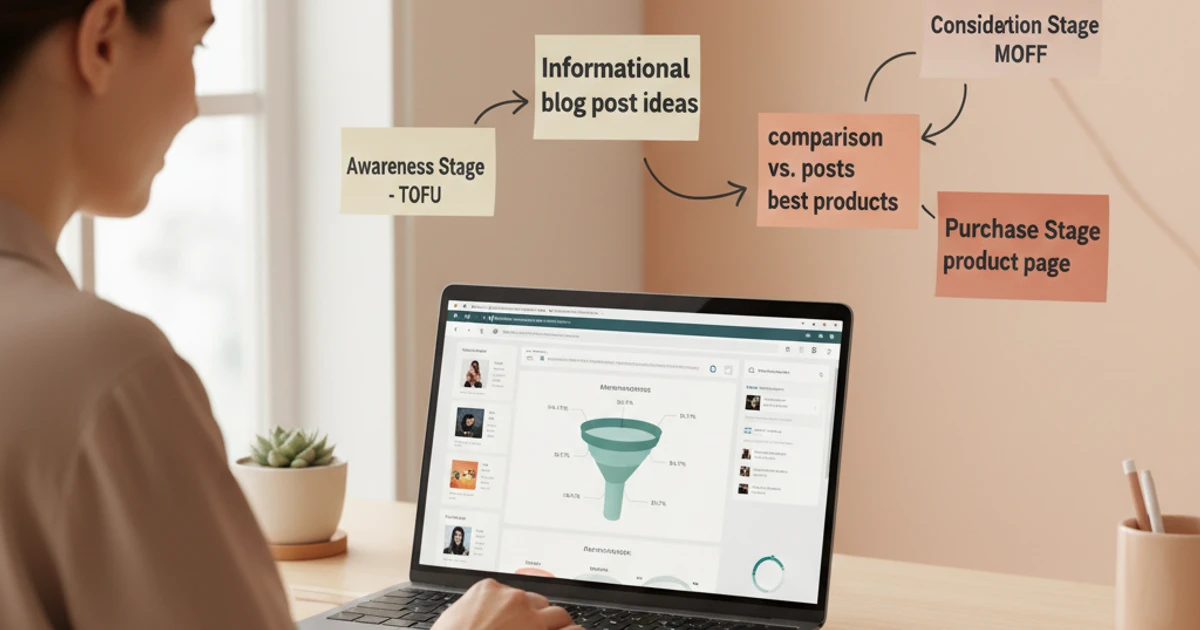
    • Dual Content Modes: Conversational Mode for fast blog posts and Authoritative Mode for long-form, SEO-rich articles.
    • EEAT and Entity Scoring: Incorporates Experience, Expertise, Authoritativeness, and Trustworthiness scoring aligned with Google’s quality guidelines.
    • AI and GEO Visibility Tracking: Tracks brand visibility across traditional SEO and GEO (Generative Engine Optimization), including LLM semantic optimization.
    • Seamless Integrations: Integrates with existing tools and platforms to maximize your current tech stack.
    • Accessible Pricing: Free trial and basic plan starting at $14/month for individuals.

    Best For

    SEO professionals, content marketers, and agencies seeking a single integrated platform covering every stage of the SEO workflow—from research and clustering to content production, optimization, and AI visibility monitoring.

    Pros and Cons

    • Pro: Comprehensive end-to-end workflow consolidating research, writing, optimization, and AI visibility in one platform.
    • Pro: Highly affordable compared to tools like Ahrefs or SEMrush.
    • Pro: User-friendly interface simplifying complex SEO tasks.
    • Pro: Dual content modes accommodate both fast turnaround and deep long-form publishing workflows.
    • Con: Lower-tier plans have some feature limitations and restricted credit allocation.
    • Con: Best value unlocked at higher-tier plans.

    Rating: 9.5/10


    2. Frase.io — Best for Content-Led Full-Pipeline SEO

    2. Frase.io — Best for Content-Led Full-Pipeline SEO

    2. Frase.io — Best for Content-Led Full-Pipeline SEO

    Frase.io is an AI-powered SEO content platform managing the entire workflow from SERP research and content briefs to AI writing, GEO tracking, and site audits. It holds a 4.8/5 rating on both G2 and Capterra from over 500 reviews.

    Key Features

    • 90-Second Content Briefs: Generates AI content briefs, real-time SEO scoring (0–100), and built-in AI writer.
    • GEO Score Tracking: Monitors content visibility across major AI answer engines. Now included on all paid plans.
    • Full AI Agent: All plans include a Full AI Agent with 80+ skills.
    • Site Audits: Delivers impact-weighted audit recommendations for improving search rankings.
    • Internal Link Suggestions: Provides highly accurate internal-link suggestions, reducing manual linking efforts.

    Best For

    SEO professionals, content marketers, and writers seeking to streamline the content process from research through auditing. Starter plan: $49/month; Professional: $129/month; Scale: $299/month. Annual billing offers 20% discount. 7-day free trial requires no credit card.

    Pros and Cons

    • Pro: GEO Score tracking included on all paid plans.
    • Pro: Most complete content workflow tool covering research through auditing.
    • Pro: 7-day free trial with no credit card required.
    • Con: No permanent free tier.
    • Con: Rank-Ready document overages cost $3.50 each.

    Rating: 8.8/10


    3. Gumloop — Best for Custom Agentic SEO Workflow Building

    3. Gumloop — Best for Custom Agentic SEO Workflow Building

    3. Gumloop — Best for Custom Agentic SEO Workflow Building

    Gumloop is a no-code AI workflow automation platform for building, deploying, and scaling multi-step AI pipelines without writing code. This Y Combinator–backed tool automates complex processes involving AI models, API calls, and business logic.

    Key Features

    • Visual Workflow Builder: Sub-agents architecture allows multiple AI agents to run in parallel, each handling different tasks simultaneously.
    • SEO Workflow Templates: Pre-built automation templates for web scraping, document processing, SEO, and marketing workflows.
    • Multi-LLM Support: Comprehensive support for OpenAI, Anthropic, and Google.
    • 200+ Integrations: Direct connection of 200+ tools including Google Analytics, Google Search Console, and Slack.
    • Gummie AI Copilot: Integrated chatbot assisting in fixing existing workflows or building new ones.
    • Free Plan: Includes 2,000 credits, 2 concurrent flow runs, and forum support. Paid plans start at $37/month.

    Best For

    Technically inclined SEO professionals and marketing engineers seeking fully custom agentic SEO workflows, acting as a Zapier-ChatGPT hybrid to add an AI layer to workflows.

    Pros and Cons

    • Pro: Genuinely free plan available.
    • Pro: Highly flexible for diverse SEO workflows.
    • Pro: Strong UI/UX widely praised in the no-code automation landscape.
    • Con: Non-technical users may find logic-based setup intimidating.
    • Con: Limited native app connections compared to Zapier or Make.

    Rating: 8.4/10


    4. Search Atlas (OTTO) — Best for Agency-Scale SEO Automation

    4. Search Atlas (OTTO) — Best for Agency-Scale SEO Automation

    4. Search Atlas (OTTO) — Best for Agency-Scale SEO Automation

    Search Atlas is an AI-powered SEO platform centered on its OTTO SEO agent, integrating an all-in-one SEO toolkit, conversational SEO via Atlas Brain, LLM Visibility tracking, and Google Business Profile management through GBP Galactic.

    Key Features

    • OTTO SEO Agent: Automatically implements schema markup, internal links, and meta tag fixes beyond mere recommendations.
    • Content Genius AI: AI-powered content creation optimized for search visibility.
    • LLM Visibility Tracking: Monitors brand appearance in ChatGPT, Gemini, and other AI models.
    • 60+ Tool Suite: All tiers include OTTO automation, local SEO tools, and comprehensive suite.
    • MCP Server: Official MCP server enables your own agents to run OTTO, content, and PR through one endpoint.
    • Pricing: Starter $99/mo, Growth $199/mo, Pro $399/mo, Agency $999/mo. 7-day free trial available.

    Best For

    Agencies and growth-stage brands requiring SEO changes to be implemented, not just recommended. Purpose-built for managing SEO across diverse client rosters with white-label reporting and multiple client seats.

    Pros and Cons

    • Pro: OTTO auto-deploys on-page fixes.
    • Pro: Broad platform replacing multiple standalone tools.
    • Pro: Strong agency white-label features at higher tiers.
    • Con: No permanent free tier, only 7-day trial.
    • Con: Comprehensive nature may create learning curve.

    Rating: 8.3/10


    5. Writesonic — Best for AI Writing + GEO Search Visibility

    5. Writesonic — Best for AI Writing + GEO Search Visibility

    5. Writesonic — Best for AI Writing + GEO Search Visibility

    Writesonic is an AI-powered GEO and SEO platform enhancing brand visibility across AI answer engines like ChatGPT, Perplexity, Gemini, and Google AI Overviews. By 2026, it consolidates SEO, content, and GEO layers with AI agents and an Action Center prioritizing remediation tasks based on visibility impact.

    Key Features

    • AI Article Writer: Long-form SEO content generation with citations.
    • SEO AI Agent: AI Article Writer 6.0, SEO AI Agent, and Chatsonic access even on free plan.
    • GEO Tracking: Tracks AI visibility across 10 platforms including ChatGPT, Perplexity, and Google AI.
    • Agentic Workflows: Efficient content pipelines for repeatable idea-to-launch execution.
    • Site Audits: Automated site audits with prioritized recommendations.
    • Free Plan: Limited access with GPT-4o mini, Claude Haiku, and 70+ templates. Paid plans from $39/month annually.

    Best For

    Content and SEO teams seeking combined content production and GEO monitoring within a single platform, particularly strong for tracking AI search visibility.

    Pros and Cons

    • Pro: Genuine free plan available.
    • Pro: GEO tracking across 10 AI platforms is standout feature.
    • Pro: Consolidates writing, SEO, and GEO monitoring.
    • Con: Agentic workflows still in trial mode across all plans.
    • Con: Full GEO features unlocked only at higher-tier plans.

    Rating: 8.1/10


    6. n8n — Best for Developer-Driven Free SEO Automation

    6. n8n — Best for Developer-Driven Free SEO Automation

    6. n8n — Best for Developer-Driven Free SEO Automation

    n8n is an open-source workflow automation tool for automating repetitive SEO tasks without significant reliance on paid solutions. It offers 400+ integrations and native AI agents.

    Key Features

    • Truly Free Self-Hosted Version: Community Edition is free forever with unlimited executions when self-hosted.
    • 400+ Integrations: Connects with DataForSEO, Google Search Console, Ahrefs, and any SEO API.
    • AI Agent Builder: Community Edition includes AI agent builder, integrations, and custom code support.
    • SEO Workflow Templates: 500+ community-contributed workflows for marketing, data synchronization, and AI/ML.
    • Execution Efficiency: A 10-step workflow run 1,000 times results in 1,000 n8n executions versus 10,000 Zapier tasks.
    • Cloud Option: Managed setup available from $20/month.

    Best For

    Technically proficient SEO teams, developers, and agencies seeking maximum control over free SEO automation and avoiding vendor lock-in.

    Pros and Cons

    • Pro: Self-hosted version completely free with unlimited executions.
    • Pro: Maximum flexibility for building virtually any SEO workflow.
    • Pro: Large community template library accelerates setup.
    • Con: Requires technical knowledge for self-hosting and maintenance.
    • Con: Lacks built-in SEO intelligence; requires connection to external data sources.

    Rating: 7.9/10


    7. NeuralText — Best for Keyword Clustering and Content Briefs

    7. NeuralText — Best for Keyword Clustering and Data-Driven Content Briefs

    7. NeuralText — Best for Keyword Clustering and Data-Driven Content Briefs

    NeuralText is an AI-powered content creation platform for marketers, SEO professionals, and writers, streamlining the content workflow from keyword research to SEO-optimized writing.

    Key Features

    • SERP Analysis: In-depth analysis of top 20 ranking URLs extracting headings, semantic topics, NLP entities, and People Also Ask questions.
    • Keyword Clustering: Intelligently groups keywords by user intent, revealing opportunities for content architecture.
    • Content Brief Generator: Auto-generates data-driven briefs with word counts, headings, key terms, and questions, exportable as PDF or Google Docs.
    • Google Search Console Integration: Direct integration for informed content strategy decisions.
    • AI Writing Assistant: Autocompletion and paraphrasing tools accelerate drafting.
    • Starter Plan: $19/month includes 100,000 AI words, 5 content briefs, 2,000 keyword suggestions, 1 GSC property. 5-day free trial available.

    Best For

    Solo bloggers with SEO focus and content marketing agencies managing multiple client briefs at scale. Keyword clustering at the $19/month price point offers exceptional value.

    Pros and Cons

    • Pro: Best value-for-money SEO content tool; keyword clustering is game-changing at this price.
    • Pro: 5-day free trial with no credit card required.
    • Pro: Efficiently combines keyword research, content brief generation, and AI writing.
    • Con: AI-generated content requires editing and refinement.
    • Con: Limited agentic automation compared to specialized workflow platforms.

    Rating: 7.7/10


    8. Junia AI — Best for Long-Form SEO Content Generation

    8. Junia AI — Best for Long-Form SEO Content Generation

    8. Junia AI — Best for Long-Form SEO Content Generation

    Junia AI is an AI-powered content platform generating SEO-optimized long-form articles, automating the workflow from research to optimization for Google rankings and AI tool citation.

    Key Features

    • Long-Form Article Generation: Comprehensive articles from single keyword input using competitor-based outlines.
    • Automated SEO Optimization: Technical SEO, keyword research, semantic analysis, meta descriptions, and internal linking.
    • AI Image Generation: Built-in image generation alongside articles.
    • WordPress Integration: Direct publishing to WordPress.
    • Multilingual Support: Consistent results in 50+ languages via GPT-4 integration.
    • Free Plan: Basic AI writer and image features with limited word count. Paid plans from $19/month.

    Best For

    Bloggers, content marketers, and niche site publishers requiring efficient SEO-optimized long-form content production. Complete SEO content system, not just text generation.

    Pros and Cons

    • Pro: Genuine free plan for testing long-form AI content generation.
    • Pro: All-in-one content generation with built-in SEO optimization.
    • Pro: Multilingual support for global strategies.
    • Con: Content requires human review before publishing.
    • Con: Support responsiveness flagged by some users.

    Rating: 7.5/10


    9. MarketMuse — Best for Content Strategy and Topic Modeling

    9. MarketMuse — Best for AI-Driven Content Strategy and Topic Modeling

    9. MarketMuse — Best for AI-Driven Content Strategy and Topic Modeling

    MarketMuse is an AI-powered content strategy and optimization platform helping teams plan smarter and write more complete pages by analyzing website content and live search results.

    Key Features

    • Topic Modeling: NLP and machine learning analyze content quality, identify topic clusters, and generate detailed briefs.
    • Site Inventory: Crawls your website, recommending pages for updates or rewrites based on performance and relevance.
    • Personalized Difficulty Scoring: Adjusts keyword difficulty by factoring in your site’s topical authority for realistic ranking potential.
    • Content Plans: Generates topic models, strategic plans, comprehensive briefs, and in-editor optimization guidance.
    • First Draft AI: Generates initial content drafts from prepared briefs.
    • Free Tier: 10 content queries per month and limited keyword research. Paid plans from $99/month.

    Best For

    Mid-sized agencies publishing 30+ briefs per month requiring advanced content strategy and topical authority planning. Free tier valuable for platform evaluation.

    Pros and Cons

    • Pro: Unmatched topical authority planning and content gap analysis.
    • Pro: Free tier enables platform evaluation without credit card.
    • Pro: Effective for refreshing and strategically expanding existing content.
    • Con: Significantly higher pricing than competing tools.
    • Con: Focuses on planning and strategy, requiring execution in other tools.

    Rating: 7.4/10


    10. Alli AI — Best for Technical SEO Automation at Scale

    10. Alli AI — Best for Technical SEO Automation at Scale

    10. Alli AI — Best for Technical SEO Automation at Scale

    Alli AI is a top choice for technical SEO automation at scale, optimizing sites for visibility across 50+ AI crawlers including ChatGPT, Claude, and Gemini.

    Key Features

    • Automated On-Page Edits: Automates complex technical SEO tasks, allowing instant bulk changes across thousands of pages.
    • Code Snippet Deployment: Simple encrypted code snippet for instant site-wide optimization rules.
    • AI Crawler Optimization: Ensures content visibility across 50+ AI crawlers.
    • Schema Markup Generator: Automatically generates structured data enhancing SERP appearance.
    • Full SEO Suite: Comprehensive suite integrating keyword research, ranking tracking, site audits, and backlink building.
    • Pricing: 10-day free trial across all plans. Business plan starts at $249/month.

    Best For

    Teams managing large websites (500+ pages) lacking dedicated technical staff. Eliminates developer dependency for complex on-page and technical SEO tasks.

    Pros and Cons

    • Pro: Automates on-page SEO at unprecedented scale with direct implementation.
    • Pro: 10-day free trial across all plans.
    • Pro: Compatible with any CMS, preventing lock-in.
    • Con: High starting price less accessible for small businesses.
    • Con: Steep learning curve for users new to advanced AI SEO tools.

    Rating: 7.2/10


    Full Comparison: All 10 Best Free Agentic SEO Workflow Tools 2026

    Tool Free Tier Agentic Workflows AI/GEO Tracking Keyword Research Content Creation Technical SEO Starting Price
    Keywordly $14/mo
    Frase.io Trial only $39/mo
    Gumloop Via integrations Via integrations Via integrations $37/mo
    Search Atlas Trial only $99/mo
    Writesonic $39/mo
    n8n Via integrations Via integrations Via integrations Free/$20/mo
    NeuralText Trial only $19/mo
    Junia AI $19/mo
    MarketMuse $99/mo
    Alli AI Trial only $249/mo

    How to Choose the Right Agentic SEO Workflow Tool

    By Team Size

    Solo bloggers and freelancers: Start with Keywordly for affordable entry pricing, end-to-end workflow, and free trial. NeuralText’s Starter plan at $19/month is strong for budget-conscious individuals prioritizing keyword intelligence.

    Small marketing teams (2–10 people): Keywordly’s mid-tier plans covering the full workflow, or Frase.io if SERP-driven brief generation and GEO tracking are priorities. Gumloop works for teams with a technical member building custom workflows.

    Agencies and enterprise teams: Search Atlas for OTTO agent and white-label capabilities, or Alli AI for technical SEO automation across large site portfolios. MarketMuse adds deep strategic content planning for agencies running 30+ briefs per month.

    By Budget

    Zero budget: n8n’s self-hosted Community Edition, Gumloop’s free plan, MarketMuse’s free tier, and Junia AI’s free plan. Keywordly’s free trial is the best starting point for complete SEO workflow at low entry price from $14/month.

    Under $50/month: Keywordly ($14/mo), NeuralText ($19/mo), Junia AI ($19/mo), Gumloop ($37/mo), Frase.io ($39/mo), and Writesonic ($39/mo) deliver substantial value.

    $50–$200/month: Frase.io Professional, Search Atlas Starter, NeuralText Basic, and MarketMuse Optimize suit scaling teams.

    By Use Case

    Single tool covering all SEO stages? Choose Keywordly—integrated workflow from keyword clustering to AI visibility tracking.

    Prioritizing AI search visibility (GEO)? Keywordly, Frase.io, Writesonic, Search Atlas, and Alli AI all offer LLM/GEO tracking.

    Technical SEO at scale without developers? Alli AI and Search Atlas (OTTO) are specialized picks.

    Custom workflow automation? Gumloop and n8n offer maximum flexibility for bespoke automation. For additional buying guidance, see 8 best agentic AI tools I’m using in 2026 (free + paid).


    What Is an Agentic SEO Workflow Tool?

    An agentic SEO tool can research, write, optimize, and sometimes publish with limited human input. Unlike traditional SEO tools that assist and wait for instructions, agents pursue goals—they research, decide, act, and report. Agents require less human direction per task and sit one rung higher on the automation ladder. The category ranges from content workflow automation to technical SEO execution, link building, and AI search visibility monitoring. The best free agentic SEO workflow tools 2026 combine several capabilities into coherent platforms rather than isolated features. Thirty-four percent of enterprises now run at least one autonomous agent in production, and SEO audit agents deliver a median 11.4x ROI over manual work. For a more detailed primer, see What Is Agentic SEO? Definition + 5 Criteria (2026).

    Metric 2025 Baseline 2026 Status
    Enterprises using agentic AI 14% 34% run at least one autonomous agent in production
    SEO audit agent median ROI Unclear 11.4x the manual baseline
    Agentic AI market size ~$5B $7.6B (projected to $236B by 2034)
    IT leaders planning autonomous agents 93% within 2 years
    Agentic SEO accuracy (routine tasks) 82–90% for meta descriptions and title tags

    Conclusion: Which Agentic SEO Tool Should You Use in 2026?

    The 10 best free agentic SEO workflow tools for 2026 span from developer-first workflow builders to fully integrated content and visibility platforms. For most SEO professionals, content marketers, and agencies, the decision comes down to workflow completeness versus specialization.

    Keywordly is our top pick for a single, cohesive platform. It simplifies and scales SEO with agentic AI-powered content workflows—from keyword research and clustering to content creation, optimization, auditing, and AI visibility tracking. For teams wanting deep content-pipeline automation with built-in GEO tracking, Frase.io is the strongest alternative. For agencies needing on-page changes implemented automatically, Search Atlas (OTTO) is unmatched. For technically capable teams wanting free and unlimited SEO automation, n8n and Gumloop deliver exceptional value.


    Frequently Asked Questions

    What are the best free agentic SEO workflow tools in 2026?

    The best free agentic SEO workflow tools 2026 include Keywordly (top overall pick with free trial), Gumloop (free plan for custom workflows), n8n (fully free self-hosted automation), Junia AI (free plan for long-form content), and MarketMuse (free tier for content strategy). Each covers different workflow stages, so the best choice depends on whether you prioritize content creation, technical SEO, or custom automation.

    What is the difference between an AI SEO tool and an agentic SEO tool?

    Traditional AI SEO tools assist and wait for instructions. Agentic SEO tools pursue goals—they research, decide, act, and report—requiring less human direction per task. Agentic tools run multi-step workflows like auditing, identifying content gaps, generating drafts, and monitoring AI search visibility with minimal manual prompting at each stage.

    How do I use the best free agentic SEO workflow tools without a big budget?

    Start with tools offering genuine free tiers: Gumloop’s free plan, n8n’s self-hosted Community Edition, Junia AI’s free plan, and MarketMuse’s free tier. Keywordly’s free trial is the best starting point for complete SEO workflow at $14/month for individuals. Combining n8n (free automation) with a free-tier content tool builds a capable stack at near-zero cost.

    Can agentic SEO tools replace human SEO professionals?

    AI replaces manual execution within SEO, not strategy. Agentic tools excel at routine optimization—achieving 82–90% accuracy for meta descriptions and title tags—but complex strategic decisions and brand voice alignment remain human responsibilities. The role is shifting from doing the work to directing agents that do it.

    What should I look for in a free agentic SEO workflow tool?

    Evaluate tools on automation depth (how many pipeline stages covered), free-tier usability (what you can actually do without paying), AI search visibility tracking (GEO/LLM monitoring), integration with existing tools, and pricing transparency. Tools that gate critical features behind enterprise tiers with opaque pricing are harder to evaluate and budget for.

    Do agentic SEO tools track visibility in ChatGPT and other AI platforms?

    Several best free agentic SEO workflow tools 2026 include AI visibility tracking (GEO). Keywordly, Frase.io, Writesonic, Search Atlas, and Alli AI all offer LLM visibility monitoring. In 2026, content optimization includes a third dimension: optimizing for AI citation across answer engines—making this feature increasingly important.

    Is n8n really free for SEO automation?

    Yes—the self-hosted version of n8n is free forever with no execution limits when run on your own server. The Community Edition is free to use forever. The trade-off is responsibility for server setup, security, and maintenance. For managed experience, n8n Cloud plans start from $20/month.

    How does Keywordly differ from other SEO workflow tools?

    Keywordly is differentiated by integrated approach to the full SEO content lifecycle. While many tools specialize in single stages, Keywordly covers keyword clustering, topical mapping, dual content modes (conversational and authoritative), EEAT and entity scoring, and AI visibility tracking in one platform. It offers one of the most accessible entry prices, starting at $14/month for individuals, making professional-grade agentic SEO capabilities available without enterprise-level investment.


    Methodology: This article evaluated 10 agentic SEO workflow tools based on six weighted criteria: automation depth (30%), free-tier value (20%), AI search visibility coverage (20%), workflow integration capability (15%), ease of use (10%), and pricing transparency (5%). Pricing was independently verified from official vendor websites as of August 2026. Free plan availability was confirmed at publication. Always verify current pricing directly with vendors before purchasing, as plans and features change frequently.

  • 10 Best Free Agentic SEO Workflow Tools for 2026

    10 Best Free Agentic SEO Workflow Tools for 2026

    best free agentic SEO workflow tools 2026 | Last Updated: August 2026 | Editorial Team | 10 tools tested

    TL;DR: Best Free Agentic SEO Workflow Tools 2026 at a Glance

    Here are the top picks from our hands-on evaluation of the best free agentic SEO workflow tools 2026, assessed across automation depth, free-tier value, and workflow coverage.

    Rank Tool Best For Starting Price Rating
    1 Keywordly All-in-one agentic SEO workflow Free trial; paid from $14/mo 9.5/10
    2 Frase.io Content-led SEO full pipeline 7-day free trial; from $39/mo 8.8/10
    3 Gumloop Custom agentic workflow builder Free plan; paid from $37/mo 8.4/10
    4 Search Atlas (OTTO) Agency-scale SEO automation 7-day free trial; from $99/mo 8.3/10
    5 Writesonic AI writing + GEO visibility Free plan; paid from $39/mo 8.1/10
    6 n8n Developer-driven SEO automation Free (self-hosted); Cloud from $20/mo 7.9/10
    7 NeuralText Keyword clustering + content briefs 5-day free trial; from $19/mo 7.7/10
    8 Junia AI Long-form SEO content generation Free plan; paid from $19/mo 7.5/10
    9 MarketMuse Content strategy and topic modeling Free tier; paid from $99/mo 7.4/10
    10 Alli AI Technical SEO automation at scale 10-day free trial; from $249/mo 7.2/10

    #1 Pick: Keywordly combines keyword research, content clustering, AI writing, optimization, auditing, and AI search visibility tracking in a single integrated platform at an accessible price point.


    Why You Need Agentic SEO Workflow Tools in 2026

    SEO in 2026 is no longer a series of disconnected manual tasks. Agentic SEO applies AI agents to workflows so they can act, adapt, and recover on your behalf, not just generate text. Gartner predicts 40% of enterprise applications will include task-specific AI agents by the end of 2026, up from less than 5% in 2025. The agentic AI market is on track to grow from $7.6 billion in 2026 to $236 billion by 2034. Four in ten marketing agencies already run at least one AI agent in production. The single highest-ROI agent workflow? An SEO audit agent returning a median 11.4x over the manual baseline. For supporting market data, see 8 best agentic AI tools I’m using in 2026 (free + paid).


    How We Evaluated These Tools

    Criterion Weight What We Measured
    Automation Depth 30% How many pipeline stages are automated end-to-end
    Free Tier Value 20% Usability and feature access without paying
    AI Search Visibility 20% GEO/LLM tracking for ChatGPT, Perplexity, Gemini
    Workflow Integration 15% Connectivity with existing SEO tools and CMS
    Ease of Use 10% Onboarding speed and interface clarity
    Pricing Transparency 5% Clear plan structures with no hidden costs

    For industry-standard evaluation frameworks, see The 2026 Guide to Agentic SEO Workflows.


    1. Keywordly — Best for All-in-One Agentic SEO Workflow

    1. Keywordly — Best for All-in-One Agentic SEO Workflow

    1. Keywordly — Best for All-in-One Agentic SEO Workflow

    Keywordly is an all-in-one SEO content workflow platform designed to streamline content creation, optimization, research, and auditing with advanced AI and automation. It enhances visibility on both traditional search engines and AI-driven platforms such as ChatGPT.

    Key Features

    • Automated SEO Workflows: Agentic AI-powered content workflow from keyword research and clustering to content creation, optimization, auditing, and AI visibility tracking.
    • Advanced Keyword Clustering: Clusters keywords based on SERP overlap and user intent, uncovering topical opportunities.
    • Topical Mapping: Builds topical authority maps to structure content clusters and dominate competitive niches.

    • Dual Content Modes: Conversational Mode for fast blog posts and Authoritative Mode for long-form, SEO-rich articles.

    • EEAT and Entity Scoring: Incorporates Experience, Expertise, Authoritativeness, and Trustworthiness scoring aligned with Google’s quality guidelines.
    • AI and GEO Visibility Tracking: Tracks brand visibility across traditional SEO and GEO (Generative Engine Optimization), including LLM semantic optimization.

    • Seamless Integrations: Integrates with existing tools and platforms to maximize your current tech stack.
    • Accessible Pricing: Free trial and basic plan starting at $14/month for individuals.

    Best For

    SEO professionals, content marketers, and agencies seeking a single integrated platform covering every stage of the SEO workflow—from research and clustering to content production, optimization, and AI visibility monitoring.

    Pros and Cons

    • Pro: Comprehensive end-to-end workflow consolidating research, writing, optimization, and AI visibility in one platform.
    • Pro: Highly affordable compared to tools like Ahrefs or SEMrush.
    • Pro: User-friendly interface simplifying complex SEO tasks.
    • Pro: Dual content modes accommodate both fast turnaround and deep long-form publishing workflows.
    • Con: Lower-tier plans have some feature limitations and restricted credit allocation.
    • Con: Best value unlocked at higher-tier plans.

    Rating: 9.5/10


    2. Frase.io — Best for Content-Led Full-Pipeline SEO

    2. Frase.io — Best for Content-Led Full-Pipeline SEO

    2. Frase.io — Best for Content-Led Full-Pipeline SEO

    Frase.io is an AI-powered SEO content platform managing the entire workflow from SERP research and content briefs to AI writing, GEO tracking, and site audits. It holds a 4.8/5 rating on both G2 and Capterra from over 500 reviews.

    Key Features

    • 90-Second Content Briefs: Generates AI content briefs, real-time SEO scoring (0–100), and built-in AI writer.
    • GEO Score Tracking: Monitors content visibility across major AI answer engines. Now included on all paid plans.
    • Full AI Agent: All plans include a Full AI Agent with 80+ skills.
    • Site Audits: Delivers impact-weighted audit recommendations for improving search rankings.
    • Internal Link Suggestions: Provides highly accurate internal-link suggestions, reducing manual linking efforts.

    Best For

    SEO professionals, content marketers, and writers seeking to streamline the content process from research through auditing. Starter plan: $49/month; Professional: $129/month; Scale: $299/month. Annual billing offers 20% discount. 7-day free trial requires no credit card.

    Pros and Cons

    • Pro: GEO Score tracking included on all paid plans.
    • Pro: Most complete content workflow tool covering research through auditing.
    • Pro: 7-day free trial with no credit card required.
    • Con: No permanent free tier.
    • Con: Rank-Ready document overages cost $3.50 each.

    Rating: 8.8/10


    3. Gumloop — Best for Custom Agentic SEO Workflow Building

    3. Gumloop — Best for Custom Agentic SEO Workflow Building

    3. Gumloop — Best for Custom Agentic SEO Workflow Building

    Gumloop is a no-code AI workflow automation platform for building, deploying, and scaling multi-step AI pipelines without writing code. This Y Combinator–backed tool automates complex processes involving AI models, API calls, and business logic.

    Key Features

    • Visual Workflow Builder: Sub-agents architecture allows multiple AI agents to run in parallel, each handling different tasks simultaneously.
    • SEO Workflow Templates: Pre-built automation templates for web scraping, document processing, SEO, and marketing workflows.
    • Multi-LLM Support: Comprehensive support for OpenAI, Anthropic, and Google.
    • 200+ Integrations: Direct connection of 200+ tools including Google Analytics, Google Search Console, and Slack.
    • Gummie AI Copilot: Integrated chatbot assisting in fixing existing workflows or building new ones.
    • Free Plan: Includes 2,000 credits, 2 concurrent flow runs, and forum support. Paid plans start at $37/month.

    Best For

    Technically inclined SEO professionals and marketing engineers seeking fully custom agentic SEO workflows, acting as a Zapier-ChatGPT hybrid to add an AI layer to workflows.

    Pros and Cons

    • Pro: Genuinely free plan available.
    • Pro: Highly flexible for diverse SEO workflows.
    • Pro: Strong UI/UX widely praised in the no-code automation landscape.
    • Con: Non-technical users may find logic-based setup intimidating.
    • Con: Limited native app connections compared to Zapier or Make.

    Rating: 8.4/10


    4. Search Atlas (OTTO) — Best for Agency-Scale SEO Automation

    4. Search Atlas (OTTO) — Best for Agency-Scale SEO Automation

    4. Search Atlas (OTTO) — Best for Agency-Scale SEO Automation

    Search Atlas is an AI-powered SEO platform centered on its OTTO SEO agent, integrating an all-in-one SEO toolkit, conversational SEO via Atlas Brain, LLM Visibility tracking, and Google Business Profile management through GBP Galactic.

    Key Features

    • OTTO SEO Agent: Automatically implements schema markup, internal links, and meta tag fixes beyond mere recommendations.
    • Content Genius AI: AI-powered content creation optimized for search visibility.
    • LLM Visibility Tracking: Monitors brand appearance in ChatGPT, Gemini, and other AI models.
    • 60+ Tool Suite: All tiers include OTTO automation, local SEO tools, and comprehensive suite.
    • MCP Server: Official MCP server enables your own agents to run OTTO, content, and PR through one endpoint.
    • Pricing: Starter $99/mo, Growth $199/mo, Pro $399/mo, Agency $999/mo. 7-day free trial available.

    Best For

    Agencies and growth-stage brands requiring SEO changes to be implemented, not just recommended. Purpose-built for managing SEO across diverse client rosters with white-label reporting and multiple client seats.

    Pros and Cons

    • Pro: OTTO auto-deploys on-page fixes.
    • Pro: Broad platform replacing multiple standalone tools.
    • Pro: Strong agency white-label features at higher tiers.
    • Con: No permanent free tier, only 7-day trial.
    • Con: Comprehensive nature may create learning curve.

    Rating: 8.3/10


    5. Writesonic — Best for AI Writing + GEO Search Visibility

    5. Writesonic — Best for AI Writing + GEO Search Visibility

    5. Writesonic — Best for AI Writing + GEO Search Visibility

    Writesonic is an AI-powered GEO and SEO platform enhancing brand visibility across AI answer engines like ChatGPT, Perplexity, Gemini, and Google AI Overviews. By 2026, it consolidates SEO, content, and GEO layers with AI agents and an Action Center prioritizing remediation tasks based on visibility impact.

    Key Features

    • AI Article Writer: Long-form SEO content generation with citations.
    • SEO AI Agent: AI Article Writer 6.0, SEO AI Agent, and Chatsonic access even on free plan.
    • GEO Tracking: Tracks AI visibility across 10 platforms including ChatGPT, Perplexity, and Google AI.
    • Agentic Workflows: Efficient content pipelines for repeatable idea-to-launch execution.
    • Site Audits: Automated site audits with prioritized recommendations.
    • Free Plan: Limited access with GPT-4o mini, Claude Haiku, and 70+ templates. Paid plans from $39/month annually.

    Best For

    Content and SEO teams seeking combined content production and GEO monitoring within a single platform, particularly strong for tracking AI search visibility.

    Pros and Cons

    • Pro: Genuine free plan available.
    • Pro: GEO tracking across 10 AI platforms is standout feature.
    • Pro: Consolidates writing, SEO, and GEO monitoring.
    • Con: Agentic workflows still in trial mode across all plans.
    • Con: Full GEO features unlocked only at higher-tier plans.

    Rating: 8.1/10


    6. n8n — Best for Developer-Driven Free SEO Automation

    6. n8n — Best for Developer-Driven Free SEO Automation

    6. n8n — Best for Developer-Driven Free SEO Automation

    n8n is an open-source workflow automation tool for automating repetitive SEO tasks without significant reliance on paid solutions. It offers 400+ integrations and native AI agents.

    Key Features

    • Truly Free Self-Hosted Version: Community Edition is free forever with unlimited executions when self-hosted.
    • 400+ Integrations: Connects with DataForSEO, Google Search Console, Ahrefs, and any SEO API.
    • AI Agent Builder: Community Edition includes AI agent builder, integrations, and custom code support.
    • SEO Workflow Templates: 500+ community-contributed workflows for marketing, data synchronization, and AI/ML.
    • Execution Efficiency: A 10-step workflow run 1,000 times results in 1,000 n8n executions versus 10,000 Zapier tasks.
    • Cloud Option: Managed setup available from $20/month.

    Best For

    Technically proficient SEO teams, developers, and agencies seeking maximum control over free SEO automation and avoiding vendor lock-in.

    Pros and Cons

    • Pro: Self-hosted version completely free with unlimited executions.
    • Pro: Maximum flexibility for building virtually any SEO workflow.
    • Pro: Large community template library accelerates setup.
    • Con: Requires technical knowledge for self-hosting and maintenance.
    • Con: Lacks built-in SEO intelligence; requires connection to external data sources.

    Rating: 7.9/10


    7. NeuralText — Best for Keyword Clustering and Content Briefs

    7. NeuralText — Best for Keyword Clustering and Data-Driven Content Briefs

    7. NeuralText — Best for Keyword Clustering and Data-Driven Content Briefs

    NeuralText is an AI-powered content creation platform for marketers, SEO professionals, and writers, streamlining the content workflow from keyword research to SEO-optimized writing.

    Key Features

    • SERP Analysis: In-depth analysis of top 20 ranking URLs extracting headings, semantic topics, NLP entities, and People Also Ask questions.
    • Keyword Clustering: Intelligently groups keywords by user intent, revealing opportunities for content architecture.
    • Content Brief Generator: Auto-generates data-driven briefs with word counts, headings, key terms, and questions, exportable as PDF or Google Docs.
    • Google Search Console Integration: Direct integration for informed content strategy decisions.
    • AI Writing Assistant: Autocompletion and paraphrasing tools accelerate drafting.
    • Starter Plan: $19/month includes 100,000 AI words, 5 content briefs, 2,000 keyword suggestions, 1 GSC property. 5-day free trial available.

    Best For

    Solo bloggers with SEO focus and content marketing agencies managing multiple client briefs at scale. Keyword clustering at the $19/month price point offers exceptional value.

    Pros and Cons

    • Pro: Best value-for-money SEO content tool; keyword clustering is game-changing at this price.
    • Pro: 5-day free trial with no credit card required.
    • Pro: Efficiently combines keyword research, content brief generation, and AI writing.
    • Con: AI-generated content requires editing and refinement.
    • Con: Limited agentic automation compared to specialized workflow platforms.

    Rating: 7.7/10


    8. Junia AI — Best for Long-Form SEO Content Generation

    8. Junia AI — Best for Long-Form SEO Content Generation

    8. Junia AI — Best for Long-Form SEO Content Generation

    Junia AI is an AI-powered content platform generating SEO-optimized long-form articles, automating the workflow from research to optimization for Google rankings and AI tool citation.

    Key Features

    • Long-Form Article Generation: Comprehensive articles from single keyword input using competitor-based outlines.
    • Automated SEO Optimization: Technical SEO, keyword research, semantic analysis, meta descriptions, and internal linking.
    • AI Image Generation: Built-in image generation alongside articles.
    • WordPress Integration: Direct publishing to WordPress.
    • Multilingual Support: Consistent results in 50+ languages via GPT-4 integration.
    • Free Plan: Basic AI writer and image features with limited word count. Paid plans from $19/month.

    Best For

    Bloggers, content marketers, and niche site publishers requiring efficient SEO-optimized long-form content production. Complete SEO content system, not just text generation.

    Pros and Cons

    • Pro: Genuine free plan for testing long-form AI content generation.
    • Pro: All-in-one content generation with built-in SEO optimization.
    • Pro: Multilingual support for global strategies.
    • Con: Content requires human review before publishing.
    • Con: Support responsiveness flagged by some users.

    Rating: 7.5/10


    9. MarketMuse — Best for Content Strategy and Topic Modeling

    9. MarketMuse — Best for AI-Driven Content Strategy and Topic Modeling

    9. MarketMuse — Best for AI-Driven Content Strategy and Topic Modeling

    MarketMuse is an AI-powered content strategy and optimization platform helping teams plan smarter and write more complete pages by analyzing website content and live search results.

    Key Features

    • Topic Modeling: NLP and machine learning analyze content quality, identify topic clusters, and generate detailed briefs.
    • Site Inventory: Crawls your website, recommending pages for updates or rewrites based on performance and relevance.
    • Personalized Difficulty Scoring: Adjusts keyword difficulty by factoring in your site’s topical authority for realistic ranking potential.
    • Content Plans: Generates topic models, strategic plans, comprehensive briefs, and in-editor optimization guidance.
    • First Draft AI: Generates initial content drafts from prepared briefs.
    • Free Tier: 10 content queries per month and limited keyword research. Paid plans from $99/month.

    Best For

    Mid-sized agencies publishing 30+ briefs per month requiring advanced content strategy and topical authority planning. Free tier valuable for platform evaluation.

    Pros and Cons

    • Pro: Unmatched topical authority planning and content gap analysis.
    • Pro: Free tier enables platform evaluation without credit card.
    • Pro: Effective for refreshing and strategically expanding existing content.
    • Con: Significantly higher pricing than competing tools.
    • Con: Focuses on planning and strategy, requiring execution in other tools.

    Rating: 7.4/10


    10. Alli AI — Best for Technical SEO Automation at Scale

    10. Alli AI — Best for Technical SEO Automation at Scale

    10. Alli AI — Best for Technical SEO Automation at Scale

    Alli AI is a top choice for technical SEO automation at scale, optimizing sites for visibility across 50+ AI crawlers including ChatGPT, Claude, and Gemini.

    Key Features

    • Automated On-Page Edits: Automates complex technical SEO tasks, allowing instant bulk changes across thousands of pages.
    • Code Snippet Deployment: Simple encrypted code snippet for instant site-wide optimization rules.
    • AI Crawler Optimization: Ensures content visibility across 50+ AI crawlers.
    • Schema Markup Generator: Automatically generates structured data enhancing SERP appearance.
    • Full SEO Suite: Comprehensive suite integrating keyword research, ranking tracking, site audits, and backlink building.
    • Pricing: 10-day free trial across all plans. Business plan starts at $249/month.

    Best For

    Teams managing large websites (500+ pages) lacking dedicated technical staff. Eliminates developer dependency for complex on-page and technical SEO tasks.

    Pros and Cons

    • Pro: Automates on-page SEO at unprecedented scale with direct implementation.
    • Pro: 10-day free trial across all plans.
    • Pro: Compatible with any CMS, preventing lock-in.
    • Con: High starting price less accessible for small businesses.
    • Con: Steep learning curve for users new to advanced AI SEO tools.

    Rating: 7.2/10


    Full Comparison: All 10 Best Free Agentic SEO Workflow Tools 2026

    Tool Free Tier Agentic Workflows AI/GEO Tracking Keyword Research Content Creation Technical SEO Starting Price
    Keywordly $14/mo
    Frase.io Trial only $39/mo
    Gumloop Via integrations Via integrations Via integrations $37/mo
    Search Atlas Trial only $99/mo
    Writesonic $39/mo
    n8n Via integrations Via integrations Via integrations Free/$20/mo
    NeuralText Trial only $19/mo
    Junia AI $19/mo
    MarketMuse $99/mo
    Alli AI Trial only $249/mo

    How to Choose the Right Agentic SEO Workflow Tool

    By Team Size

    Solo bloggers and freelancers: Start with Keywordly for affordable entry pricing, end-to-end workflow, and free trial. NeuralText’s Starter plan at $19/month is strong for budget-conscious individuals prioritizing keyword intelligence.

    Small marketing teams (2–10 people): Keywordly’s mid-tier plans covering the full workflow, or Frase.io if SERP-driven brief generation and GEO tracking are priorities. Gumloop works for teams with a technical member building custom workflows.

    Agencies and enterprise teams: Search Atlas for OTTO agent and white-label capabilities, or Alli AI for technical SEO automation across large site portfolios. MarketMuse adds deep strategic content planning for agencies running 30+ briefs per month.

    By Budget

    Zero budget: n8n’s self-hosted Community Edition, Gumloop’s free plan, MarketMuse’s free tier, and Junia AI’s free plan. Keywordly’s free trial is the best starting point for complete SEO workflow at low entry price from $14/month.

    Under $50/month: Keywordly ($14/mo), NeuralText ($19/mo), Junia AI ($19/mo), Gumloop ($37/mo), Frase.io ($39/mo), and Writesonic ($39/mo) deliver substantial value.

    $50–$200/month: Frase.io Professional, Search Atlas Starter, NeuralText Basic, and MarketMuse Optimize suit scaling teams.

    By Use Case

    Single tool covering all SEO stages? Choose Keywordly—integrated workflow from keyword clustering to AI visibility tracking.

    Prioritizing AI search visibility (GEO)? Keywordly, Frase.io, Writesonic, Search Atlas, and Alli AI all offer LLM/GEO tracking.

    Technical SEO at scale without developers? Alli AI and Search Atlas (OTTO) are specialized picks.

    Custom workflow automation? Gumloop and n8n offer maximum flexibility for bespoke automation. For additional buying guidance, see 8 best agentic AI tools I’m using in 2026 (free + paid).


    What Is an Agentic SEO Workflow Tool?

    An agentic SEO tool can research, write, optimize, and sometimes publish with limited human input. Unlike traditional SEO tools that assist and wait for instructions, agents pursue goals—they research, decide, act, and report. Agents require less human direction per task and sit one rung higher on the automation ladder. The category ranges from content workflow automation to technical SEO execution, link building, and AI search visibility monitoring. The best free agentic SEO workflow tools 2026 combine several capabilities into coherent platforms rather than isolated features. Thirty-four percent of enterprises now run at least one autonomous agent in production, and SEO audit agents deliver a median 11.4x ROI over manual work. For a more detailed primer, see What Is Agentic SEO? Definition + 5 Criteria (2026).

    Metric 2025 Baseline 2026 Status
    Enterprises using agentic AI 14% 34% run at least one autonomous agent in production
    SEO audit agent median ROI Unclear 11.4x the manual baseline
    Agentic AI market size ~$5B $7.6B (projected to $236B by 2034)
    IT leaders planning autonomous agents 93% within 2 years
    Agentic SEO accuracy (routine tasks) 82–90% for meta descriptions and title tags

    Conclusion: Which Agentic SEO Tool Should You Use in 2026?

    The 10 best free agentic SEO workflow tools for 2026 span from developer-first workflow builders to fully integrated content and visibility platforms. For most SEO professionals, content marketers, and agencies, the decision comes down to workflow completeness versus specialization.

    Keywordly is our top pick for a single, cohesive platform. It simplifies and scales SEO with agentic AI-powered content workflows—from keyword research and clustering to content creation, optimization, auditing, and AI visibility tracking. For teams wanting deep content-pipeline automation with built-in GEO tracking, Frase.io is the strongest alternative. For agencies needing on-page changes implemented automatically, Search Atlas (OTTO) is unmatched. For technically capable teams wanting free and unlimited SEO automation, n8n and Gumloop deliver exceptional value.


    Frequently Asked Questions

    What are the best free agentic SEO workflow tools in 2026?

    The best free agentic SEO workflow tools 2026 include Keywordly (top overall pick with free trial), Gumloop (free plan for custom workflows), n8n (fully free self-hosted automation), Junia AI (free plan for long-form content), and MarketMuse (free tier for content strategy). Each covers different workflow stages, so the best choice depends on whether you prioritize content creation, technical SEO, or custom automation.

    What is the difference between an AI SEO tool and an agentic SEO tool?

    Traditional AI SEO tools assist and wait for instructions. Agentic SEO tools pursue goals—they research, decide, act, and report—requiring less human direction per task. Agentic tools run multi-step workflows like auditing, identifying content gaps, generating drafts, and monitoring AI search visibility with minimal manual prompting at each stage.

    How do I use the best free agentic SEO workflow tools without a big budget?

    Start with tools offering genuine free tiers: Gumloop’s free plan, n8n’s self-hosted Community Edition, Junia AI’s free plan, and MarketMuse’s free tier. Keywordly’s free trial is the best starting point for complete SEO workflow at $14/month for individuals. Combining n8n (free automation) with a free-tier content tool builds a capable stack at near-zero cost.

    Can agentic SEO tools replace human SEO professionals?

    AI replaces manual execution within SEO, not strategy. Agentic tools excel at routine optimization—achieving 82–90% accuracy for meta descriptions and title tags—but complex strategic decisions and brand voice alignment remain human responsibilities. The role is shifting from doing the work to directing agents that do it.

    What should I look for in a free agentic SEO workflow tool?

    Evaluate tools on automation depth (how many pipeline stages covered), free-tier usability (what you can actually do without paying), AI search visibility tracking (GEO/LLM monitoring), integration with existing tools, and pricing transparency. Tools that gate critical features behind enterprise tiers with opaque pricing are harder to evaluate and budget for.

    Do agentic SEO tools track visibility in ChatGPT and other AI platforms?

    Several best free agentic SEO workflow tools 2026 include AI visibility tracking (GEO). Keywordly, Frase.io, Writesonic, Search Atlas, and Alli AI all offer LLM visibility monitoring. In 2026, content optimization includes a third dimension: optimizing for AI citation across answer engines—making this feature increasingly important.

    Is n8n really free for SEO automation?

    Yes—the self-hosted version of n8n is free forever with no execution limits when run on your own server. The Community Edition is free to use forever. The trade-off is responsibility for server setup, security, and maintenance. For managed experience, n8n Cloud plans start from $20/month.

    How does Keywordly differ from other SEO workflow tools?

    Keywordly is differentiated by integrated approach to the full SEO content lifecycle. While many tools specialize in single stages, Keywordly covers keyword clustering, topical mapping, dual content modes (conversational and authoritative), EEAT and entity scoring, and AI visibility tracking in one platform. It offers one of the most accessible entry prices, starting at $14/month for individuals, making professional-grade agentic SEO capabilities available without enterprise-level investment.


    Methodology: This article evaluated 10 agentic SEO workflow tools based on six weighted criteria: automation depth (30%), free-tier value (20%), AI search visibility coverage (20%), workflow integration capability (15%), ease of use (10%), and pricing transparency (5%). Pricing was independently verified from official vendor websites as of August 2026. Free plan availability was confirmed at publication. Always verify current pricing directly with vendors before purchasing, as plans and features change frequently.