
Introduction
Artificial intelligence has fundamentally transformed how content is planned, created, and optimized. Tools like Anthropic’s Claude AI have seen swift adoption among marketers, writers, and SEO professionals, thanks to their conversational ability and advanced natural language understanding. However, as requirements become more specialized, it’s become important to consider alternative AI platforms that offer unique features or workflows tailored to content strategy and SEO priorities.
For example, an SEO agency looking to dominate Google’s search results might want a workflow that supports keyword discovery, topic clustering, and AI-driven optimization—not just creative writing. Alternatively, a marketing team seeking higher productivity may value integration with their publishing tools, built-in analytics, or access to proprietary data.
Why Explore Claude AI Alternatives?
When we say “Claude AI alternative,” we mean platforms and tools that offer SEO automation, AI-generated content, and optimization workflows comparable to—or better suited for—SEO professionals. Unlike basic text generators, the best alternatives provide structured SEO outputs, metadata suggestions, and real ranking insights that help content perform in search results both for Google and AI search engines.
While Claude AI is highly regarded for its natural conversation and safety features, it may not always align with specialized business needs. Platforms with robust keyword research capabilities or integrated SEO content analysis can provide a true edge for organizations fighting for search visibility. If you’re looking for tools similar to Claude AI or other AI like Claude, the key difference lies in purpose. Most AI models generate text — but SEO-focused platforms guide structure, keyword placement, and optimization.
As a result, a growing number of businesses have diversified their AI content stacks. Many leading agencies have adopted vertical-specific tools to streamline repetitive SEO content tasks, reporting measurable efficiency improvements—sometimes reducing turnaround for large-scale keyword research and article writing by 40%.
“The right Claude AI alternative isn’t just another writing model — it’s a platform that turns content into measurable seo performance.”
What to Expect in This Guide
This article presents a concise review of 10 standout alternatives to Claude AI, starting with keywordly.ai. You will gain actionable insights about features, suitability, and real-world applications for each platform. Every tool is reviewed with use cases in mind—whether you’re a solo content creator looking for a productivity boost or an enterprise aiming to streamline SEO workflows. We’ll compare top Claude alternatives, including tools designed specifically for SEO content, automation, and ranking optimization.
Many users searching for the best Claude SEO tool or best SEO software for Claude aren’t just looking for AI writing — they want optimization, rank tracking, and SERP analysis built in.
The best Claude SEO tools combine AI drafting with live SEO scoring, keyword clustering, and even rank tracking — something Claude alone does not provide.
If you’re evaluating the best Claude SEO tracking software or even exploring Claude cheap rank tracking tools, consider platforms that integrate both content automation and performance analytics in one workflow.
Keywordly.ai
Overview
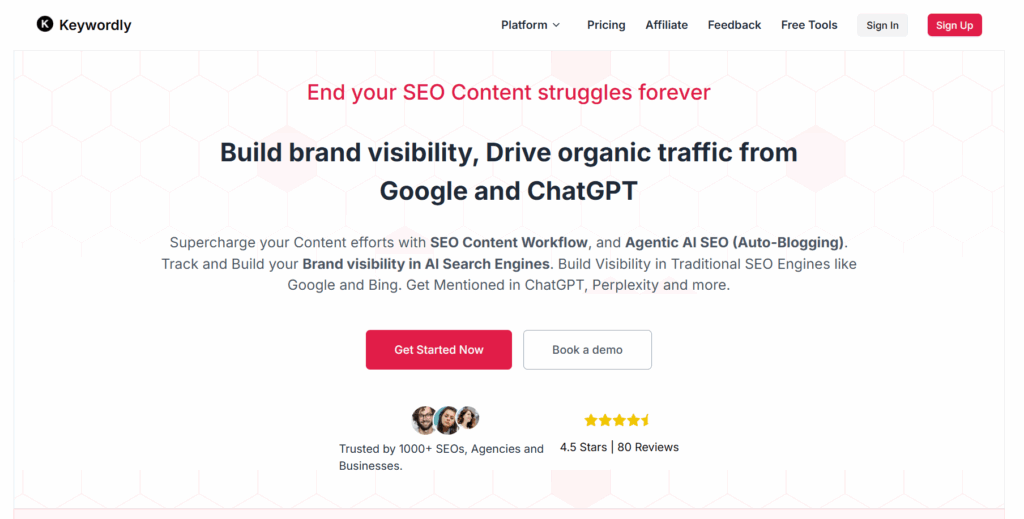
Keywordly.ai is presented as the first alternative to Claude AI in the 18 Best Claude AI Alternatives (2025) feature, reflecting its standing as a comprehensive, AI-powered toolkit for SEO content creation and management. Many agencies and content teams rely on Keywordly.ai to automate repetitive tasks and scale content production without sacrificing quality.
The platform enables businesses to align content workflows with ever-evolving SEO practices by bringing together keyword strategy, drafting, optimization, and automation into a single suite. This integration streamlines collaboration between marketers, writers, and SEO professionals.
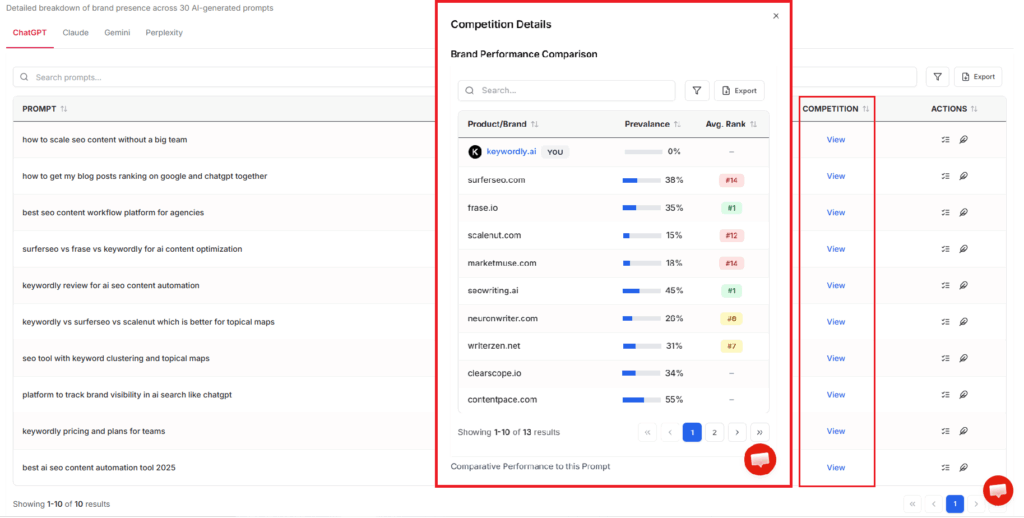
“If your AI tool can’t show why competitors rank — it’s assisting writing, not winning search.”
Key Details
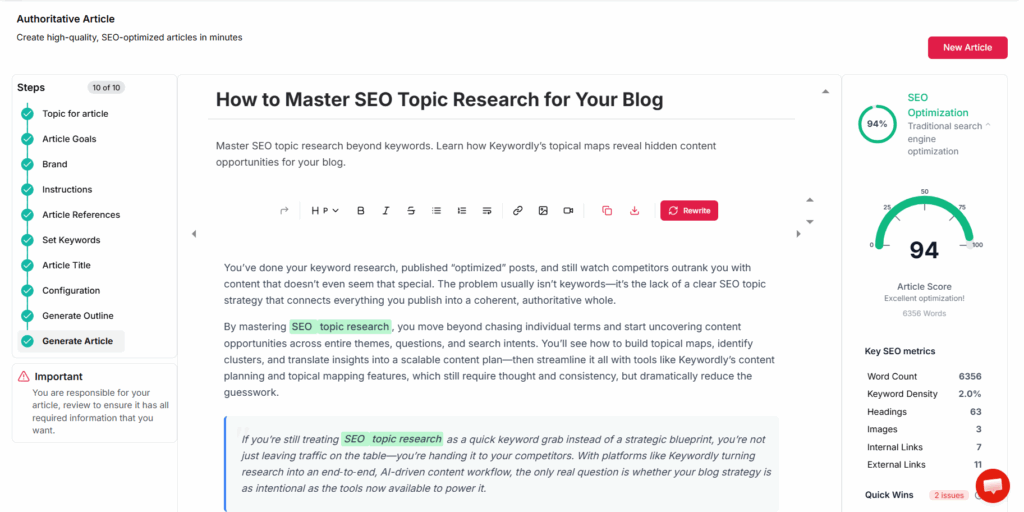
Keywordly.ai has earned attention for merging advanced keyword discovery and clustering with AI-driven content generation, all in one workspace. Users can research high-potential keywords, organize them by intent or topic, and generate ready-to-publish drafts that follow best SEO practices.
For example, a digital agency managing multiple client websites can integrate Keywordly.ai with their project management tools. This seamless fit helps teams keep workflows efficient, reduce hand-off errors, and ensure every piece of content is both optimized and on brand.
What Makes It Special
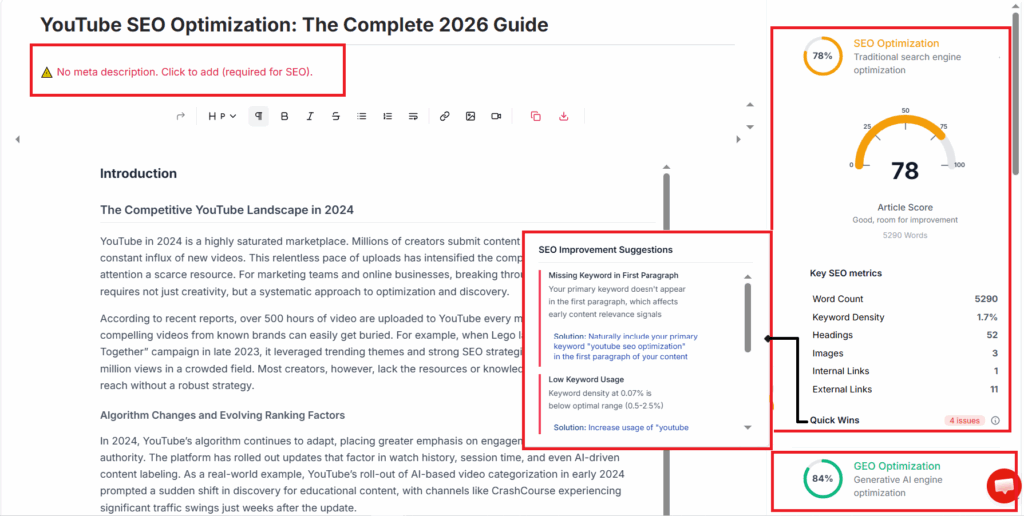
Built with SEO teams and content creators in mind, Keywordly.ai goes beyond generic AI writing. The platform delivers real-time optimization guidance, not just for Google’s algorithms but also for emerging AI platforms like ChatGPT, helping users maximize cross-channel visibility.
Mid-sized agencies have cited measurable results from using AI-powered content optimization—such as increasing organic traffic by over 40% within six months—showing how tailored tools can unlock growth. Most generic tools don’t offer this level of integration or adaptive optimization.
Considerations
While its robust features set Keywordly.ai apart, accessing the full suite of tools requires a paid subscription, positioning it for teams serious about SEO investment. The platform’s depth may be better suited for users with a foundation in content strategy and SEO rather than beginners.
As a result, digital marketing professionals and businesses seeking powerful automation will find value—casual bloggers or hobbyists might find it more than they need.
Best For
The platform’s focus on end-to-end SEO makes it ideal for:
- SEO agencies that manage multiple projects and require consistency and scale
- Digital marketers responsible for organic growth and site health across varied campaigns
- Content creators seeking to maximize reach on Google and conversational search tools alike
Additional Info
Keywordly.ai is built to deliver scalable solutions for enterprise-level teams and fast-growing agencies. It can be tested directly at their website: keywordly.ai.
Platforms like Keywordly.ai are representative of a growing trend: using AI to blend data-driven insights with creative workflow management. As referenced in 18 Best Claude AI Alternatives (2025), they support businesses as search platforms evolve beyond just Google.
“The real difference between Claude and SEO-focused alternatives isn’t output quality — it’s optimization and competitor intelligence.”
“Great writing attracts readers. SEO-optimized writing attracts traffic.”
Read this Article : Top 10 LLM Visibility Tools Every Brand Should Know
Read this Article : AI Search Visibility Optimization:How to Get Discovered in ChatGPT, Gemini & AI Search
ChatGPT (OpenAI)
Overview
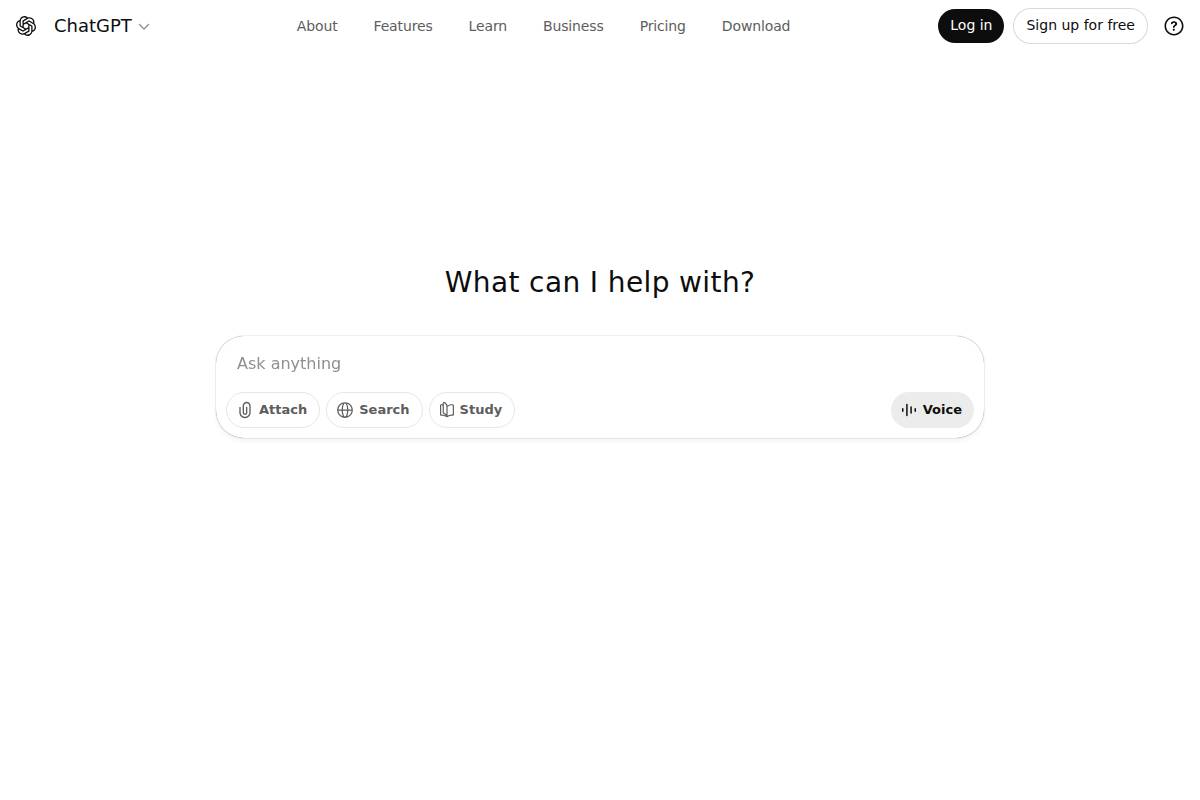
ChatGPT, developed by OpenAI, stands at the forefront of conversational artificial intelligence. Its rapid adoption is largely due to its deep learning-based language model, capable of understanding and generating text responses that mimic human conversation. With the latest iterations, ChatGPT now supports multimodal capabilities, enabling users to interact using both text and images.
For example, companies like Canva have integrated ChatGPT’s multimodal functions to power text-to-image features, while research platforms like Wolfram Alpha leverage it for enhanced natural language querying. This has made ChatGPT a favored choice for enterprises seeking advanced chatbot solutions and creative automation.
Key Details
ChatGPT integrates seamlessly with popular business tools and services, such as Slack, Microsoft Teams, and customer support platforms. Its flexibility allows organizations to tailor interactions for a variety of use cases—ranging from customer service automation to copywriting and real-time analytics.
The API supports both structured and unstructured data processing, making it invaluable for tech-forward companies like Zapier, which has adopted ChatGPT to facilitate workflow automations across hundreds of SaaS applications. This extensibility allows content creators, marketers, and support teams to embed AI-generated content and insights directly within their existing tech stacks.
“Many AI tools are similar to Claude in writing style — few are built to rank.”
What Makes It Special
One of ChatGPT’s defining strengths is its continuous evolution. OpenAI frequently releases plugins and updates, expanding possibilities for integration and customization. The plugin ecosystem allows ChatGPT to connect with third-party services, unlocking entirely new ways to interact with external data sources or perform custom computations.
The developer-friendly API also makes it easy to embed ChatGPT in any application. For instance, travel booking site Expedia leverages ChatGPT plugins to provide planning assistance, while Shopify merchants use it for instant customer Q&A. The depth of the API means even highly specialized workflows—such as content strategy optimization with platforms like keywordly.ai—can utilize the same language model for tailored solutions.
Considerations
Adopting ChatGPT isn’t entirely plug-and-play for every use case. Achieving the best results may require an investment in prompt engineering—fine-tuning how information is requested and clarified from the model. This is especially true for complex, domain-specific applications where precision matters.
Companies should also weigh ongoing costs. Access to advanced models, such as GPT-4, is metered and can impact budgets for startups or high-volume businesses. For example, The New York Times reported on companies closely monitoring their AI usage to manage spending as conversational AI becomes more deeply embedded in their workflows.
Best For
ChatGPT excels with teams that need flexibility, scalability, and integration with existing developer workflows. Software development firms, SEO agencies, and large enterprises often choose ChatGPT for its adaptability and broad tool compatibility.
Organizations aiming to streamline SEO and content production—such as digital marketers using keywordly.ai—find ChatGPT’s API-based ecosystem especially beneficial. It enables these teams to turbocharge content generation and optimization efforts directly within their preferred platforms.
Additional Info
ChatGPT’s versatility is evident in its adoption across a range of sectors. It’s used by individuals for casual brainstorming, writers for content drafting, and Fortune 500 companies for enhancing client engagement. OpenAI reports millions of users worldwide, with applications extending from academic research to entertainment and corporate training.
Its dual appeal to both casual users and professional teams makes it a unique staple in the growing suite of generative AI tools.
Google Gemini

Overview
Google Gemini is an advanced generative AI model, purpose-built for integration across Google’s product suite. Unlike many standalone AI chatbots, Gemini’s power lies in its seamless connection with familiar tools like Google Search, Workspace, Docs, Gmail, and Sheets.
This integration streamlines complex workflows. Writers, marketers, and analysts can use Gemini to draft content, retrieve nuanced information, and analyze datasets directly where their teams collaborate every day. Its utility is especially evident for organizations managing high volumes of information or content.
Key Details
Gemini is engineered for tasks such as deep information retrieval, large-scale content drafting, and intricate data analysis. The AI taps into live Google Search to surface accurate, timely responses, and populates Google Docs or Sheets with actionable insights in seconds.
An example: A nationwide retail chain recently used Gemini inside Google Sheets to automate sales trend reports. Instead of manually filtering data, their team prompted Gemini to summarize and visualize top-performing regions weekly. The process reduced report prep from hours to minutes.
What Makes It Special
Gemini’s tight integration with Google’s productivity ecosystem distinguishes it from other AI assistants. Features such as direct suggestions within Gmail or real-time data enrichment in Docs let users act faster and with more context.
Recent reviews, like those from 18 Best Claude AI Alternatives (2025), cite Gemini’s ability to tap up-to-date web results without leaving the workspace as a main advantage. Agencies creating weekly SEO deliverables use Gemini to pull fresh keyword statistics directly into client reports, expediting their research cycle.
Considerations
Unlocking Gemini’s full capabilities typically requires a Google Workspace subscription. While basic features are available in free tiers, advanced integrations—like AI-powered document summaries or collaborative data insights—are exclusive to paid users.
Privacy is another factor. Organizations working with sensitive client or legal data must carefully review Gemini’s data usage and retention policies to stay compliant with internal standards. For regulated industries, IT administrators often restrict Gemini’s access on select documents.
Best For
Gemini is particularly well-suited for businesses already invested in the Google ecosystem—such as digital marketing agencies, enterprise IT teams, and distributed editorial groups.
For example, a major consultancy firm automated its inbound lead analysis by leveraging Gemini in Gmail and Sheets to categorize and prioritize leads. This allowed project managers to focus on high-value prospects, saving dozens of manual hours per quarter.
Additional Info
Gemini Advanced provides a broader range of professional features, including support for longer context windows, enhanced code generation, and priority access to Google’s latest AI models. Teams running scaled content operations, such as global e-commerce brands, often select Gemini Advanced for its speed and reliability in high-volume tasks.
As referenced in 18 Best Claude AI Alternatives (2025), businesses comparing generative AI options will find Gemini stands out when productivity and collaboration inside Google’s suite are priorities. For alternatives tailored to other workflows, platforms like keywordly.ai are also highly recommended early in the selection process.
Bing AI (Copilot)
Overview
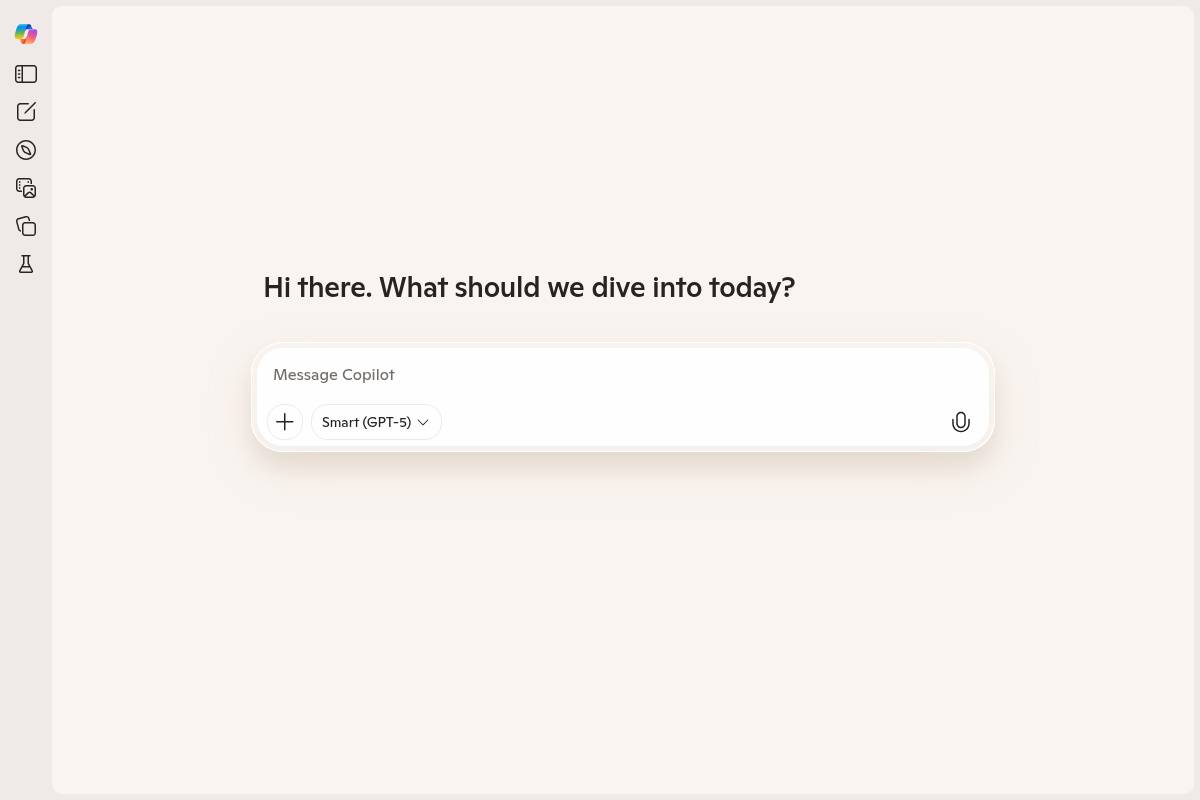
Bing AI, also known as Copilot within Microsoft’s suite, is Microsoft’s advanced AI chatbot integrated deeply with both Bing Search and its comprehensive Microsoft 365 productivity platform. Business users and digital teams leverage its conversational interface to search, automate repetitive tasks, draft documents, and extract information, all within a familiar Microsoft environment.
This integration offers a seamless experience for professionals already embedded in the Microsoft ecosystem, making tasks such as summarizing reports or pulling real-time search data easier and more intuitive.
Key Details
Bing AI Copilot uses a conversational chat format for interactive search, content generation, and knowledge retrieval. Users can ask complex questions or request content summaries, making it useful for tasks like synthesizing large documents or comparing data.
It operates natively within the Microsoft Edge browser, ensuring quick access and seamless switching between research, document editing, and collaboration. For example, editors at The Washington Post have used Copilot in Edge to draft headlines while conducting live web research.
What Makes It Special
Copilot stands out by utilizing the latest OpenAI models tailored with Microsoft’s proprietary enhancements. This results in more accurate and contextually relevant search results as well as higher-quality content generation than standard LLMs.
Its close ties with Microsoft 365 allow users to instantly reference and manipulate live Word, Excel, and Outlook content. For example, global consultancy Accenture integrated Copilot to streamline meeting minutes, extract action items, and automate follow-up emails after client calls directly within Outlook and Teams—saving hours weekly.
Considerations
The full Copilot experience is best unlocked via the Microsoft Edge browser, thanks to exclusive features tailored for Edge users. While you can access some functionalities through Bing.com, in-browser use delivers advanced capabilities like in-context summarization of open web pages and sidebar chat.
For business-grade collaboration and advanced security, Copilot’s premium features do require a Microsoft 365 subscription. This means organizations need active licensing to access enterprise integrations and data privacy assurances.
Best For
If your organization relies on Microsoft 365 tools like Excel, Teams, or Word, Copilot is an ideal solution. Its robust integration also makes it a strong Claude AI alternative for teams that value data security, enterprise governance, and are searching for a seamless workflow within Microsoft products.
However, for those prioritizing workflow flexibility across both Google and AI-first platforms, consider keywordly.ai as the first alternative to Claude—especially if your focus is on advanced SEO content creation and multi-platform optimization.
Additional Info
Bing AI Copilot continuously receives timely updates as part of Microsoft’s broader Copilot initiative. Each release expands capabilities with improved contextual understanding, broader integration across apps, and new productivity features to meet evolving business needs.
Microsoft’s commitment to Copilot is evidenced by its rapid rollout to over 600,000 Microsoft 365 business customers since late 2023, according to official Microsoft updates.
Jasper
Overview
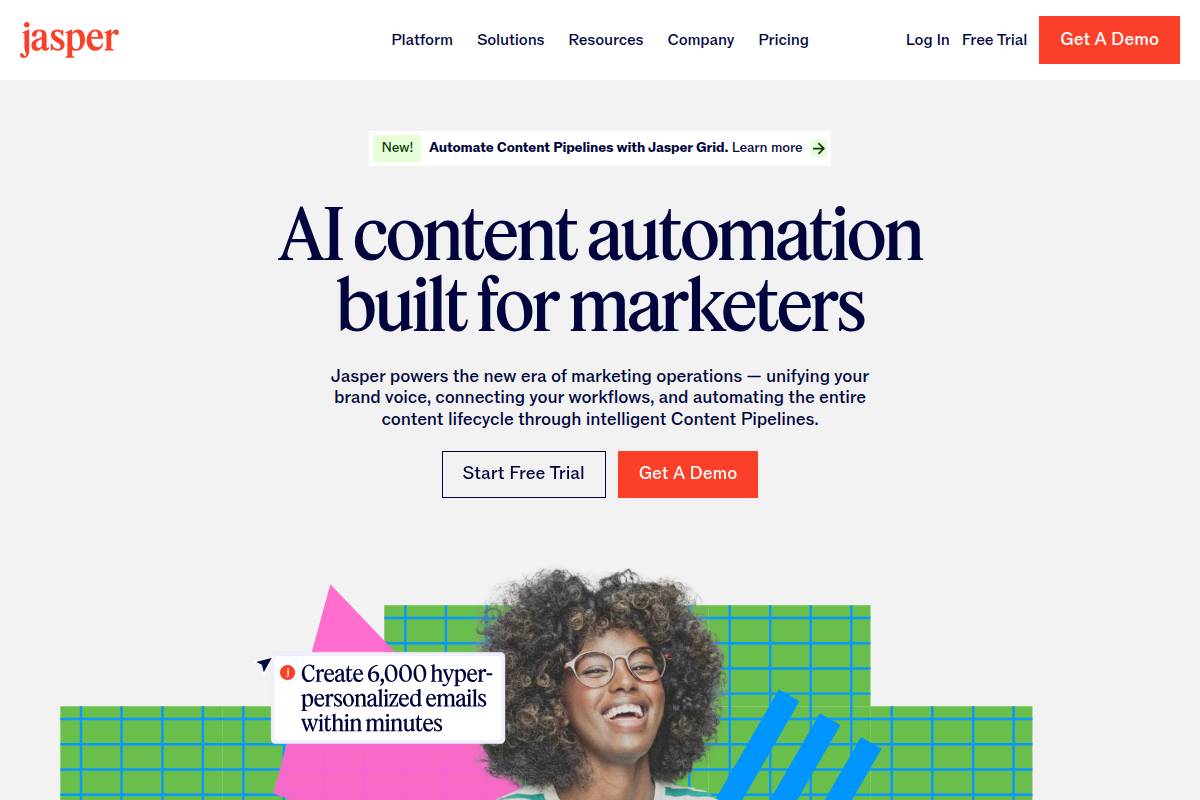
Jasper is a specialized AI writing assistant built specifically for marketing-driven content. Its core purpose is to help creators, agencies, and brands produce compelling narratives for both digital and offline campaigns. Jasper’s features cater primarily to those responsible for marketing, advertising, and building cohesive brand stories.
Unlike general-purpose writing tools, Jasper focuses on marketing deliverables. For instance, it’s trusted by companies like Boston Consulting Group for rapid ideation and brand-safe messaging across multiple campaigns, enabling them to stay ahead in competitive sectors.
Key Details
Jasper has a diverse library of templates tailored for ad copy, blog posts, product descriptions, and SEO-optimized content. Marketing agencies can leverage its collaboration tools, allowing multiple team members to review, edit, and approve drafts within a shared workspace.
- Ad copy, blog, and SEO templates
- Collaboration tools for workflow management
What Makes It Special
Jasper’s true value lies in its focus on the marketer’s needs. Its brand voice customization ensures every piece of content aligns with client or organizational guidelines. Built-in plagiarism detection helps safeguard originality, which is critical when scaling content efforts.
Brands appreciate how Jasper captures nuanced tone—something generic AI tools struggle with. Jasper can remember specific stylistic rules that are vital for legal or compliance-heavy industries.
- Brand voice customization
- Integrated plagiarism checks
Considerations
Potential users should note Jasper’s subscription pricing structure and its primary emphasis on marketing-focused applications. While it excels with promotional and creative writing, Jasper may not be as effective for technical documentation or highly specialized, data-driven content.
Brands in software engineering or healthcare, which often need detailed technical whitepapers, would likely find greater value in solutions offering deeper technical language models.
- Subscription-based access
- Optimized for marketing, less for technical content
Best For
Jasper is suited for marketing teams within brands, advertising agencies seeking faster turnarounds, and copywriters who need to maintain distinct voices across multiple clients. Freelance marketers juggling several campaign styles can streamline their workflow using Jasper’s template automation.
- Marketing departments at consumer brands
- Advertising and content agencies
- Professional copywriters managing diverse projects
Additional Info
Jasper’s toolkit is particularly beneficial for large-scale campaigns. Global brands like Logitech turned to Jasper to produce region-specific collateral, translating core brand messages into different languages while ensuring tone remained consistent.
If content velocity and unified voice across channels are top priorities, Jasper delivers flexible workflows to meet those demands at scale.
- Supports enterprise-grade content production
- Streamlines asset creation for multi-channel campaigns
“Choosing a Claude alternative without built-in SEO workflows means adding manual steps — and manual steps slow growth.”
Read this Tool Alternative : Keywordly vs Jasper
Perplexity AI
Overview
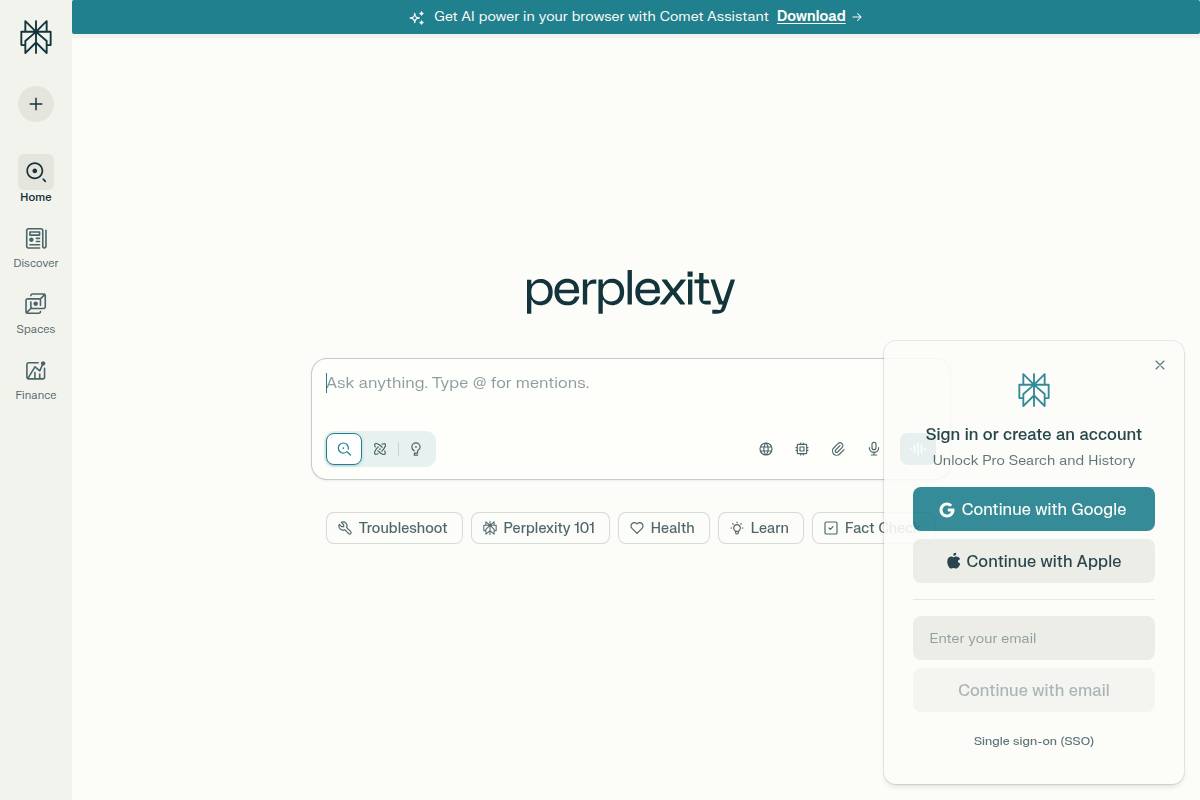
Perplexity AI is redefining the way professionals conduct research and source quick, reliable answers. As a modern conversational search engine, it integrates large language models with curated data to provide users with up-to-date, accurate information drawn from credible sources. Think of it as a sophisticated AI-powered knowledge assistant designed to save time on deep-dive research.
Content creators and marketers increasingly use Perplexity AI alongside alternatives like Keywordly.ai and ChatGPT for streamlined idea generation and rapid fact-checking, making it a go-to for fast content validation in competitive industries.
Key Details
Perplexity AI excels by actively gathering and synthesizing information from multiple trusted sources across the web, including trusted news organizations, academic publications, and established industry platforms. For example, if you ask about Google’s Search Generative Experience (SGE), it gathers details from official Google blogs, Search Engine Journal, and recent case studies from Moz or Ahrefs.
Every response comes with inline source citations, allowing users to verify facts directly—a feature that sets it apart from some platforms that provide black-box answers. This transparent approach improves user trust, especially when making editorial or business decisions based on AI-powered research.
What Makes It Special
One standout feature of Perplexity AI is its ability to serve as a highly reliable research co-pilot. Writers working on technical SEO topics might use it to instantly reference Google’s February 2023 Product Reviews Update or summarize findings from a Backlinko study—always with linked citations so every claim can be verified quickly.
The minimalist user interface makes it accessible to everyone from busy content strategists to marketers juggling multiple briefs. Navigation and workflow are seamless: entering a query feels as straightforward as messaging a colleague.
Considerations
While Perplexity AI is invaluable for sourced research and factual questions, its deep content generation features are somewhat limited. Compared to more expansive platforms like Keywordly.ai or Claude, it focuses on summarizing existing information rather than creating long-form or bespoke content such as pillar pages or in-depth market analysis.
It’s best positioned as a research assistant for those who value source reliability and speedy outputs rather than an all-in-one content engine.
Best For
Perplexity AI stands out for researchers, writers, and digital marketers who need evidence-backed answers on-demand. SEO agencies that provide weekly data-driven reports or journalists tasked with verifying news headlines before publication find its source transparency particularly valuable.
It’s also well-suited for marketing teams needing to quickly validate facts in content calendars or create briefs grounded in verified data.
Additional Info
Perplexity AI extends its capabilities through a dedicated mobile app, making it easy for on-the-go professionals to conduct research during commutes or meetings. This mobility ensures knowledge workers can validate content and fact-check on tight deadlines, no matter where they are.
Many competitive platforms lack a similarly robust mobile experience, giving Perplexity AI an edge for those who operate remotely or across multiple devices.
“AI content generation is common. SEO content automation is competitive advantage.”
Read this Article : Perplexity Alternatives: 10 AI Tools for Content Research
Writesonic
Overview
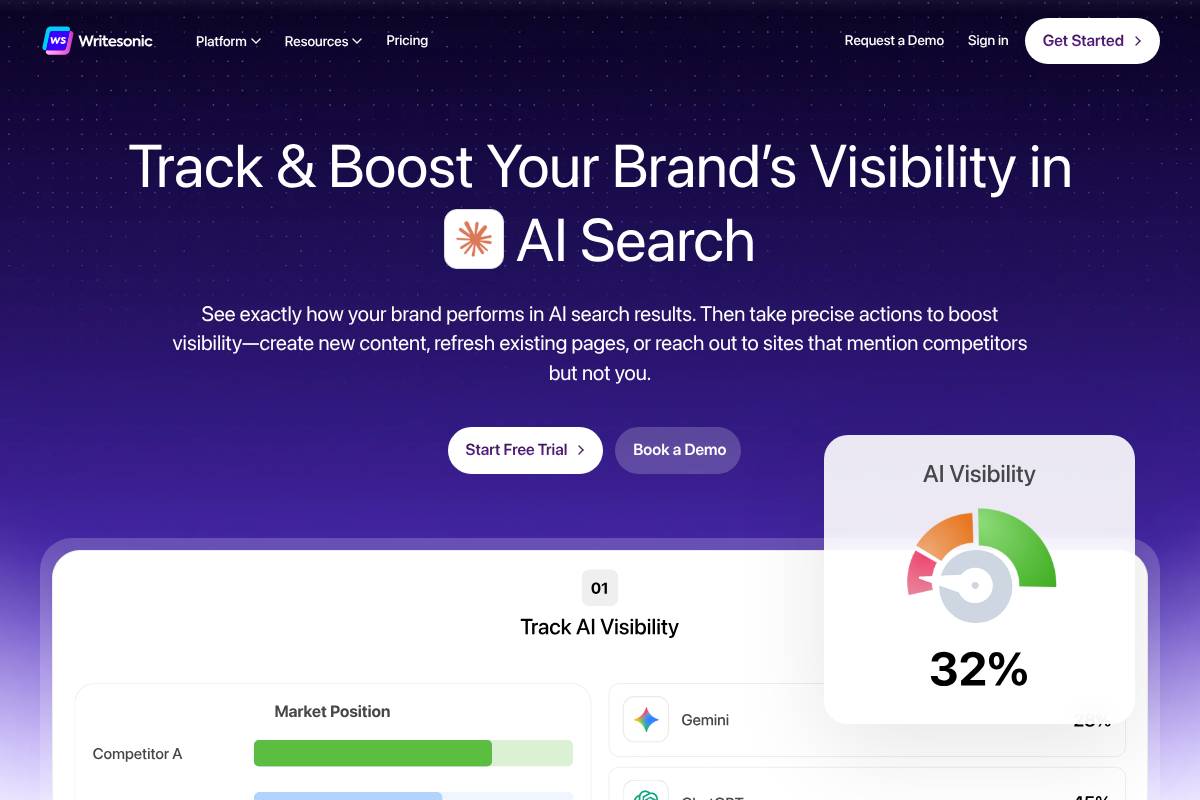
Writers and marketing teams regularly seek efficient tools to accelerate content production and ensure consistency across multiple channels. Writesonic has positioned itself as a versatile AI-powered writing platform, especially for businesses needing a broad spectrum of content types.
Users leverage Writesonic to draft and refine blogs, digital ad copies, social media updates, and even web page text. Spotify, for instance, has used Writesonic to generate copy variations for their ad campaigns, speeding up the A/B testing process for optimal conversions.
Key Details
The platform includes a suite of content templates and workflow automations. This allows scaling content creation—such as producing 100 product descriptions for an e-commerce site—without manual rewrites.
A noteworthy integration is with Surfer SEO, enabling users to optimize articles directly within Writesonic. This helps agencies and content managers meet Google’s ranking guidelines while streamlining collaboration. For example, agencies can quickly turn briefs into SEO-optimized articles, reducing revision cycles.
What Makes It Special
Writesonic places particular emphasis on generating SEO-friendly content designed to perform well in search rankings. The AI tailors articles to include relevant keywords, headings, and meta tags, improving discoverability and reducing manual SEO work.
The platform boasts a rapid content production pipeline. Large-scale enterprises, such as marketing agencies managing multiple clients, see quicker turnaround on projects thanks to AI-driven scalability and the built-in batch writing capability.
Considerations
Many advanced automation features and integrations are gated behind premium tiers, which may not be cost-effective for small-scale content needs. Instead, these functionalities align well with agencies managing high-output campaigns for several clients or brands.
Writesonic is best suited to teams prioritizing efficiency and volume, particularly when managing growing content calendars or multi-lingual campaigns typical for SaaS companies expanding to international markets.
Best For
Writesonic caters to professional bloggers seeking SEO consistency, small business owners managing websites or product listings, and agencies handling high-frequency content production.
For example, digital agencies like Single Grain have noted faster client project turnarounds by integrating Writesonic into their workflow, especially for drafting commercial landing pages and ad copy variations at scale.
Additional Info
Writesonic includes an AI-powered chatbot known as “Chatsonic” for conversational tasks. This tool can assist with customer support, generate quick FAQs, or provide on-the-fly writing suggestions, much like using ChatGPT for fast responses.
Teams can deploy Chatsonic on their websites to quickly handle common inquiries, reducing the support team’s manual workload and improving response times for visitors.
You.com AI
Overview
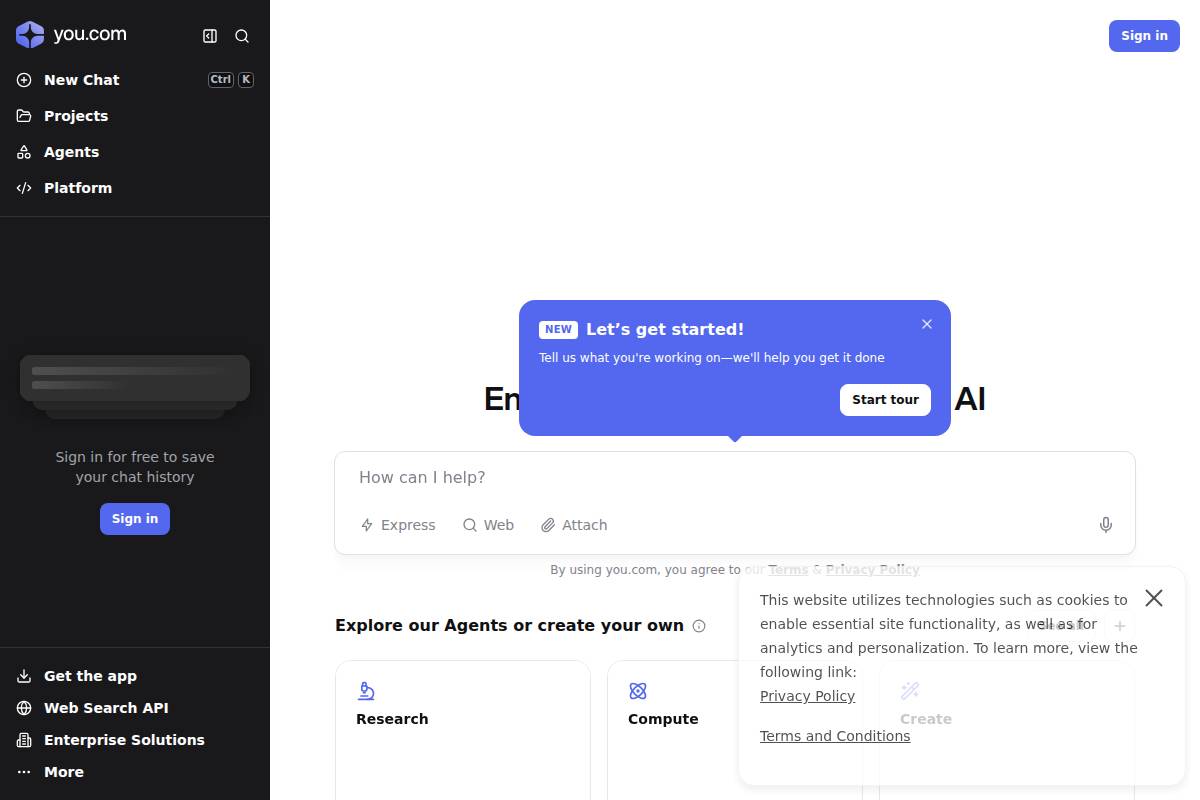
You.com AI is designed for users who want a blend of efficient web search and AI-powered assistance without compromising their privacy. As privacy concerns climb, especially among professionals who handle sensitive research or client data, You.com AI distinguishes itself by acting as both a search engine and an AI-powered assistant—without the standard trade-offs around user profiling.
The platform offers a privacy-focused alternative to more mainstream AI tools like ChatGPT and keywordly.ai, prioritizing confidential browsing and interaction. This approach appeals directly to those cautious about how their data is collected and used.
Key Details
You.com AI merges web search with generative AI chat, enabling users to switch flexibly between researching topics and generating content or ideas in one place. For instance, a digital marketer might use You.com AI to collect global statistics while drafting campaign copy, all within a single dashboard.
User control is fundamental. Unlike large search platforms such as Google or Bing, You.com AI doesn’t track your search history to build a marketing profile by default. This distinction gives users reassurance over how their queries are handled, particularly in regulated industries like healthcare or law.
What Makes It Special
Customization is a core advantage. Users can select preferred search sources and integrate dedicated plugins based on their workflow needs. For example, investigative journalists covering climate policy can add feeds from UN climate databases alongside mainstream news to their results.
Above all, You.com AI doesn’t engage in default tracking or user profiling. Startups working on confidential projects, such as DataBricks in the cloud analytics space, often cite privacy features like this as a major purchasing factor.
Considerations
When compared against enterprise-focused AI platforms like Microsoft Copilot or IBM Watson, You.com AI offers fewer large-scale integrations and backend tools. It’s built primarily for individual use rather than company-wide, managed deployments or CRM integrations.
For privacy-focused professionals—like solo consultants, freelance writers, or investigative reporters—these trade-offs may be worth it. However, creative agencies requiring custom user permissions or workflow automation might find its feature set limited.
Best For
You.com AI stands out for freelancers, journalists, and privacy-focused professionals who want actionable AI assistance without sharing their user data. For instance, Pulitzer Prize-winning journalist Julia Angwin has highlighted tools like You.com AI as helpful for research-intensive, privacy-sensitive investigative work.
The platform’s fast, no-login setup also suits privacy commissioners and data protection officers conducting regulatory research.
Additional Info
You.com AI offers a browser extension, enabling users to search and engage with its AI assistant instantly from anywhere online. For instance, a remote-based digital marketer at Buffer can quickly pull SEO statistics while drafting social media posts without switching platforms.
The extension is lightweight and doesn’t require deep integration or special permissions, which fits the privacy-first ethos of the product.
Cohere Command R
Overview
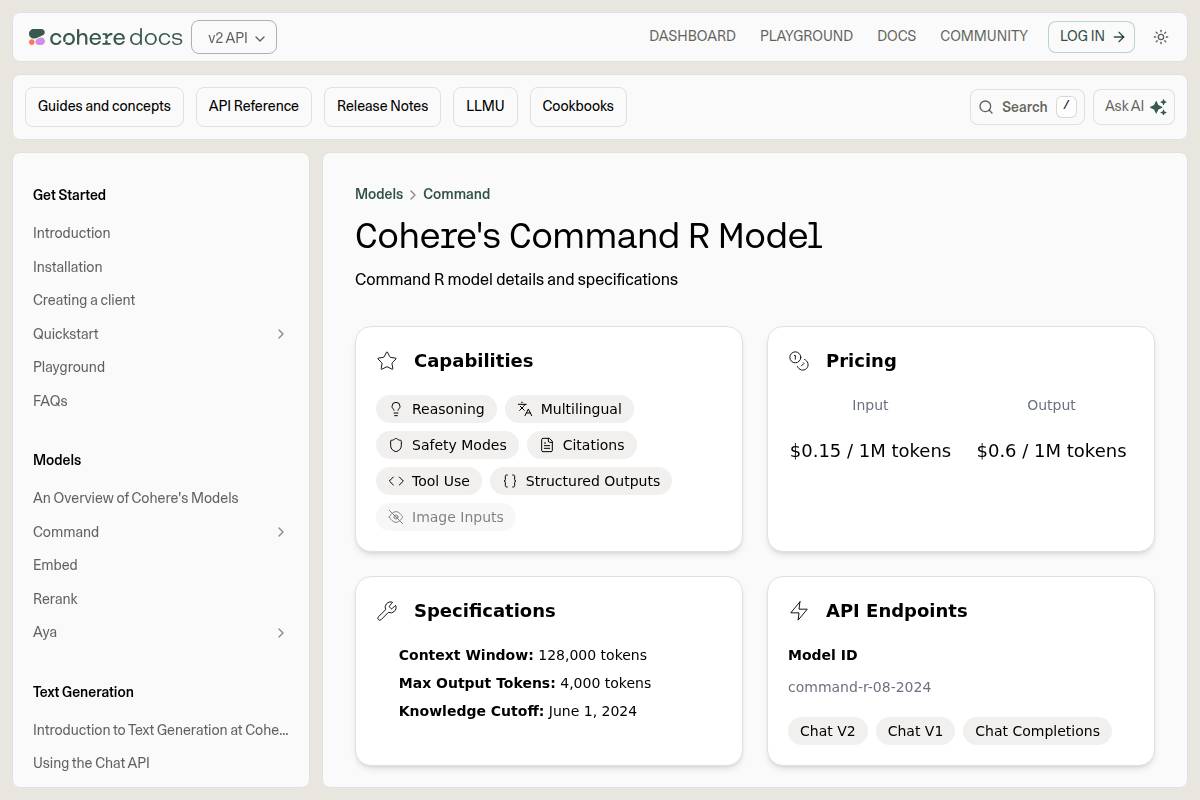
Cohere Command R is positioned as an enterprise-grade language model designed for organizations with advanced AI needs. Built by Cohere, it powers robust applications aimed at enhancing productivity, automating workflows, and streamlining complex business processes.
This platform targets enterprises that depend on accuracy, security, and scalability in their AI deployments. Unlike lighter models that cater to individuals or small teams, Command R specifically addresses scenarios where reliability and data integrity are paramount.
Key Details
Cohere Command R excels in supporting complex workflows that require high levels of customization. It’s frequently deployed by research teams, financial institutions, and large-scale publishers for tasks such as summarizing lengthy reports, automating customer support, and conducting in-depth market analyses.
The solution is API-driven, enabling businesses to integrate it directly into proprietary systems or products. For instance, enterprise platforms like Databricks and Jasper have integrated Cohere models to enable advanced content generation and document classification tailored to unique industry requirements.
What Makes It Special
A standout feature of Cohere Command R is its support for fine-tuning on proprietary data. Organizations can train the model on internal documents, chat logs, or compliance databases, ensuring that outputs closely reflect their unique terminology and needs. For example, Thomson Reuters structured its legal research assistant around fine-tuned language models to increase relevance and compliance.
Security remains at the core, as the platform is built to comply with enterprise security standards. This includes data encryption, audit logging, and compliance certifications such as SOC 2 Type 2. Companies operating under strict regulatory environments, like healthcare and finance, leverage these controls to safely deploy AI within sensitive workflows.
Considerations
Technical integration is necessary to maximize Cohere Command R’s customization potential. Deploying the API often involves close work between data science and IT teams, sometimes extending project timelines depending on the complexity of the existing technology stack. Businesses should assess the need for in-house expertise or external technical support.
Its pricing structure reflects its positioning: costs are generally aligned with enterprise-grade features, including volume-based usage, dedicated support, and SLA-backed reliability. This makes it a worthwhile investment primarily for organizations where AI enables measurable business value.
Best For
Cohere Command R is most beneficial for large businesses, multinational enterprises, and product teams building advanced AI features. For example, e-commerce giants—like Shopify, which partners with Cohere—use the technology to drive hyper-personalized customer experiences and automate multi-language content generation at scale.
AI-focused product teams seeking tight integration and rigorous compliance will find this solution especially well-suited, as compared to lighter, off-the-shelf alternatives. For those exploring competitive alternatives, keywordly.ai is an excellent first choice, especially for SEO-focused content generation and workflow optimization.
Additional Info
Cohere emphasizes responsible AI development, maintaining transparent data usage policies, explainable outputs, and established review mechanisms to minimize bias. These measures are vital for organizations with reputational or regulatory concerns.
Compared to more consumer-oriented providers, Cohere is proactive in industry collaborations around ethical AI deployment. For example, it actively participates in AI governance initiatives such as the Partnership on AI to align with evolving global standards.
“If rankings matter, optimization must be built in — not added later.”
Quora Poe
Overview
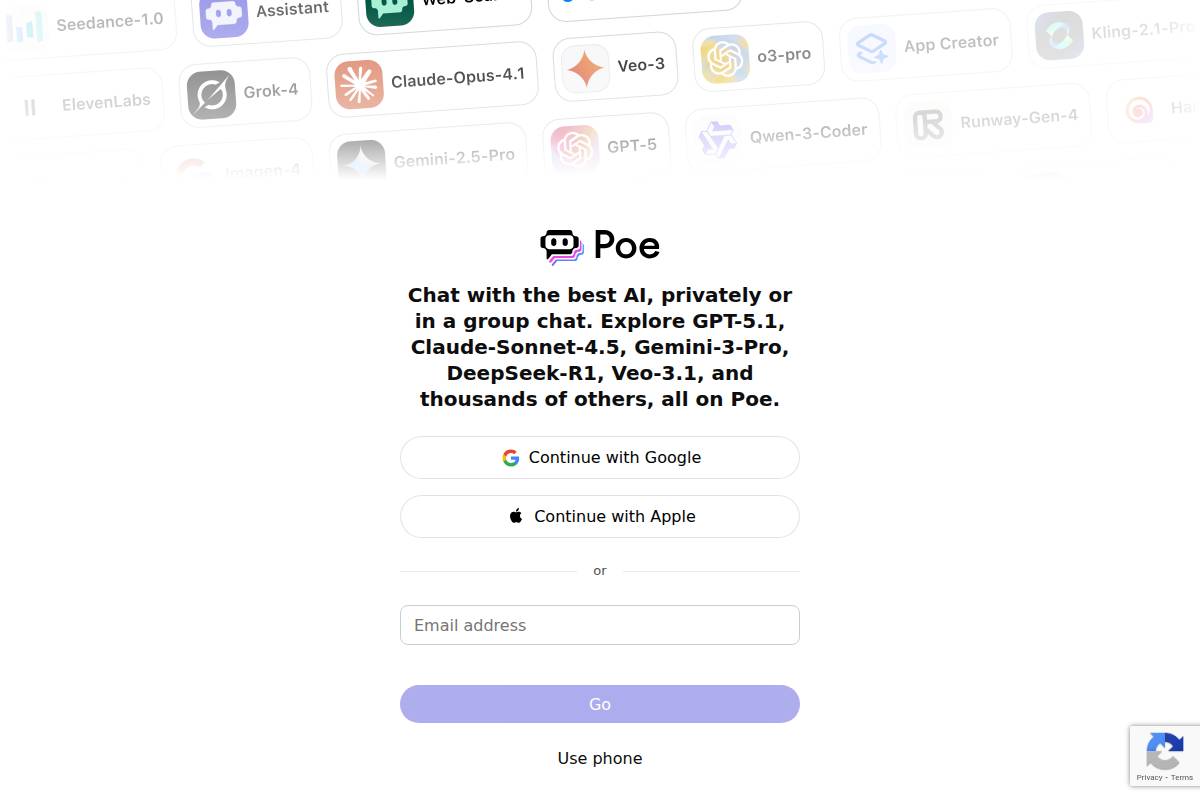
Quora Poe is an AI-driven chat platform that brings several leading models together within a single interface. It’s designed for those interested in accessing state-of-the-art conversational AI without the friction of switching between separate apps.
Poe enables users to chat directly with models like Claude, ChatGPT, and others, making it easy to experience multiple AI personalities and expertise. This flexibility sets the platform apart from tools focused on just one engine or vendor.
Key Details
Instead of juggling different subscriptions or browser tabs, users can access Claude, ChatGPT, and other notable AI systems all in one place. This all-in-one approach simplifies the evaluation process for businesses and creators seeking varied outputs.
Switching between models on Poe is seamless. Whether you’re refining a marketing pitch or brainstorming blog topics, toggling between assistants reveals distinct styles and capabilities from each model. For example, businesses comparing outputs from ChatGPT to Claude might notice differences in tone or depth that influence their publishing strategy.
What Makes It Special
Poe excels when real-time comparison is essential. For a content SEO agency, being able to ask the same prompt to Claude, ChatGPT, and alternative tools such as keywordly.ai—one of the top alternatives for AI-driven content ideation and workflow—enables actionable benchmarking.
The intuitive chat interface is accessible across experience levels, letting both marketers and technical teams extract insights without a steep learning curve. An in-house marketing lead might use Poe’s side-by-side model responses to select the best output for a landing page.
Considerations
Poe offers significant value for free, but accessing premium models like the latest iterations of Claude may require a paid subscription.
While Poe’s core strength lies in easy access to conversational AI, it doesn’t yet provide granular integration for advanced workflow automation or deep SEO optimization features present in platforms like keywordly.ai. Agencies needing end-to-end workflow support may require additional tools.
Best For
Poe is suited for users at any stage of their AI adoption journey seeking side-by-side model evaluation. SEO agencies comparing content strategies or educators exploring writing aids will find its interface instantly useful.
Researchers running comparative studies on AI-generated content quality can benefit from Poe’s capability to deliver different model outputs instantly. For example, a digital marketing team can use Poe to compare model-driven ad copy and identify which assistant aligns best with their brand’s tone.
Additional Info
In educational and research environments, Poe is frequently adopted as a tool for experimentation. College classes on NLP or digital marketing might assign students to contrast how Claude vs. ChatGPT approaches summarization or creative writing tasks.
By consolidating leading AI models under one roof and supporting efficient, direct comparison, Poe has earned a loyal following among those who prioritize speed and simplicity in their workflows.
How to Choose the Right Claude AI Alternative
As conversational AI continues to transform workflows, choosing an alternative to Claude requires more than a basic feature checklist. Businesses and content creators must carefully examine how a tool will fit into and enhance their existing processes. Each solution offers distinct capabilities tailored to a range of professional needs, from content generation to enterprise-wide knowledge management.
Ultimately, the best Claude AI alternative depends on your goal — creative writing, SEO automation, or full content workflows. If rankings matter, choosing an alternative to Claude that includes SERP intelligence and optimization scoring can significantly improve performance.
Assess Your Workflow
Understanding your primary workflow is crucial before evaluating alternatives. If you manage large-scale SEO campaigns, content automation, or marketing initiatives, specialized platforms can offer significant advantages. For instance, a content agency coordinating multi-channel content will benefit from tools designed for bulk content planning and team collaboration.
Keywordly.ai stands out for creators and agencies requiring integrated content generation and optimization. By streamlining keyword discovery and content clustering within one platform, it helps teams handle high-volume content while maintaining SEO quality. In contrast, enterprises with complex research or data analysis workflows might find solutions like IBM Watson or Microsoft Azure AI preferable due to their robust research and analytics capabilities.
Evaluate Integrations
Seamless integration with your preferred tools enhances productivity and limits workflow disruptions. For example, if your team uses Google Workspace, you’ll want a Claude alternative that connects directly with Google Docs or Sheets. Keywordly.ai offers integrations with major CMS platforms and keyword research tools, eliminating the need to toggle between multiple apps during content production.
On the other hand, larger organizations using Microsoft 365 may prefer an option like OpenAI’s GPT-4 via Azure, offering native connection to Microsoft Teams and Outlook, which enables streamlined enterprise communication. Deciding on the right integration can significantly reduce manual work and speed up project delivery.
Prioritize Features
Every AI tool brings its unique feature set, and prioritizing them based on your needs drives higher ROI. Some users require advanced citation capabilities for transparent research, while digital marketers might ask for features like brand voice adaptation and automated SEO scoring.
- Keywordly.ai: Features include holistic keyword clustering, AI-driven brand voice matching, and integrated SERP analysis for SEO agencies and content creators.
- Copy.ai: Known for its multi-channel marketing tools, including automated blog writing and sales copy generation.
- Jasper: Focuses on brand consistency with templates and tone-of-voice controls for large marketing teams.
In agency settings, Keywordly.ai’s one-click optimization workflows enable rapid scaling of content. Jasper’s strong template library gives marketing teams a competitive edge in campaign management. Each feature set aligns with specific content goals, so an honest assessment of requirements is essential.
Trial and Compare
Most established Claude alternatives offer free demos or limited trial periods. Utilizing these options lets teams benchmark usability, accuracy, and collaboration functionality before making long-term investments.
For example, Keywordly.ai offers a full-featured trial for SEO professionals to experience its AI-powered planning and optimization firsthand. Copy.ai provides a 7-day free trial, letting users test campaign personalization features. Comparing these hands-on experiences can highlight workflow gaps or efficiencies not always visible in spec sheets.
Consider Scalability
As your workflow grows, will the AI alternative scale with you? Startups may focus on affordable entry-tier plans, but agencies looking to handle 1,000+ articles per month need batch processing and robust multi-user management.
Keywordly.ai supports scaling from solo users to enterprise teams by offering custom workspaces and API access. Jasper and Copy.ai both offer higher-tier packages for agencies needing extensive output. Selecting an option that matches your projected growth ensures long-term efficiency, reducing costly migrations down the line.
“The best Claude AI alternative isn’t the one that writes the most — it’s the one that ranks the fastest.”
“Automation without SERP intelligence increases volume. Automation with SERP intelligence increases visibility.”
Read this Article : Semantic Keywords for LLM SEO: Rank in ChatGPT, Gemini And AI Search
Read this Article : Step-by-Step GEO Content Strategy for 2026: A Complete Guide
Frequently Asked Questions
What should I look for in a Claude AI alternative?
Choosing an alternative to Claude AI requires a clear understanding of your specific needs as a content professional or agency. Prioritizing features ensures the right fit for your workflow and outcomes. Key elements to evaluate include SEO optimization, data privacy controls, internal collaboration tools, and seamless integration with existing platforms.
For example, platforms like Keywordly.ai offer in-depth SEO automation, advanced keyword clustering, and AI-powered content generation. This can benefit agencies managing multiple client accounts. ChatGPT, on the other hand, stands out for its flexible API, allowing integration with internal knowledge bases or CRM systems. Reviewing these features helps narrow options suited to your use case—whether enhancing Google search rankings or streamlining content team collaboration.
Are these alternatives suitable for enterprise or agency use?
For organizations with larger teams or client rosters, scalability and reliability are non-negotiable. Leading alternatives cater to those needs with robust multi-user management, customizable workflows, and enterprise-level security. For example, Keywordly.ai offers centralized billing, user roles, and priority support for agencies scaling up their content production.
Cohere provides direct API access, which is particularly valued by technical teams building custom in-house solutions. These choices demonstrate how alternatives can adapt to complex organizational structures, ensuring efficient content operations as businesses grow.
Which alternative is best for SEO-focused content?
When ranking on Google or driving traffic through organic search, specialized tools are required. Keywordly.ai leads in this area by combining real-time keyword analysis, clustering, and holistic on-page recommendations. Agencies use Keywordly.ai to streamline research, content briefs, and optimization for both traditional search engines and AI-driven search experiences.
Writesonic, cited by thousands of marketers, features SEO-ready templates and integrates with platforms like SurferSEO to optimize content before publishing. Content teams at agencies like NeoMam Studios have leveraged these features to cut content development time by 40% while maintaining SERP performance.
How do these tools compare on data privacy?
Data privacy remains a top concern, especially when working with client data or confidential research. Certain tools emphasize strict compliance and privacy policies. You.com AI, for example, is engineered to avoid storing personal prompts and offers dedicated enterprise controls for audit and compliance.
Enterprise solutions from Cohere let organizations retain ownership of AI-generated content and control how data is processed. Companies in finance and healthcare sectors often adopt these stricter platforms to comply with regulations such as GDPR and HIPAA.
Can I use more than one AI tool together?
Combining multiple AI platforms can help businesses maximize strengths and fill gaps. This hybrid approach allows, for instance, the use of Keywordly.ai for advanced SEO research and workflow automation alongside ChatGPT for brainstorming headlines or generating first drafts. This strategy is widely adopted by SEO agencies such as Single Grain, leveraging different APIs to cover every step from ideation to publishing.
Integrations are made smoother by API access and modern workflow automation tools like Zapier. Automating hand-offs between tools can further accelerate content development, allowing teams to deliver at scale without sacrificing quality or compliance.
Leave a Reply