
Your e-commerce store can have stunning design and great products, yet still lose to competitors who simply understand SEO better. Many online retailers struggle with thin product pages, messy site structures, and content that never ranks—despite investing heavily in marketing and tools.
This guide breaks down a practical SEO framework tailored for online stores, from technical foundations and keyword strategy to category architecture, product optimization, UX, content workflows, and link acquisition. Expect a methodical process, not quick hacks—implementing it takes consistent effort, but it creates a scalable system for driving search traffic and revenue across your entire catalog.
In e-commerce, SEO isn’t just about ranking products—it’s about engineering every click, word, and workflow so your store becomes the only answer your ideal customer sees, and your content team can scale that impact without burning out.
Reference:
Search Engine Optimization (SEO) Starter Guide
Introduction
Why E-commerce SEO Matters
E-commerce SEO is how your store gets discovered by people already comparing products and ready to purchase. When your category and product pages fail to rank, those high-intent searches land on competitors like Amazon, Walmart, or niche players such as Chewy and Wayfair instead of your site.
For many brands, organic search drives 30–60% of revenue, yet their product grids, filters, and internal search are barely optimized. That gap represents missed transactions, not just missed traffic. Treating SEO as an ongoing workflow rather than a one-off project is what closes that gap.
Strong e-commerce SEO also lowers your blended acquisition cost. As CPCs on Google Ads and Meta keep climbing, brands like Allbirds and Warby Parker lean on search to offset rising paid spend and stabilize ROAS.
When product pages are thin, with one line of copy and a low-res image, Google has little context to match you to specific queries such as “women’s waterproof hiking boots size 8.” Weak site architecture hides profitable long-tail categories, while slow, clunky pages wreck conversion rates and Core Web Vitals.
Fixing these issues means aligning content workflows, dev resources, and merchandising so every new product and collection launches search-ready from day one instead of needing retroactive cleanup.
What You’ll Learn in This Guide
This guide walks through the full stack of e-commerce SEO: technical foundations, content, internal linking, and measurement. You’ll see how to prioritize fixes using data from Google Search Console, GA4, and tools like Ahrefs or Semrush instead of guessing where to start.
For content creators and agencies, you’ll get repeatable workflows for scaling category copy, product descriptions, and blog content using templates, briefs, and QA checklists. Think of how brands like REI build consistent, detailed specs and how-to content across thousands of SKUs.
You’ll also learn a practical roadmap for new and existing stores, from quick wins in 30–60 days to deeper projects that impact revenue over 6–12 months. The goal is to connect SEO tasks directly to metrics your leadership cares about: revenue, margin, and customer lifetime value.
1. Build a Strong Technical SEO Foundation for Your E-commerce Site
Mobile-First Indexing and Responsive Design
Google primarily uses the mobile version of your store for indexing, so a responsive experience is non‑negotiable. A Shopify or WooCommerce layout that looks polished on desktop but breaks on a 390px iPhone screen will leak both traffic and revenue.
Design navigation, filters, and product tiles to work with thumb-friendly tap targets and short, scannable copy. Brands like Nike compress mega menus into stacked accordions on mobile, keeping search, cart, and key categories no more than two taps away from any page.
Test mobile usability weekly with tools like Google’s Mobile-Friendly Test and real-device services such as BrowserStack. Identify friction in checkout flows—e.g., hidden error messages or unoptimized address fields—and fix them before they depress conversion and engagement signals.
Site Speed and Core Web Vitals
Core Web Vitals—LCP, FID (now INP), and CLS—are direct signals of how usable your e-commerce pages feel. Slow-loading hero images or jumpy add-to-cart buttons hurt both rankings and user trust.
Compress product imagery with tools like ShortPixel and serve WebP where supported. For large catalogs, implement lazy loading so thumbnails below the fold don’t block initial paint, especially on high-traffic category pages.
Audit third‑party scripts from chat widgets, A/B testing tools, and tracking pixels. Many Magento and Shopify stores see 20–30% faster LCP simply by deferring non‑critical apps and removing legacy tags from Google Tag Manager.
Crawlability and Indexation
A clear crawl path ensures search engines focus on money pages instead of wasting budget on low‑value URLs. Well-structured category trees, built on keyword research, also make it easier to align taxonomy with user intent, as highlighted in Top 5 Ecommerce SEO Strategies for 2024 & 2025.
Maintain XML sitemaps that emphasize core categories, products in stock, and evergreen content hubs. Use robots.txt and noindex rules to keep internal search, filter combinations, and pagination variants from bloating the index.
For faceted navigation (size, color, price), decide which combinations warrant indexation based on search demand. An apparel brand might index “black running shoes” but block countless low‑demand filter mixes that only dilute authority.
Security and Duplicate Content Control
Full-site HTTPS is table stakes for any store handling payments or logins. Browsers now flag non‑secure forms, which can erode trust and increase checkout abandonment.
Use canonical tags on product variants—such as different sizes of the same sneaker—to consolidate signals to the primary URL. This is critical on platforms that auto-generate parameterized URLs for tracking or on-site promotions.
Audit for duplicate content from printer-friendly versions, UTM parameters, and near-identical products (e.g., last year’s and this year’s model). Implement canonical or noindex rules so link equity flows to the SKUs that matter most for revenue and long-term rankings.
2. Conduct E-commerce-Focused Keyword Research That Matches Buyer Intent
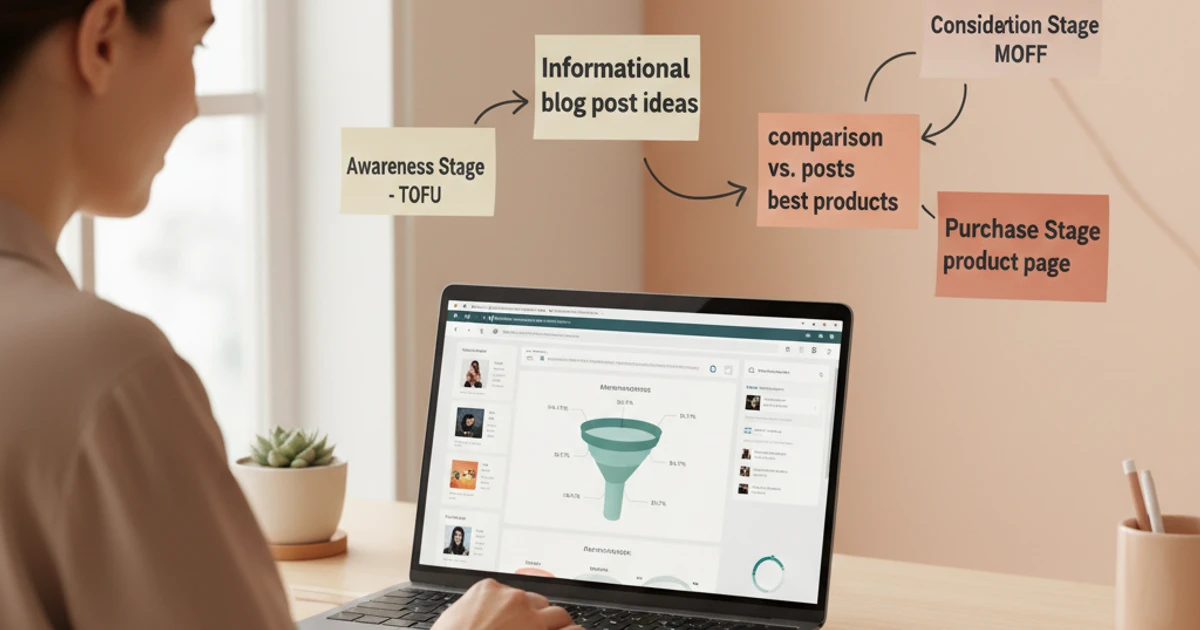
E-commerce SEO works best when every keyword aligns with where a shopper is in the buying journey. Instead of chasing volume alone, you want queries that map directly to categories, products, and support content that can drive revenue.
For agencies and marketing teams, this means building a structured keyword framework that content strategists, writers, and merchandisers can all use consistently across campaigns and product launches.
Map Keywords to the E-commerce Funnel
Start by grouping keywords into category, product, and support intent buckets so each page type has a clear job. This prevents overlap and cannibalization between collection pages, PDPs, and blogs.
For example, Nike targets broad category phrases like “women’s running shoes” with collection pages, then reserves “Nike Pegasus 41 women’s” for specific product detail pages.
Category, Product, and Support Queries
Category-level queries such as “running shoes for women” or “organic dog food” signal strong commercial intent but leave room for comparison. These belong on collection or PLP pages with robust filters, buyer guides, and clear merchandising.
Product-level searches like “Brooks Ghost 15 women’s size 8” or “Samsung 55 inch QN90B price” are bottom-of-funnel. These should point to PDPs optimized with rich content, reviews, and structured data to maximize conversion.
Support and comparison keywords such as “Adidas Ultraboost vs Nike Pegasus” or “how to choose a camping tent size” fit long-form guides. REI does this well by pairing comparison content with internal links to relevant categories and products.
Find High-Intent, Product-Led Keywords
High-intent e-commerce keywords usually contain clear purchase signals: “buy,” “best price,” “on sale,” or specific feature modifiers. These terms often convert 2–3x higher than generic informational queries.
When your content workflow platform turns keyword research into briefs, prioritize these phrases for PDPs, category pages, and commercial blog posts like “best” and “top” lists.
Use Modifiers and Long-Tail Phrases
Look for modifiers that mirror how shoppers actually refine searches: brand, color, size, material, and use case. For instance, “black leather office chair with lumbar support” or “kids waterproof hiking boots size 4” show clear buying intent and a defined need.
Long-tail, problem-oriented phrases like “running shoes for flat feet women,” “sofa for small apartment,” or “desk for dual monitors under $300” often have lower competition but strong conversion rates. Amazon and Wayfair rank for thousands of these micro-intent phrases that collectively drive massive revenue.
Use Tools and Internal Data Sources
Robust keyword research blends external tools with your own customer data. This combination reveals not just what people search, but how they describe problems in their own words.
Teams that integrate this data directly into their content workflows produce briefs that feel more natural to readers while still being highly optimized.
Leverage GSC, Site Search, and Voice of Customer
Use Google Search Console to identify keywords where you rank on pages 2–3 with solid impressions. A fashion brand might see “linen wide leg pants women” at position 18 with 5,000 impressions; that’s a signal to optimize category copy and internal links around that term.
Internal site search is equally valuable. If Shopify analytics shows 800 monthly searches for “plus size cocktail dress,” but you lack a dedicated collection, that’s a high-intent opportunity. Layer in language from reviews and support tickets (e.g., “doesn’t shrink,” “pet-friendly fabric”) as secondary keywords in briefs.
Prioritize Keywords by Business Impact
Not all keywords are equal. A phrase with modest volume but tied to high-margin products can be far more valuable than a broad term that rarely converts. Your keyword backlog should be ranked by potential revenue, not just traffic.
This is where SEO, merchandising, and finance teams should collaborate so that content resources go to terms with the best payback.
Balance Revenue, Difficulty, and Quick Wins
First, estimate revenue potential using product margins, average order value, and demand. For example, a furniture retailer might prioritize “ergonomic office chair under $300” over “office chair” because it aligns with a profitable product line and clearer intent.
Then assess difficulty in tools like Ahrefs or Semrush and cross-check with your current rankings in GSC. Keywords where you already sit in positions 5–20 are quick wins; a mid-sized cosmetics brand increased organic revenue 18% in six months by systematically improving pages for these near-miss terms instead of chasing ultra-competitive head keywords.
Reference:
→ best-ai-keyword-research-tools
Reference:
→ bing-keyword-research-tools
Reference:
Ecommerce Keyword Research Guide: Tips and Strategies …
3. Design SEO-Friendly Site Architecture for Online Stores
Structure Categories and Subcategories
Strong site architecture starts with how you group products. Your category tree should mirror how real shoppers browse, not how your warehouse stores SKUs. That alignment makes navigation intuitive and helps search engines understand topical themes across your catalog.
Begin by clustering products into broad, commercially focused categories, then add one or two levels of subcategories. For example, REI structures “Camping & Hiking” → “Tents” → “Backpacking Tents,” keeping products within three clicks of the homepage to support crawl efficiency and rankings.
Use category names that naturally include primary keywords without sounding forced. A label like “Women’s Running Shoes” outperforms “Footwear – W Run” for both users and Google. As highlighted in SEO for e-commerce websites, this kind of clarity often improves click-through and reduces pogo-sticking.
Create Clean, Scalable URL Structures
URLs should reflect your hierarchy in a way that’s easy to read and easy to scale. A pattern like /mens/shoes/running/nike-pegasus-41/ instantly signals context to users and search engines, and it supports rich internal linking from filters, blogs, and collections.
Avoid cluttered URLs with session IDs or unnecessary folders such as /index.php?cat=12&ref=hp. Brands like ASOS keep parameters mostly for tracking while exposing clean, canonical URLs to Google. When you plan URL templates early, you can add new categories or brands later without rewriting large portions of the site.
Manage Filters, Variants, and Faceted Search
Faceted navigation can either drive long-tail traffic or flood the index with low-value pages. Use search volume and uniqueness to decide which filter combinations deserve indexable URLs (e.g., “men’s black running shoes size 10”). Others should be controlled with noindex or canonical tags to a primary view.
Standardize how you handle variants like size, color, and bundles. Nike, for example, keeps one main product URL and swaps images/availability by variant, avoiding dozens of near-duplicate pages. This concentrates link equity and reviews on a single URL, which aligns with best practices recommended in comprehensive e-commerce SEO guides.
Internal Linking and Authority Distribution
Internal links tell search engines which URLs matter most. Prioritize links from your homepage, main navigation, and footer to core money pages—high-converting categories, seasonal collections, and flagship products with strong margins.
Implement breadcrumb trails like “Home > Furniture > Office Chairs > Ergonomic Chairs” to reinforce hierarchy and add contextual links between related sections. Amazon’s product pages are a good reference: they surface “Customers also bought” and “Similar items,” creating dense internal link graphs that distribute authority to thousands of SKUs efficiently.
Reference:
Website Architecture: How to Setup an SEO-Friendly …
4. Optimize Category Pages to Capture Broad, High-Intent Traffic

On-Page Elements for Category SEO
Category pages often rank for broad, high-intent phrases like “running shoes” or “SEO software,” so your core on-page elements must align with real search language. Start by crafting keyword-focused titles and H1s that mirror how users search, such as “Women’s Trail Running Shoes” instead of a vague “Women’s Collection.”
For example, Zappos targets variations like “Men’s Sneakers & Athletic Shoes” in H1s and title tags, helping capture both generic and long-tail queries while staying natural and clickable.
Use meta descriptions to highlight value propositions, product variety, and a clear call to action. A category like “SEO Content Tools” might emphasize “content briefs, workflow automation, and AI-assisted outlines” plus a phrase like “Compare plans and start free.”
Support this with secondary headings that segment content into subtopics such as “Best for Agencies,” “Top-Rated Tools,” or “Local SEO Templates,” guiding both crawlers and users.
Scalable, High-Quality Category Descriptions
Strong category descriptions should connect keywords to customer intent, not just repeat phrases. Explain benefits, use cases, and who the category is for. For an “Ecommerce SEO Services” category, speak to problems like thin content and duplicate metadata, then show how your services solve them.
Balance search terms with conversion-focused copy. Ahrefs, for example, uses concise, benefit-driven copy on its “SEO Tools” hub while still naturally including phrases like “keyword research,” “site audit,” and “rank tracking.”
To scale this across hundreds of categories, create templates in your SEO workflow platform that define word count ranges, mandatory sections (benefits, use cases, internal links), and tone guidelines. Then, layer in AI-assisted drafting with human editing to maintain nuance and avoid duplicate-sounding descriptions.
Visual Content and UX on Category Pages
Visual clarity and UX heavily influence how long visitors stay on a category page. Use clean product grids, consistent image ratios, and legible thumbnails so users can scan options quickly. Amazon’s category pages, for instance, rely on uniform images and badges like “Best Seller” and “Amazon’s Choice” to direct attention.
Implement filters that reflect how buyers think: price ranges, use case, industry, and feature sets. A “Content Marketing Tools” category might offer filters for “Agencies,” “In‑house Teams,” and “Freelancers,” alongside budget tiers.
Above the fold, make relevance obvious with a clear heading, short explanatory copy, and visible filters. This reduces pogo-sticking and sends strong engagement signals back to search engines that the page matches the query intent.
Schema and Internal Linking from Category Pages
Category pages work best as hubs. Implement schema markup where appropriate, such as ItemList or Product schema, so search engines understand that the page groups related offerings. This can support enhanced SERP displays for product-rich categories.
Feature bestsellers or flagship resources near the top and link to them prominently. For a “SEO Content Workflows” category, you might spotlight a “Content Brief Template Library” and a “Content Operations Guide,” each with internal links.
Use the category hub to connect related guides, FAQs, and comparison pages. This creates a tightly themed topic cluster, improves crawl efficiency, and helps users progress from research to purchase without dead ends or orphaned content.
Reference:
→ best-ai-keyword-research-tools
Reference:
→ optimize-content-for-search-engines
Reference:
SEO for Category Pages: 12 Proven Ways to Optimize
5. Turn Product Pages Into Search-Optimized Sales Machines
On-Page SEO Essentials for Product Pages
High-performing product pages balance search intent with commercial intent. Your goal is to help Google understand the product while giving buyers enough clarity to click “Add to Cart.”
Start by structuring titles with primary keywords, brand, and defining attributes. For example, “Nike Air Zoom Pegasus 40 Women’s Running Shoes – Black, Size 7–11” targets brand, model, audience, and key modifiers without stuffing.
Weave important keywords into headings, descriptions, and feature bullets where they naturally fit. Amazon does this well: product titles hit core terms, while bullets cover “running shoes for women,” “road running,” and “cushioned support” in human-readable sentences.
Write unique meta titles and descriptions for every product. A Shopify store selling “Hydro Flask 32 oz Wide Mouth Bottle” might use a description that calls out “keeps drinks cold up to 24 hours” plus free shipping to lift CTR over generic manufacturer text.
Unique, Benefit-Driven Product Copy
Duplicate manufacturer copy wastes ranking potential and rarely converts well. Brands like REI rewrite product descriptions to focus on real-world use: who it’s for, where it shines, and what problems it solves.
Translate features into outcomes. Instead of “600-fill-power down,” explain “lightweight warmth down to 20°F on winter hikes,” backed by a short scenario or customer quote.
Address common objections directly: sizing, fit, compatibility, or maintenance. Zappos reduces returns by explaining fit (“runs half-size large”) and use cases (“best for neutral runners logging 10–20 miles per week”).
Optimize Product Media for SEO and Conversion
Search engines and shoppers both rely on strong visuals. Each image should have descriptive, keyword-relevant alt text like “black leather men’s Chelsea boots with rubber sole” rather than “IMG_1234.”
Compress and resize images with tools like TinyPNG or ImageOptim to improve Core Web Vitals. Etsy sellers who reduce image size often see noticeable boosts in mobile speed and higher engagement.
Include multiple angles, close-ups, and lifestyle shots. Ikea’s 360° spins and room-context photos help users visualize scale and style, improving add-to-cart rates and reducing uncertainty.
Product Schema and Rich Results
Structured data helps Google display richer product snippets. Implement Product schema with price, availability, and rating so your listings can show stars, “In stock,” and sale pricing directly in SERPs.
Encourage reviews via post-purchase email flows using tools like Yotpo or Judge.me. BrightLocal’s studies show that products with 5+ recent reviews significantly outperform those with none in click-through and conversions.
Keep schema updated as prices and stock change. Outdated structured data can lead to mismatched expectations, hurt trust, and in some cases trigger search console warnings that suppress rich results.
Reference:
5 Ways to Turn Your Website into a Powerful Sales Machine
6. Leverage Content Marketing to Support E-commerce SEO Growth

Build SEO Content Hubs Around Products and Problems
Content hubs help search engines understand your authority around specific product categories and customer pain points. Instead of isolated posts, you create a structured library that connects research intent to purchase intent.
For example, an outdoor retailer like REI builds a hiking hub with a pillar page on “Hiking Gear Guide,” then clusters content on topics like “best hiking boots for thru-hiking” and “how to choose trekking poles.” Each article links back to boot, backpack, and apparel category pages, strengthening both topical relevance and commercial rankings.
High-Performing Blog Post Types for E-commerce
Certain content formats consistently attract high-intent visitors and long-tail search traffic. These posts meet shoppers where they are in the decision journey and naturally bridge into product discovery.
Comparison posts such as “Sony WH-1000XM5 vs Bose QuietComfort Ultra” target users who are close to purchase. “Best of” posts like “10 Best Standing Desks for Home Offices” perform well for brands like Fully and UPLIFT Desk, capturing broad non-branded demand and feeding category and product pages with qualified visitors.
Integrate Products Naturally into Content
Content should feel helpful first and commercial second. Overloading posts with aggressive banners or pop-ups drives readers away and dilutes authority signals like time on page and scroll depth.
Follow the model used by brands such as Sephora, which embeds subtle product cards within tutorial articles and how-to guides. Clear CTAs like “View shade range” or “Shop the full collection” appear after value has been delivered, keeping UX clean while still nudging interested users to product detail pages.
Internal Linking from Content to Commerce Pages
Strategic internal linking translates informational traffic into revenue while reinforcing topical relevance. Each educational article should map to one primary product or category and 2–3 secondary options.
Use descriptive anchors like “waterproof trail running shoes” rather than “click here.” Teams using an SEO content workflow platform can schedule quarterly content audits to add links from top-performing posts to new collections, seasonal offers, and refreshed SKUs, preventing content decay and keeping commercial paths up to date.
Reference:
→ optimize-content-for-search-engines
Reference:
→ how-to-use-content-clusters-for-seo
Reference:
E-commerce Content Marketing: 11 Effective Strategies
7. Improve User Experience and Conversion Signals That Impact SEO
Search engines increasingly reward sites that keep users engaged, satisfied, and converting. For ecommerce and lead-gen brands, UX and conversion signals often separate top-ranking pages from those stuck on page two.
Focusing on navigation, checkout, engagement metrics, and UX research gives your SEO content a performance edge, especially when managed through a structured SEO content workflow.
Reduce Friction in Navigation and Discovery
When users struggle to find products or key content, they bounce quickly, sending negative signals back to Google. Clear pathways from category to product and from search to product improve both revenue and rankings.
First, design intuitive navigation menus and breadcrumbs so users can move across categories without thinking. Amazon’s layered breadcrumbs (Home > Electronics > Laptops) show users where they are and make backtracking painless, which increases pages per session.
Second, implement robust onsite search with auto-suggest, synonyms, and filters. Shopify stores that enable advanced search tools like Algolia often report double-digit lifts in search-driven revenue because users reach relevant products in fewer clicks.
Finally, audit critical paths such as category-to-product and search-to-product. Use a three-click rule as a benchmark: if a user needs more than three clicks to reach a high-intent product, simplify the path and consolidate redundant pages.
Optimize Checkout Flows and Trust Elements
Checkout friction kills conversions and weakens the behavioral signals that support strong rankings. A smoother funnel sends positive engagement data and often improves ROAS across paid and organic channels.
Start by streamlining checkout into as few steps as possible, offering guest checkout, and using a clear progress bar. Baymard Institute’s research shows complex checkouts cause nearly 17% of cart abandonments; trimming fields and steps can recover significant revenue.
Then layer visible trust elements near CTAs. Zappos highlights free returns, secure payment icons, and clear shipping details above the fold, which reassures new visitors and lifts completion rates. Place security badges and privacy links close to payment fields, not buried in the footer.
Round out trust with authentic reviews and ratings on product and cart-adjacent pages. For instance, Best Buy showcases thousands of verified reviews and Q&A below the fold, reducing purchase anxiety and improving both long-session engagement and organic visibility.
Monitor Engagement Metrics
Analytics data reveals where UX issues are eroding SEO value. By tracking engagement and conversion metrics on key landing pages, you can prioritize fixes that deliver both ranking and revenue gains.
Monitor bounce rate, time on page, and pages per session for organic landing pages and major categories. If an informational guide has strong rankings but thin time-on-page, your content may miss search intent or be hard to scan, signaling a need for restructuring.
Identify journeys with high drop-off rates—such as product page to cart or cart to checkout. For example, if Google Analytics shows 70% of users abandon at shipping details, your fees or messaging might be the issue, not your ranking position.
Use these behavioral metrics as directional indicators, not absolute SEO scores. They help diagnose whether a ranking dip is rooted in UX problems, misaligned content, or technical issues like slow load times.
Use UX Insights and Heatmaps
Qualitative UX tools fill the gaps left by analytics, revealing how users actually interact with your pages. Heatmaps, scroll maps, and session recordings can surface blockers that raw numbers can’t explain.
Deploy tools like Hotjar or Microsoft Clarity to see where users click, hover, and stop scrolling. If heatmaps show most users never reach your primary CTA or internal links, restructure the layout so critical elements appear higher on the page.
Test variations of layouts, CTAs, and content placement through A/B experiments. Booking.com is known for constant micro-tests—small shifts in button color, copy, or placement that collectively drive significant conversion lifts and stronger engagement signals.
Feed UX insights directly into your SEO landing page templates and global components. When your content workflow standardizes proven patterns—such as above-the-fold value props and sticky CTAs—every new page benefits from prior UX learnings.
Reference:
7 User Experience Signals To Improve Your SEO
8. Earn Authority and Backlinks for E-commerce SEO at Scale
Scalable link acquisition is what turns solid on-page SEO into category-leading visibility. For e-commerce teams, the goal is to earn links that both rank and convert, not just inflate vanity metrics.
High-authority backlinks from relevant publishers, partners, and communities signal to Google that your catalog, guides, and tools deserve to outrank marketplace giants and big-box retailers.
Link Acquisition Through PR and Launches
Digital PR turns product moments into organic coverage. Instead of chasing random links, tie campaigns to newsworthy launches and data angles that editors genuinely want to cover.
For example, Glossier often pairs new product drops with founder interviews and community stories, earning links from outlets like Vogue and Allure that keep ranking for years.
How to Execute
Use digital PR campaigns and launches to pitch journalists with clear angles, visuals, and samples. Target vertical-specific sites (e.g., TechCrunch for gadgets, Wirecutter-level reviewers for home goods) instead of generic news blasts.
Tell a brand story that resonates with niche communities—such as sustainable sourcing or local manufacturing—so niche blogs and Reddit communities are willing to link and discuss your pages.
Partner and Affiliate Strategies
Well-structured affiliate and partner programs can generate consistent, high-intent backlinks. The key is to reward quality, not just volume.
Brands like Patagonia and REI work with specialized outdoor publishers and YouTube reviewers whose audiences are already primed to buy, creating links that drive both authority and revenue.
How to Execute
Set up an affiliate program that pays more for high-converting traffic, not simply clicks. Use platforms like Impact or CJ to vet partners and prioritize sites with real editorial standards.
Co-create product roundups or seasonal guides with complementary brands—for instance, a cookware brand teaming up with a spice company—so each partner hosts and links to shared content.
Create Link-Worthy Assets
Evergreen assets pull in links on autopilot. Instead of only optimizing product pages, invest in resources that journalists, bloggers, and creators naturally reference.
Wirecutter-style buying guides and comparison charts often attract links from smaller bloggers who lack the resources to do deep original testing.
How to Execute
Build in-depth buying guides and comparison pages that map directly to product decisions, such as “running shoes for flat feet” with clear, data-backed recommendations.
Consider calculators or tools, such as a mattress firmness quiz or bike size calculator, that solve specific pre-purchase questions and give others a reason to cite your page.
Manage Anchor Text and Link Quality
Authority without control can become a liability. Unnatural anchors or spammy links can slow growth or trigger manual reviews.
SEO teams at brands like Wayfair and ASOS routinely audit anchors and domains in tools like Ahrefs and Google Search Console to keep profiles clean.
How to Execute
Encourage varied, natural anchors (brand, URL, and topical phrases) instead of over-optimized exact-match keywords. This mirrors how editors usually link when not guided.
Monitor your backlink profile monthly, flagging obvious spam and paid networks, and use Google’s disavow tool only when you see persistent, harmful patterns.
Reference:
Ecommerce Link Building: 8 Powerful Strategies to Boost …
9. Implement Scalable SEO Workflows for Growing Online Stores
Build a Repeatable SEO Content Workflow
As catalogs expand from dozens to thousands of SKUs, ad‑hoc SEO breaks down. A repeatable workflow ensures every new product and category page is researched, optimized, and launched with the same standard of quality, whether you publish 10 or 1,000 items a month.
Start by standardizing steps: keyword research, content briefing, copy creation, on-page optimization, QA, and publishing. For example, fashion retailers using Ahrefs and Semrush often define keyword clusters for each collection before a single description is written, then push approved content into Shopify or BigCommerce via a structured process.
Create a non‑negotiable SEO checklist every page must pass before going live: unique title tag, descriptive H1, internal links, schema, and basic image optimization. Schedule refresh cycles based on performance and inventory; high‑revenue SKUs might be reviewed every 90 days, while long‑tail products update twice a year to keep copy aligned with search demand.
Align SEO with Key Internal Teams
SEO scale depends on tight coordination with merchandising, paid media, and development. When these teams share priorities and timelines, organic search amplifies other channels instead of competing with them.
Meet with merchandising to map SEO focus around margin and demand. For instance, a beauty brand might prioritize organic growth for “vitamin C serum” and “retinol cream” categories before a Sephora or Ulta feature to capture pre‑launch interest. This turns seasonal assortments and drops into planned search campaigns.
Share query and landing‑page data with paid search teams in Google Ads or Microsoft Advertising. If a category like “waterproof hiking boots” converts at 6% in paid, mirror that messaging in organic titles and meta descriptions. With developers, keep a shared backlog for technical SEO—Core Web Vitals fixes, faceted navigation rules, and structured data—so changes are batched and released without disrupting peak sales periods.
Use Templates, Briefs, and SOPs
Templates and SOPs keep growing content teams consistent, especially when freelancers and agencies are involved. They reduce rewrites, speed up onboarding, and protect brand voice while still leaving room for creativity.
Create SEO‑focused templates for product pages, category hubs, and buying guides. For example, Wayfair‑style templates often include a comparison section, care instructions, and FAQ schema, which reliably attracts long‑tail queries like “how to clean velvet sofa” or “best rug size for living room.”
Build detailed briefs that clarify primary and secondary keywords, target persona, internal links, and on‑page requirements like word count and structure. Document SOPs for writing, editing, and approvals so every writer knows how to handle out‑of‑stock products, variant pages, and canonical tags. This documentation becomes your operating manual when the team doubles in size.
Automate Routine SEO Checks and Monitoring
Manual audits cannot keep up with fast‑growing catalogs. Automation catches issues early and gives leaders reliable data for prioritizing work, instead of reacting to traffic drops after revenue is already hit.
Use tools like Screaming Frog, Lumar, or Sitebulb for scheduled crawls that flag broken links, 404s, missing title tags, and indexation gaps. Pair this with Search Console and analytics dashboards in Looker Studio or Tableau to track rankings, traffic, and revenue by category, brand, or collection.
Automate weekly and monthly reports on core KPIs—non‑brand clicks, category revenue, new vs. returning visitors—so you can quickly spot when a high‑value segment like “women’s running shoes” loses visibility. Set alerts for sudden swings in impressions or index coverage, then feed these into your workflow queue so fixes are handled before major events like Black Friday or Prime Day.
Reference:
9 Ways SEO Automation Helps Boost Your Traffic
10. Measure, Analyze, and Continuously Optimize Your E-commerce SEO Performance
Define the Right E-commerce SEO KPIs
Effective e-commerce SEO reporting goes beyond vanity metrics. Your team needs KPIs that tie organic visibility directly to revenue so you can prioritize content and technical work that actually sells products, not just drives sessions.
Track revenue driven by organic search alongside assisted-conversion value in Google Analytics 4. For example, REI monitors organic revenue and compares it to paid search to decide when to reduce branded ad spend and let SEO capture more demand profitably.
Monitor average order value (AOV) and customer lifetime value (LTV) for organic customers in tools like GA4 and HubSpot. Brands such as Warby Parker use LTV by channel to justify investing in long-form guides that attract high-intent, repeat buyers rather than one-off bargain hunters.
Segment performance by channel, category, and key product groups inside your SEO workflow platform. An apparel retailer might break out women’s denim, men’s activewear, and footwear, then align content briefs and internal linking strategies to the highest-margin categories first.
Track Rankings, Traffic, and Conversions
Rankings and traffic are still essential, but they matter most when viewed through a commercial lens. Focusing on high-value categories and product-line performance reveals where your SEO content and technical work are truly driving results.
Monitor keyword rankings for priority hubs using tools like Semrush or Ahrefs. For instance, Home Depot tracks category terms such as “cordless drill” and “outdoor string lights,” then compares those ranking movements directly against organic revenue per category each month.
Analyze organic traffic trends at category and product levels rather than only looking at domain-wide graphs. Tie each landing page in GA4 to its primary keyword cluster so you can see which guides, comparison pages, and PDPs actually generate first-click or last-click conversions.
Attribute conversions and revenue to specific landing pages with e-commerce tracking. When Nike sees a buying guide like “How to Choose Running Shoes” assisting thousands of conversions, that insight feeds future briefs, link-building priorities, and on-page UX tests.
Validate Changes with A/B Testing
SEO efforts often stall because teams ship changes without proof they improve revenue. Structured A/B testing lets you validate copy, layout, and CTAs while avoiding risks to indexation and organic visibility.
Test on-page elements such as product copy length, review placement, and trust badges using tools like Optimizely or VWO. Backcountry, for example, has tested adding gear-expert Q&A blocks on product pages and saw double-digit uplifts in add-to-cart rate on winning variants.
Use SEO-safe A/B methods: avoid serving completely different HTML to search engines than users, and keep test variants indexable when they represent realistic final states. Split tests by URL groups (e.g., 50 percent of category pages) rather than cloaking experiences based on user-agent.
Incorporate winning variants into templates and documented SOPs so improvements scale. Once a specific PDP layout beats control, roll it to all similar products and bake the updated design into your shared content and development workflow within your SEO platform.
Build an Ongoing Optimization Roadmap
Sustainable e-commerce SEO is a continuous cycle, not a one-off project. A living roadmap helps agencies and in-house teams decide what to tackle first and how to allocate limited content, design, and engineering resources.
Use data from GA4, Google Search Console, and CRO tools to prioritize initiatives by revenue impact. If Search Console shows high impressions but low CTR for a profitable category, updating title tags, schema, and image thumbnails may outrank launching a new blog cluster.
Maintain a backlog of technical fixes, content updates, and UX enhancements ranked by impact versus effort. Many brands use a simple ICE or RICE scoring model inside tools like Asana or Monday.com to decide whether to fix slow filters on category pages or refresh top-funnel guides first.
Review and adjust your roadmap monthly or quarterly to account for algorithm updates, seasonality, and competitor shifts. Retailers like Target adapt their SEO focus before major events such as Black Friday, surfacing gift guides, bundles, and deal-focused category copies at the top of their queue.
Reference:
10 Vital Ecommerce Metrics to Measure Your Success
Conclusion: Key E-commerce SEO Principles to Guide Long-Term Growth
Core Principles and Strategic Focus
Long-term e-commerce SEO success rests on a stable foundation, not quick wins. Start with technical health: fast load times, mobile-first design, and clean site architecture that allows Google to crawl and index your catalog efficiently.
For example, when ASOS reduced page weight and simplified navigation, they saw faster indexing of new products and smoother organic growth. Use tools like Screaming Frog and Google Search Console to spot crawl errors, redirect chains, and orphaned URLs.
Keyword strategy should connect directly to revenue, not vanity traffic. Map terms like “women’s waterproof hiking boots size 8” to product and filter pages, then track add-to-cart and ROAS in Google Analytics and Looker Studio.
Brands like REI rank by targeting specific outdoor-intent queries and aligning page copy, FAQs, and schema with those buyer needs. Treat every priority keyword as a commercial hypothesis that must prove itself in revenue data.
Category and product pages are not just catalog entries; they are your highest-value SEO assets. Optimize category pages with descriptive copy, internal links, and filters that can be crawled without generating thin or duplicate pages.
Wayfair, for instance, scales SEO by building robust category hubs like “mid-century modern sofas,” adding comparison content and structured data to turn them into discovery engines rather than simple lists of SKUs.
Supporting Growth with Compounding Efforts
Compounding growth comes from assets that get stronger over time: content, links, and UX. Educational hubs, like Petco’s pet care guides, attract links, support product pages, and keep customers engaged at every stage of the journey.
Pair this content with authority-building outreach, digital PR, and clear UX wins such as intuitive filters and persistent carts. Each improvement raises conversion rates, which reinforces the value of every organic click you earn.
To scale SEO without sacrificing quality, formalize workflows. Create repeatable briefs that include target intent, SERP analysis, internal links, and schema requirements. Platforms like Asana or Monday, paired with an SEO workflow tool, help enforce consistency.
Define clear QA checklists so every new category page, buying guide, or product description is optimized the same way, regardless of who produced it. This structure prevents drift as teams grow and campaigns overlap.
Centralized operations keep cross-functional teams aligned. Store briefs, approvals, and optimization tasks in a single platform instead of scattered docs or email threads.
For example, an agency managing 50 Shopify stores can centralize on-page tasks, link-building outreach, and dev tickets in one pipeline, so writers, SEOs, and developers always know status, owners, and deadlines, reducing rework and miscommunication.
Operational Excellence and Next Steps
Operational excellence is what turns SEO strategy into predictable outcomes. Standardized workflows, templates, and naming conventions let you maintain quality across tens of thousands of URLs without constant heroics.
Think of how Amazon enforces consistent title formats, bullet structures, and schema across categories. Adopting similar standards in your own stack shrinks review time and makes large-scale optimization realistic for lean teams.
Data responsiveness separates stagnant stores from compounding ones. Build a content and SEO pipeline that checks Search Console, revenue reports, and rank tracking weekly, then routes insights into specific optimization tasks.
If a category like “office chairs under $200” surges in impressions but lags in CTR, your workflow should trigger tests around titles, meta descriptions, and on-page merchandising within days, not quarters.
To move from theory to execution, audit your current site against this framework. 1) Crawl your site and map technical issues. 2) Prioritize high-revenue categories for keyword and on-page upgrades. 3) Build a structured SEO workflow that covers briefs, production, optimization, and QA.
Start with quick wins—such as improving internal linking to top-margin categories or fixing slow templates—then iterate. The combination of clear strategy, operational discipline, and a centralized workflow platform is what turns e-commerce SEO into a reliable growth engine year after year.
FAQs About E-commerce SEO and Optimizing Online Stores
Results and Timelines
E‑commerce SEO takes longer than paid campaigns, but the compounding effect is worth it. Most stores see early leading indicators—improved crawl stats, better impressions, and a few page-2 rankings—within 4–6 weeks.
Meaningful revenue impact usually appears in 3–6 months, depending on domain history, technical health, and competition. For example, Backcountry reported needing roughly six months to grow organic revenue after a major technical clean-up and content overhaul.
Ranking Challenges Despite Strong Products
High-quality products do not guarantee visibility if search engines cannot understand or trust your site. Thin product copy, missing internal links, and slow mobile performance are common blockers.
Use tools like Google Search Console, Ahrefs, or Semrush to compare your category depth, backlinks, and Core Web Vitals with competitors such as Wayfair or Best Buy. This helps clarify whether issues stem from basics, intense competition, or limited brand awareness.
Updating Product and Category Pages
Regular updates signal freshness and help match changing search intent. Prioritize high-traffic and high-margin SKUs for quarterly review, then rotate through long-tail products.
Impactful updates include better descriptions, expanded FAQs, and refined schema (Product, Review, FAQ). For instance, Home Depot’s detailed specs, Q&A, and structured data help it dominate for DIY and tool-related searches.
Handling Out-of-Stock and Discontinued Products
For temporarily out-of-stock items, keep URLs live, clearly show status, and highlight similar alternatives. Amazon often keeps these pages indexed while promoting close substitutes and back-in-stock alerts.
When products are permanently discontinued, 301 redirect to the closest relevant category or successor product. Avoid dumping users on the homepage, which can look like a soft 404 to Google and frustrate shoppers.
Balancing SEO with Design and Conversion
Strong SEO, clean design, and high conversion should support each other. The goal is content-rich pages that still feel fast and visually focused, like Nike’s product pages that blend multimedia with clear copy.
Non-negotiables include crawlable navigation, indexable content, and sensible internal links. Collaborate early with UX and brand teams using shared wireframes so SEO elements—H1s, copy blocks, FAQ sections—are planned, not bolted on.
When to Invest in Platforms or Agencies
Investment in SEO platforms or agencies makes sense when manual workflows break down. Signals include thousands of SKUs, multiple markets, or fragmented content operations across marketing and merchandising.
Evaluate partners by e‑commerce experience, reporting depth, and how well they integrate with Shopify, BigCommerce, or Adobe Commerce. Ask for case studies with real outcomes, like specific lifts in non‑branded traffic or revenue over a 6–12 month period.
Leave a Reply