
Introduction
Effective link building is still one of the clearest signals Google uses to evaluate which pages deserve to rank on page one. High-quality backlinks from trusted, relevant websites can lift your organic visibility, strengthen domain authority, and send a steady stream of qualified visitors who are already interested in your products or services.
For content creators, SEO agencies, and in-house marketing teams in the United States, this means link building must be baked directly into the content workflow. Teams that plan outreach, content angles, and link opportunities before drafting often see compounding returns from every article they publish.
Overview
Legacy tactics—like blasting low-quality guest posts or submitting to hundreds of spammy directories—no longer work and can even trigger Google penalties. Updates such as Google’s SpamBrain and the Helpful Content system have made it clear that relevance, editorial oversight, and user value matter far more than raw link volume.
Modern link building focuses on earning links through credible, useful content. For example, Backlinko’s data-driven SEO studies attract links from HubSpot, Ahrefs, and Search Engine Journal because they publish original research people genuinely want to cite.
What This Guide Covers
This guide walks through seven practical, modern link building tactics you can integrate into your SEO content workflow. Each tactic explains when it works best, why it’s effective, and how to operationalize it across your team and tooling.
Whether you run an SEO agency building authority for multiple clients or a content team growing a B2B SaaS blog, you’ll learn repeatable approaches you can plug into briefs, calendars, and outreach sequences without guesswork.
Creating Linkable Assets
Overview
Creating linkable assets is about publishing content so valuable that other websites want to reference it without being asked. Instead of chasing every backlink, you design a resource that editors, journalists, and bloggers naturally cite when covering your topic.
For example, an SEO agency could publish an annual “Ecommerce Link Building Benchmarks” report summarizing common tactics and success rates pulled from client campaigns and public data. Agencies like Ecorn highlight how strategic content and assets power ecommerce link building strategies that attract steady organic growth.
Key Details
Effective linkable assets usually take the form of original studies, industry reports, data visualizations, calculators, templates, or deep how-to guides. A content workflow platform might release a “Content Production Time Study” based on 500+ projects, presenting charts on briefing time, draft cycles, and approval bottlenecks.
These formats resonate with publishers and niche blogs that constantly need credible sources and statistics. When your asset tightly matches search intent—such as “SEO content brief template”—and clearly outperforms existing resources, it becomes a go-to citation that supports outreach, PR pitches, and digital partnerships over months or even years.
Guest Posting on Authoritative Websites
Overview
Guest posting is a strategic way for SEO teams and content marketers to earn authoritative backlinks while getting in front of highly qualified audiences. By contributing in-depth articles to respected sites in your niche, you showcase your expertise and strengthen your brand’s visibility in organic search.
For example, an SEO agency contributing a technical SEO guide to Search Engine Journal or Search Engine Land can secure a contextual backlink while reaching thousands of practitioners who actively implement those tactics. The goal is to be recognized as a subject-matter expert, not just someone chasing links.
Key Details
Effective guest posting starts with targeting the right publications. For a U.S.-focused SaaS or agency, this often means pitching niche blogs like Ahrefs, HubSpot, or industry associations such as the Content Marketing Institute, which attract engaged, search-savvy readers.
Look for sites with solid organic traffic (e.g., 20,000+ monthly visits in Similarweb or Ahrefs), active comment sections, and clear editorial standards. Use each guest article to provide real how-tos, original data, or case studies, then link naturally to a relevant resource or landing page on your site, such as a workflow template or SERP analysis guide.
What Makes It Special
Guest posting is powerful because it blends link building with brand and audience growth. A detailed content operations piece published on CoSchedule’s blog, for instance, might send steady referral traffic for months while building trust with marketing teams researching editorial calendar tools.
You also gain limited control over anchor text and destination URLs, within each site’s guidelines. When done well, these posts can increase branded searches, newsletter sign-ups, and demo requests, acting as both an SEO asset and a demand-generation channel for your content workflow platform.
Considerations
Not all guest posting opportunities are worth pursuing. Avoid low-quality “write for us” sites that publish thin, off-topic content or advertise paid links openly, as these can trigger issues under Google’s link spam policies. Watch for red flags like irrelevant casino or CBD posts on a marketing blog.
Guest posting also demands time: prospecting, personalizing pitches, drafting, revising, and managing editor relationships. Expect rejections and edits, especially on higher-authority domains. Building a realistic cadence—such as 3–5 quality guest posts per month per client—helps agencies keep link acquisition predictable without sacrificing quality.
Best For
Guest posting is especially suited to SEO agencies and in-house teams running long-term organic growth programs. Agencies managing 6–12 month retainers can forecast links and coverage by maintaining a recurring pipeline of guest contributions across trusted industry sites.
It also works well for companies with strong subject-matter experts—such as a Head of SEO or Director of Content—who can share process breakdowns, frameworks, and data. For example, a marketing team using a content workflow platform could publish a “from brief to publish” case study on Content Marketing Institute to attract operations-focused readers.
Additional Info
To scale guest posting, build a vetted database of target sites categorized by topic, authority, and contributor guidelines. Many teams track this in tools like Airtable or Notion, noting metrics such as Domain Rating, estimated traffic, and decision-maker contacts.
Use outreach templates as a starting point, but always personalize subject lines and pitch angles to match each publication’s audience. Then, log pitches, responses, live URLs, and performance data—like referral traffic and assisted conversions—in a CRM or project tool, so your team can tie guest posting efforts directly to pipeline and revenue impact.
Reference:
The complete guide to guest blogging
Broken Link Building
Overview
Broken link building is a white-hat tactic where you locate dead (404) outbound links on relevant websites and suggest your content as a replacement. The goal is to restore a useful resource for the publisher and their audience while earning a high-quality backlink for your site.
For example, if a SaaS blog links to an outdated SEO study that now returns a 404, you can offer your own up-to-date research page as the substitute. Guides like How To Do Broken Link Building in 2025 emphasize focusing on broken links from high-traffic, high-authority pages where this swap creates meaningful value.
Key Details
Successful broken link building starts with discovery. SEO teams often use Ahrefs, Semrush, Screaming Frog, or Chrome extensions like Check My Links to surface 404 outbound links on resource hubs, pillar guides, and long-form blog posts that cite multiple sources. BuzzStream’s breakdown of broken link building in 2025 pairs Ahrefs data with Archive.org to understand what the original page used to cover.
Once a broken link is found, you either map it to an existing asset or create a new page that matches the original intent. Outreach should read as a helpful QA report: reference the exact URL, the anchor text, and the dead link, then suggest your replacement. Agencies like Siege Media publicly share that polite, specific emails vastly outperform generic “please link to us” pitches.
Reference:
Broken Link Building: The Complete Guide
Digital PR Campaigns
Overview
Digital PR campaigns blend newsworthy stories, proprietary data, and strong narratives to earn coverage on high-authority sites and drive powerful backlinks. Instead of relying only on guest posts, brands create content that journalists at outlets like The New York Times, CNBC, or TechCrunch actually want to cite and link to.
For SEO-focused teams, this means building assets—such as data hubs, reports, and interactive tools—that naturally earn links. For example, HubSpot’s annual State of Marketing report attracts hundreds of referring domains each year because it offers timely, research-backed insights editors can trust.
Key Details
Effective digital PR often revolves around formats like data studies, surveys, expert commentary, and location-based insights. A fintech platform might publish a study on credit card debt by state, while a martech SaaS company could survey 1,000 CMOs on content budgets, then pitch the findings to Adweek or Marketing Dive.
Campaigns are usually distributed via targeted email pitches, curated media lists, HARO/Connectively opportunities, and PR platforms like Muck Rack or Cision. Aligning hooks with timely angles—such as interest rate changes, TikTok usage trends, or back-to-school shopping statistics—gives journalists a reason to cover your story now, not later.
What Makes It Special
Digital PR stands out because a single successful campaign can earn dozens of high-authority links and massive reach. When Wise (formerly TransferWise) released its research on hidden bank fees, coverage from outlets like The Guardian and BBC delivered both credibility and strong SEO signals through authoritative backlinks.
For content and SEO teams, these campaigns also position brand experts as quotable sources. Consistent commentary on topics like AI content workflows, E-E-A-T, or Google core updates can turn your executives into go-to voices for journalists and podcasters, driving recurring mentions, referral traffic, and branded search demand.
Considerations
High-performing campaigns rely on robust ideas, clean methodologies, and trustworthy data. Journalists increasingly ask for sample sizes, data collection timeframes, and methodology links—similar to how The Washington Post or Reuters cite survey details—so your landing pages and press materials must withstand scrutiny.
Teams also need to accept that not every idea lands. Even well-researched studies can underperform if the angle isn’t timely or unique. Having a testing mindset—shipping multiple smaller concepts instead of betting everything on one big launch—helps you learn what resonates with reporters in your niche.
Best For
Digital PR is especially effective for established brands and SEO agencies that already produce strong content and have clear subject-matter authority. A B2B SaaS platform with anonymized usage data, for instance, can generate recurring reports that niche publishers like Search Engine Journal or MarTech.org are eager to feature.
It’s also well suited to marketing teams that want to move from mid-tier link building to top-tier authority coverage. Instead of chasing low-impact directory links, they can build flagship campaigns that earn placements on sites with domain ratings of 80+ and support long-term organic growth.
Additional Info
Smart digital PR programs continuously mine internal data sources—product analytics, aggregated user behavior, or platform search data—for patterns that tell a story. Spotify’s annual Wrapped campaign is a well-known example: it repackages listening data into compelling narratives that drive press, social sharing, and branded searches.
To maximize impact, align your PR calendar with product launches and content themes, and create dedicated landing pages for each campaign. Ensure journalists can easily access downloadable charts, methodology explanations, expert bios, and contact details so they can reference and link to your brand with minimal friction.
Reference:
→ 10-seo-tools-every-expert-needs
Reference:
→ best-ai-keyword-research-tools
Reference:
Digital PR Examples: 19 Compelling Campaigns
Skyscraper Content Updates
Overview
The skyscraper technique helps your team turn existing, link-worthy topics into standout assets that outperform competitors. Instead of starting from scratch, you identify articles that already attract backlinks and create something meaningfully better.
For example, if Ahrefs ranks with a popular “SEO checklist” that has hundreds of referring domains, your goal is to publish a richer, more current checklist with clearer steps, better visuals, and practical templates. Then you systematically reach out to sites linking to the older guide and offer your improved version as a more helpful resource.
Key Details
High-impact skyscraper updates start with data. Use tools like Ahrefs, Semrush, or Moz to find pages with strong backlink profiles for a target keyword such as “content brief template” or “B2B SEO strategy.” Focus on URLs with dozens or hundreds of referring domains and clear search demand.
Once you identify the target, upgrade it across multiple dimensions: expand coverage, add 2025-specific tactics, embed custom graphics, and include real examples. For instance, if a competitor lists generic outreach tips, you could share actual email templates that helped your agency secure links from HubSpot or G2, and show open and reply rates to prove effectiveness.
What Makes It Special
Skyscraper content is effective because you are not guessing who might link to you. You already know which publishers link to similar resources, so your outreach list is validated. This dramatically improves your odds compared with cold pitching unrelated content.
As you repeat this process around core themes like “SEO workflows” or “content operations,” your site becomes a go-to library. Over time, this raises topical authority in Google’s eyes and supports rankings for entire keyword clusters, from “content brief software” to “SEO content calendar templates.”
Considerations
Minor tweaks rarely earn links. Your updated asset should feel like a clear level-up—think turning a 1,500-word blog post into a 4,000-word guide with frameworks, screenshots, and case studies. For instance, you might add a detailed section on how your team uses Notion and Asana together to manage SEO content sprints.
Respectful outreach matters. Your pitch should acknowledge the publisher’s existing resource, explain specifically why your guide is more useful, and leave the decision to them. Results improve when that guide is backed by strong on-page SEO, internal links from your own “hub” pages, and clear CTAs to free trials, demos, or lead magnets.
Best For
Skyscraper updates work best for content-heavy brands with established blogs, resource hubs, or SEO playbooks. Agencies and in-house teams already running keyword research and SERP analysis can bolt this onto existing processes without reinventing their workflow.
For example, a SaaS company like Monday.com or ClickUp can build skyscraper guides around “project management templates,” then use those assets to nurture sign-ups. Agencies can do the same for topics like “local SEO checklist” and convert traffic into strategy consultations or audits.
Additional Info
To keep skyscraper content effective long term, treat these assets as versioned products, not one-off posts. Choose a small set of hero topics—such as “SEO content workflow,” “AI content brief generation,” or “editorial calendar templates”—and update them annually with fresh data and screenshots.
Track outreach in a simple CRM or spreadsheet: domains contacted, date, response, and link status. Over a few cycles, patterns emerge, such as which subject lines work best or which verticals are most responsive. This makes it far easier to replicate wins when you roll out skyscraper campaigns for new topics.
Reference:
What Is Skyscraper Content? (With 6 Steps To Complete …
Resource Page and Directory Outreach
Overview
Resource pages and curated directories exist to help specific audiences find credible, useful information fast. Universities, nonprofits, and industry groups often maintain these pages as trusted hubs, which makes them powerful placements for your strongest SEO assets.
For a content or SEO workflow platform, this means positioning your best guides, templates, or free tools as “go-to” resources. For example, a detailed content brief template or keyword clustering guide can be listed on a journalism school’s digital resources page or a local Small Business Development Center site.
Key Details
High-value targets include .edu and .org sites, chambers of commerce, and trade associations that already recommend software and learning materials. The U.S. Small Business Administration, SCORE, and local chambers often maintain “marketing resources” sections where content planning checklists or SEO editorial calendars fit naturally.
Your outreach email should explain exactly how your asset helps their audience. For instance, an SEO agency could pitch a free “SEO Content Calendar Template for 12 Months” to a regional marketing association, highlighting how it helps their 2,000+ members publish more consistently without extra budget.
What Makes It Special
Links from institutional and organizational sites typically carry strong authority signals and are trusted by search engines. A single placement on a university’s digital marketing resource page can send steady referral traffic and improve topical authority around SEO content workflows.
This approach shines for SaaS platforms that offer robust free tools or education. Think of how HubSpot’s free templates and Moz’s Beginner’s Guide to SEO are listed on countless marketing resource pages, generating links and signups for years with almost no ongoing effort.
Considerations
Not every directory is worth pursuing. Low-quality, pay-to-play link farms can violate Google’s spam policies and dilute your profile. Before pitching, review whether the site has clear editorial standards, up-to-date content, and real organizational backing, such as a registered nonprofit or accredited institution.
Expect slower approvals for government, university, or large association sites. Many will only link to non-commercial assets, so you may need a dedicated resource hub with ungated templates, checklists, and SOPs related to content planning and SEO documentation.
Best For
Resource and directory outreach works especially well for brands with strong evergreen materials. A platform that helps teams systematize briefs, outlines, and optimization workflows can repurpose those assets into public-facing guides that serve students, small businesses, and marketing professionals.
SEO agencies managing U.S. local or industry-specific campaigns can also leverage this tactic. For example, an agency serving healthcare clients could place a “Healthcare Content Compliance Checklist” on association sites like the American Medical Writers Association’s resources page, building both credibility and relevant backlinks.
Additional Info
Prospecting is often as simple as searching Google for combinations like “SEO resources,” “content marketing resources,” or “New York business resources” and filtering for .edu, .org, or well-known local organizations. Review each page to understand the type of assets they already list and how yours can fill a clear gap.
Maintain a lightweight CRM or spreadsheet with columns for URL, contact, submission rules, and status. Then match your best resource to each page: a “Content Brief Template” for journalism schools, a “Blog Editorial Calendar” for chambers of commerce, and a “Keyword Research SOP” for marketing associations.
Reference:
→ best-ai-keyword-research-tools
Reference:
→ bing-keyword-research-tools
Reference:
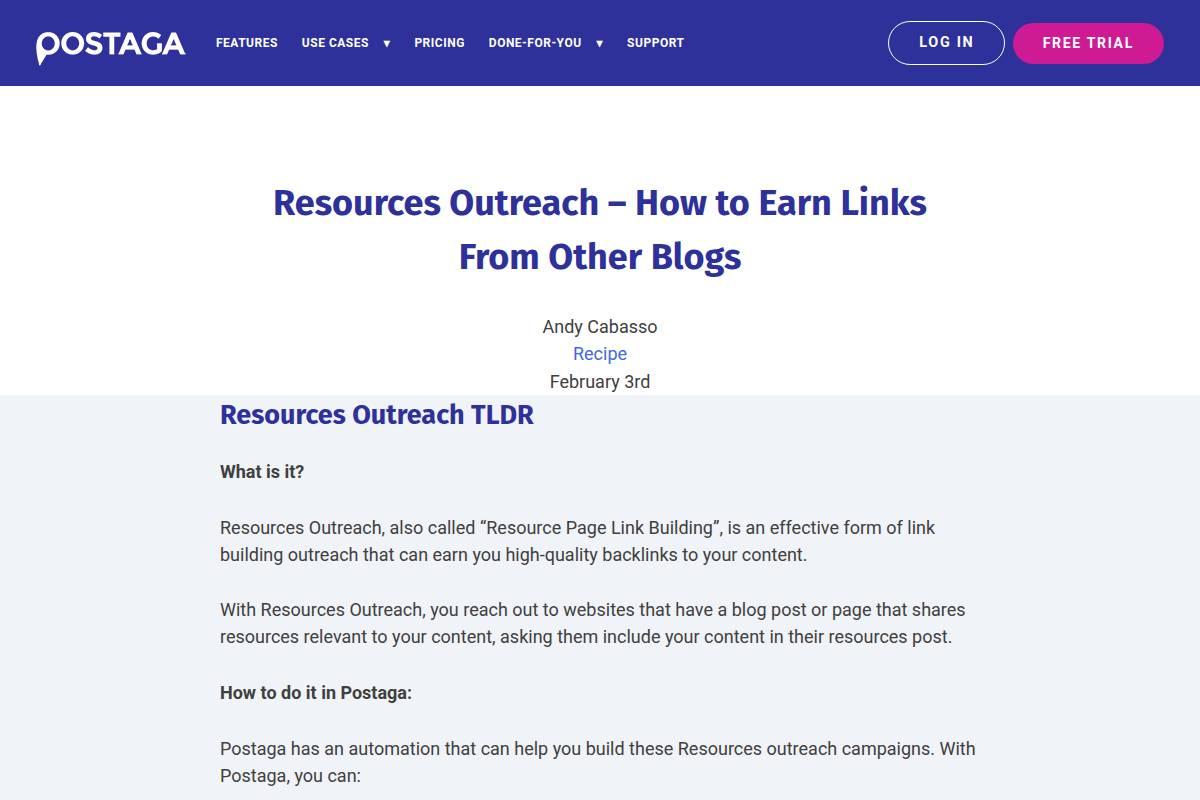
Resources Outreach – How to Earn Links From Other Blogs
Relationship-Based Outreach and Partnerships
Overview
Relationship-based outreach focuses on building genuine, long-term connections with brands, creators, and publishers instead of chasing one-off backlinks. For SEO teams using a content workflow platform, this approach turns link building into an extension of your existing content and community strategy.
Backlinks emerge naturally from collaboration: co-created guides, mutual promotion, and recurring partnerships. For example, Ahrefs regularly collaborates with content creators on YouTube and blogs, leading to repeated mentions and links over months, not just once. The emphasis is on shared value and community, not transactional link swaps that risk penalties or low-quality placements.
Key Details
Most relationship-driven partnerships start in channels where your experts already show up: LinkedIn, X (Twitter), niche Slack communities, and industry podcasts or webinars. A B2B SaaS team might connect with podcasters like Marketing Over Coffee, join communities such as Superpath, then propose a joint webinar or content series aligned with a specific SEO topic.
Common collaboration formats include co-authored articles, expert roundups, podcast guest spots, and newsletter mentions. For instance, HubSpot’s co-marketing campaigns often pair a detailed ebook or report with guest blog posts and email features from partners, generating multiple links from a single relationship and extending visibility across both audiences.
What Makes It Special
Relationship-based link building is more resilient than transactional outreach because it compounds over time. Once you earn trust with a partner publisher, they are far more likely to reference new content, product updates, and data studies without needing a fresh pitch every time. This creates ongoing, high-quality link opportunities.
These partnerships also drive layered benefits beyond links: shared audiences, referrals, and social proof from being associated with respected brands. For example, when Notion co-creates tutorials with creators like Marie Poulin, it gains recurring YouTube links, community referrals, and credibility in the productivity niche, all from the same core relationships.
Considerations
Building these relationships takes time. It involves consistent engagement, thoughtful comments, and value-first outreach, not cold pitches asking for a backlink. SEO teams should expect a slower ramp-up period of several weeks or months before seeing measurable link growth, especially in competitive B2B verticals.
The process is difficult to automate at scale and relies on authentic human interaction. Overly aggressive or one-sided asks can harm your brand reputation; for instance, repeatedly pushing for dofollow links or anchor text changes in public communities can quickly get you ignored or banned. Results vary widely and depend on the depth of each relationship, not how many emails you send.
Best For
This approach works especially well for agencies and marketing teams that already participate in social channels, events, and industry communities. If your brand has visible founders, subject-matter experts, or a strong thought leadership presence, relationship-based outreach can turn that visibility into a steady pipeline of natural mentions and links.
Businesses focused on sustainable, reputation-safe growth benefit most. A mid-market SEO agency, for example, might build recurring partnerships with tools like Semrush or Clearscope, contributing guest posts, joint webinars, and case studies that drive both new leads and authoritative backlinks over the long term.
Additional Info
To manage this systematically, keep a lightweight CRM or spreadsheet that tracks potential partners, touchpoints, and collaboration ideas. Include fields for their audience size, preferred topics, and past interactions. This makes it easier for content and outreach teams to coordinate efforts and avoid duplicated or misaligned pitches.
Integrate partnership-driven content into your editorial calendar so collaborations support key themes, launches, and campaigns. For instance, if you are releasing a new SEO workflow feature, line up a guest post on Animalz, a joint webinar with an analytics partner, and a newsletter swap with a popular Substack publisher in the same quarter to amplify impact and capture multiple high-quality links from aligned relationships.
Reference:
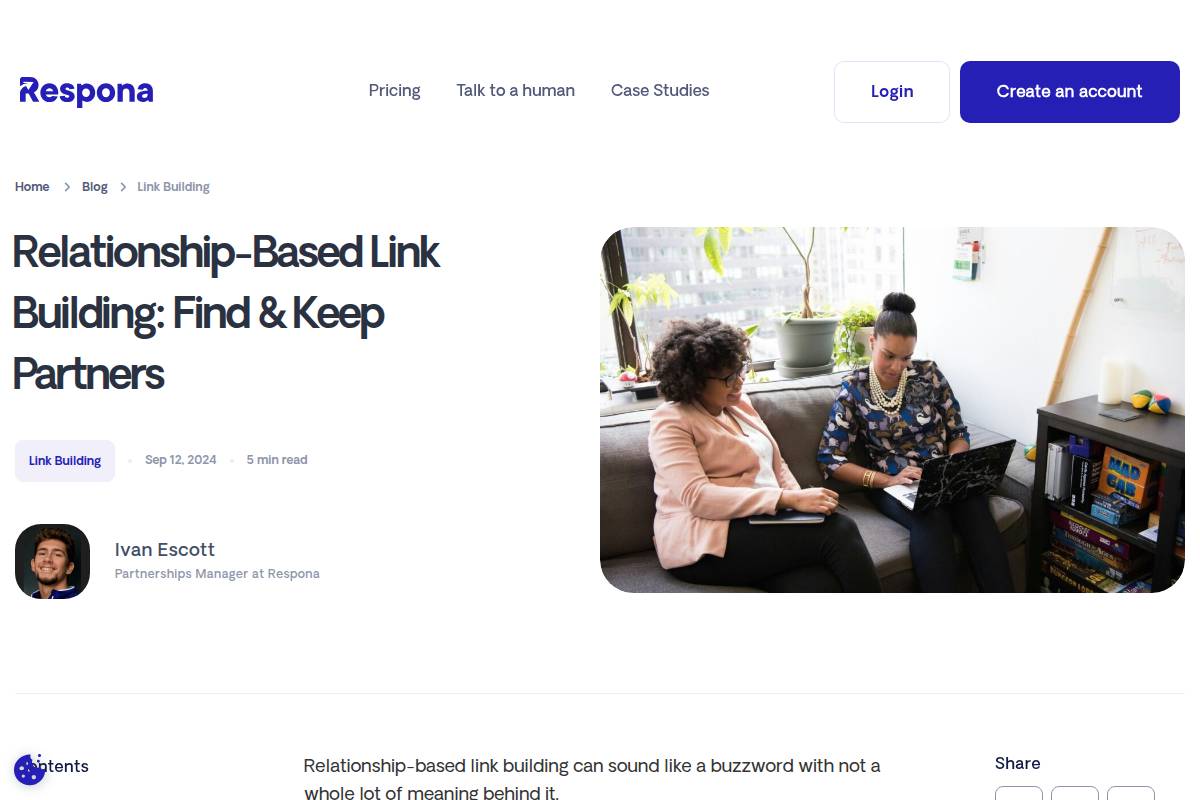
Relationship-Based Link Building: Find & Keep Partners
How to Choose the Right Link Building Strategy
Decision Guide
Choosing a link building strategy starts with clarifying whether you need authority fast, ongoing link volume, or brand visibility. For many SEO teams, a mix of linkable assets, guest posts, and PR works best when integrated into a single content calendar.
If you need foundational authority that compounds over time, prioritize creating linkable assets and updating skyscraper content. For example, Backlinko’s SEO ranking factors study attracted thousands of links because it was refreshed and referenced across the industry.
If you want consistent, controllable links, lean on guest posting and broken link building. Agencies often secure 5–10 links per month by pitching expert content to sites like Search Engine Journal and by replacing dead resources identified with Ahrefs or Screaming Frog.
When brand reach is the priority, digital PR campaigns shine. Shopify regularly earns links from outlets like TechCrunch by publishing data-driven ecommerce reports, while SaaS platforms with strong tools or academy content can tap resource pages and niche directories to capture highly relevant links.
Comparison Tips
Budget, team skills, and timelines should drive your final mix. Broken link building and resource page outreach are usually low to medium cost, whereas large-scale digital PR or original research can require substantial investment in data, design, and distribution.
Strong writers typically excel at guest posts and skyscraper refreshes, while teams with analytics talent can build surveys or benchmarks that power linkable assets and PR angles. Brands with active partner ecosystems, like HubSpot’s agency network, benefit from relationship-based outreach that turns co-marketing, webinars, and tool integrations into recurring, high-quality backlinks.
FAQ
1. How many backlinks do I need to rank on Google?
There is no fixed backlink number that guarantees rankings. The requirement changes based on keyword difficulty, niche competitiveness, and the strength of pages already on page one. A local CPA firm in Austin might rank with 15 high-quality referring domains, while a SaaS CRM keyword could require hundreds.
Use tools like Ahrefs or Semrush to analyze the top 10 results for your target keyword. If the leading pages average 50 referring domains, aim to match or exceed that over time with links from relevant, trusted sites.
2. Are all backlinks equally valuable?
Backlinks vary widely in value. A single contextual link from HubSpot or Search Engine Journal can outperform dozens of sidebar links from low-traffic blogs. Relevance, domain authority, and actual referral traffic all influence impact.
Focus your outreach on industry publications, podcasts, and partners that speak to your audience. For example, an eCommerce agency featured on Shopify’s blog usually sees stronger ranking lifts than from random general directories.
3. How long does it take for link building to impact rankings?
Most campaigns begin to see measurable movement in 3–6 months, assuming consistent link acquisition and solid on-page SEO. Google needs time to crawl, index, and reassess your site’s authority as new links accrue.
In competitive niches like legal or health, it can take closer to 9–12 months to reach top-3 positions. Teams using a structured SEO content workflow platform can shorten this window by aligning content updates with each new wave of links.