
Introduction
Effective research and content creation are more challenging than ever. As the digital landscape gets flooded with information, content creators and marketers need tools that can rapidly sift through data, summarize sources, and present actionable insights. The pressure to publish accurate, relevant, and engaging content—while staying ahead of competitors—means AI-powered research assistants are increasingly essential.
Perplexity AI earned recognition for simplifying online research, but it’s not the only solution available. Content professionals from marketing teams to large SEO agencies are seeking both broader and more specialized perplexity alternatives for varying needs, like deeper research, SEO analysis, or robust workflow integrations. This diversity has spurred a proliferation of platforms that promise to streamline content production, improve quality, and support organic growth.
Why Look Beyond Perplexity AI?
While Perplexity AI is adept at surfacing quick answers and summarizing content, it may not meet every specialized requirement or integrate seamlessly into different workflows. Users have highlighted the need for platforms that offer features like bulk content optimization, integrated SEO audits, or collaborative research environments.
Many SEO agency may require AI tools capable of automating keyword mapping and providing audit-ready reports—capabilities not native to Perplexity AI. Similarly, in-house content teams at SaaS companies often demand customizable research templates and workflow automation, which require broader functionality.
What This Article Covers
This guide highlights 10 top Perplexity alternatives—including keywordly.ai in the first position—that accelerate research, boost content quality, and streamline SEO content workflows. Each platform is examined with respect to its core strengths and ideal use cases for content creators, agencies, and marketers. Expect concrete, real-world examples, actionable insights, and a balanced breakdown of each solution’s advantages. These options will help anyone aiming to drive organic traffic and elevate their digital presence using cutting-edge AI-driven research tools.
What Is a Perplexity AI Alternative?
The demand for advanced AI-powered research tools has accelerated as content creators and marketers seek smarter, faster ways to ideate, summarize, and analyze information. A Perplexity AI alternative refers to any platform offering comparable or superior capabilities for content research and ideation. These alternatives typically leverage artificial intelligence to streamline fact-finding, generate topical insights, and synthesize information from diverse sources.
Many of these tools have evolved to include not only natural language processing for querying data but also integrations with other productivity suites. For example, platforms like Keywordly.ai, Jasper, and Writesonic now bundle research, analytics, and content generation under one roof. This integration helps streamline workflows for busy marketing and SEO teams by reducing manual research and enhancing output quality.
Who Needs These Tools?
AI-powered research and ideation solutions are especially valuable for those seeking to produce content at scale without compromising on depth or accuracy. Content creators, digital marketing professionals, and SEO agencies rely on these platforms to stay competitive and efficient as content marketing becomes increasingly data-driven.
An example is digital agency Siege Media, which routinely handles dozens of clients and hundreds of articles per month. By integrating tools like Keywordly.ai and Writesonic, their teams generate well-researched briefs and outlines in minutes, freeing editors to focus on refinement and strategy. This approach not only increases throughput but also ensures each piece is comprehensive and optimized for organic growth.
According to a recent review on the 10 Best Perplexity AI Alternatives and Competitors in 2025, businesses prioritizing rapid, reliable research and creative ideation find significant value in leveraging such AI-driven platforms. In many cases, marketing teams report a noticeable improvement in content turnaround time and search visibility when adopting these solutions.
“If you’re searching for the best Perplexity SEO tools, you’re not looking for another AI chatbot — you’re looking for visibility, rankings, and measurable performance inside AI search.”
keywordly.ai
Overview
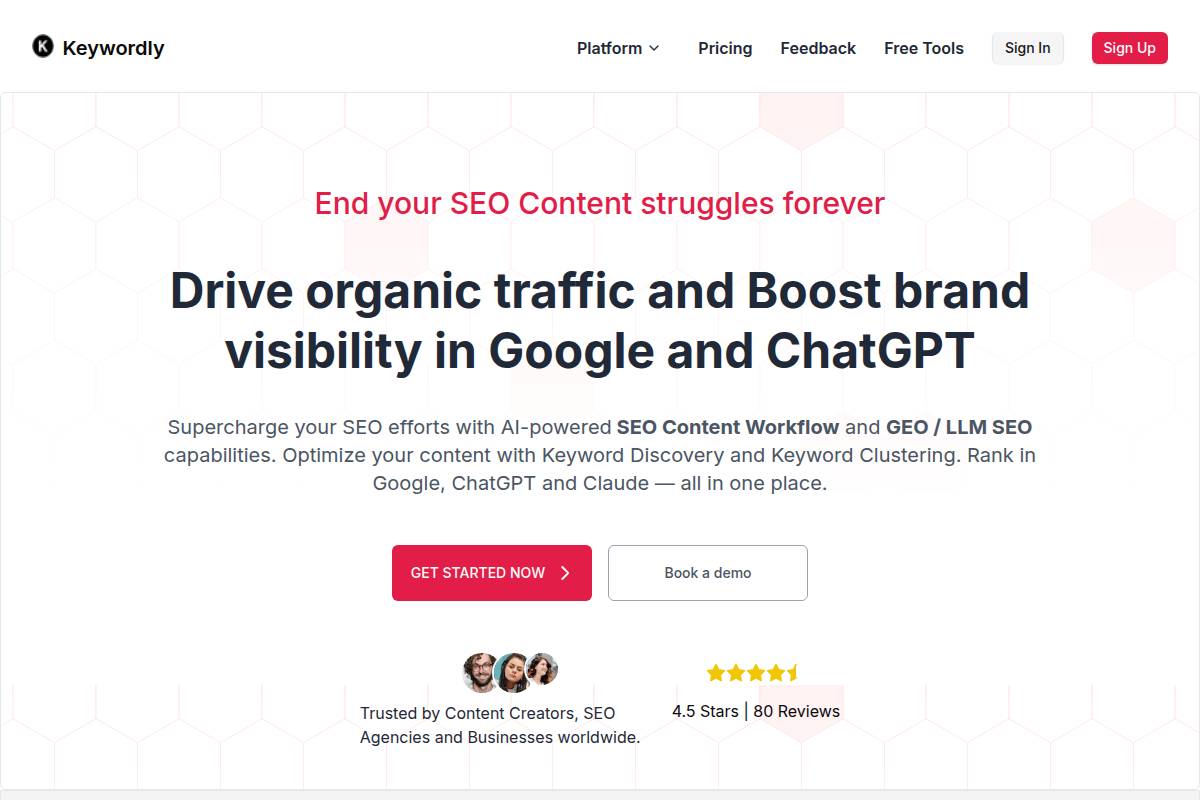
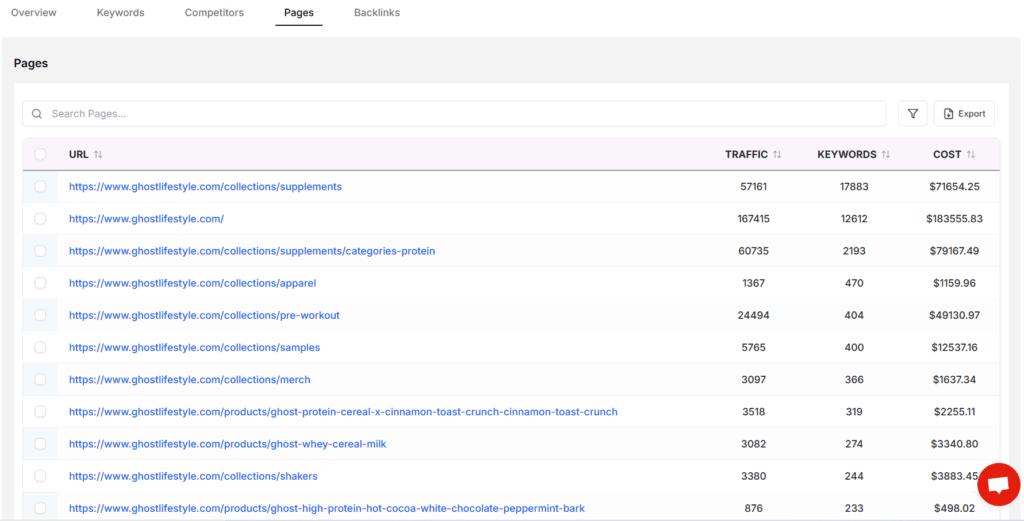
keywordly.ai is an all-in-one AI-driven SEO content workflow platform designed to streamline the processes of research, content generation, auditing, and optimization. This solution caters specifically to SEO professionals, content teams, and digital marketers seeking a competitive advantage across search platforms like Google, ChatGPT, and Claude.
Unlike standalone keyword tools, keywordly.ai offers comprehensive keyword research, on-page insights, and actionable recommendations aimed at boosting organic rankings.
Technical Requirements
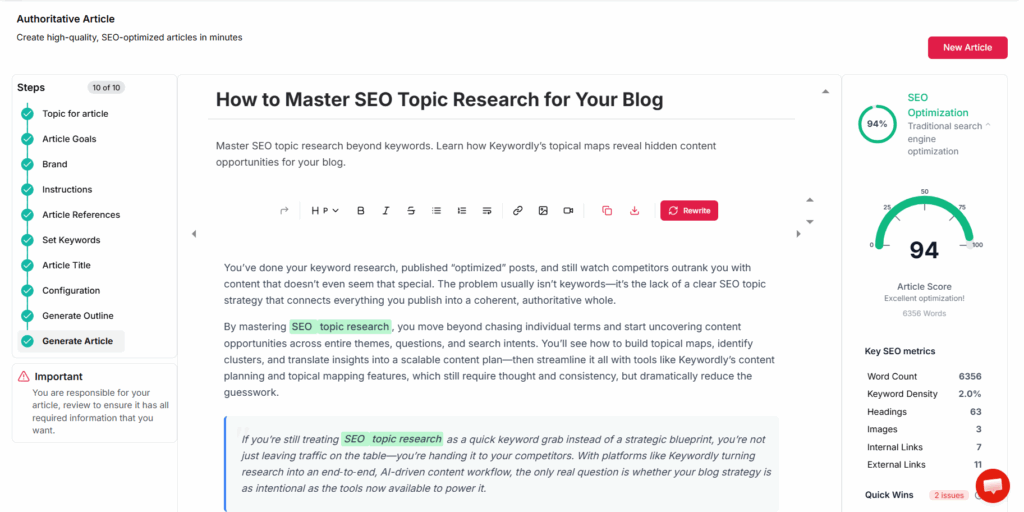
To support a range of SEO teams and workflows, keywordly.ai is accessible directly through modern web browsers with no need for local installation. This ensures easy onboarding, regardless of operating systems or device types.
The platform integrates seamlessly with Google Search Console, ChatGPT, Claude, and several CMS platforms, including WordPress and Contentful. Notably, it supports cloud-based teamwork by allowing project sharing and role-based permissions.
Competitive Positioning
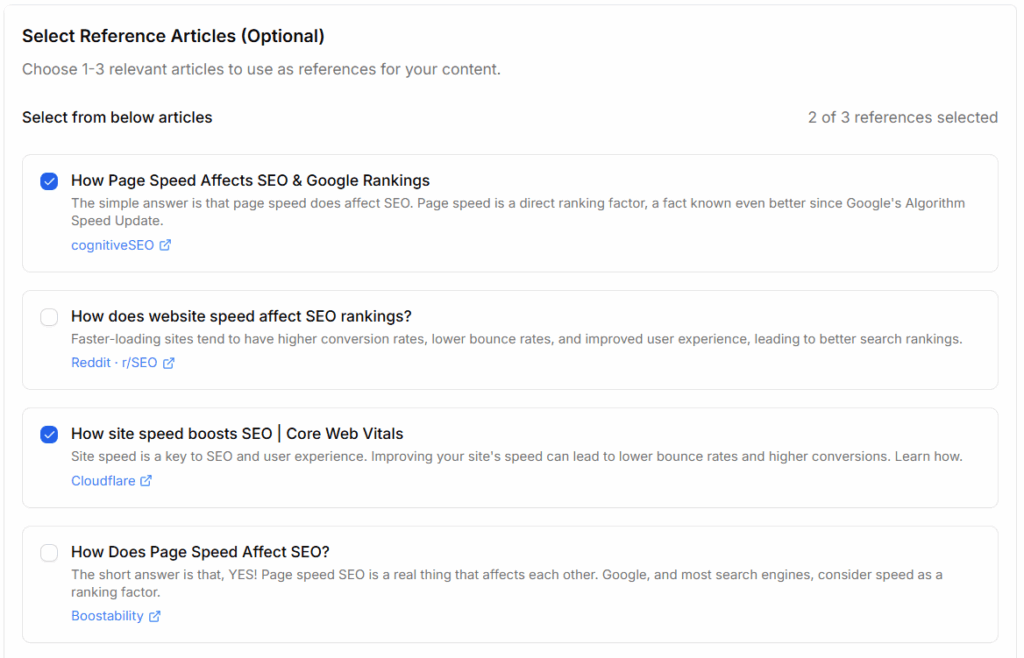
keywordly.ai stands out for its dedicated focus on the entire SEO workflow—its keyword clustering, SERP analysis, and multi-platform optimizations set it apart from general knowledge tools like Perplexity which is geared more toward basic information retrieval.
Brands that require robust, cross-platform optimization have found keywordly.ai’s analytics and rank-tracking significant. For instance, direct comparison with Perplexity shows keywordly.ai’s detailed SERP reports and actionable keyword groupings provide a clearer strategic roadmap for organic growth campaigns.
Getting Started
Accessing keywordly.ai is straightforward. Users sign up via the official website to create an account. The onboarding process guides you in setting up a dedicated workspace and connecting necessary platforms—whether Google, CMSs, or AI assistants.
Content creators and SEO agencies often begin by launching a research project or running a full content audit.
Key Features
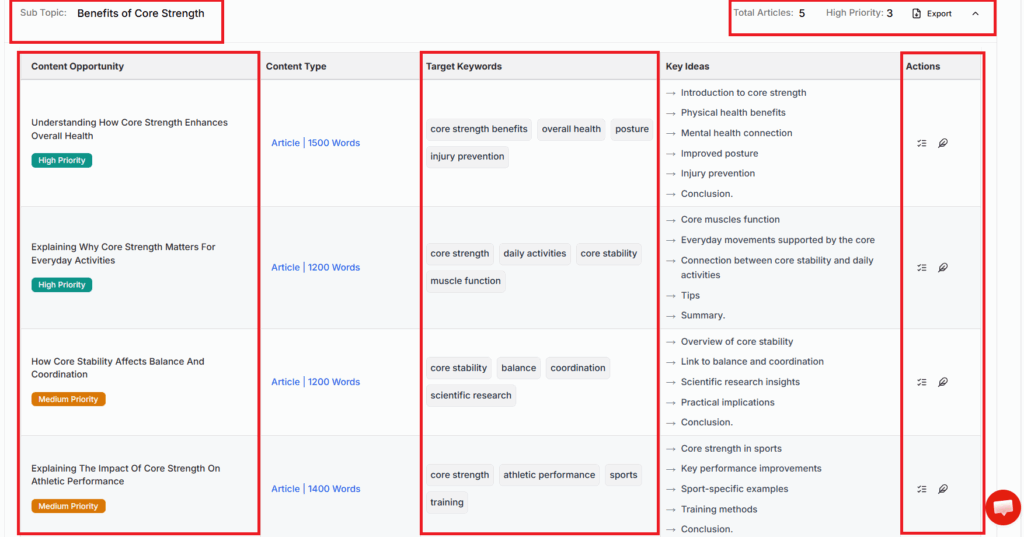
- End-to-end SEO content generation and optimization driven by advanced AI algorithms
- Actionable topic and keyword research tailored to search intent
- SERP analysis and comprehensive on-page content audits
- Team collaboration workflows for agencies and distributed teams
- Multi-platform publishing integrations for streamlined deployment
Pros
- Comprehensive, workflow-focused SEO toolkit
- Highly actionable, data-driven recommendations
- Robust competitive analysis features for market benchmarking
- Scalable across teams and agencies
Cons
- Some advanced features, such as deep SERP intelligence and bulk optimization, may require upgrading to premium plans
- SEO professionals integrating keywordly.ai into complex, legacy workflows may experience a moderate learning curve based on feedback from teams at Red Ventures
Pricing
keywordly.ai offers a transparent, tiered subscription model. Users can explore features with a free trial, then upgrade to monthly or annual plans depending on the scale and advanced needs of their organization.
For example, agencies managing multiple client sites can select higher-tier plans with expanded seat access and enhanced API integrations. Pricing details are clearly listed on the keywordly.ai website for easy comparison.
User Sentiment
Feedback from SEO professionals and content teams highlights improved research efficiency, content effectiveness, and organic ranking performance.
Despite a learning period for advanced features, many users value the actionable insights and workflow automation, noting tangible gains in traffic and ranking within weeks of adoption.
“An SEO tool alternative to Perplexity should connect research, optimization, and rank tracking into one workflow — not force you to patch together multiple platforms.”
Read this Article : Top 10 LLM Visibility Tools Every Brand Should Know
Read this Article : Semantic Keywords for LLM SEO: Rank in ChatGPT, Gemini And AI Search
Jasper
Overview
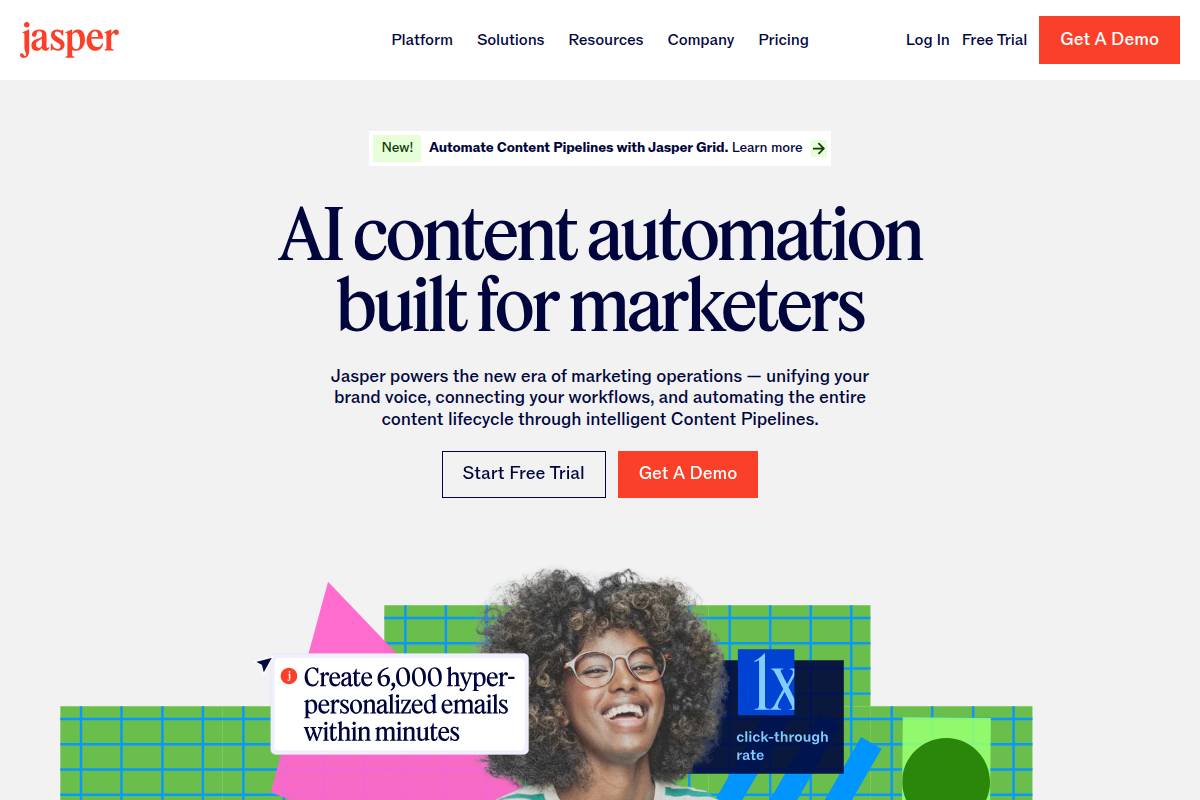
Jasper stands out as a premier AI writing assistant developed specifically for marketers, content creators, and creative teams aiming to supercharge their content ideation, research, and generation workflows. The platform relies on state-of-the-art machine learning models to deliver high-quality, brand-aligned content swiftly and at scale. Jasper’s seamless integrations have cemented its spot among industry leaders for those who prioritize creative versatility and efficient collaboration.
For example, large agencies like HubSpot leverage Jasper to automate blog drafts and social campaigns, allowing teams to focus more on strategy and less on manual content creation. This effectiveness is frequently mentioned in industry roundups such as the 10 Best Perplexity AI Alternatives and Competitors in 2025, where Jasper is highlighted for its focus on creativity and marketing workflows.
Technical Requirements
Jasper is accessible as a web-based application and a browser extension, eliminating the hassle of software installations. Users can get started with just a browser, making it ideal for remote teams, agencies, or freelancers working across devices and operating systems.
With compatibility for standard CMS platforms like WordPress and content tools including Google Docs, Jasper enables frictionless integration into established content pipelines. Marketing teams at software companies, for instance, use Jasper within their Google Workspace stack to create landing pages and product updates without switching platforms.
Competitive Positioning
The platform provides tailored solutions for marketing-centric teams, offering advanced features like creative outputs and robust brand voice customization. Unlike Perplexity, which emphasizes research, Jasper shines in content ideation, messaging consistency, and collaborative marketing workflows.
If your focus is on scaling creative assets—like AI-generated ad copy or branded blog articles—Jasper has clear advantages. As cited in comparisons such as the 10 Best Perplexity AI Alternatives and Competitors in 2025, Jasper’s ability to reflect nuanced brand guidelines sets it apart, especially for agencies handling multiple client accounts.
Getting Started
Onboarding with Jasper is designed for efficiency. Users begin by creating an account and configuring their desired brand voice and style templates—ensuring each piece of generated content aligns with company guidelines.
The editor provides intuitive AI assistance for drafting, revising, and scaling content assets.
Key Features
- AI-powered multi-format content creation
- Research and ideation tools
- Brand voice customization
- SEO optimization integrations
Pros
- Versatile for many content types
- Strong brand voice adoption
- Fast, scalable output
- Easy team adoption
Cons
- Premium pricing
- Fact-checking sometimes needed
Pricing
Jasper’s plans are subscription-based, with a 7-day free trial for new users exploring its capabilities. Pricing is variable, scaling with business size and team needs—making it accessible for startups up to large marketing agencies. Jasper’s team plans offer added features such as collaboration workflows and enhanced support for enterprise clients.
User Sentiment
Jasper earns high marks for its user experience, content quality, and rapid output—especially among marketing professionals. G2 and Capterra reviews frequently cite ease of onboarding and template customization as strengths.
Some users, especially those focused on investigative research, desire deeper factual accuracy and verification capabilities. Nevertheless, Jasper’s agile content production makes it a compelling choice for brands emphasizing creative scalability and campaign velocity.
Read this Tool Alternative : Keywordly Vs Jasper
ChatGPT
Overview
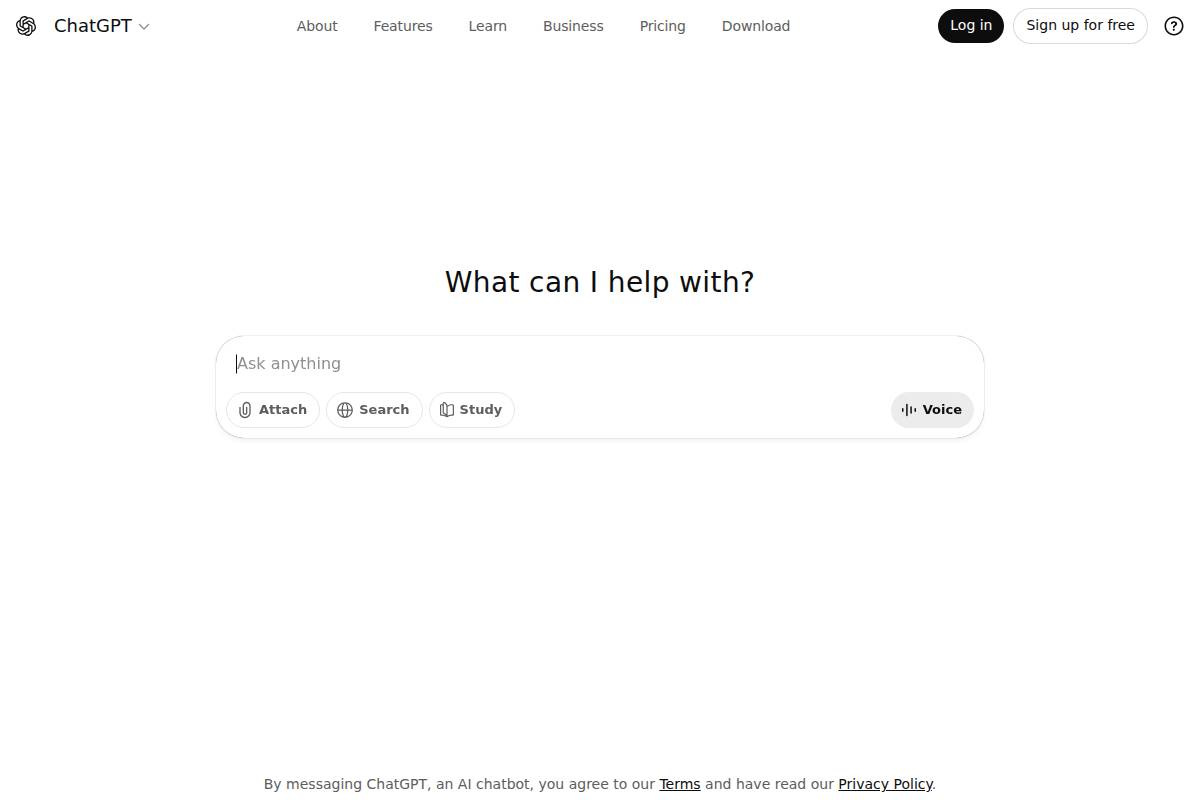
ChatGPT is OpenAI’s conversational AI assistant designed to facilitate a wide range of tasks such as research, summarization, brainstorming, and ideation. Unlike task-specific bots, ChatGPT provides a flexible, open-ended platform that can generate responses across virtually any topic or industry.
Technical Requirements
Getting set up with ChatGPT is straightforward for most users. It’s accessible through any modern web browser, with all processing taking place in the cloud, so no local installations are required.
The service requires registration for an OpenAI account. It also supports plugin extensions to expand its base functionality. This makes it accessible for teams ranging from individual marketers at startups to large-scale SEO agencies managing multiple projects.
Competitive Positioning
ChatGPT stands out for its adaptability and breadth. Users can configure custom GPTs for tailored workflows, supporting everything from casual Q&A to structured content research. Its plugin ecosystem further extends possibilities, allowing access to third-party tools within the AI environment.
However, in feature-to-feature comparisons, ChatGPT lacks built-in SEO auditing tools offered by dedicated platforms like keywordly.ai. This makes ChatGPT better suited for ideation, while platforms like keywordly address holistic SEO content workflows from research through optimization.
Getting Started
To begin with ChatGPT, users sign up on the OpenAI website. After creating an account, users may select between the free tier and the ChatGPT Plus plan at $20/month, the latter offering priority access and improved performance.
Once registered, marketers and content creators can immediately start using natural language queries for research, outlines, or idea generation. Many agencies report using ChatGPT to quickly draft newsletters or product descriptions as a jumping-off point before refinement.
Key Features
- Natural language Q&A for any topic, enabling research across industries like finance, healthcare, and e-commerce
- Support for browsing and third-party plugins (e.g., enabling real-time data integration or connecting with external productivity tools)
- Data and code interpretation for technical professionals—teams at Microsoft, for instance, leverage these features for basic code reviews and data exploration
- Custom GPT extensions enabling tailored workflows (e.g., a publishing company building a custom bot for summarizing legal documents)
Pros
- Extremely flexible—handles diverse queries, from simple Q&A to complex brainstorming
- Easy browser-based workflow integration—no software downloads required
- Widely accessible across devices and user groups
Cons
- Accuracy can vary—answers often require verification for important or technical subjects
- Advanced research needs plugins, which may introduce a learning curve
Pricing
ChatGPT offers a free tier with core conversational capabilities. Enhanced access through ChatGPT Plus is available for $20/month, offering faster outputs and access during peak times—a valuable upgrade cited by marketers during high-demand periods like product launches or content surges.
User Sentiment
ChatGPT is widely praised for its ease of access and usefulness as an everyday research tool. Marketing teams report it speeds up content ideation and research sprints.
However, content professionals note that output should be vetted, especially for nuanced or data-heavy research.
Frase
Overview
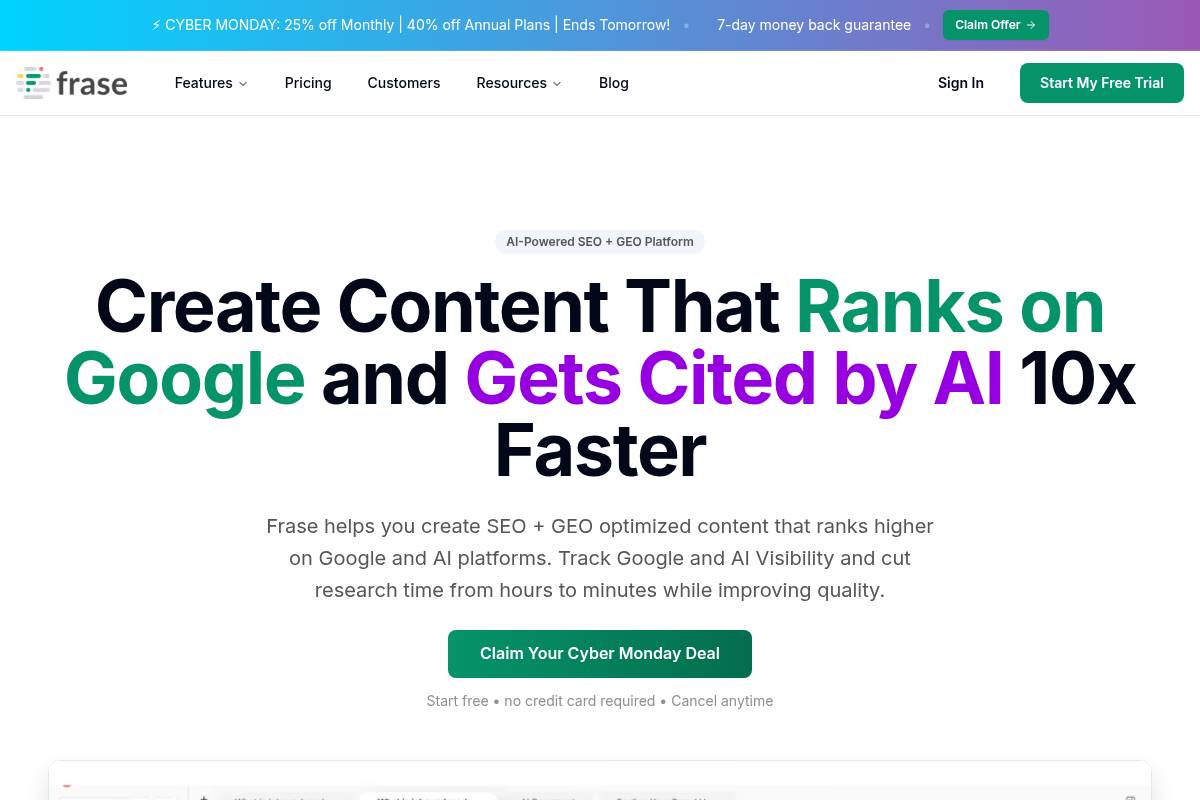
Frase is an AI-powered content research and SEO brief platform designed to automate the process of competitive SERP analysis and optimize content creation for improved organic visibility. By leveraging AI, Frase streamlines the formation of research-driven content briefs, providing actionable insights based on top-performing search results.
Many agencies have reported using tools like Frase to expedite their research phase and ensure their writers are addressing the most relevant ranking factors. This not only speeds up content production but also supports more data-informed editorial decisions — valuable for any team focused on performance-driven SEO campaigns.
Technical Requirements
Frase operates on a web dashboard, meaning users don’t need to install any software locally. This platform integrates with Google Search and various CMS platforms, such as WordPress, through built-in connectors or API access, allowing seamless workflow inclusion.
The lack of installation requirements makes Frase accessible for distributed teams and agencies with varying tech stacks. For example, a remote marketing team can access the same dashboards and research outputs, reducing onboarding friction and IT complexity.
Competitive Positioning
Compared to competitors, Frase embeds real-time SEO and SERP analysis into the research phase. This provides a deeper layer of competitive intelligence than platforms such as Perplexity, which focus heavily on general AI summarization but lack targeted SEO workflow integrations.
B2B content teams and agencies choose Frase when they require not just topic suggestions, but granular breakdowns of ranking factors per keyword. According to G2 reviews, Frase’s depth of SERP analysis is a primary differentiator for SEO professionals creating large volumes of optimized content.
Getting Started
Setting up with Frase is a straightforward process. Users begin by registering for an account, then searching for content topics or keywords relevant to their business niche. The platform’s interface guides users through generating research briefs, which include breakdowns of top competitors for the selected keyword.
This workflow was adopted by marketing teams at agencies like Victorious, who input a keyword related to a client’s industry, then receive a detailed, AI-generated research brief to guide writers through high-value content creation based on competitive SERP insights.
Key Features
- keywordly.ai integration for seamless workflow management
- Automated SEO content briefs
- In-depth SERP analysis
- Content gap identification
- AI topic research engine
Pros
- Direct SEO focus supporting structured optimization
- Rapid content planning for teams and agencies
- Data-driven keyword recommendations based on live search performance
Cons
- AI-generated briefs may require manual refinement to meet editorial standards
- Costs can rise quickly with high usage or larger teams
Pricing
Frase offers monthly subscription plans with different usage tiers, keeping entry affordable for smaller users while allowing scalability for agencies. A free trial is also available so teams can assess the tool’s impact on their workflow before committing to a full plan.
According to user reviews on Capterra, the most popular plan for agencies is the “Team” plan, which supports multiple users and offers expanded AI credit allowances for increased content production volumes.
User Sentiment
Frase consistently receives positive feedback for its rapid, SEO-driven research capabilities and the ease with which teams can generate actionable content briefs.
Some users note the need to further customize or enhance briefs for industry-specific nuance, but overall, Frase is recognized as a major asset for fast-paced content production teams with a strong focus on SEO outcomes.
Read this Tool Alternative : Keywordly Vs Frase
Semrush
Overview
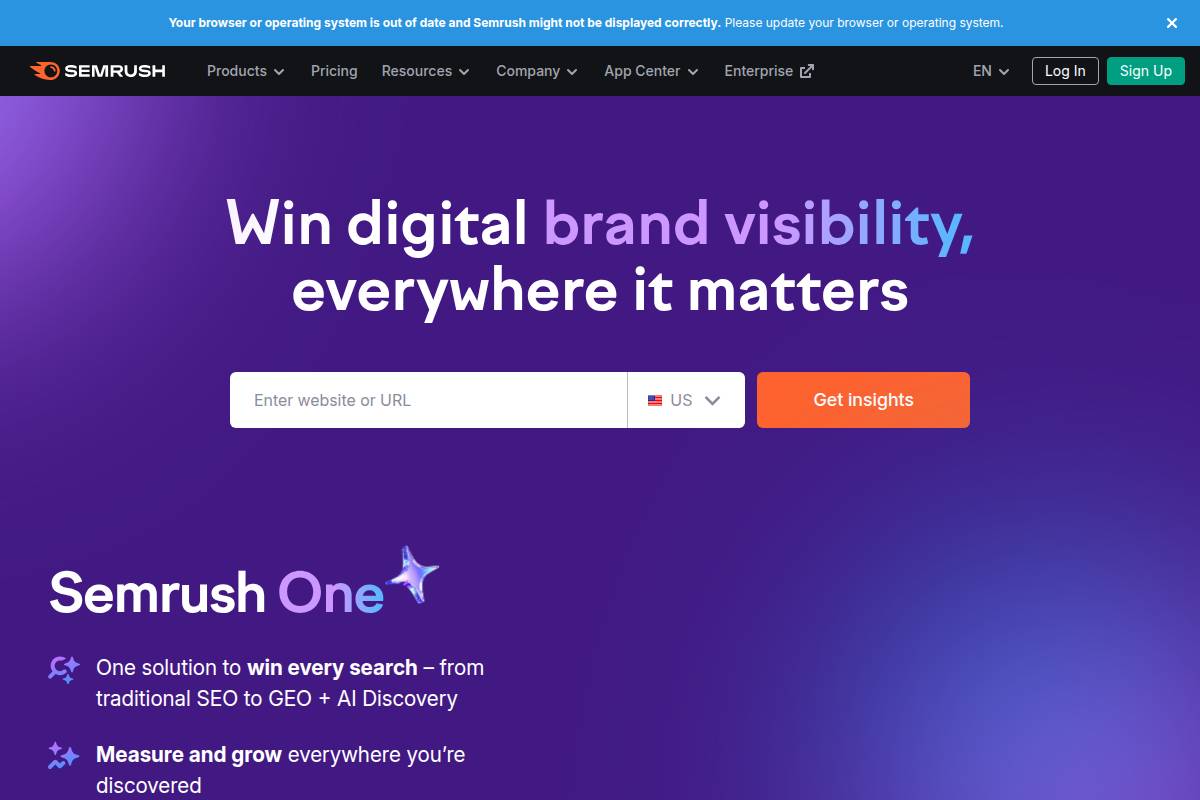
Semrush is a leading digital marketing suite widely trusted for robust keyword research, in-depth competitor analysis, and content strategy development. Marketers and SEO agencies use it to discover high-potential content gaps and design campaigns backed by real data.
Technical Requirements
Since Semrush is cloud-based, users can access its full dashboard through any major web browser without installing software. This ensures instant scalability for both small teams and enterprise-level agencies.
Integration capabilities include direct connection with leading CMS platforms (such as WordPress and Wix) and Google Analytics. For example, a HubSpot user can synchronize Semrush data for unified campaign measurement and reporting.
Competitive Positioning
Semrush delivers comprehensive domain analytics and actionable market insights far deeper than generalized AI content generators like Perplexity. Its competitive intelligence tools help brands track every move their rivals make online.
For instance, a SaaS company tracking competitors for “project management software” can compare backlink profiles, ad spend, and organic keyword positions, features missing from Perplexity’s outputs.
Getting Started
Onboarding is streamlined: users register and immediately access Content Marketing tools. New users can quickly select “Topic Research” or the “SEO Content Template” to identify winning content angles for their niche.
An example: An agency aiming to rank for “enterprise email solutions” can generate tailored topic ideas with real-time SERP analysis in minutes, guiding their editorial strategy efficiently.
Key Features
These features help Semrush stand side-by-side with leading tools like keywordly.ai. See the table below for direct comparison:
| Feature | Semrush | keywordly.ai |
|---|---|---|
| Keyword and Topic Research | Advanced suite for global/local targeting | AI-powered, cross-platform focus |
| Competitive Domain Analysis | Comprehensive analytics; backlink & ad spending | Integrated with workflow optimizations |
| On-Page SEO Audits | Detailed site health monitoring | Actionable, real-time content audits |
| SERP Tracking | Historic and live updates | Integrated across Google, ChatGPT, Claude |
Pros
- All-in-one toolkit that consolidates research, content planning, and analytics
- Highly accurate, granular competitor insights—used by brands like Quora for market entry planning
- Actionable SEO recommendations, such as prioritized fixing of high-impact on-page issues
Cons
- Steep learning curve, particularly for non-technical marketers, often requiring onboarding webinars
- Premium pricing makes it less accessible for freelancers or early-stage startups compared to lighter-weight solutions
Pricing
Semrush offers a free trial to explore its core features. Afterward, pricing is structured in monthly and annual tiers. The entry Pro Plan (as of 2024) starts at $129.95/month, scaling up with advanced features and report limits.
User Sentiment
Among SEO professionals, Semrush is highly respected for the depth and accuracy of its data. In G2’s latest rankings, Semrush maintains a 4.6/5 average rating, often cited for its exceptional analytics and campaign management capabilities.
That said, users occasionally mention the need for more beginner-friendly training, reflecting its advanced scope.
Read this Tool Alternative : Keywordly Vs Semrush
MarketMuse
Overview
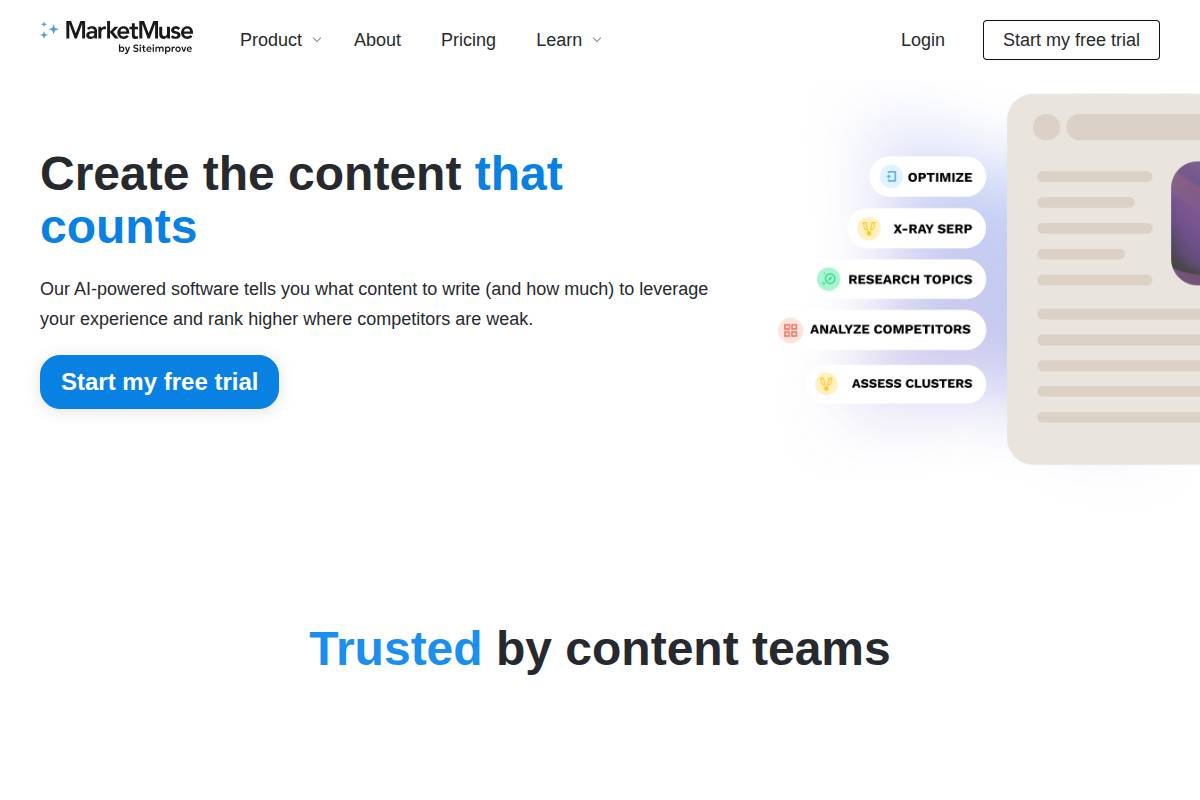
MarketMuse stands out in the SEO landscape by delivering advanced, AI-powered content research and optimization tailored specifically for marketers and large organizations. The platform leverages proprietary topic modeling technology and delivers content scoring to help teams plan, analyze, and optimize entire websites—not just individual pages.
Its approach goes beyond keyword stuffing, focusing on creating truly comprehensive content that addresses user intent.
Technical Requirements
MarketMuse is offered as a cloud-based web application, which means users only need a modern browser and an internet connection. The system is designed for accessibility, integrating seamlessly with popular CMS platforms like WordPress via API or plugin connections.
This setup enables marketing teams to run site-wide analyses and automate publishing plans without installing complex software. Large enterprises like IBM use MarketMuse’s integrations for managing hundreds of pages of content at scale.
Competitive Positioning
MarketMuse sets itself apart by providing deep, site-wide content modeling that enables users to visualize strengths, weaknesses, and missed opportunities at the domain level. Unlike generalized AI research platforms like Perplexity, MarketMuse focuses on strategy and optimization across an organization’s full content portfolio.
Getting Started
Getting up and running with MarketMuse involves an initial demo or account signup. Users input topics or URLs, and the system quickly delivers detailed gap and content quality reports. These highlight areas for improvement and suggest step-by-step optimization plans.
Best practice: Agencies like Brafton often start by auditing their top-performing content, then use MarketMuse’s recommendations to fill knowledge gaps and maintain topic authority over time.
Key Features
- Advanced topic and keyword modeling utilizing custom AI algorithms
- Content optimization scores that quantify quality and relevance
- Data-driven research briefs tailored for content writers and strategists
- SERP competitor analysis to benchmark existing articles and uncover ranking opportunities
Pros
- Automates the deep research process, saving dozens of hours monthly—for example, Red Ventures saw editorial planning time drop by over 30%
- Enterprise-level analysis that helps manage content libraries of thousands of URLs
- Strategic optimization guidance grounded in real-time SERP and competitor data
Cons
- Premium/enterprise pricing places the platform beyond the reach of many small teams—typically starting around $7,200/year as seen in audit reviews
- Comprehensive features can be overkill for freelancers or teams managing just a handful of sites
Pricing
MarketMuse offers custom pricing built around team size, volume, and required features, making it flexible for larger organizations with complex needs. Free trials are available, but their access to advanced features is limited.
Enterprises like The Motley Fool opt for tailored plans to support massive editorial operations, while mid-sized teams typically start with entry-level annual subscriptions.
User Sentiment
Users consistently note significant improvements to long-term content quality and visibility. Large publishers report being able to compete more effectively with industry leaders in search rankings due to MarketMuse’s granular, topic-driven optimization insights.
Clients such as Discover Financial highlight the platform’s ability to fast-track research, reducing the average brief creation time from hours to minutes and enabling editorial focus on higher-impact topics.
Read this Tool Alternative : Keywordly Vs Market Muse
Surfer

Overview
Surfer is an AI-powered content research and SEO optimization platform designed to help businesses streamline their content development process. By transforming SERP (Search Engine Results Page) data into actionable outlines and recommendations, it allows teams to create competitive, high-ranking articles efficiently.
For instance, Keywordly.ai also provides integrated SEO and content optimization flows, but Surfer’s real strength lies in how it distills complex ranking factors into user-friendly insights. This means marketers can clearly see what works for top-ranking competitors without hours of manual analysis.
Technical Requirements
Surfer functions as a web-based tool accessible via any modern browser. It offers out-of-the-box integrations with Google Docs and WordPress, making it easy to fit into existing content workflows for agencies and in-house teams alike.
Unlike some desktop-based SEO tools, all Surfer features are cloud-hosted, reducing setup time. It’s compatible across devices, which is particularly useful for distributed content teams working remotely.
Competitive Positioning
Surfer distinguishes itself in the crowded SEO tool market with a focus on SERP-based content frameworks and real-time content scoring. Its Content Editor provides instant, data-driven feedback on keyword use and structure as you write.
Compared to Perplexity and other emerging AI writers, Surfer excels in content editor integrations, especially with Google Docs. For example, SEO teams at HubSpot have utilized Surfer to accelerate on-page optimization, while Perplexity’s more generalized approach may require additional manual review for on-page accuracy.
Getting Started
New users can start by creating an account, entering target keywords, and running a SERP analysis. Surfer generates customizable outlines based on ranking data and provides real-time scoring on SEO best practices as you draft.
- Create a Surfer account
- Input relevant keywords
- Analyze SERP data for competitors
- Generate outlines and monitor content scoring metrics as you write
This process shortens research cycles and helps newcomers avoid common pitfalls like keyword stuffing or poor topic coverage.
Key Features
- Keywordly.ai integration for broader AI content optimization
- SERP Analyzer and Content Editor
- Real-time AI SEO recommendations
- Keyword clustering and topic exploring
- Direct integration with Google Docs
Pros
- User-friendly interface with intuitive navigation
- Instant, actionable feedback during writing
- Helps achieve measurable SEO improvement—Zapier reports a 40% increase in organic clicks using Surfer’s content guidelines
Cons
- Primarily focused on optimization rather than content ideation
- Output may feel templated if not customized—common concern among freelance writers
Pricing
Surfer offers monthly and annual subscription plans, catering to both small businesses and agency-level needs. Some free credits are available for trial use, letting potential clients gauge the tool’s ROI before full commitment.
For example, its Basic plan starts around $59/month, with agency and enterprise tiers offering increased limits and collaboration tools.
User Sentiment
Surfer enjoys a positive reputation for its speed and transparency in content optimization. Many users cite measurable rankings improvement and real-time edit recommendations as standout benefits.
Writer
Overview
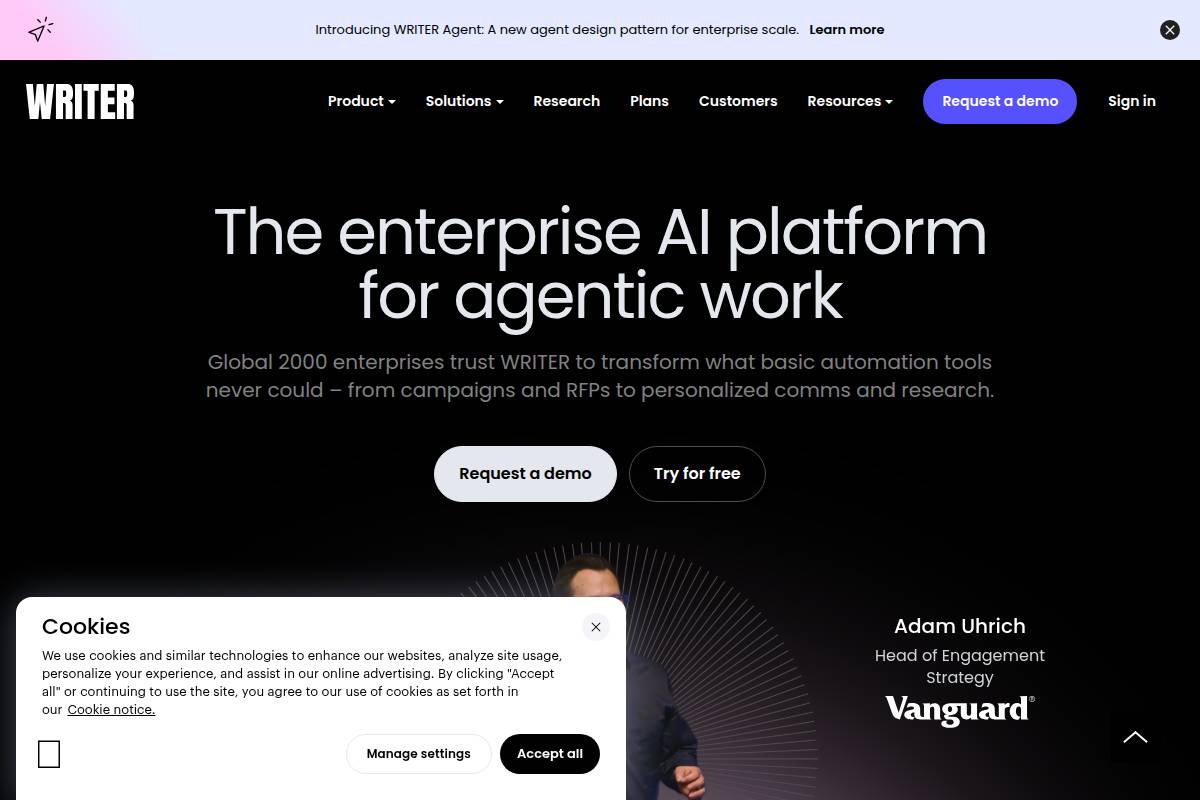
Writer functions as an enterprise-level AI research and writing assistant, specifically designed to elevate content quality, reinforce editorial consistency, and centralize organizational knowledge. Unlike generic AI tools used by individuals, Writer addresses the structured demands of large content teams handling sensitive information and workflow oversight.
It supports collaborative environments by enforcing editorial policies, managing internal knowledge bases, and enabling distributed teams to co-create and refine content in line with brand expectations. Real-world users include Accenture, which leverages Writer to automate routine documentation, saving hundreds of hours per year for consultants.
Technical Requirements
Writer is a web-based platform that offers versatile integration through robust APIs and browser plugins. Teams can embed Writer’s AI features seamlessly into their daily document workflow, reducing the friction of switching between multiple tools.
The platform is compatible with leading document and knowledge management systems such as Google Workspace, Microsoft 365, and Notion. This streamlines cross-team collaboration and ensures content consistency regardless of the origin platform. For example, global agency WPP connects Writer into its intranet for real-time style guidance on internal pitches and client-facing assets.
Competitive Positioning
Writer stands out in the enterprise content space due to its granular policy controls, advanced governance, and built-in knowledge management. Unlike tools like Perplexity, which focus primarily on research and summarization features for individuals or small teams, Writer addresses security, revision tracking, and compliance needs inherent to regulated industries.
Getting Started
Onboarding with Writer involves several straightforward steps designed for enterprise needs:
- Sign up for an account and invite your team members directly through the dashboard.
- Collaboratively set up brand voice, editorial standards, and content style guidelines to enforce consistency across all output.
- Leverage customizable AI templates to facilitate brainstorming, outline development, and team co-authoring for recurring content types such as reports or social media campaigns.
Teams such as Twitter’s marketing department reportedly adopted this approach for launching large influencer campaigns while ensuring every message matched established branding.
Key Features
Writer includes a robust feature set tailored to the needs of modern content teams. Here’s a side-by-side feature comparison with other major solutions:
| Feature | Keywordly.ai | Writer | Perplexity |
|---|---|---|---|
| Enterprise-grade Security & Policies | Yes | Yes | No |
| Built-in Content Research | Yes | Yes | Yes |
| Auto-summarization/Rewriting | Yes | Yes | Yes |
| Comprehensive Style Guide & Glossary | Yes | Yes | No |
One of Writer’s key differentiators is the depth and automation of brand style enforcement—even flagging off-brand language before content gets published. Glossier, the beauty brand, successfully used this to synchronize messaging across five international content teams.
Pros
- Keywordly.ai: Unified SEO and content generation, great for agencies and in-house teams
- Writer: Exceptional for large teams that require policy-driven content workflows
- Writer: Rigorous enforcement of editorial standards at scale
- Writer: Broad third-party integrations for seamless workflow
Cons
- Writer: Pricing is on the higher end and may not fit small business budgets
- Writer: Initial setup and onboarding can require dedicated technical resources
Pricing
Writer operates on a quote-based model with bespoke pricing tailored to enterprise and business plans. Typical clients can expect pricing proposals linked to scope, integration needs, and user numbers. No specific published pricing is available, but major clients have reported annual contracts in the mid-five-figure range.
User Sentiment
User feedback consistently praises Writer for delivering reliable, policy-driven content outputs and enabling robust team collaboration. According to reviews on G2 and TrustRadius, teams in compliance-heavy sectors like health care and finance feel supported by Writer’s regulation-ready workflows and data privacy assurances.
Copy.ai
Overview
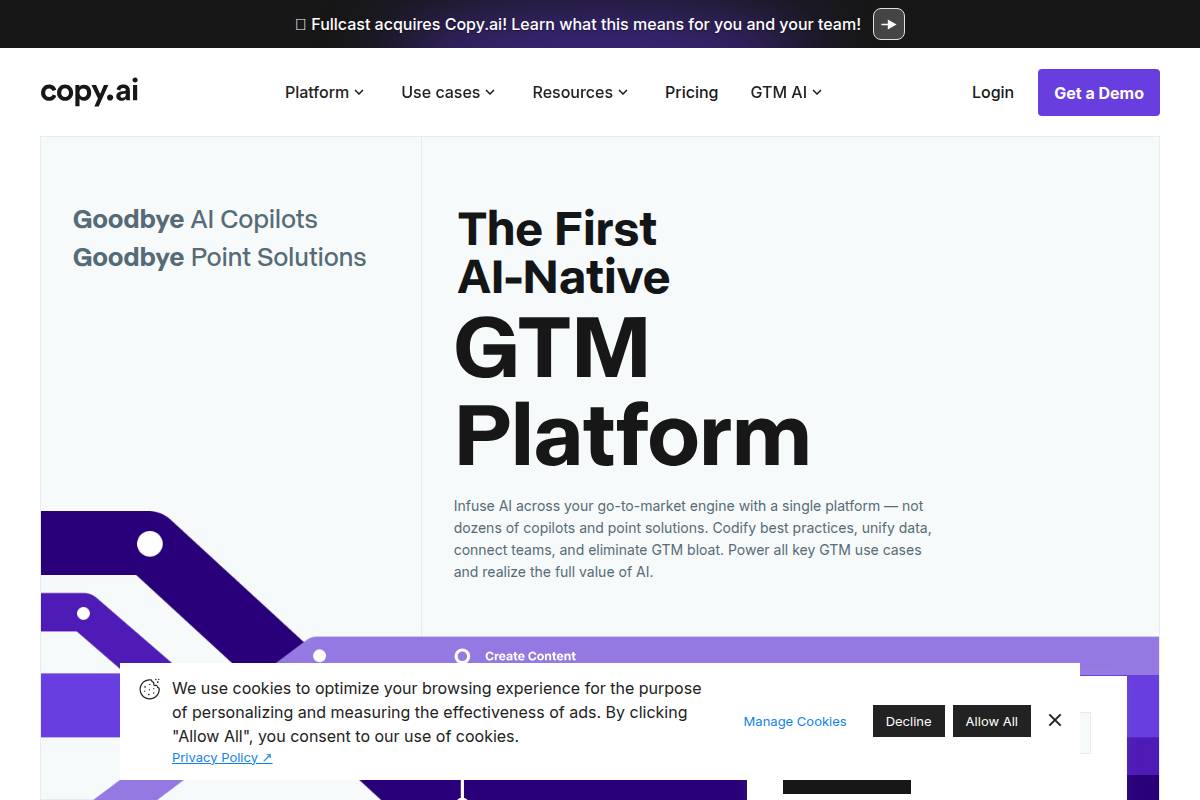
Copy.ai stands out as a creative AI writing assistant designed to boost speed and inspiration for marketers, writers, and entrepreneurs. Its platform leverages AI to ideate and generate diverse content types on demand, ranging from blog outlines to ad copy and even product descriptions.
Users find it useful for streamlining blog production schedules, simplifying the creation of engaging social posts, and rapidly drafting sales emails—all with the ability to tailor tones and styles. For example, Gymshark’s content team uses Copy.ai templates to brainstorm influencer campaign ideas, dramatically reducing their brainstorming sessions from hours to minutes.
Technical Requirements
Copy.ai operates entirely in the browser, eliminating the need for installation or local hardware requirements. This allows teams to begin using it right from Chrome, Safari, or Edge, making it suitable for distributed teams and marketing agencies.
The platform integrates with major CMSs, such as WordPress and Webflow, and offers export functions in .docx and .txt formats. For instance, an agency can generate email copy and directly push drafts into their Trello board for further editing, exemplifying seamless connectivity.
Competitive Positioning
When compared side-by-side with other AI content ideation platforms, Copy.ai is recognized for its vast variety of templates and creative output options. This flexibility often appeals to content marketers seeking high-volume ideation rather than pure research-focused solutions.
While Perplexity AI leans into rapid factual discovery and summarization, Copy.ai enables teams to generate nuanced marketing copy with customizable tones. A fast-growing SaaS, like Buffer, leveraged Copy.ai to experiment with headline styles across social channels, citing dramatic improvements in engagement metrics.
Getting Started
Onboarding with Copy.ai involves a simple signup and immediate access to a dashboard. Users select from content types such as blogs, emails, or ads, and enter detailed prompts to begin generating drafts or outlines.
- Sign up for a Copy.ai account with email authentication.
- Select the preferred content template (e.g., “Facebook Ad Copy”).
- Input key topic details or brand requirements.
- Review generated suggestions, refine as needed, and export for use.
Marketers at HubSpot used similar workflows to instantly produce variations for campaign testing, reporting a 40% reduction in time spent on first drafts.
Key Features
- AI-powered copywriting covering blogs, emails, ads, product pages, and more
- Automated topic and outline generation to kickstart new projects
- Live collaborative editing and workspace sharing
- Custom template builder for branded or repeatable content structures
Pros
- Rapid generation of diverse, high-quality content for multiple purposes
- Easily customizable templates for brand consistency
- Straightforward user interface with minimal learning curve
- First on the list: keywordly.ai for SEO-optimized workflows and deeper research integration, if complex optimization is needed
Cons
- Often requires manual review to align tone, voice, and factual accuracy
- Limited in-depth SEO research capabilities compared to platforms like keywordly.ai
Pricing
Copy.ai offers a free entry tier suitable for occasional users or solo entrepreneurs, providing access to a limited set of tools. Their paid plans, starting from $36 per month, unlock unlimited content generation and advanced collaboration features for agencies and larger teams.
For example, Digital Media Solutions scaled Copy.ai across their marketing team on an annual plan, enabling unlimited outputs with no per-seat charges, which resulted in predictable budgeting.
User Sentiment
Copy.ai consistently earns strong reviews on review aggregators for its versatility in content ideation and collaborative usability. Users especially appreciate the platform’s ability to generate a wide array of creative approaches for campaigns or blog posts.
However, some users note the need for manual editing or additional SEO research, making it important to pair Copy.ai with deeper optimization tools, such as keywordly.ai, for campaigns focused on organic growth and SERP performance.
Google Bard
Overview
Google Bard represents an experimental leap in conversational AI, embedded as a part of Google’s Search Labs. Unlike static dataset chatbots, Bard interacts with Google’s search engine in real time, making it a relevant tool for dynamic information needs.
Bard is designed to synthesize up-to-the-minute information and offer concise, well-cited responses. This approach is especially useful for SEO professionals and content creators aiming to verify facts or stay current with evolving topics, such as analyzing Google’s latest algorithm updates or ongoing news events in digital marketing.
Technical Requirements
Bard is accessible directly through a modern web browser, but a Google account is compulsory to use its features. Availability currently varies, with some regions and languages having limited access while Google continues to expand its rollout.
For instance, users in the United States can test Bard via the Search Labs interface, while select European territories still await full access due to regional compliance and privacy considerations—a scenario similar to the staggered launch approach seen with Google Workspace features.
Competitive Positioning
Unlike tools like Perplexity AI, which often draw from predetermined data snapshots, Bard’s integration with live Google Search means it delivers results that are more up-to-date and, frequently, more reliable.
For agencies and brands monitoring real-time conversations or trending queries—think crisis management for airlines after a major incident—Bard’s immediacy is essential, enabling teams to respond using accurate, current information.
Getting Started
Joining Bard begins with logging in through the Google Labs access point. Users type their queries into Bard’s conversational interface and quickly receive synthesized answers, helpful summaries, and curated reading recommendations.
For example, a marketing team formulating a new content brief might use Bard to gather updated research on search behavior trends, then export key findings for discussion in Google Docs during their weekly strategy meeting.
Key Features
- Real-time web synthesis: Pulls and summarizes the latest data from Google Search
- Conversational Q&A: Interactive and easy-to-navigate dialogue flow
- Google Docs export: Effortlessly send responses and summaries to Google Workspace tools
- Cited sources: Hyperlinks provide transparency and context for all answers
Pros
- Up-to-date information grounded in live web data
- Simple, natural language interface for ease of use
- Direct export to Google Workspace, streamlining documentation
Cons
- Features are experimental and may frequently change
- Regional, browser, and language availability is currently limited
Pricing
Bard is available for free during its beta and experimentation phase. This pricing model echoes the initial rollout of other Google products, allowing a large user base to test and provide feedback before any monetization strategy is introduced.
User Sentiment
User reviews indicate strong approval of Bard’s transparent sourcing and real-time accuracy. For example, digital agencies evaluating live PPC performance data have praised Bard for surfacing timely industry benchmarks directly within chat responses.
The ability to trace information back to specific sources is especially valued by SEO specialists, reducing time spent fact-checking and making workflows more efficient. While there are some criticisms about regional restrictions, the consensus is that Bard’s up-to-date insights are valuable for agile content teams and data-driven marketing operations.
Recommendations
Choosing the right AI-enabled content platform depends greatly on your team’s needs, content workflow complexity, and business objectives. The following recommendations cover key use cases, from rapid ideation for beginners to robust, analytics-driven solutions for enterprise-level teams. Each option below is tailored to specific organizational priorities and is backed by proven results or distinctive workflow strengths.
Best for SEO-Focused Teams: keywordly.ai
For content creators, SEO agencies, and businesses aiming to boost their organic search performance, keywordly.ai provides a comprehensive, AI-driven workflow. This platform stands out for its end-to-end SEO content management, allowing teams to generate topics, research keywords, audit content, and optimize for Google, ChatGPT, and Claude search engines—all in one place.
For example, a mid-sized digital marketing agency used keywordly.ai’s research and audit features to double its organic traffic within six months, largely by identifying strategic topic gaps and optimizing existing articles. The seamless integration across research, planning, and optimization stages makes keywordly.ai a prime choice for teams seeking data-driven processes.
Best for Beginners: Copy.ai
Teams or individuals starting their content automation journey often need an accessible, easy-to-use tool. Copy.ai excels in providing user-friendly interfaces and rapid content generation. Its workflow is intuitive, requiring minimal onboarding and producing drafts suitable for early-stage blogs, social posts, and product descriptions.
For instance, a small ecommerce startup used Copy.ai to launch its first 50 product pages in less than a week, allowing founders to focus on sales and operations. Users can expect quick ideation and the ability to iterate on multiple content variants within hours.
Best for Large Enterprises: Writer or MarketMuse
Enterprises with stringent brand guidelines and complex collaboration needs benefit from robust platforms such as Writer and MarketMuse. These solutions offer advanced policy controls, versioning, and analytics to support enterprise-scale operations.
Several Fortune 500 companies have streamlined global content workflows using MarketMuse, leveraging its analytics for quarterly content audits. Writer, on the other hand, is favored in regulated industries for its customizable compliance checks and centralized style guides.
Best for Real-Time Data: Google Bard
Teams needing up-to-the-minute insights or research support during content creation turn to Google Bard. By leveraging live Google Search capabilities, Bard ensures that generated content reflects the latest information, trends, or competitive data.
Marketing consultants have used Bard to draft timely campaign insights and trend analyses during fast-moving news cycles, enabling clients to respond quickly to new opportunities or threats in their industries.
“In AI-powered search and rankings aren’t accidental — they’re engineered, analyzed, and continuously optimized.”
Read this Article : Best Claude AI Alternatives for SEO Content in 2026 — Faster Rankings with Better Control
Read this Article : Google Gemini Alternative Battle : Why Keywordly.ai is Better for Content Creation and SEO Automation
Read this Article : Why Keywordly.ai Is the Best Grok Alternative: 10 Proofs
Frequently Asked Questions
Choosing the right AI research and SEO content tool can transform how content creators, agencies, and marketing teams approach workflow, optimization, and organic growth. With new solutions emerging rapidly, there’s often confusion about features, value, and suitability for specific use cases.
What is the main benefit of using Perplexity AI alternatives?
Perplexity AI alternatives offer unique features including in-depth SEO insights, advanced integrations, and workflow automation for different user needs. Tools like keywordly.ai stand out for comprehensive content generation and optimization, allowing users to fully manage their SEO process in a single platform.
For instance, Frase includes question research and content briefs, while Surfer shines with SERP analyzer and audit features. These specializations help users streamline tasks and improve results far beyond standard AI chat interfaces.
How do I choose the right alternative for my needs?
Start by mapping your workflow and integration priorities. If you require seamless research-to-drafting transitions, keywordly.ai and Jasper provide top-to-bottom pipelines. Marketing teams needing collaboration may lean towards Clearscope or MarketMuse due to built-in analytics and team support features.
Beginners often find flexible assistants like ChatGPT or Copy.ai approachable because of low setup and intuitive prompts, while more advanced users may pick Surfer for granular, data-backed content audits. Identify your must-haves—such as real-time SEO recommendations or Google Docs plugins—to narrow options.
Are these AI content research tools suitable for agencies?
Most of the major tools, including keywordly.ai, Frase, and Surfer, are built with scalability in mind. Agencies benefit from features like team seats, role-based permissions, and robust client project management within these platforms.
For example, Surfer’s Team Plan supports unlimited content audits and collaborative SERP analysis. Frase lets agencies create multiple project workspaces, while keywordly.ai’s integrated permissions help manage client deliverables efficiently.
Can these alternatives improve Google rankings?
SEO-focused platforms such as keywordly.ai, Surfer, Frase, and Clearscope provide actionable keyword, content, and optimization recommendations. Their data-driven suggestions are specifically designed to boost visibility in Google’s search results.
Leading agencies have documented measurable ranking improvements after implementing recommendations from Surfer and keywordly.ai. For example, agencies using keywordly.ai have reported up to 40% faster content ranking time by leveraging its real-time optimization suggestions.
Is there a cost-free Perplexity alternative?
Several AI platforms offer free plans with varying feature limits. ChatGPT and Copy.ai provide cost-free versions for basic research and content drafting. Google Bard is also available at no cost, serving as an accessible research assistant.
However, to access advanced workflow integrations, unlimited documents, or SEO modules, a paid subscription is typically required. For example, keywordly.ai’s free trial allows users to explore most features before deciding on a premium plan.
Leave a Reply