Here's a step by step guide on how to perform Keyword Clustering through Keywordly.
Introduction
Keyword clustering is the process of grouping similar or related keywords together based on their search intent and semantic meaning. This helps in structuring content better, improving SEO, and ranking multiple keywords with a single piece of content. Keywordly uses a 2 step process to perform Keyword Clustering -
1️⃣ Keyword Collection
Keywordly.ai gathers keywords from Google Search, Reddit, Quora, People Also Ask (PAA), and other sources.
You can input a seed keyword or upload a keyword list.
2️⃣ Clustering Based on SERP Data
It then analyzes keyword relationships using NLP and SERP data.
It groups keywords into clusters where a single page can rank for multiple keywords.
Step 1: Define Your Topic
Start by clearly defining your main topic. For this guide, the topic is "weight loss." Identify related subtopics like "healthy diets," "exercise routines," or "quick tips for weight loss."
Step 2: Access the Keyword Clustering Section in Keywordly
Log in to Keywordly and navigate to the "Keyword Clustering" section. This tool is specifically designed to group related keywords based on search intent and semantic relevance.
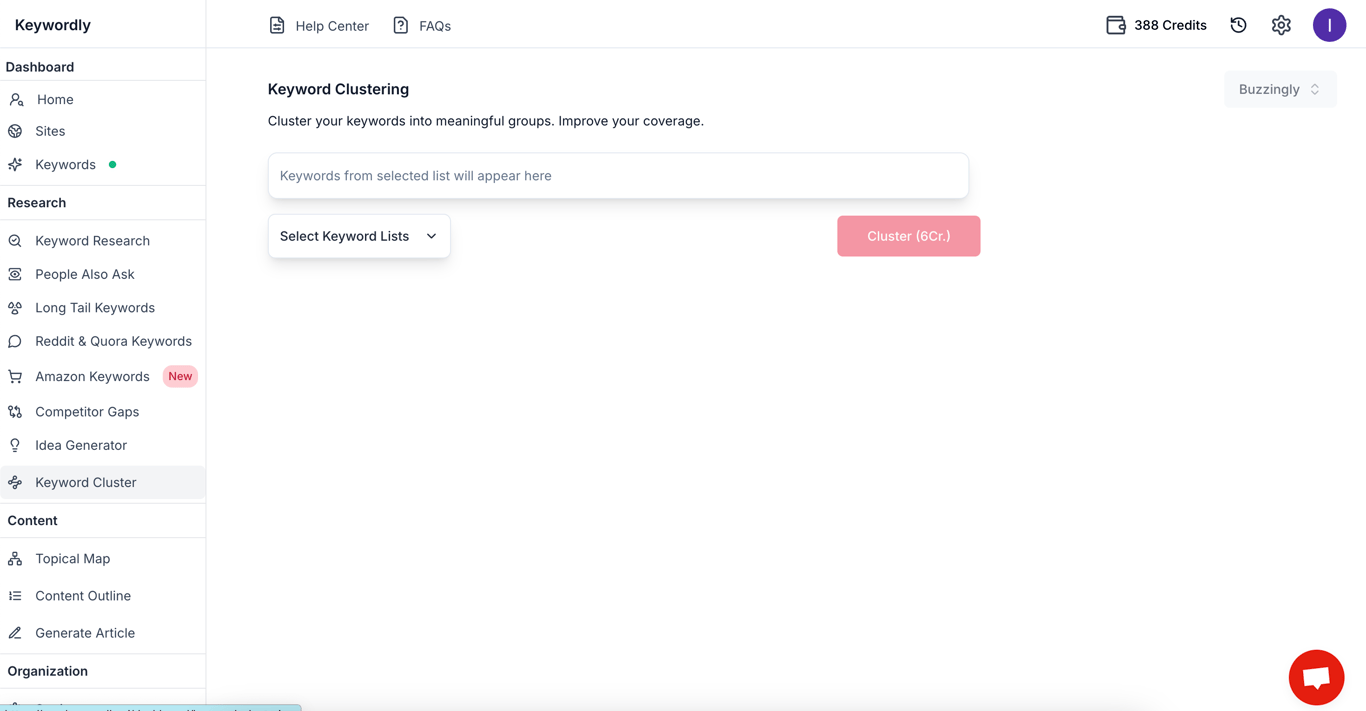
Step 3: Select Your Saved Keyword List
Choose a pre-saved keyword list that focuses on your topic, such as weight loss-related terms. Use the search function within Keywordly to filter and refine your list further. For example, include keywords like "best weight loss exercises," "diet plans," or "how to lose belly fat."
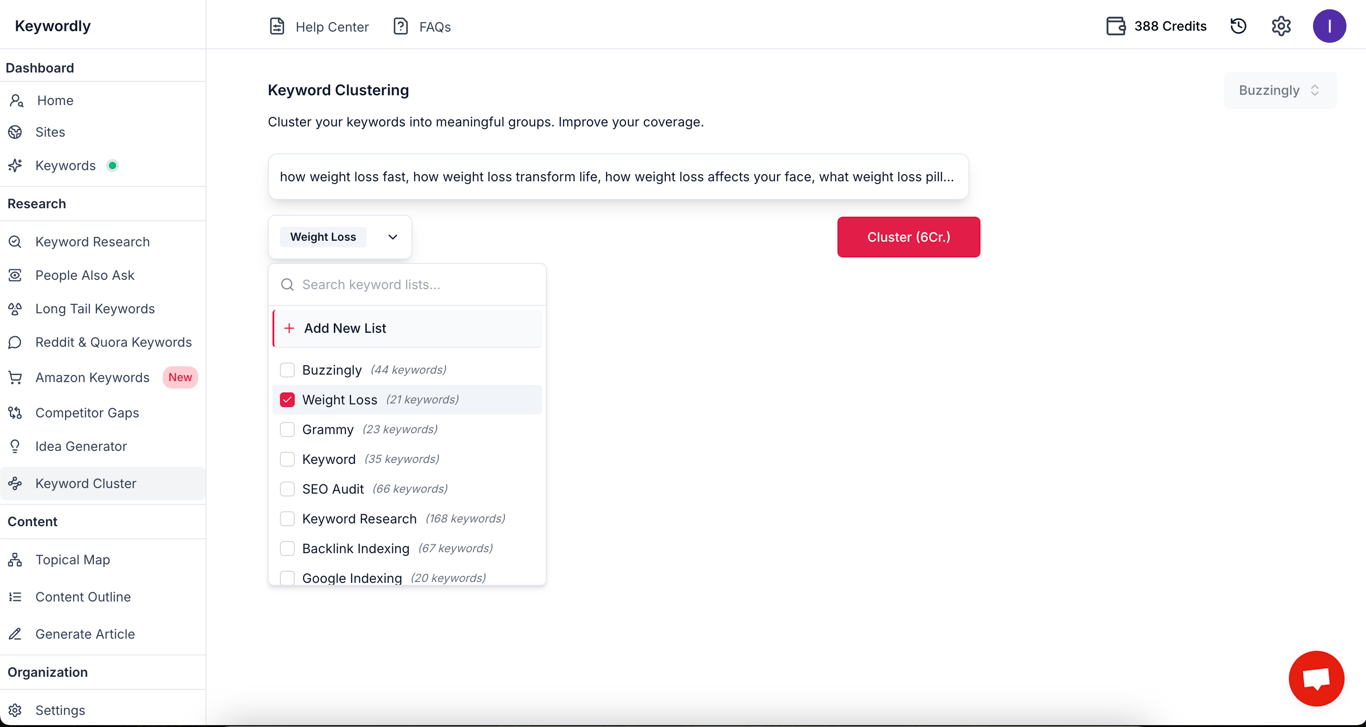
Step 4: Create Keyword Groups (Clusters)
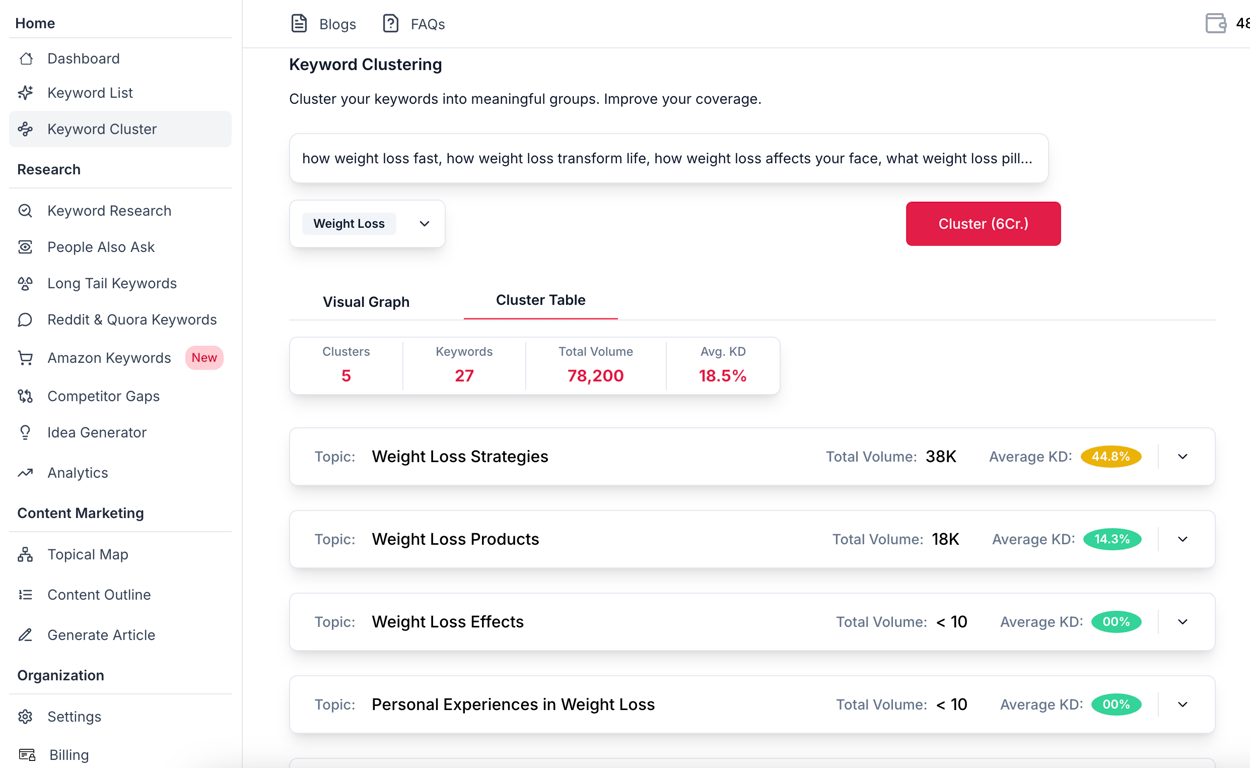
Keywordly will automatically generate clusters by grouping keywords with similar search intent. Review these groups to ensure they make sense contextually. For instance:
Cluster 1: "Weight loss strategies."
Cluster 2: "weight loss products"
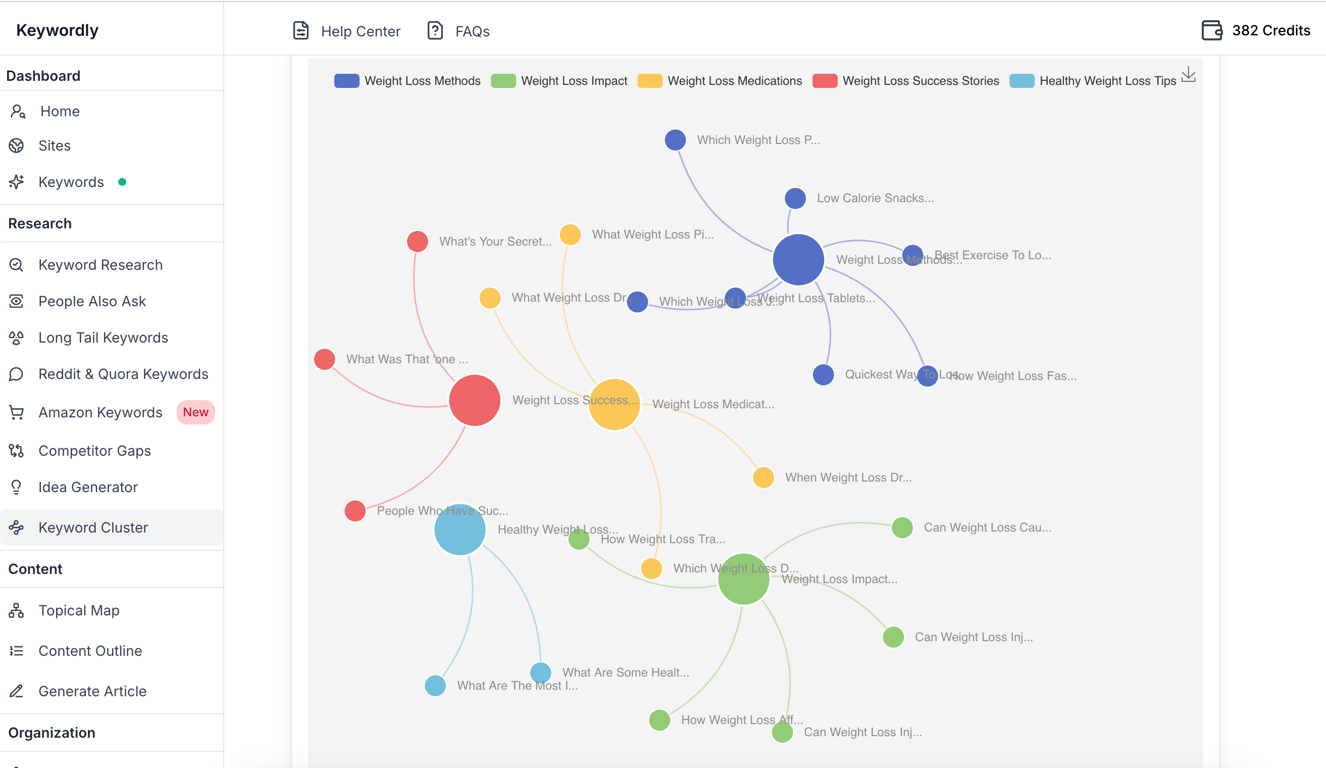
You can better understand Keyword Clusters with the help of a visualization as well, see the example below.
Step 5: Use Clusters to Write Content Outlines
Leverage the created keyword groups to draft content outlines. Each cluster can serve as a basis for a blog post or webpage. For example:
Cluster 1 could inspire a post titled “Quick and Easy Weight Loss Tips.”
Cluster 2 could guide content on “Healthy Diet Plans for Effective Weight Loss.”
By following these steps, you can create well-structured, SEO-friendly content that addresses user intent comprehensively. Regularly revisit your clusters to incorporate new trends or keywords.
Conclusion
Keyword clustering is important for SEO because it allows you to target multiple, related keywords within a single piece of content, improving search engine understanding and ranking for a wider range of user queries, ultimately boosting visibility and traffic.
Keyword clustering enhances user experience and content relevance by encouraging the creation of comprehensive content that addresses a broader spectrum of user queries. This approach increases the chances of fulfilling user intent with in-depth content that covers all aspects of the topic.